Learning Lessons: Make schooling joyful up to class XII

[email protected] (The Hindu)
April 20, 2012

IIXApril 20: In another month or so, we will read reports of the number of students who secured centum in mathematics, chemistry, or computer science. “My parents suspended our cable TV connection during examinations. I did my daily lessons regularly and did not go for tuitions. I thank my teachers for their support,” a top rank holder will say. “I expected a total above 1,000, but did not think I would top,” another will say, in apparent disbelief. After interviewing such candidates (we have been receiving mixed responses to the extent of our coverage of Plus Two results), I would invariably come back troubled.


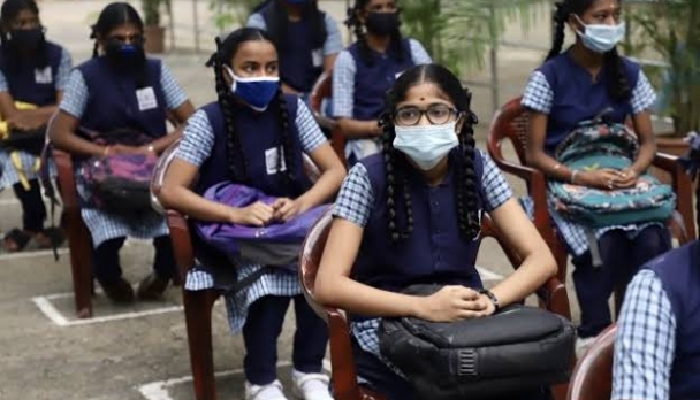
Their academic achievement may be commendable in today's competitive context, but most of the top scorers have very similar things to say, from what they did to emerge successful to what they wish to do next – often medicine, engineering, chartered accountancy or civil services. This is not to say that these students lack creativity, but to point to one of the most disturbing impacts of the high-pressure schooling experience they have had. These are students who have spent much of their childhood in a world that values nothing but high academic achievement.


In this context, School Education Minister N. R. Sivapathy's recent announcement on the "Tamil Nadu Curricular Framework 2012' brings some promise, for it is an opportunity to review the state's school education system in its entirety.


It is not as if Tamil Nadu has never attempted changing its approach to teaching and learning. There are periodic syllabus revisions, and more importantly, the State has seen certain progressive pedagogic interventions such as the Activity Based Learning (ABL) and Active Learning Methodologies (ALM).


All the same, the focus, particularly in higher classes, is clearly on students' achievements and their comprehension. This attitude has, besides breeding a culture of rote learning, also nurtured an atmosphere of unbelievable high pressure. Students are left disillusioned, batch after batch. For some, this "hangover' lasts until they get out of college. Any attempt to challenge this culture of schooling has to begin at primary school. In that, the State is on the right track, with the ABL and ALM in place. The State Board is also set to adopt Continuous and Comprehensive Evaluation (CCE) from the coming academic year. But the real challenge is to carry the same spirit all through schooling, right up to the higher secondary level.


This is where Tamil Nadu is clearly in a danger zone, where competition and pressure are rather intense. Several residential schools along the Namakkal belt that are known to adopt a regimented approach to training plus two students, have, in fact, been building brand images as institutions that coach students to emerge as toppers. Their students may obtain high scores, but not many of them would have had the opportunity to experience the joy in learning and understanding. The sense of wonder they had as children would have also died a natural death by then. If the proposed curricular framework is successful in restoring that sense of wonder, in addition to equipping students to face contemporary challenges of today's highly competitive world, it will truly be a historic step.


For that purpose, Tamil Nadu will do well to reflect on the recommendations made in vision documents such as the Yashpal Committee Report (1993) on "Learning without burden' and the more recent National Curriculum Framework (NCF) 2005, and suitably incorporate them into its own curricular framework. The NCF says "The fact that learning has become a source of burden and stress on children and their parents is evidence of a deep distortion in educational aims and quality', and makes important recommendations, such as connecting knowledge to life outside school, and making examinations more flexible and integrating them with classroom life.


The State has now embarked upon a crucial exercise that has the potential to bring about a radical change in the school education space. The new curricular framework will be eagerly awaited.


Comments

Add new comment

  • Coastaldigest.com reserves the right to delete or block any comments.
  • Coastaldigset.com is not responsible for its readers’ comments.
  • Comments that are abusive, incendiary or irrelevant are strictly prohibited.
  • Please use a genuine email ID and provide your name to avoid reject.
Media Release
June 12,2020

Mangaluru: Agnes Towards Community (ATC) is a five-year old project of social responsibility undertaken by St Agnes College (Autonomous), Mangaluru to give their students a taste for community service before they leave the portals of the College.  For this purpose the College has adopted five villages in the vicinity of Mangaluru, namely Harekala, Amblamogaru, Munnuru, Kotekar and Hosabettu.  The ATC programmes are undertaken on saturdays wherein all the final year students as guided by their staff members are given hands on experience of community interaction and service.  The four saturdays in a month are divided to plan, prepare, execute and evaluate the whole service exercise.

The year 2019-20 saw a major change in the format of the project. The Science and Arts faculty came together with projects based on the syllabus of study and apply it for their service learning activity.  This was done with the dual purpose of helping students to learn the topic practically in a real social set up and to identify and render useful scientific based practical solutions to the problems faced by the villagers.  

One such problem is water purity. Since water plays an important role in maintaining the human health and welfare, water quality testing is important because it identifies contaminants and prevents water borne diseases. In this regard, Departments of Chemistry and Microbiology took up a project on water analysis.   The major objectives of the project were: 1. To provide hands on experience on water analysis, a topic learnt by the students in their course of study.  2. To test the potability of water sources of the villages, so that the scientific and practical solutions can be provided, wherever needed.  

The first village chosen for the study was Amblamogaru.  The two batches of students (20 students in each batch) were led by Mrs.Prajwal Rao, Assistant Professor, Department of Microbiology and Ms.Smitha, Assistant Professor, Department of Chemistry. They were assisted by Ms.Hezil Saldanha, Assistant Professor, Department of Chemistry in carrying out the project. 

The water samples from different sources were collected in sterilised glass bottles. The students were enthusiastic in collecting water samples and also interacted with the village folk regarding the availability of drinking water supplies. The students under the guidance of faculty carried out the experiments in water analysis in Chemistry and Microbiology Laboratories at St Agnes College. This included testing for parameters such as pH, conductivity, total hardness and turbidity, presumptive, confirmed and completed Coliform test. From chemical analysis, it is found that all parameters satisfy the standards of potable water. Microbiological analysis showed that the water samples were potable for human consumption (No faecal contamination observed). 

The project has been envisaged to help the villagers to have recourse to the information on the results of the tests conducted. The water samples collected for the analysis were found to be potable for human consumption. If the water samples not been found to be potable, the departments had strategized to guide the villagers on useful scientific and practical solutions wherever needed.

This project of Agnes Towards Community (ATC) helped students to go beyond classroom learning, develop practical skills, disseminate knowledge and render service to the community. This activity also provided direct and relevant experiences to the students that deepened and enriched their learning abilities.

Comments

Add new comment

  • Coastaldigest.com reserves the right to delete or block any comments.
  • Coastaldigset.com is not responsible for its readers’ comments.
  • Comments that are abusive, incendiary or irrelevant are strictly prohibited.
  • Please use a genuine email ID and provide your name to avoid reject.
News Network
August 9,2020


New Delhi, Aug 9: With the National Education Policy 2020 recognising the need for flexibility in choosing the subjects that a student wants to study, implementation of this policy will boost science, technology, engineering and mathematics (STEM) education in India, edtech startup SP Robotic Works has said.

The new education policy also recognised that skills like coding and scientific temper and evidence-based thinking should be learned by all students to become good, successful, innovative, adaptable and productive human beings in today's rapidly changing world.

With the semester-based pattern, there is a lot of relaxation with respect to a child's choice to select their interest in subjects, according to Sneha Priya, CEO and co-founder, SP Robotic Works.

"This will promote the kids to explore various segments which otherwise I believe was restricted to an extent," Priya told IANS in an interview.

On July 29, the Union Cabinet gave its approval to a new National Education Policy (NEP) which aims at bringing about several changes in the education system from the school to college level.

Prime Minister Narendra Modi on Friday said that the NEP is the foundation of a "new India" and that it will help close the gap between education and research.

It is now well recognised that in opening the door to myriad opportunities offered by STEM education, online platforms have played a pivotal role.

Coding-related courses have picked up well and the online platforms have seen a lot of kids enrol in block programming, artificial intelligence (AI) and android app development.

"As the field of STEM education gained immense popularity in India, this online learning platform has seen 80 per cent increase in the number of renewal of programmes, which implies the increase in interest and is a positive sign for the future of STEM education," she said.
The proposal to introduce coding from Class 6 and onwards is one of the best decisions of the policy, Priya added.

"With importance being given to coding in the NEP, the schools will be more open to adopting new ways to ensure their children master in what they are learning which will automatically result in better outcomes," she opined.

"Focus on these skills is crucial during the formative years for the development of the children. Hence, this new policy will prove beneficial for growing kids to gather their interest in coding at an early stage," she said.

According to Priya, it is important to deliver the coding concepts in the right manner to captivate and encourage the child to engross his/her attention towards the subject.

She also stressed that both robotics and coding courses have seen a huge upsurge this year.
In addition to what is being taught at school, the online learning platform has seen an increased number of queries from parents with regards to shaping up their child's coding skills.

"Especially with the current situation, the Covid-i9 lockdown has given more time to students to explore their interest in this field and we have seen double the demand in participation just in the previous few months from children," Priya quipped.

Even during the lockdown, SP Robotic Works said they have seen an increase of 55 per cent in the revenues.

"Additionally, we have seen around 1 lakh new enrolments during the last four months which demonstrates that Indian children are exploring their interests across segments," the CEO said.
"For the next six months, our focus is going to continue educating and engaging more students in experiential learning as we work towards building a nation that's truly 'Aatmanirbhar'," Priya noted.

Comments

Add new comment

  • Coastaldigest.com reserves the right to delete or block any comments.
  • Coastaldigset.com is not responsible for its readers’ comments.
  • Comments that are abusive, incendiary or irrelevant are strictly prohibited.
  • Please use a genuine email ID and provide your name to avoid reject.