


NIA court convicts 13 Muslim youths in 2012 terror module case

September 16, 2016

Bengaluru, Sep 16: A National Investigation Agency (NIA) special court here on Thursdayconvicted 13 persons accused in the Karnataka terror module case, wherein several educated Muslim youths were arrested from their houses and rented rooms in Bengaluru, Hubballi and other places four years ago.
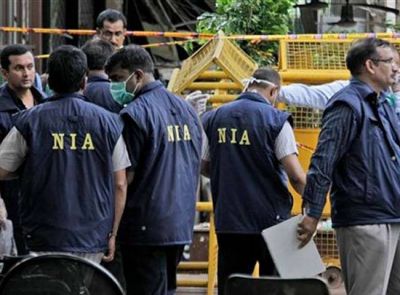
niaSources in the NIA said that this was the first time the accused have pleaded guilty in a terror case. Special court judge Muralidhar Pai adjourned the case to Friday, when he will pronounce the quantum of punishment.

The charge was that the youths had planned to assassinate several prominent personalities including BJP leaders and pro-BJP journalists. Later, a couple of the arrested youths had got clean chit in the case. Some of the accused are still absconding, according to the NIA. The arrest spree started on August 29, 2012 when a team of the Central Crime Branch of the Bengaluru City police nabbed two bike-borne youths in Basaveshwaranagar police limits.

The convicted are: Syed Tanzeem Ahmed of Ben galuru, Dr Imran Ahmed of Bengaluru, Dr Nayeem Siddiqui of Davanagere, Ubaid Ur Rehman of Hyderabad, Shoaib Ahmed Mirza alias Chotu of Hubballi, Abdul Hakeem Jamdar of Hubballi, Riyaz Ahmed Byahatti of Hubballi, Zafar Iqbal Sholapur of Hubb alli, Moha mmed Sa diq Lashkar of Hubballi, Mehaboob Bagalkot of Hubballi, Baba alias Mehboob Bagalkot and Wahid Hussain alias Saahil.

Public prosecutor Arjun Ambalapatta said, the conviction was made mainly under IPC sections 120B (criminal conspiracy), 153A (promoting enmity between different groups on grounds of religion), 307 (attempt to murder) and Section 38 of the Unlawful Activities Prevention Act and Arms Act, and Section 3 read with 25 of the Arms Act, 1959. The sections invoked entail prison terms of up to 10 years.

Police said the suspects were linked to Lashkar-e-Taiba and Harkat-ul-Jehad-al-Islami, and were being directed by handlers in Saudi Arabia to eliminate prominent personalities, including a newspaper editor, a newspaper columnist who is now a BJP MP representing Mysuru-Kodagu constituency, and right-wing leaders.

The case was later transferred to the National Investigation Agency. Six months after the arrests, NIA released two of the suspects, saying there was no prosecutable evidence against them, while a court released on bail a third suspect after the agency failed to file a chargesheet within the stipulated six months of the arrest.

Pleaded guilty in the hope of early release'

The Federation of Muslim NGOs has regretted that the 13 accused pleaded guilty because they were unable to bear the torture of remaining in prison.

"It is a sad reflection of the way investigations are being conducted in terror-related cases. Hundreds of witnesses are cited and a chargesheet running into several thousand pages is filed. The trial takes several years to complete. The draconian Unlawful Activities Prohibition Act ensures no bail is granted and the accused, even if innocent, have to spend several years in jail," read the statement.

"We further call upon the government to ensure the trials are expedited and the Act is amended to ensure bail is granted when proof is not convincing .... Call upon to form an independent review committee comprising a HC judge ... to review the evidence collected before granting sanction for prosecution to ensure innocents are not harassed," read the statement.

"Police say they have ample material evidence against our children. They have been in jail for too long now and have not got bail. Instead of dragging the case, our children agreed to plead guilty as they have already spent four years in jail, and undergo punishment. At least now they can look at an early release after they complete their terms," a family member said, on condition of anonymity.

Only 32 Of 260 gave evidence

The 13 accused stood motionless as NIA special court judge Muralidhar Pai held them guilty, while some of their family members let out exclamations of disappointment.

Around 10.30am Thursday, the men were brought in police vans, each accompanied by a policeman, as they walked to court hall 54 on the third floor of the City Civil Court complex. The judge said he would pronounce the judgment by 3pm. The men were taken out for lunch in the van and brought back to the hall by 2.30pm.

The 13 accused had been denied bail and were in jail during the course of the trial, where only 32 of the 260 witnesses turned up to give evidence.

Comments

Bopanna
 - 
Friday, 16 Sep 2016

\Educated Muslim youth \" ?
Madrassa education ????? Get ready to go meet your 72 virgins"

Bopanna
 - 
Friday, 16 Sep 2016

Terror has only one religion = Islam

Abdullah
 - 
Friday, 16 Sep 2016

The namo naresh who killed baliga was given bail.
The educated Muslim youths who didn't do any crime are convicted.
Wah re wah incredible RSS ruling India.

Deepak D
 - 
Friday, 16 Sep 2016

Who said terror does not have any religion. Anything or nothing can become a terror act if the arrested are Muslims. and any terror act can become nothing if the arrested are Sangh Parivar activists.

observer
 - 
Friday, 16 Sep 2016

Judge Murlidhar Pai a pakka RSS man.

Althaf
 - 
Friday, 16 Sep 2016

really injustice to the youths, how their family must be feeling about the injustice of india.

Nazir
 - 
Friday, 16 Sep 2016

Seriously shameful to our court. hoping of early release they accepted the guilty, for everything we should answer one day, that day will come soon to everyone.

Narain
 - 
Friday, 16 Sep 2016

this terrorists produced by Muslim's NGO's itself, they have to protect them from all the side. in every case this happens. their plan is to take compensation from govt. so they are pushing the case to so many years, in this 60% goes to this NGO's for protecting them, but in this case they failed to protect their children.

Mohan
 - 
Friday, 16 Sep 2016

this Muslim NGO's main job is this only first our court should punish this fellows for arguing against court decision.

Pran Kumar
 - 
Friday, 16 Sep 2016

Why naming Muslim youths? Terror dont have any religion.

Add new comment

  • Coastaldigest.com reserves the right to delete or block any comments.
  • Coastaldigset.com is not responsible for its readers’ comments.
  • Comments that are abusive, incendiary or irrelevant are strictly prohibited.
  • Please use a genuine email ID and provide your name to avoid reject.
News Network
April 22,2020

Bengaluru, Apr 22: The Karnataka government has announced partial relaxation of COVID-19 lockdown norms in the state allowing certain construction activities, manufacturing of packaging materials, courier services, among others, from April 23.

The activities will be permitted only outside the COVID-19 containment zones identified by the government.

Service provided by self-employed people like electrician, IT repair, plumbers, motor mechanics, and carpenters in local areas have also been given exemption.

Tea, coffee and rubber plantation have been allowed to work with 50 per cent workforce, and a similar exemption have been given to processing, packaging, sale and marketing of these produce.

“To mitigate hardship to the public, select additional activities have been allowed,which will come into effect from 00.00 hours of April 23,” Chief Secretary TM Vijay Bhaskar said in an order on Wednesday.

However, these additional activities will be operationalised by District Administrations and BBMP (city corporation in the case of Bengaluru city) based on strict compliance to the guidelines on lockdown measures, it said.

Before operating these relaxations, district administrations and BBMP (city corporation) shall ensure that all the preparatory arrangements on social distancing in offices, work place establishments as also sectoral requirements are in place, it said, adding that relaxations will not apply in containment zones.

Facing a financial crunch, the state government has been eager to kick-start economic activities in the state that had come to halt due to the coronavirus lockdown.

While hospitality services, bars, malls, theatres, shopping complexes, religious and places of worship among others will continue to remain shut, relaxation of norms has been for activities that are linked to essential services such as health, infrastructure and agriculture.

As per the order, while, public transportation will continue to remain suspended till May 3,private vehicles with passes for emergency services and personnel commuting with passes to places of work and back will be allowed.

Activities permitted include construction of roads, irrigation projects, buildings and all kinds of industrial projects, including MSMEs, in rural areas and all kinds of projects in industrial estates, where workers are available on site and no one is required to be brought in from outside.

Also permitted to function are manufacturing units of essential goods – drugs, pharmaceuticals, medical devices, their raw materials and intermediates;

food processing industries in rural areas, coal production (mines and mineral production and activities incidental to mining) besides manufacturing units of packaging materials.

Comments

Add new comment

  • Coastaldigest.com reserves the right to delete or block any comments.
  • Coastaldigset.com is not responsible for its readers’ comments.
  • Comments that are abusive, incendiary or irrelevant are strictly prohibited.
  • Please use a genuine email ID and provide your name to avoid reject.
Agencies
January 1,2020

For many Indian tycoons, 2019 turned woeful as lenders -- empowered by the nation’s recent bankruptcy law and desperate to clean up soured debt from their books -- started seizing assets of delinquent firms or dragged them into insolvency.

Indian banks wrote off a record $39 billion of loans in the 18 months through September in a bid to repair their balance sheets as they battled the world’s worst bad debt pile. Making matters worse, a shadow banking crisis led to a funding squeeze, crushing debt-laden businesses that were critically dependent on rollover financing.

“Life has come a full circle for tycoons that had enjoyed debt-fueled growth,” said Nirmal Gangwal, founder of distress and debt restructuring advisory firm Brescon & Allied Partners LLP. “Many firms collapsed like a house of cards. The downfall was rather unprecedented.”
The government has also been cracking down on economic crime to assuage public anger over absconding businessmen. It’s even barred some from traveling overseas if they were deemed a flight risk.

Here are some of the country’s biggest and most-storied businessmen who saw their fortunes fade. Spokespersons for none of these tycoons, except Essar, immediately replied to emails and text messages seeking comments.

Anil Ambani

The chairman of Reliance Group, which makes movies to metro lines, had a close shave with jail time in March before his elder brother and Asia’s richest man, Mukesh Ambani, bailed him out at the last minute. The woes of the ex-billionaire came to the fore when India’s top court asked him to pay Ericsson AB’s India unit about $77 million of past dues or go to jail since Anil Ambani, 60, had given a personal guarantee. His telecom carrier slipped into insolvency this year, while unprofitable Reliance Naval & Engineering Ltd. faced a cash crunch. Reliance Capital Ltd. is selling assets to pare debt. Ambani is also fending off Chinese lenders in a London court.

Malvinder & Shivinder Singh

Karma caught up with ex-billionaires and brothers Malvinder Singh, 47, and Shivinder Singh, 44, and how. Scions of a prominent business family, they once helmed India’s top drug maker and second-largest hospital chain. In October, the two were arrested on charges of fraudulently diverting nearly $337 million from a lender they controlled. India’s market regulator found in 2018 that the brothers had defrauded their hospital company of about $56 million. The collapse of the $2 billion empire turned brother against brother, prompting their mother to broker a peace deal that was short-lived. In February, Malvinder accused Shivinder and their spiritual guru of fraud.

Shashikant & Ravikant Ruia

After a hard-fought battle to keep their flagship steel mill, the first-generation entrepreneurs finally saw the bankrupt Essar Steel India Ltd. pass on to ArcelorMittal last month. The $5.9 billion takeover was almost two years in the making with multiple legal wrangles. The group, controlled by Shashikant Ruia, 76, and Ravikant Ruia, 70, were also reprimanded by a U.K. judge in March this year for concealing documents. Started in 1969 as a construction firm, Essar Group diversified, investing about $18 billion between 2008 and 2012, and piled on debt. In 2017, the group had sold another prized asset, Essar Oil.

Selling an asset to pare a liability shouldn’t be seen as a “lost asset,” an Essar spokesman said, adding that the group remains a diversified conglomerate.

VG Siddhartha

Before jumping off a bridge into a river in July in an apparent suicide, the founder of India’s biggest coffee chain Cafe Coffee Day had penned a letter that spoke of pressure from lenders, a private equity firm and harassment by tax officials. He had spent much of the last two years pledging ever more of Coffee Day Enterprises Ltd. shares to refinance loans for ever shorter periods, at ever higher interest rates. “I would like to say I gave it my all,” V.G. Siddhartha, 60, wrote in the letter. “I fought for a long time but today I gave up.”

Naresh Goyal

The former ticketing agent who built India’s largest airline by value, stepped down as chairman of Jet Airways India Ltd. in March, caving in to pressure from banks who took over the company. Cut-throat price wars and surging costs pushed Jet deeper into loss. The airline stopped flying in April and went into bankruptcy two months later as lenders failed to find a buyer. In July, an Indian court barred Naresh Goyal from flying overseas after the government said it was investigating an alleged $2.6 billion fraud involving Jet Airways.

Rana Kapoor

The founder of Yes Bank Ltd., which became India’s fourth-largest non-state lender, tweeted in September 2018 that his shares were invaluable and requested his children never to sell them upon inheritance. But trouble was brewing. The nation’s banking regulator, which found the lender had repeatedly under-reported its bad loans, refused to extend his tenure as chief executive officer. This forced Rana Kapoor, 62, to step down by end-January. Kapoor, who has pledged some of his Yes Bank shares in July, sold almost his entire stake in the lender by October.

Subhash Chandra

The rice trader-turned-media mogul, 69, who brought cable television into Indian homes in the early 1990s with his ZEE TV, resigned as chairman of Zee Entertainment Enterprises Ltd. in November and lost control of his crown jewel. Subhash Chandra has been selling stake in Zee Entertainment in the past few months to repay group’s debt.

Gautam Thapar

A default by Gautam Thapar, founder of the paper mill-to-power transmission Avantha Group, on pledged shares made Yes Bank Ltd. the biggest shareholder in CG Power and Industrial Solutions Ltd. In August, the firm was hit by an accounting scandal forcing the board to remove Thapar, 59, from the chairman’s post. A month later, the market regulator ordered a forensic audit of the firm and barred Thapar from accessing securities market.

Comments

Add new comment

  • Coastaldigest.com reserves the right to delete or block any comments.
  • Coastaldigset.com is not responsible for its readers’ comments.
  • Comments that are abusive, incendiary or irrelevant are strictly prohibited.
  • Please use a genuine email ID and provide your name to avoid reject.
News Network
July 18,2020

Bengaluru, Jul 18: Bringing a major change in the  administration of Bengaluru, which has emerged as a Covid-19 hotspot, the state government on Saturday transferred B H Anil Kumar out of the BBMP and brought N Manjunath Prasad to take his place. 

Manjunath Prasad, who headed the Bruhat Bengaluru Mahanagara Palike (BBMP) before being replaced by Kumar, will take over with immediate effect. The government has also placed him in concurrent charge of the Revenue Department as well as the Disaster Management, Bhoomi and UPOR.

Kumar, an Additional Chief Secretary, has been put in a place where earlier a secretary was posted. He now heads the Department of Public Enterprises. The posting would have brought him two spots down had it not been for the government upgrading it to the level of additional chief secretary. 

Anil Kumar, who was earlier praised for his work to contain the coronavirus pandemic, had faced criticism by the High Court of Karnataka for the BBMP's failure to help people in containment zones as well as other issues on the spread of the pandemic. 

Sources in the government said, pressure has been building up against Anil Kumar over the last two months after most of the Bengaluru MLAs complained to the chief minister's office.

"No MLA backed him. Everyone had a problem," a source said. 

Things came to the head with regard to a Rs 436 crore project given to KRIDL. "The issue reached the chief minister's office as all the MLAs took an issue with the way the project was awarded," a source said. 

Another source said that Kumar came under fire after a central team flagged the issue of failing Covid-19 surveillance measures in Bengaluru. The central team's criticism, it is widely believed in the government, came as the last straw. 

Comments

Add new comment

  • Coastaldigest.com reserves the right to delete or block any comments.
  • Coastaldigset.com is not responsible for its readers’ comments.
  • Comments that are abusive, incendiary or irrelevant are strictly prohibited.
  • Please use a genuine email ID and provide your name to avoid reject.