



NIA court convicts 13 Muslim youths in 2012 terror module case

September 16, 2016

Bengaluru, Sep 16: A National Investigation Agency (NIA) special court here on Thursdayconvicted 13 persons accused in the Karnataka terror module case, wherein several educated Muslim youths were arrested from their houses and rented rooms in Bengaluru, Hubballi and other places four years ago.
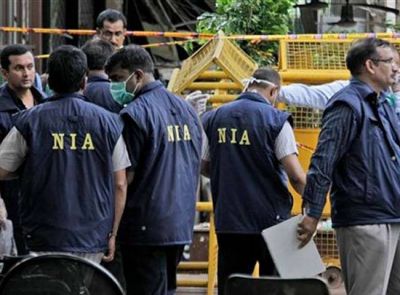
niaSources in the NIA said that this was the first time the accused have pleaded guilty in a terror case. Special court judge Muralidhar Pai adjourned the case to Friday, when he will pronounce the quantum of punishment.

The charge was that the youths had planned to assassinate several prominent personalities including BJP leaders and pro-BJP journalists. Later, a couple of the arrested youths had got clean chit in the case. Some of the accused are still absconding, according to the NIA. The arrest spree started on August 29, 2012 when a team of the Central Crime Branch of the Bengaluru City police nabbed two bike-borne youths in Basaveshwaranagar police limits.

The convicted are: Syed Tanzeem Ahmed of Ben galuru, Dr Imran Ahmed of Bengaluru, Dr Nayeem Siddiqui of Davanagere, Ubaid Ur Rehman of Hyderabad, Shoaib Ahmed Mirza alias Chotu of Hubballi, Abdul Hakeem Jamdar of Hubballi, Riyaz Ahmed Byahatti of Hubballi, Zafar Iqbal Sholapur of Hubb alli, Moha mmed Sa diq Lashkar of Hubballi, Mehaboob Bagalkot of Hubballi, Baba alias Mehboob Bagalkot and Wahid Hussain alias Saahil.

Public prosecutor Arjun Ambalapatta said, the conviction was made mainly under IPC sections 120B (criminal conspiracy), 153A (promoting enmity between different groups on grounds of religion), 307 (attempt to murder) and Section 38 of the Unlawful Activities Prevention Act and Arms Act, and Section 3 read with 25 of the Arms Act, 1959. The sections invoked entail prison terms of up to 10 years.

Police said the suspects were linked to Lashkar-e-Taiba and Harkat-ul-Jehad-al-Islami, and were being directed by handlers in Saudi Arabia to eliminate prominent personalities, including a newspaper editor, a newspaper columnist who is now a BJP MP representing Mysuru-Kodagu constituency, and right-wing leaders.

The case was later transferred to the National Investigation Agency. Six months after the arrests, NIA released two of the suspects, saying there was no prosecutable evidence against them, while a court released on bail a third suspect after the agency failed to file a chargesheet within the stipulated six months of the arrest.

Pleaded guilty in the hope of early release'

The Federation of Muslim NGOs has regretted that the 13 accused pleaded guilty because they were unable to bear the torture of remaining in prison.

"It is a sad reflection of the way investigations are being conducted in terror-related cases. Hundreds of witnesses are cited and a chargesheet running into several thousand pages is filed. The trial takes several years to complete. The draconian Unlawful Activities Prohibition Act ensures no bail is granted and the accused, even if innocent, have to spend several years in jail," read the statement.

"We further call upon the government to ensure the trials are expedited and the Act is amended to ensure bail is granted when proof is not convincing .... Call upon to form an independent review committee comprising a HC judge ... to review the evidence collected before granting sanction for prosecution to ensure innocents are not harassed," read the statement.

"Police say they have ample material evidence against our children. They have been in jail for too long now and have not got bail. Instead of dragging the case, our children agreed to plead guilty as they have already spent four years in jail, and undergo punishment. At least now they can look at an early release after they complete their terms," a family member said, on condition of anonymity.

Only 32 Of 260 gave evidence

The 13 accused stood motionless as NIA special court judge Muralidhar Pai held them guilty, while some of their family members let out exclamations of disappointment.

Around 10.30am Thursday, the men were brought in police vans, each accompanied by a policeman, as they walked to court hall 54 on the third floor of the City Civil Court complex. The judge said he would pronounce the judgment by 3pm. The men were taken out for lunch in the van and brought back to the hall by 2.30pm.

The 13 accused had been denied bail and were in jail during the course of the trial, where only 32 of the 260 witnesses turned up to give evidence.

Comments

Bopanna
 - 
Friday, 16 Sep 2016

\Educated Muslim youth \" ?
Madrassa education ????? Get ready to go meet your 72 virgins"

Bopanna
 - 
Friday, 16 Sep 2016

Terror has only one religion = Islam

Abdullah
 - 
Friday, 16 Sep 2016

The namo naresh who killed baliga was given bail.
The educated Muslim youths who didn't do any crime are convicted.
Wah re wah incredible RSS ruling India.

Deepak D
 - 
Friday, 16 Sep 2016

Who said terror does not have any religion. Anything or nothing can become a terror act if the arrested are Muslims. and any terror act can become nothing if the arrested are Sangh Parivar activists.

observer
 - 
Friday, 16 Sep 2016

Judge Murlidhar Pai a pakka RSS man.

Althaf
 - 
Friday, 16 Sep 2016

really injustice to the youths, how their family must be feeling about the injustice of india.

Nazir
 - 
Friday, 16 Sep 2016

Seriously shameful to our court. hoping of early release they accepted the guilty, for everything we should answer one day, that day will come soon to everyone.

Narain
 - 
Friday, 16 Sep 2016

this terrorists produced by Muslim's NGO's itself, they have to protect them from all the side. in every case this happens. their plan is to take compensation from govt. so they are pushing the case to so many years, in this 60% goes to this NGO's for protecting them, but in this case they failed to protect their children.

Mohan
 - 
Friday, 16 Sep 2016

this Muslim NGO's main job is this only first our court should punish this fellows for arguing against court decision.

Pran Kumar
 - 
Friday, 16 Sep 2016

Why naming Muslim youths? Terror dont have any religion.

Add new comment

  • Coastaldigest.com reserves the right to delete or block any comments.
  • Coastaldigset.com is not responsible for its readers’ comments.
  • Comments that are abusive, incendiary or irrelevant are strictly prohibited.
  • Please use a genuine email ID and provide your name to avoid reject.
News Network
April 18,2020

Bengaluru, Apr 18: Amid fears that people from the unorganised sector are running out of cash to meet their daily expenses, the Karnataka government said there was no data available for such labourers, who can be provided financial assistance under the direct benefit transfer (DBT) scheme.

"The government does not have data of people in the unorganised sector such as drivers, farmers, domestic help and others. If we have to deposit directly into their account, we need data..," State Labour minister A Shivaram Hebbar told reporters.

The minister said a situation borne out of the COVID-19, where the entire nation has been lockdown was never anticipated.

To him, the pandemic has given an opportunity to gather information about the unorganised sector.

"This COVID-19 has taught the department and the workers a lesson that we should be prepared for a situation like this. We have learnt that all the information about labourers should be available with the labour department," Hebbar conceded.

The minister opined that the department should have had the list during the good times but nobody bothered to have it.

"During the good times nobody bothered about it -- neither they (beneficiaries) asked for it, nor we thought of it.," Hebbar said.

Now that the pandemic has struck, the government is focusing only on not letting anyone starve to death.

A three-level preparation has been made -- at the village level, Taluk level and the city level, the minister said.

Village anganwadis have been stuffed with food items to be cooked for the needy, whereas in Taluk level, government hostels have been turned into shelters for the labourers, he said, noting that lakhs of philanthropists in cities have come forward to feed the people from unorganised sector.

"The basic objective of our government is that no one should starve to death. The issue of organised or unorganised sector comes next," he explained.

On the fear of large-scale retrenchment, the minister said notices have been served on all the industries that no one should be expelled from the job.

However, Hebbar underlined that the industrialists today are as much in distress as the workers and his department was taking into account everyone's concern.

A decision will be taken in this connection by the government in the next two days, to provide assistance to small enterprises to keep them afloat.

Comments

Add new comment

  • Coastaldigest.com reserves the right to delete or block any comments.
  • Coastaldigset.com is not responsible for its readers’ comments.
  • Comments that are abusive, incendiary or irrelevant are strictly prohibited.
  • Please use a genuine email ID and provide your name to avoid reject.
News Network
May 6,2020

Bengaluru, May 6: More than a month after international flights have been barred, Karnataka government is preparing to quarantine all 10,823 of the state''s people poised to return home from overseas amid the Covid pandemic, an official said on Tuesday.

"The state has planned to quarantine all 10,823 passengers coming back to Karnataka. The quarantine guidelines framed as below would be applicable," said Health Commissioner Pankaj Kumar Pandey in a statement.

According to the Government of India, 10,823 Karnataka residents have been stranded abroad by April 30, comprising 4,408 tourists, 3,074 students, 2,784 migrants and professionals and 557 ship crew.

Out of the 10,823 people, the state government is expecting 6,100 to return early as the government has decided to allow Indians stuck abroad to return.

"All the passengers arriving at points of entry (airports and seaports) will be compulsorily screened for symptoms of Covid-19," said Pandey.

Point of entry screening will include self-reporting form verification, thermal screening, pulse oximeter reading, briefing with instructions, categorisation, stamping for some and downloading of Aarogya Setu, Quarantine Watch and Apthamitra apps.

Arriving passengers are also required to declare existing comorbidities such hypertension, diabetes, asthma or any lung disease, organ transplantations, cancer, tuberculosis and other ailments.

Passengers will be categorised into three groups: Category A (symptomatic on arrival), Category B (asymptomatic with co-morbidity or aged above 60 years) and Category C (rest of asymptomatic passengers).

Depending on the category into which the people fall, their quarantine place and time will be determined.

Category A arrivals will be subjected to institutional quarantine for a fortnight, Category B one week quarantine at a hotel or hostel, followed by another week at home, and Category C home quarantine for a fortnight.

Karnataka government is making elaborate arrangements and logistical means, deploying healthcare, police and several other departments into action to handle the huge influx of Kannadigas and state residents.

Pandey has issued a 21-page elaborate standard operating procedure (SOP) guidelines on how to face the international returnees.

Comments

Add new comment

  • Coastaldigest.com reserves the right to delete or block any comments.
  • Coastaldigset.com is not responsible for its readers’ comments.
  • Comments that are abusive, incendiary or irrelevant are strictly prohibited.
  • Please use a genuine email ID and provide your name to avoid reject.
News Network
February 28,2020

Bengaluru, Feb 28: The Liquefied Petroleum Gas penetration in Karnataka is 'absolutely 100 per cent' due to the Prime Minister Ujjwala Yojana, Indian Oil Corporation Karnataka Executive Director D L Pramodh said here on Friday.

In 2014, LPG penetration in the State was only 68 per cent, but after the PMUY, massive number of gas connections were given in the last five years, he said, adding, "It is absolutely 100 per cent today."

"There are 1.6 crore LPG connections out of which around 31.5 lakh -- or around 20 per cent -- come under the PMUY. The 100 per cent LPG penetration in the state will help women in rural areas to make their kitchens smokeless. Against the national average of 2.88 cylinders per family per PMUY annually, the figure is Karnataka 3.4 cylinders in Karnataka," Pramodh told reporters.

On the initiative of blending ethanol with petrol, he said it's 8.6 per cent in Karnataka, the highest comparedto other states, where it's five per cent to 5.5 per cent. The state aims to increase it to 10 per cent. By March 31, the IOC would commission the Rs 10 crore Vapour Recovery System at the Devanagonthi terminal on the city outskirts which would ensure that vapour does not go out in the air when tankers are being filled with fuel. "This is an important measure taken tominimise pollution", he said.

Pramodh also said the IOC has started mobile fuel dispensers, delivering fuels at the doorsteps.

Regarding the IOC's preparedness for Electric Vehicle charging stations, Pramodh said the Ministry of Power has given the company a target to set up 500 charging stations across India in the first phase. The IOC has already signed MoUs with NTPC, Power Grid Corporation Limited, Hyundai Motors, Tech Mahindra and Tata Power in this regard.

In Karnataka, 58 sites have been identified for setting up charging and battery swapping stations.

"Total electric vehicle charging facilities planned by IOC in Karnataka by March 31 is 34, out of which 26 will be EVcharging sites and eight battery swapping stations," Pramodh said.

Comments

Add new comment

  • Coastaldigest.com reserves the right to delete or block any comments.
  • Coastaldigset.com is not responsible for its readers’ comments.
  • Comments that are abusive, incendiary or irrelevant are strictly prohibited.
  • Please use a genuine email ID and provide your name to avoid reject.