Nipah: People in coastal Karnataka urged to take precautions, not panic | Here’s a list of Dos and Don’ts

coastaldigest.com news network
May 23, 2018

Mangaluru/Udupi, May 23: Officials in Dakshina Kannada and Udupi districts of coastal Karnataka have urged the people to take maximum precautionary measures and not panic over Nipah virus that has claimed at least a dozen lives in neighbouring Kerala.

The twin districts have been put on high alert after two suspected case of Nipah were surfaced in Mangaluru yesterday. All private hospitals have been asked to notify such cases.

Dakshina Kannada District Health and Family Welfare Officer M Ramakrishna Rao, said that the people suffering from chronic diseases and immunity problems are susceptible to the infection.

The doctor advised people to drink boiled water and wash their hands properly. After exposure to the virus it would take three to 18 days to develop symptoms such as cold, cough, fever, convulsion and nausea, he said.

Meanwhile, Udupi Deputy Commissioner Priyanka Mary Francis, who on Tuesday chaired a meeting over the prevention of Nipah virus at the District Offices Complex, said that people should strictly avoid eating fruits bitten by birds and which had fallen below trees. People should eat fruits only after cleaning them properly and removing their peels. They should wash their hands and keep them clean, she said.

She directed the Health Department to give information about the virus to all anganwadi workers and junior health workers. Pamphlets about the precautions should be distributed to the general public. All the doctors should be told about the Standard Operating Procedure through the IMA, Ms. Francis said.

The symptoms of Nipah fever include fever, head ache, fainting and nausea. In a few cases, symptoms could also include choking, stomach pain, vomiting, fatigue and blurred vision.

The experts have issued a guideline of Do’s and Don’ts for preventing the spread of Nipah virus fever.

The Dos are:

• Isolate infected livestock, such as pigs, horses, dogs and cats as they act as the intermediate host

• Suspected human cases should be isolated

• Clothes, utensils of suspected cases and items typically used in the toilet or bathroom to be cleaned separately and maintained hygienically

• Avoid hand shake and wash hands properly after contacting infected people

• Wear mask and gloves while tending to patients

• Wash, peel and/or cook all fruits thoroughly before eating

• Visit the nearest health centre for any flu-like illness

The Don’ts are:

• Do not eat fruits that may have been bitten by birds and animals

• Do not drink toddy/neera collected from areas where bats are found in large numbers

• Precautionary measures should be taken when visiting infected areas

• Avoid contact with sick persons’ body secretions (saliva, sweat, urine, etc.)

• Relatives should try to refrain from hugging or kissing their dead.

Also Read: From Malaysia to Kerala: All you need to know about the deadly Nipah virus

Comments

Rahul
 - 
Wednesday, 23 May 2018

Actually media sensationalising. Sitution is under control. Centre certified that

Danish
 - 
Wednesday, 23 May 2018

Thank you CD for the information

Add new comment

  • Coastaldigest.com reserves the right to delete or block any comments.
  • Coastaldigset.com is not responsible for its readers’ comments.
  • Comments that are abusive, incendiary or irrelevant are strictly prohibited.
  • Please use a genuine email ID and provide your name to avoid reject.
News Network
May 30,2020

Bengaluru, May 30: People travelling to Bengaluru by flight or train must pay to get their Covid-19 tests done at designated private labs.

This is being done to improve the participation of private labs that have been approved by the Indian Council of Medical Research to do testing. Many of these labs are running at sub-optimal levels.

The new rule will also help the special categories of passengers and their attendants to leave early for home quarantine after giving the sample once the swab collection centres are established at airports and railway stations. The nodal officers at these places will coordinate in establishing the swab collection centres.

Each test will cost Rs 650 per sample. XCyton Diagnostics will cater to air passengers. Rail passengers will be tested at Neuberg Anand Reference Laboratory, Cancyte Technologies Pvt Ltd, Aster Labs, Narayana Hrudayalaya, Vydehi Hospital and Syngene International Ltd.

Comments

Add new comment

  • Coastaldigest.com reserves the right to delete or block any comments.
  • Coastaldigset.com is not responsible for its readers’ comments.
  • Comments that are abusive, incendiary or irrelevant are strictly prohibited.
  • Please use a genuine email ID and provide your name to avoid reject.
News Network
May 13,2020

Mumbai, May 13: Members of the Muslim community helped in performing the last rites of their 72-year-old Hindu neighbour in Sewri area here after the deceased's relatives could not reach for his funeral due to the lockdown.

Pandurang Ubale, who was paralysed since the last few months, died at his residence in Zakaria Bunder area of Sewri on Monday. He had been staying there along with his wife and son since some decades.

After his death on Monday, his relatives staying in suburban Mulund, Belapur in adjoining Navi Mumbai and Alibaug in neighbouring Raigad district could not come over to his place in the wake of the coronavirus-induced lockdown.

As Ubale's wife and son were unable to make all arrangements for the funeral, they informed their neighbours, who came forward to help and even prepared the bier.

A neighbour, Asif Sheikh, who attended the funeral, said, We knew Ubale uncle since a long time. He always participated in our festivals and we used to be a part of their festivities. We all came forward to bid him a farewell and helped in performing his last rites."

Last month also,some Muslim men carried the body of a Hindu neighbour in suburban Bandra on their shoulders to the cremation ground after the deceased's relatives were unable to attend the last rites due to the lockdown.

Comments

Add new comment

  • Coastaldigest.com reserves the right to delete or block any comments.
  • Coastaldigset.com is not responsible for its readers’ comments.
  • Comments that are abusive, incendiary or irrelevant are strictly prohibited.
  • Please use a genuine email ID and provide your name to avoid reject.
News Network
August 2,2020

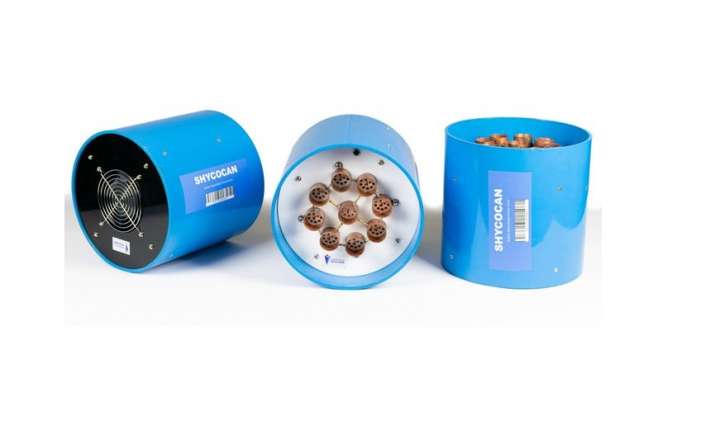
Bengaluru, Aug 2: Bengaluru based Centre for Advanced Research and Development (CARD), the research wing of organisation De scalene has come up with a device called "SHYCOCAN" (Scalene Hypercharge Corona Canon) which neutralizes the coronavirus.

Speaking to news agency Dr Rajah Vijay Kumar, Chairman, Organisation De Scalene said that the device will not kill any bacteria or fungus, however, neutralizes the coronavirus particles.

"The device was tested for its safety and efficacy and is soon going to be manufactured and marketed in the US under the Enforcement Discretion policy of USFDA and in Europe as the device is CE compliant and is CE marked," said Kumar.

He also added the device will cover a volume of 10,000 cubic feet.

The device Scalene Hypercharge Corona Canon (SHYCOCAN) is intended to be used in the residential, industrial and commercial environment and is designed for active containment by attenuation of Corona family of viruses. (Laboratories de Especialidades Immunological S.A. de C.V, Virucidal Activity concludes 99.9 per cent virus elimination), Kumar asserted.

"SHYCOCAN operates on regular 110/240V - 50/60 Hz wall socket and is a plug and play device, that delivers the necessary signals to a photon mediated electrons emitters (PMEE), that produces hypercharge high-velocity electrons by photon mediation that interacts with the negative seeking S-protein of Corona family of viruses thus reducing infectivity and prevent air and surface borne transmission of corona family of viruses," said Kumar.

The device does not use any chemicals, or any other consumables and does not produce harmful ozone gas or any other substances and is completely safe for use in any environment, he added.

"The attack mechanism of the Virus starts with the initial attachment of the virion to the host cell, it is initiated by interactions between the S-protein and its receptor on the "negative" cell membrane. The sites of receptor binding domains (RBD) within the S1 region of a coronavirus S-protein vary depending on the virus. 

The S-protein/receptor interaction is the primary determinant for a coronavirus to infect a host species and governs the tissue tropism of the virus. However, the end result is the fusion and release of the viral genome into the cytoplasm," said Kumar.

He continued saying that the counter mechanism by the device SHYCOCAN is that if negative seeking is the guidance mechanism of the S- Protein, attracted by the transmembrane potential of the host cells, then breaking this mechanism would block the Coronavirus infectivity and spread.

"The device has been in use for more than a year at the S-CARD campus, the headquarters of Scalene," said Kumar.

Comments

Add new comment

  • Coastaldigest.com reserves the right to delete or block any comments.
  • Coastaldigset.com is not responsible for its readers’ comments.
  • Comments that are abusive, incendiary or irrelevant are strictly prohibited.
  • Please use a genuine email ID and provide your name to avoid reject.