‘No alliance in future’: Cong-JDS turn archrivals once again in Karnataka

coastaldigest.com web desk
July 23, 2020

Bengaluru, July 23: The Janta Dal (Secular) and Congress that had joined hands together in Karnataka ‘to keep communal forces at bay, have once again turned archrivals. The development comes a year after the collapse of JD(S)-Congress coalition government in the state.

Recently, Leader of the Opposition Siddaramaiah claimed that the Congress would have won at least 10 seats in the Lok Sabha elections had it not been for the alliance with the JD(S). In response, former chief minister H D Kumaraswamy of the JD(S), who headed the coalition government, blamed the Congress for its many 'conspiracies'.

In a series of tweets on Wednesday, Kumaraswamy said he was prompted by Siddarmaiah's claims to recall what transpired during the coalition government. 

"There will never be a future alliance with Congress," Kumaraswamy declared, in a letter to his party colleagues on Wednesday. He claimed that there were many conspiracies on part of Congress, which led to the fall of the coalition government.

Comments

Add new comment

  • Coastaldigest.com reserves the right to delete or block any comments.
  • Coastaldigset.com is not responsible for its readers’ comments.
  • Comments that are abusive, incendiary or irrelevant are strictly prohibited.
  • Please use a genuine email ID and provide your name to avoid reject.
News Network
April 5,2020

Bengaluru, Apr 5: The COVID-19 related lockdown has substantially improved the air quality of Bengaluru, taking it from satisfactory level to good, a senior state pollution control board offcial said here on Sunday.

"During the course of the lockdown 19 problem, we reached good position from satisfactory.

It is between zero to 50 AQI (Air Quality Index) now. We have good quality air," the Karnataka State Pollution Control Board member secretary Basavaraj Patil told PTI.

He said the indicator for knowing the air quality in

"If the AQI is zero to 50 then it is good. If it is 50 to 100 then it is satisfactory. 101 to 150 is moderate and if it is 151 to 200, then it is poor, he explained.

Patil said as per available recrods, there has been a 60 to 65 per cent reduction in pollution during the lockdown.

The city railway station and Peenya industrial area, which used to be among the areas with highest AQI, has seen pollution levels come down significantly, he said.

Another major contributor of pollution was construction activities, which too had ground to a halt due to the lockdown, resulting in zero dust emission.

Patil opined that the improved air quality would boost the immune system of the people.

"It will improve the immune system of people, including those who have breathing problems like asthma," he said.

He asked the public to learn lessons from the lockdown and later switch to sustainable means of transport such as public transport, walking and cycling,.

"We can still reduce the pollution load even after the lockdown is over," Patil said.

Comments

Add new comment

  • Coastaldigest.com reserves the right to delete or block any comments.
  • Coastaldigset.com is not responsible for its readers’ comments.
  • Comments that are abusive, incendiary or irrelevant are strictly prohibited.
  • Please use a genuine email ID and provide your name to avoid reject.
News Network
May 17,2020

Mangaluru, May 17: A team of staff and students from the Department of Electrical and Electronics Engineering, NMAM Institute of Technology, Nitte, have designed and developed a simple and cost-effective touch-less hand sanitiser dispenser kit at Research and Innovation Centre, Nitte.

According to a release here on Sunday, NITTE said that the most effective medicine for Covid-19 is social distancing, frequent use of sanitiser, and washing hands regularly. In work areas, many people sharing common sanitiser might lead to issues.

The developed product dispenses sanitiser upon sensing the presence of the hand. The product has features like automatic hand detection, indication for power, and sanitiser quantity in the system.

Comments

Add new comment

  • Coastaldigest.com reserves the right to delete or block any comments.
  • Coastaldigset.com is not responsible for its readers’ comments.
  • Comments that are abusive, incendiary or irrelevant are strictly prohibited.
  • Please use a genuine email ID and provide your name to avoid reject.
News Network
July 28,2020

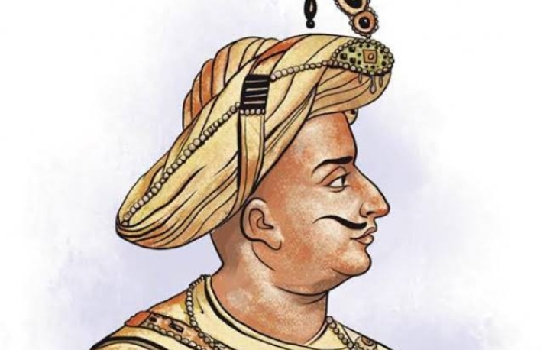
Bengaluru, Jul 28: After the Central Board of Secondary Education (CBSE) reduced the syllabi for Classes 9 to 12 due to COVID-19 pandemic, the Karnataka government has followed the suit. The Department of Public Instruction has omitted the chapters on legendary south Indian rulers Hyder Ali and Tipu Sultan from the textbooks of Class 7 in their attempt to reduce syllabus for state board schools by 30 per cent. 

The department, however, has decided to retain similar chapters on Tipu Sultan in 6th and 10th Classes, though the syllabus in text books for all classes from 1 to 10th has been trimmed. 

The trimmed textbooks uploaded on the website of the Department of State Education Research and Training (DSERT) by Karnataka state Textbook Society revealed removal of chapters on Tipu Sultan for the seventh grade.

Justifying the decision, officials said, "students study similar chapters in Class 6 and more in the 10th grade." Yet another senior official from the Text Book Society said, "Trimming does not mean we have removed half of the syllabus from textbooks. It is only keeping in mind the repetition we have condensed the chapters. In case students study about a particular dynasty in higher grades, then the same had been removed from lower grades."

A few months ago, there was an uproar over dropping of content on Tipu Sultan and MLAs from the ruling BJP also demanded the same and petitioned to the Chief Minister. Even an expert committee led by Prof Baraguru Ramachandrappa suggested to not drop any content on the historic figure. However, the department still decided to drop lessons from one of the classes while keeping the syllabus short for the next 120 active academic days.

Earlier this month, a controversy had erupted over the CBSE's decision to omit topics like federalism, secularism, citizenship, etc while reducing the syllabus for Classes 9 to 12. The education board had issued a detailed clarification later, stating that topics claimed to be dropped "are either being covered by the rationalised syllabus or in the Alternative Academic Calendar of NCERT".

"The rationalisation of syllabus up to 30 per cent has been undertaken by the Board for nearly 190 subjects of class 9 to 12 for the academic session 2020-21 as a one-time measure only. The objective is to reduce the exam stress of students due to the prevailing health emergency situation and prevent learning gaps," it said.

Last week, the Congress in Uttar Pradesh expressed its concern over 'deliberate and systematic' deletions of chapters related to the freedom struggle and the party's role in it from the Class 10-12 syllabi of the Secondary Education Board.

Comments

Add new comment

  • Coastaldigest.com reserves the right to delete or block any comments.
  • Coastaldigset.com is not responsible for its readers’ comments.
  • Comments that are abusive, incendiary or irrelevant are strictly prohibited.
  • Please use a genuine email ID and provide your name to avoid reject.