As democracy is seeping in slowly all over the world, there is an organization which is monitoring the degree of democracy in the individual countries, The Economist Intelligence Unit. As such in each country there are diverse factors which on one hand work to deepen it, while others weaken it. Overall there is a march from theoretical democracy to substantive one. The substantive democracy will herald not just the formal equality, freedom and community feeling in the country but will be founded on the substantive quality of these values. In India while the introduction of modern education, transport, communication laid the backdrop of beginning of the process, the direction towards deepening of the process begins with Mahatma Gandhi when he led the non-cooperation movement in 1920, in which average people participated. The movement of freedom for India went on to become the ‘greatest ever mass movement’ in the World.
The approval and standards for democracy were enshrined in Indian Constitution, which begins ‘We the people of India’, and was adopted on 26th January 1950. With this Constitution and the policies adopted by Nehru the process of democratization started seeping further, the dreaded Emergency in 1975, which was lifted later restored democratic freedoms in some degree. This process of democratisation is facing an opposition since the decade of 1990s after the launch of Ram Temple agitation, and has seen the further erosion with BJP led Government coming to power in 2014. The state has been proactively attacking civil liberties, pluralism and participative political culture with democracy becoming flawed in a serious way. And this is what got reflected in the slipping of India by ten places, to 51st, in 2019. On the index of democracy India slipped down from the score of 7.23 to 6.90. The impact of sectarian BJP politics is writ on the state of the nation, country.
Ironically this lowering of score has come at a time when the popular protests, the deepening of democracy has been given a boost and is picking up with the Shaheen Bagh protests. The protest which began in Shaheen Bagh, Delhi in the backdrop of this Government getting the Citizenship amendment Bill getting converted into an act and mercilessly attacking the students of Jamia Milia Islamia, Aligarh Muslim University along with high handed approach in Jamia Nagar and neighbouring areas. From 15th December 2019, the laudable protest is on.
It is interesting to note that the lead in this protest has been taken by the Muslim women, from the Burqa-Hijab clad to ‘not looking Muslim’ women and was joined by students and youth from all the communities, and later by the people from all the communities. Interestingly this time around this Muslim women initiated protest has contrast from all the protests which earlier had begun by Muslims. The protests opposing Shah Bano Judgment, the protests opposing entry of women in Haji Ali, the protests opposing the Government move to abolish triple Talaq. So far the maulanas from top were initiating the protests, with beard and skull cap dominating the marches and protests. The protests were by and large for protecting Sharia, Islam and were restricted to Muslim community participating.
This time around while Narendra Modi pronounced that ‘protesters can be identified by their clothes’, those who can be identified by their external appearance are greatly outnumbered by all those identified or not identified by their appearance.
The protests are not to save Islam or any other religion but to protect Indian Constitution. The slogans are structured around ‘Defence of democracy and Indian Constitution’. The theme slogans are not Allahu Akbar’ or Nara-E-Tadbeer’ but around preamble of Indian Constitution. The lead songs have come to be Faiz Ahmad Faiz’s ‘Hum Dekhenge’, a protest against Zia Ul Haq’s attempts to crush democracy in the name of religion. Another leading protest song is from Varun Grover, ‘Tanashah Aayenge…Hum Kagaz nahin Dikhayenge’, a call to civil disobedience against the CAA-NRC exercise and characterising the dictatorial nature of the current ruling regime.
While BJP was telling us that primary problem of Muslim women is Triple talaq, the Muslim women led movements has articulated that primary problem is the very threat to Muslim community. All other communities, cutting across religious lines, those below poverty line, those landless and shelter less people also see that if the citizenship of Muslims can be threatened because of lack of some papers, they will be not far behind in the victimization process being unleashed by this Government.
While CAA-NRC has acted as the precipitating factor, the policies of Modi regime, starting from failure to fulfil the tall promises of bringing back black money, the cruel impact of demonetisation, the rising process of commodities, the rising unemployment, the divisive policies of the ruling dispensation are the base on which these protest movements are standing. The spread of the protest movement, spontaneous but having similar message is remarkable. Shaheen Bagh is no more just a physical space; it’s a symbol of resistance against the divisive policies, against the policies which are increasing the sufferings of poor workers, the farmers and the average sections of society.
What is clear is that as identity issues, emotive issues like Ram Temple, Cow Beef, Love Jihad and Ghar Wapasi aimed to divide the society, Shaheen Bagh is uniting the society like never before. The democratisation process which faced erosion is getting a boost through people coming together around the Preamble of Indian Constitution, singing of Jan Gan Man, waving of tricolour and upholding the national icons like Gandhi, Bhagat Singh, Ambedkar and Maulana Azad. One can feel the sentiments which built India; one can see the courage of people to protect what India’s freedom movement and Indian Constitution gave them.
Surely the communal forces are spreading canards and falsehood against the protests. As such these protests which is a solid foundation of our democracy. The spontaneity of the movement is a strength which needs to be channelized to uphold Indian Constitution and democratic ethos of our beloved country.



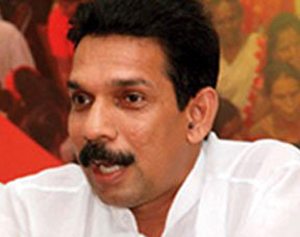 Addressing a protest meet in front of Konaje police station on Sunday Mr Kateel said: “We (Sangh Parivar) are capable of setting Dakshina Kannada district on fire if the police fail to arrest the accused in Karthik Raj murder case.”
Comments
I think kateel had good new year celebration along with mithun rai.... free alcohol was supplied by mithun rai.....what you say guys????? lagta hai daaru kuch bohat hi zyaada hogayi thi raat me....daaru ka nasha utra nahi hoga....isliye agle din subah aake kateel ne apni dil ki baat keh di.....wo kehte hai na daaru ke nashe me aadmi ke muh se sach nikalta hai
Think twice before u speak, is a famous dialogue which clearly suits Nalini Kumari Kateel.. Mike mila tho pagal bhi gaane lagta hey,,
He is not fit for MP.......should be removed.....
Nalin is lying that he was not well. He uttered what bjp and sanghis have planned. Nothing can be hidden for a long time. this is hidden agenda of sanghis to create trouble in karnataka and costal districts in particular. Police should arrest him under goonda act. He should be removed from MP post as he is unfit for this responsible position. Suprement Court should order central Govt to take notice of this dangerous statement from an MP and remove him from this post. In case Nalin is mentally sick, admit him in a mental hospital.
for instance if this was happened from one of our muslim brother, what would be the reaction and action from these sanghis????? even from chaddi police dept......
ha now we came to know that you are bad mental mp of our dk dist. shame on you. you must resign immediately.
New year night \ raathre paad dina onchooru jaasthiathund\" - mallajjappa powad.
Ancha namma modi 15 lakh niklena bank gu paadwe panthijja..... Anchane indula..
Thoo paadare inbe daane lankeda hanumanthena?"
Hahaha...pukkele...
Typical coward sanghi...
The nation wants to know whether you are really not well or the frog inside well?
No need to give clarification just put this man behind bars. Useless MP
Pradeepji, NOT Wenlock, Kankanady Permanently.
Such goondas are fit to be encountered ....
Yes true he is not well... this all unstable people belongs to BJP/RSS, They dont know what they are speaking after all, all are the followers of chaiwala, what we can expect from this RSS goondas...this marle minister even dont know to speak in parliment, he drinks spit twice before he delivers a word
If he is unwell, admit him to Wenlock
This is the fact and sanghis real mentality. Now he may accept his threatening to set fire his own constituency, message is out in public.
Every anti-national will say the same thing when press conference even Thogadia....Shame on you as a MP of our beloved Dakshina Kannada. Did the people elect you to disturb the area & set fire .. Thooo ninna....
Anna kadle baipinanda thoo malpode, E thoo malpu bokk kadle baipundu.....
why didnt police arrest him, he is enticing people to create violence, why no suo motto on him.
such people should be booked under goonda act
Add new comment