No re-evaluation of CBSE Class XII answer scripts from 2017

October 5, 2016

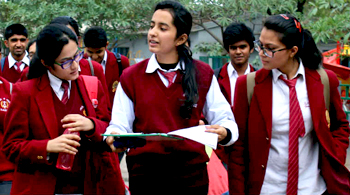
New Delhi, Oct 5: The Central Board of Secondary Education (CBSE) has decided to do away with the option for re-evaluation of answer sheets for the Class XII board examinations from 2017.

cbseexamThe decision was taken in view of the growing number of applications and limited human resource. “We have decided to end the facility from next year,” said CBSE chairman Rajesh Kumar Chaturvedi.

In 2014, the board began offering re-evaluation option in 12 of the total 187 subjects, including physics, chemistry, mathematics and biology.

It also provided students with an option to apply for a copy of their evaluated answer sheets and challenge the evaluation in up to 10 questions by paying Rs 200 for each.

The re-evaluation option was brought in after the introduction of a new format of the joint entrance examination (JEE), wherein it was decided to be conducted in two parts – JEE Main and JEE Advanced – for admissions to premier technical institutes, including the Indian Institutes of Technology (IITs).

As the nationwide test stipulated that only top 20 percentile holders of each board or those who secure over 75% marks would be eligible for admissions to IITs based on their performance in JEE Advanced, there was a surge in demand for re-evaluation.

“While the number of applications is growing each year, we have very limited manpower to process them. Moreover, it is also not justified to allow re-evaluation in just 12 of 187 subjects. The issue was recently discussed at the board's governing council meeting also. Most of the members supported ending the facility,” a CBSE official said.

The board has also decided to hold the next central teachers' eligibility test (CTET) online. Chaturvedi said that a move has also been initiated to bring more reforms in the examination system and the CBSE's affiliation by-laws, required to give more teeth to the board to take action against schools violating the rules. Chaturvedi said the board has also decided to make the process of verification of class XII board certificates completely online from next year. The board is already sending the mark sheets and other details to the national academic depository.

Comments

Zubair Katipalla.
 - 
Wednesday, 5 Oct 2016

If there is no enough man power!! you hire.. and not to play with students life... Of course Students will seek for the high marks and they apply for re-evaluation for their better carrier.. and get merit seat...So, you have to fulfill their request. Do not escape by giving simple reason \NOT ENOUGH HUMAN RESOURCE\""

Add new comment

  • Coastaldigest.com reserves the right to delete or block any comments.
  • Coastaldigset.com is not responsible for its readers’ comments.
  • Comments that are abusive, incendiary or irrelevant are strictly prohibited.
  • Please use a genuine email ID and provide your name to avoid reject.
News Network
July 16,2020

New Delhi, Jul 16: India’s Covid-19 tally on Thursday jumped to 968,876 after the country reported highest-ever single-day spike in coronavirus cases registering 32,695 new infections in the last 24 hours. According to the government data, India’s Covid-19 death toll stands at 24,915 after 606 fresh fatalities were reported in the last 24 hours.

The number of recovered patients in India stands at 612,814. On Wednesday, the government said that a record 20,572 patients recuperated from Covid-19 disease in the last 24 hours (between Tuesday and Wednesday), taking the country’s recovery rate to 63.24 percent.

While the Covid-19 tally runs in lakhs in states like Maharashtra, Delhi and Tamil Nadu, other states have been reporting a surge in coronavirus infections. Karnataka has reported over 47,000 coronavirus cases till date but its active cases are more that of Delhi. It has overtaken Gujarat as the fourth worst-hit state in the country. Gujarat’s Covid-19 tally stands at 44,552.

Here’s taking a look at the Covid-19 situation across worst-affected states:

Maharashtra

The state Covid-19 tally jumped to 275,640 on Thursday. As many as 152,613 people have recovered from coronavirus in Maharashtra while 10,928 have died.

Tamil Nadu

With 151,820 coronavirus cases, Tamil Nadu is the state with second-highest coronavirus cases in the country and has witnessed 2,167 coronavirus fatalities. The number of patients who have recovered from coronavirus in the state stands at 102,310.

Delhi

The national capital is the third worst-hit in India with coronavirus cases jumping to 116,993 on Thursday. As many as 95,699 patients have recovered from Covid-19 in the national capital while 3,487 have succumbed to the infection.

Karnataka

The South Indian state has witnessed 47,253 coronavirus cases till date and is now the fourth worst-affected in the country. While 928 have lost their lives to the deadly contagion in the state. Nearly 18,466 patients have recovered from the disease in Karnataka.

Gujarat

Gujarat has seen Covid-19 cases reach 44,552 on Thursday. The state has seen 31,286 people recover from coronavirus while 2,079 people have died.

Uttar Pradesh

The Covid-19 tally in Uttar Pradesh has jumped to 41,383 while the number of recoveries has touched 25,743. The state’s death toll has crossed 1,000.

Telangana

The state’s Covid-19 tally stands at 39,342 coronavirus cases. While 25,999 people have recovered from the disease, the Covid-19 death toll has jumped to 386 in the state.

Andhra Pradesh

The state has reported 35,451 Covid-19 patients till date. While 18,378 people have recovered from the virus across the state, the death toll stands at 452.

West Bengal

As many as 34,427 people have contracted Covid-19 in West Bengal till date. The state has seen 20,680 recover from coronavirus while 1,000 people have been killed.

Rajasthan

The state has reported 26,437 Covid-19 cases till date. Covid-19 death toll in Rajasthan stands at 530 while 19,502 patients have recovered.

Comments

Add new comment

  • Coastaldigest.com reserves the right to delete or block any comments.
  • Coastaldigset.com is not responsible for its readers’ comments.
  • Comments that are abusive, incendiary or irrelevant are strictly prohibited.
  • Please use a genuine email ID and provide your name to avoid reject.
News Network
July 29,2020

Bengaluru, Jul 29: The Karnataka High Court’s division bench of Chief Justice Abhay Oka and Justice H P Sandesh today rejected an application that wanted Amulya Leona’s case to be transferred from Karnataka Police to the National Investigation Agency (NIA).

The bench, while observing that extraordinary jurisdiction can’t be exercised for transferring the case to the NIA, asked “What is so special that investigation should be transferred to NIA?”

The court, in its previous hearing, had questioned the maintainability of the petition seeking transfer of the sedition case against Leona to the NIA.

According to the petitioner, advocate Pavana Chandra Shetty, the case is a serious matter against national integration and unity and has not been investigated properly by the police. The state police also failed to file the chargesheet within 90 days, he said, and also asked for cancellation of her bail.

The bench asked the petitioner as to how a bail, already granted to a person, can be cancelled. “Is it not the indefeasible right of the accused to be released on bail if chargesheet is not filed within stipulated time? How can you make a prayer for cancellation of bail?”  the Court asked.

The counsel for the petitioner also stated that in cases of a cognizable offence, when the chargesheet is purposely not filed within the stipulated time, the matter will have to transferred to the appropriate authority.

The court responded to his contention by asking him how could the court override law and cancel the bail. “Where is the question of cancellation of bail? Can we override the law and say that bail should be cancelled?” said the bench.

Advocate Vishal Raghu had filed the petition for transfer of Leona’s case, who was accused of raising pro-Pakistan slogans at an anti-CAA rally on February 20 at Freedom Park. The advocate had blamed the probe team for not filing a chargesheet on time and has asked the state government to approach the higher court against bail granted to Leona.

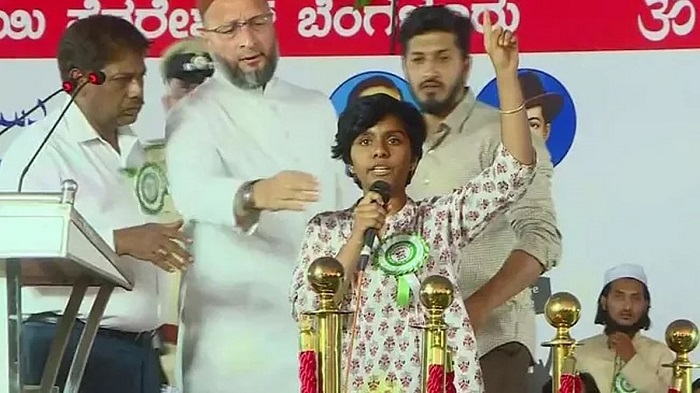
Bengaluru student Amulya Leona was charged with sedition for her actions in the presence of All India Majlis-e-Ittehad-ul-Muslimeen chief Asaduddin Owaisi. She was arrested by the Bengaluru police for allegedly shouting ‘Pakistan Zindabad’ slogans at an anti- CAA Protest in Bengaluru in February this year. On June 11, she was granted conditional bail by the Bengaluru civil court.

Her bail plea was earlier rejected by a Bengaluru court, after she had spent a three-month period in jail, stating that she may abscond if she is released. The sessions judge Vidhyadhar Shirahatti had also stated that if the petitioner is granted bail, she may abscond and may involve in similar offence which affects peace at large and hence her petition is liable to be rejected. The court had also noted that Amulya Leona is an influential person who may threaten and influence the witness and hamper the case in case of the prosecution and will abscond if released on bail.

Comments

Add new comment

  • Coastaldigest.com reserves the right to delete or block any comments.
  • Coastaldigset.com is not responsible for its readers’ comments.
  • Comments that are abusive, incendiary or irrelevant are strictly prohibited.
  • Please use a genuine email ID and provide your name to avoid reject.
Ram Puniyani
February 10,2020

Noam Chomsky is one of the leading peace workers in the world. In the wake of America’s attack on Vietnam, he brought out his classic formulation, ‘manufacturing consent’. The phrase explains the state manipulating public opinion to have the public approve of it policies—in this case, the attack of the American state on Vietnam, which was then struggling to free itself from French colonial rule.

In India, we are witness to manufactured hate against religious minorities. This hatred serves to enhance polarisation in society, which undermines India’s democracy and Constitution and promotes support for a Hindu nation. Hate is being manufactured through multiple mechanisms. For example, it manifests in violence against religious minorities. Some recent ghastly expressions of this manufactured hate was the massive communal violence witnessed in Mumbai (1992-93), Gujarat (2002), Kandhamal (2008) and Muzaffarnagar (2013). Its other manifestation was in the form of lynching of those accused of having killed a cow or consumed beef. A parallel phenomenon is the brutal flogging, often to death, of Dalits who deal with animal carcasses or leather.

Yet another form of this was seen when Shambhulal Regar, indoctrinated by the propaganda of Hindu nationalists, burned alive Afrazul Khan and shot the video of the heinous act. For his brutality, he was praised by many. Regar was incited into the act by the propaganda around love jihad. Lately, we have the same phenomenon of manufactured hate taking on even more dastardly proportions as youth related to Hindu nationalist organisations have been caught using pistols, while police authorities look on.

Anurag Thakur, a BJP minster in the central government recently incited a crowd in Delhi to complete his chant of what should happen to ‘traitors of the country...” with a “they should be shot”. Just two days later, a youth brought a pistol to the site of a protest at Jamia Millia Islamia university and shouted “take Azaadi!” and fired it. One bullet hit a student of Jamia. This happened on 30 January, the day Nathuram Godse had shot Mahatma Gandhi in 1948. A few days later, another youth fired near the site of protests against the CAA and NRC at Shaheen Bagh. Soon after, he said that in India, “only Hindus will rule”.

What is very obvious is that the shootings by those associated with Hindu nationalist organisations are the culmination of a long campaign of spreading hate against religious minorities in India in general and against Muslims in particular. The present phase is the outcome of a long and sustained hate campaign, the beginning of which lies in nationalism in the name of religion; Muslim nationalism and Hindu nationalism. This sectarian nationalism picked up the communal view of history and the communal historiography which the British introduced in order to pursue their ‘divide and rule’ policy.

In India what became part of “social common sense” was that Muslim kings had destroyed Hindu temples, that Islam was spread by force, and that it is a foreign religion, and so on. Campaigns, such as the one for a temple dedicated to the Hindu god Rama to be built at the site where the Babri masjid once stood, further deepened the idea of a Muslim as a “temple-destroyer”. Aurangzeb, Tipu Sultan and other Muslim kings were tarnished as the ones who spread Islam by force in the subcontinent. The tragic Partition, which was primarily due to British policies, and was well-supported by communal streams also, was entirely attributed to Muslims. The Kashmir conflict, which is the outcome of regional, ethnic and other historical issues, coupled with the American policy of supporting Pakistan’s ambitions of regional hegemony, (which also fostered the birth of Al-Qaeda), was also attributed to the Muslims.

With recurring incidents of communal violence, these falsehoods went on going deeper into the social thinking. Violence itself led to ghettoisation of Muslims and further broke inter-community social bonds. On the one hand, a ghettoised community is cut off from others and on the other hand the victims come to be presented as culprits. The percolation of this hate through word-of-mouth propaganda, media and re-writing of school curricula, had a strong impact on social attitudes towards the minorities.

In the last couple of decades, the process of manufacturing hate has been intensified by the social media platforms which are being cleverly used by the communal forces. Swati Chaturvedi’s book, I Am a Troll: Inside the Secret World of the BJP’s Digital Army, tells us how the BJP used social media to spread hate. Whatapp University became the source of understanding for large sections of society and hate for the ‘Other’, went up by leaps and bounds. To add on to this process, the phenomenon of fake news was shrewdly deployed to intensify divisiveness.

Currently, the Shaheen Bagh movement is a big uniting force for the country; but it is being demonised as a gathering of ‘anti-nationals’. Another BJP leader has said that these protesters will indulge in crimes like rape. This has intensified the prevalent hate.

While there is a general dominance of hate, the likes of Shambhulal Regar and the Jamia shooter do get taken in by the incitement and act out the violence that is constantly hinted at. The deeper issue involved is the prevalence of hate, misconceptions and biases, which have become the part of social thinking.

These misconceptions are undoing the amity between different religious communities which was built during the freedom movement. They are undoing the fraternity which emerged with the process of India as a nation in the making. The processes which brought these communities together broadly drew from Gandhi, Bhagat Singh and Ambedkar. It is these values which need to be rooted again in the society. The communal forces have resorted to false propaganda against the minorities, and that needs to be undone with sincerity.

Combating those foundational misconceptions which create hatred is a massive task which needs to be taken up by the social organisations and political parties which have faith in the Indian Constitution and values of freedom movement. It needs to be done right away as a priority issue in with a focus on cultivating Indian fraternity yet again.


Comments

Add new comment

  • Coastaldigest.com reserves the right to delete or block any comments.
  • Coastaldigset.com is not responsible for its readers’ comments.
  • Comments that are abusive, incendiary or irrelevant are strictly prohibited.
  • Please use a genuine email ID and provide your name to avoid reject.