Normal life hit across Karnataka as transport unions strike work

July 25, 2016

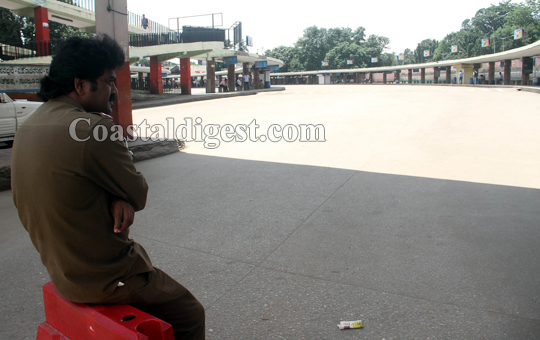
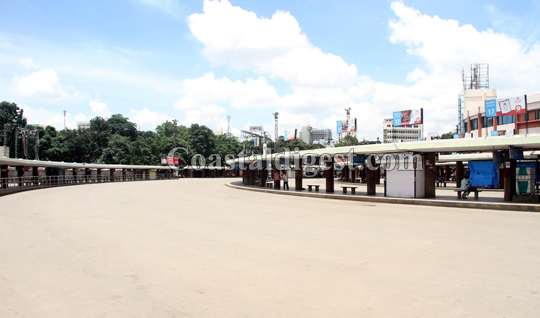
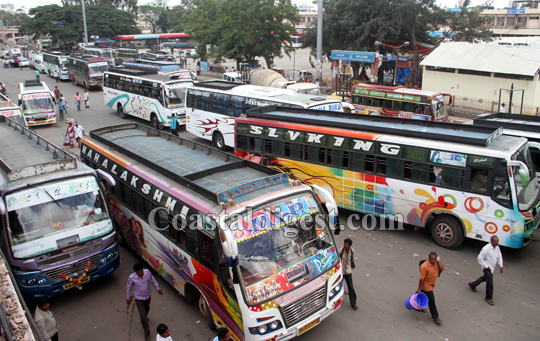
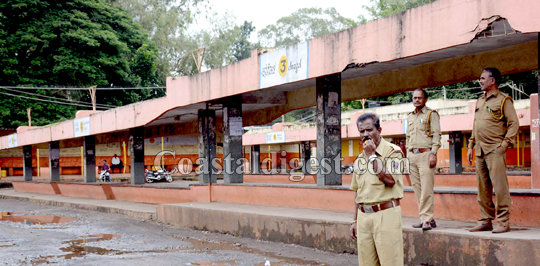
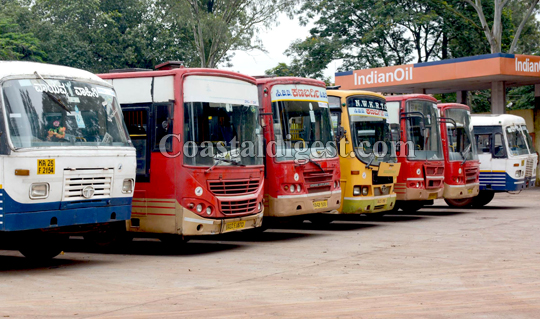
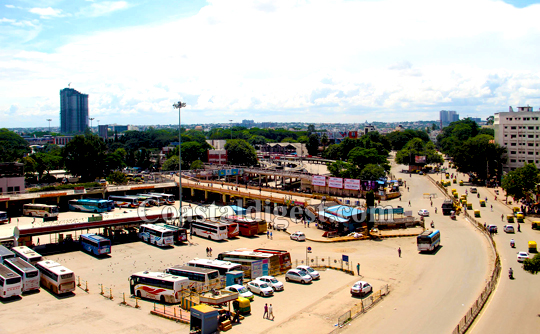
Bengaluru, Jul 25: Normal life was affected on Monday across Karnataka, including the IT capital here, with over one lakh employees of four state road transport corporations commencing an indefinite strike, seeking wage hike.

ksrtcbundh 1

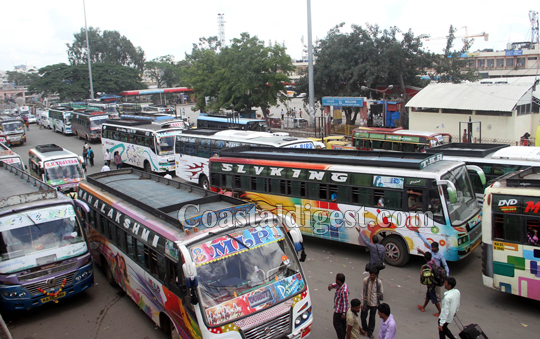
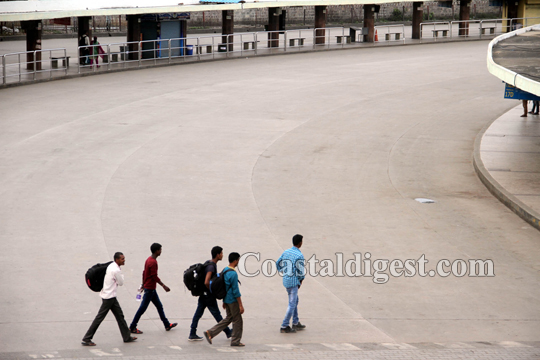
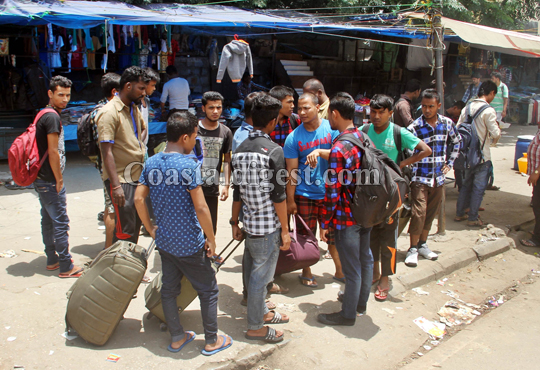
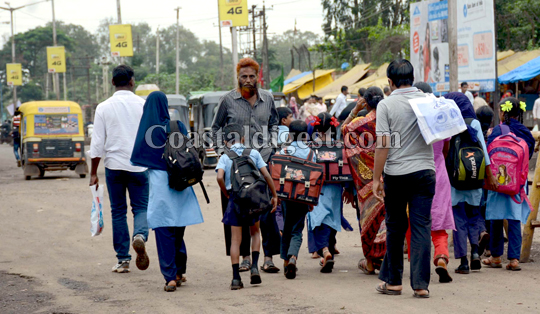
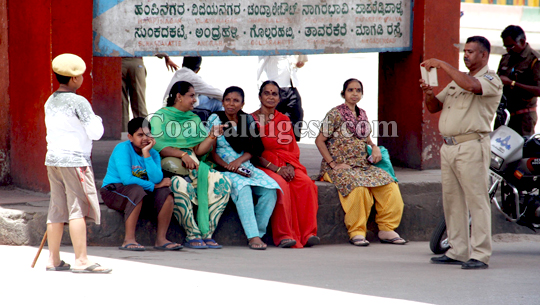
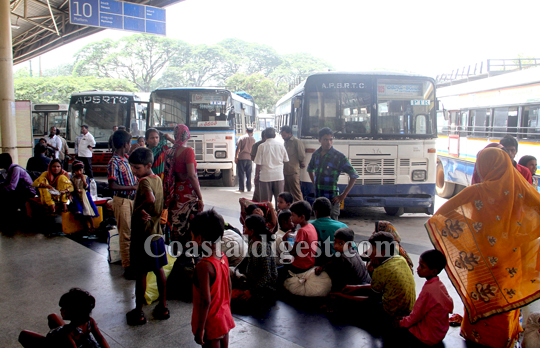
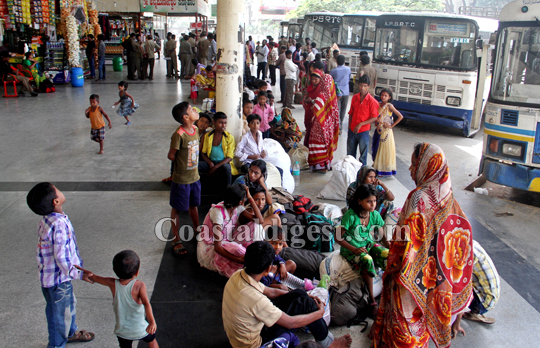
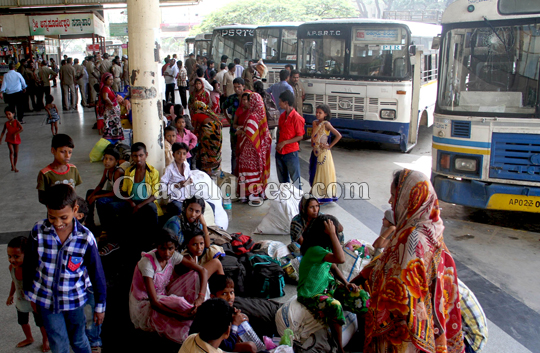
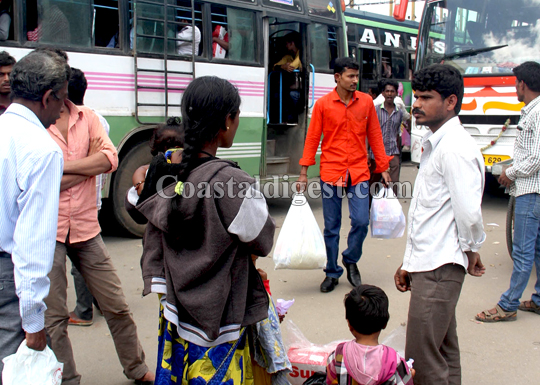
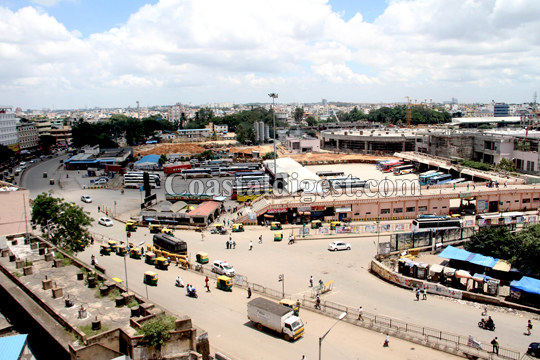
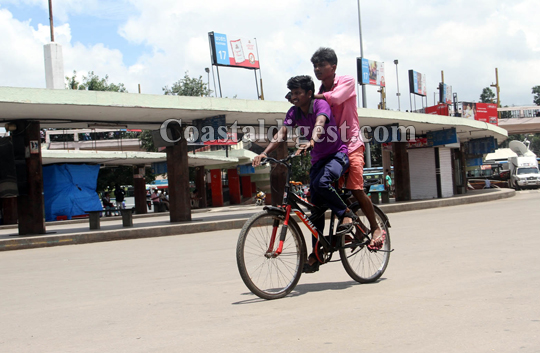
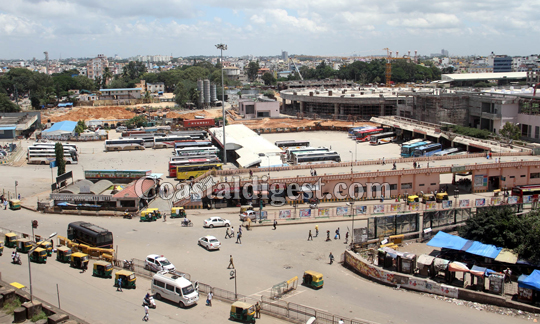
As the employees struck work since last midnight, office-goers waiting at bus stops was a common sight across the city, while thousands who had come down to Bengaluru from different parts of the state were seen stranded at Kempegowda bus stand, the city's main bus terminal.

Commuters had started facing trouble since yesterday evening with drivers and conductors not turning up for work.

Similar reports have emerged from different parts of the state. Authorities in several districts have declared a holiday in schools and colleges.

More than one lakh employees of state transport corporations have gone on strike with about 41 demands, including a 35 per cent wage hike, while state government has offered 10 per cent increase.

Several rounds of reconciliatory meetings held between the management of state transport corporations and the unions, even at the level of transport minister Ramalinga Reddy, had failed with both sides sticking to their stand.

"We are still open for discussion with the unions. They have to come for discussion with an open mind. They will also have to understand the financial situation and reconsider their demand of 35 per cent wage hike. We are ready for discussion at the chief ministerial level," Reddy had said.

KSRTC Staff and Workers Federation general secretary and All India Trade Union Congress leader H V Anantha Subbarao said, "The unions are ready for a meeting with Chief Minister. Let him call a meeting. We feel sorry that public are suffering, but our concerns should also be addressed."

Meanwhile, stone pelting on buses was reported from different parts of the state like Hassan, Bengaluru, Ramanagara, Belagavi, Shivamogga, Koppal and Chikkamagaluru.

Transport officials said alternative arrangements are being made by giving temporary contract carriage to private operators during the strike.

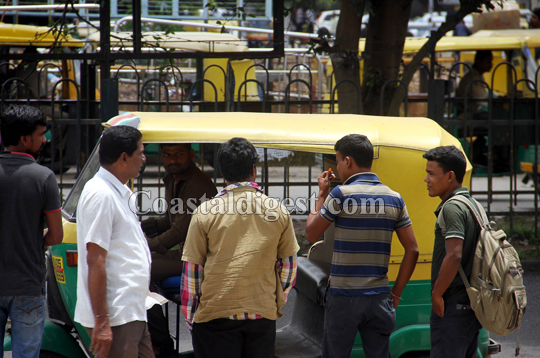
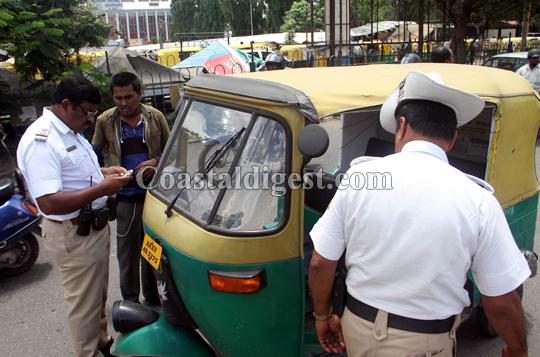
In the wake of the strike, public were depending on private and own vehicles for commuting even as several commuters complained that private transporters were overcharging.

Transport officials said they have begun crackdown of private transporters who are overcharging.

ksrtcbundh 2

ksrtcbundh 3

ksrtcbundh 4

ksrtcbundh 5

ksrtcbundh 6

ksrtcbundh 7

ksrtcbundh 8

ksrtcbundh 9

ksrtcbundh 10

ksrtcbundh 11

ksrtcbundh 12

ksrtcbundh 13

ksrtcbundh 14

ksrtcbundh 15

ksrtcbundh 16

ksrtcbundh 17

ksrtcbundh 18

ksrtcbundh 19

ksrtcbundh 20

ksrtcbundh 21

ksrtcbundh 22

ksrtcbundh 23

ksrtcbundh 24

ksrtcbundh 25

ksrtcbundh 26

ksrtcbundh 27

ksrtcbundh 28

Comments

Add new comment

  • Coastaldigest.com reserves the right to delete or block any comments.
  • Coastaldigset.com is not responsible for its readers’ comments.
  • Comments that are abusive, incendiary or irrelevant are strictly prohibited.
  • Please use a genuine email ID and provide your name to avoid reject.
News Network
February 26,2020

Bengaluru, Feb 26: The Karnataka Pre-University Board issued a five-page booklet on Coronavirus ahead of the forthcoming examination to spread awareness among the students, the Board said on Wednesday.

In a statement, the Board said that the booklet contains details on symptoms of the disease, measures to be taken in case of an outbreak and other information. The Board has directed the Directors in all districts to disseminate the information to students through college principals.

The PUC examination begins from March 4 and continues till March 23.

Comments

Add new comment

  • Coastaldigest.com reserves the right to delete or block any comments.
  • Coastaldigset.com is not responsible for its readers’ comments.
  • Comments that are abusive, incendiary or irrelevant are strictly prohibited.
  • Please use a genuine email ID and provide your name to avoid reject.
Ram Puniyani
March 14,2020

In the wake of Citizenship Amendment Act (CAA) UN High Commissioner, Michele Bachelet, has filed an intervention in the Supreme Court petition challenging the constitutionality of the Citizenship Amendment Act, as she is critical of CAA. Responding to her, India’s Foreign Minister S. Jai Shanker strongly rebutted her criticism, saying that the body (UNHCR) has been wrong and is blind to the problem of cross border terrorism. The issue on hand is the possibility of scores of people, mainly Muslims, being declared as stateless. The problem at hand is the massive exercise of going through the responses/documents from over 120 crore of Indian population and screening documents, which as seen in Assam, yield result which are far from truthful or necessary.

The issue of CAA has been extensively debated and despite heavy critique of the same by large number of groups and despite the biggest mass opposition ever to any move in Independent India, the Government is determined on going ahead with an exercise which is reminiscent of the dreaded regimes which are sectarian and heartless to its citizens, which have indulged in extinction of large mass of people on grounds of citizenship, race etc. The Foreign minister’s assertion is that it is a matter internal to India, where India’s sovereignty is all that matters! As far as sovereignty is concerned we should be clear that in current times any sovereign power has to consider the need to uphold the citizenship as per the principle of non-discrimination which is stipulated in Art.26 of the International Covenant on Civil and Political (ICCPR) rights.

Can such policies, which affect large number of people and are likely to affect their citizenship be purely regarded as ‘internal’? With the World turning into a global village, some global norms have been formulated during last few decades. The norms relate to Human rights and migrations have been codified. India is also signatory to many such covenants in including ICCPR, which deals with the norms for dealing with refugees from other countries. One is not talking of Chicago speech of Swami Vivekanand, which said that India’s greatness has been in giving shelter to people from different parts of the World; one is also not talking of the Tattariaya Upanishad’s ‘Atithi Devovhav’ or ‘Vasudhaiva Kutumbkam’ from Mahaupanishad today.

What are being talked about are the values and opinions of organizations which want to ensure to preserve of Human rights of all people Worldwide. In this matter India is calling United Nations body as ‘foreign party’; having no locus standi in the case as it pertains to India’s sovereignty. The truth is that since various countries are signatories to UN covenants, UN bodies have been monitoring the moves of different states and intervening at legal level as Amicus (Friend of the Court) to the courts in different countries and different global bodies. Just to mention some of these, UN and High Commissioner for Human Rights has often submitted amicus briefs in different judicial platforms. Some examples are their intervention in US Supreme Court, European Court of Human Rights, International Criminal Court, and the Inter-American Court of Human Rights. These are meant to help the Courts in areas where UN bodies have expertise.

 Expertise on this has been jointly formulated by various nations. These interventions also remind the nations as to what global norms have been evolved and what are the obligations of individual states to the values which have evolved over a period of time. Arvind Narrain draws our attention to the fact that, “commission has intervened in the European Court of Human Rights in cases involving Spain and Italy to underscore the principle of non-refoulement, which bars compulsory expulsion of illegal migrants… Similarly, the UN has intervened in the International Criminal Court in a case against the Central African Republic to explicate on the international jurisprudence on rape as a war crime.”

From time to time organizations like Amnesty International and Human Rights Watch have been monitoring the status of Human rights of different countries. This puts those countries in uncomfortable situation and is not welcome by those establishments. How should this contradiction between ‘internal matter’, ‘sovereignty’ and the norms for Human rights be resolved? This is a tough question at the time when the freedom indices and democratic ethos are sliding downwards all over the world. In India too has slid down on the scale of these norms.

In India we can look at the intervention of UN body from the angle of equality and non discrimination. Democratic spirit should encourage us to have a rethink on the matters which have been decided by the state. In the face of the greatest mass movement of Shaheen bagh, the state does need to look inwards and give a thought to international morality, the spirit of global family to state the least.

The popular perception is that when Christians were being persecuted in Kandhmal the global Christian community’s voice was not strong enough. Currently in the face of Delhi carnage many a Muslim majority countries have spoken. While Mr. Modi claims that his good relations with Muslim countries are a matter of heartburn to the parties like Congress, he needs to relook at his self gloating. Currently Iran, Malaysia, Indonesia and many Muslim majority countries have spoken against what Modi regime is unleashing in India. Bangladesh, our neighbor, has also seen various protests against the plight of Muslims in India. More than the ‘internal matter’ etc. what needs to be thought out is the moral aspect of the whole issue. We pride ourselves in treading the path of morality. What does that say in present context when while large section of local media is servile to the state, section of global media has strongly brought forward what is happening to minorities in India.   

The hope is that Indian Government wakes up to its International obligations, to the worsening of India’s image in the World due to CAA and the horrific violence witnessed in Delhi.


Comments

Add new comment

  • Coastaldigest.com reserves the right to delete or block any comments.
  • Coastaldigset.com is not responsible for its readers’ comments.
  • Comments that are abusive, incendiary or irrelevant are strictly prohibited.
  • Please use a genuine email ID and provide your name to avoid reject.
News Network
January 21,2020

Bengaluru, Jan 21: A private hospital in Bengaluru, the capital of Karnataka, on Tuesday claimed that it has successfully performed a live liver transplant on a Jehovah's Witness from Nigeria, by not using blood or blood products, in order to protect the patient's religious beliefs.

It is said that Jehovah's Witnesses are followers of a Christian faith that prohibits the use of blood or blood products during their treatment. Gehojadak (37), a Jehovah's Witness follower, had developed decompensated liver disease and visited more than three countries seeking treatment over the last four years but was turned away by most doctors due to the highly risky nature of surgery, Aster CMI Hospital said.

The surgery was challenging compared to a normal liver transplant because in order to protect the patient's religious beliefs, the medical team could not use blood or blood products (Fresh frozen plasma, Cryoprecipitate, Platelets etc), it said in a release, adding that very few such surgeries have been successfully conducted worldwide.

The patient's brother was the donor, the hospital said, adding, without a liver transplant, Gehojadak's chances of survival were less than 10 per cent over the next two years. A team of liver specialists from the Hospital thoroughly reviewed the patient's medical history before recommending a bloodless liver transplant and charted out a feasible pathway to make the surgery a success.

"This transplant was especially challenging as we did not have the safety net (of using blood) even if the patient's life was at risk due to their advance directive. We have performed other non-transplant liver surgeries in Jehovah's Witnesses and this gave us the confidence to take on Gehojadak's transplant," Dr Rajiv Lochan, Consultant Liver Transplant Surgeon, said.

The critical surgery took a 12-hour period to complete where two teams of specialists with close to 25 doctors including anaesthetists, intensivists worked in absolute sync with each other and Gehojadak finally received a life-saving liver transplant, the Hospital said. In a period of two weeks, the patient and his brother were fit enough to go home and were discharged from the hospital.

"Even if their haemoglobin levels dropped to life-threatening levels, the patients were clear that they would not accept a blood transfusion. Keeping the limitations in mind, the most effective treatment path was planned, and we spent close to two months preparing the patients for surgery," Arun V, Consultant Anesthesiologist said. The hospital arranged customised artificial products like synthetic drug molecules, to conduct a bloodless liver transplant, he added.

Comments

Add new comment

  • Coastaldigest.com reserves the right to delete or block any comments.
  • Coastaldigset.com is not responsible for its readers’ comments.
  • Comments that are abusive, incendiary or irrelevant are strictly prohibited.
  • Please use a genuine email ID and provide your name to avoid reject.