Normal life hit across Karnataka as transport unions strike work

July 25, 2016

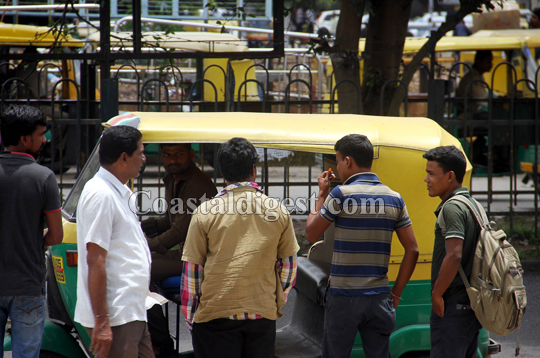
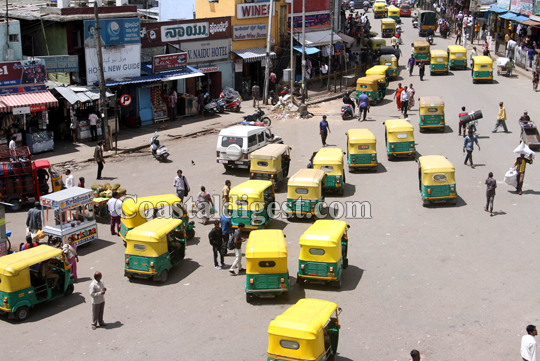
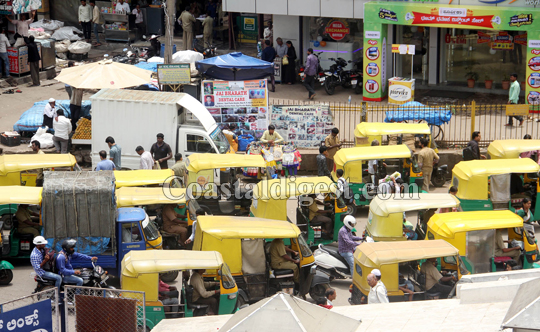
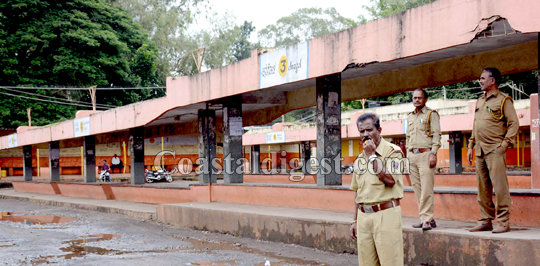
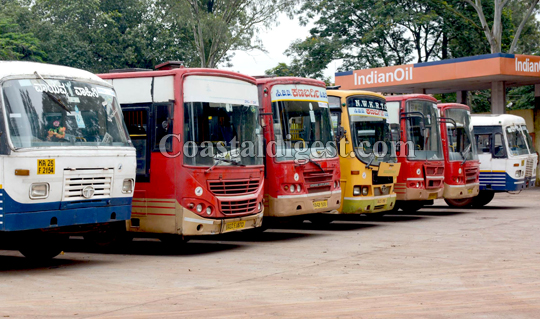
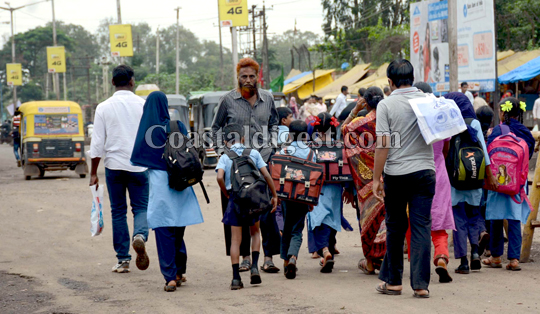
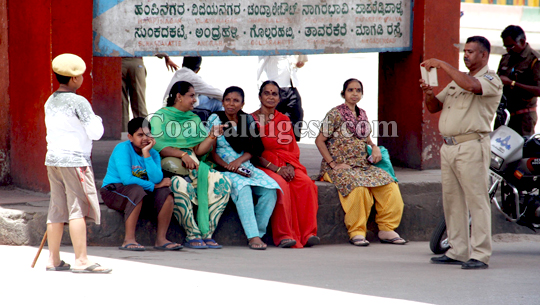
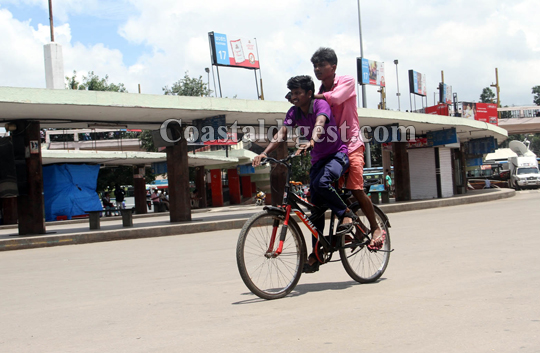
Bengaluru, Jul 25: Normal life was affected on Monday across Karnataka, including the IT capital here, with over one lakh employees of four state road transport corporations commencing an indefinite strike, seeking wage hike.
ksrtcbundh 1

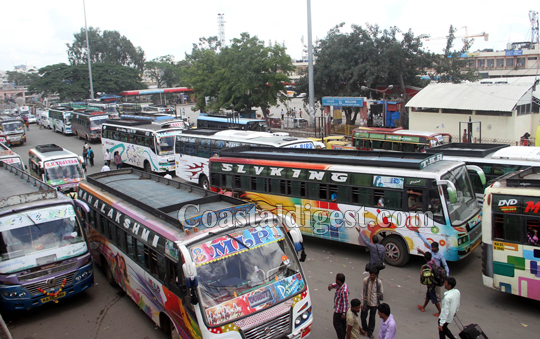
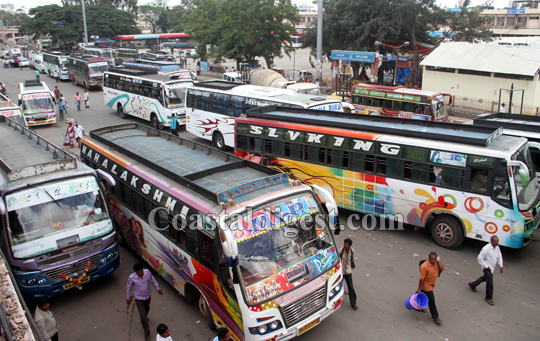
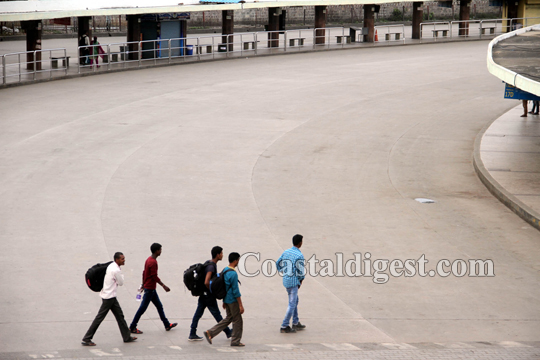
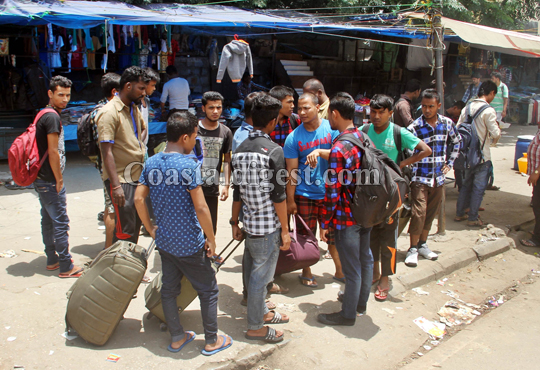
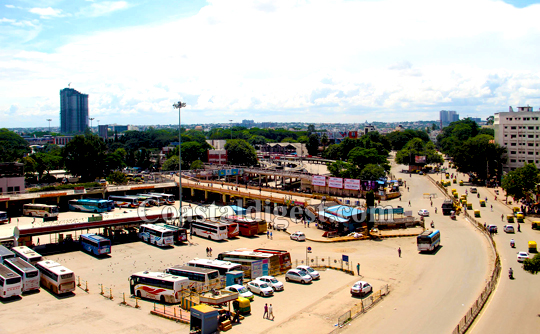
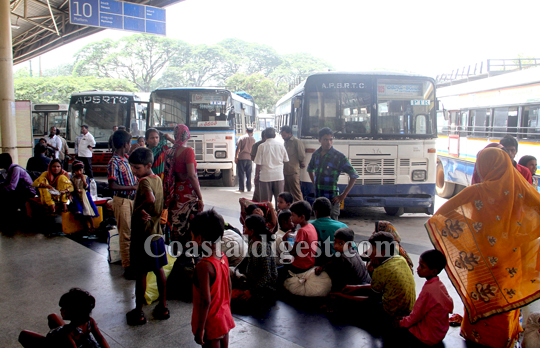
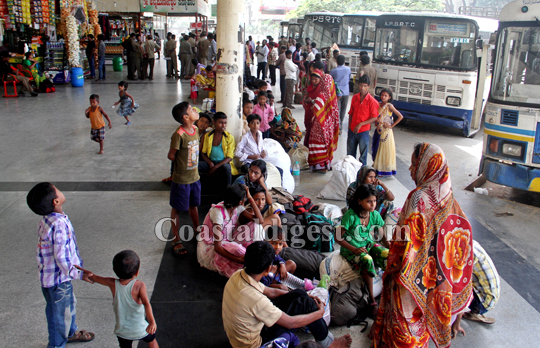
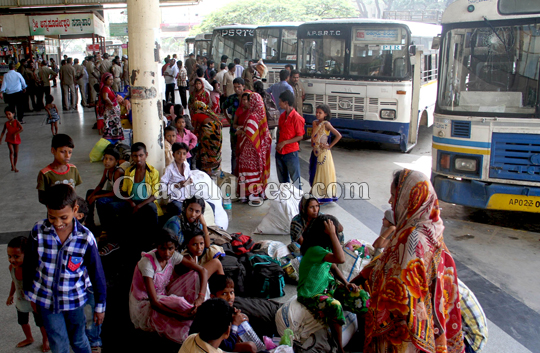
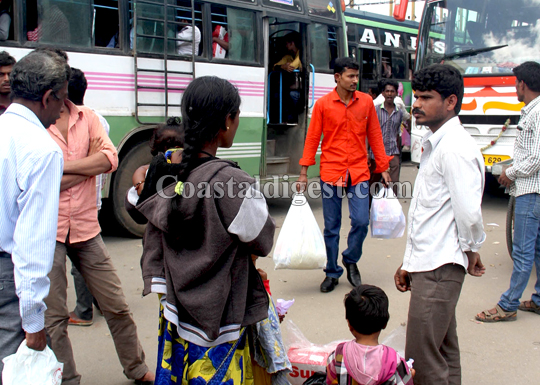
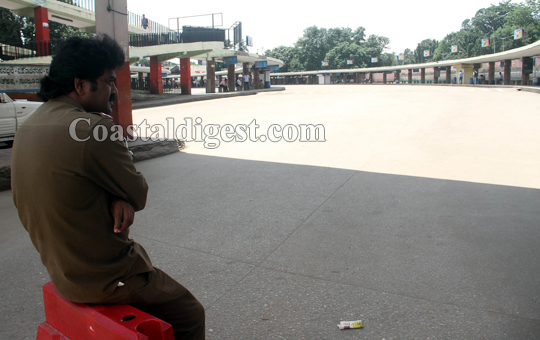
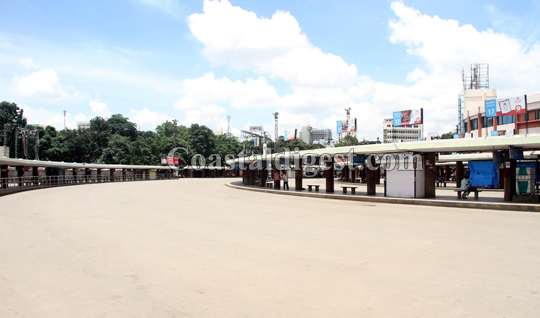
As the employees struck work since last midnight, office-goers waiting at bus stops was a common sight across the city, while thousands who had come down to Bengaluru from different parts of the state were seen stranded at Kempegowda bus stand, the city's main bus terminal.

Commuters had started facing trouble since yesterday evening with drivers and conductors not turning up for work.

Similar reports have emerged from different parts of the state. Authorities in several districts have declared a holiday in schools and colleges.

More than one lakh employees of state transport corporations have gone on strike with about 41 demands, including a 35 per cent wage hike, while state government has offered 10 per cent increase.

Several rounds of reconciliatory meetings held between the management of state transport corporations and the unions, even at the level of transport minister Ramalinga Reddy, had failed with both sides sticking to their stand.

"We are still open for discussion with the unions. They have to come for discussion with an open mind. They will also have to understand the financial situation and reconsider their demand of 35 per cent wage hike. We are ready for discussion at the chief ministerial level," Reddy had said.

KSRTC Staff and Workers Federation general secretary and All India Trade Union Congress leader H V Anantha Subbarao said, "The unions are ready for a meeting with Chief Minister. Let him call a meeting. We feel sorry that public are suffering, but our concerns should also be addressed."

Meanwhile, stone pelting on buses was reported from different parts of the state like Hassan, Bengaluru, Ramanagara, Belagavi, Shivamogga, Koppal and Chikkamagaluru.

Transport officials said alternative arrangements are being made by giving temporary contract carriage to private operators during the strike.

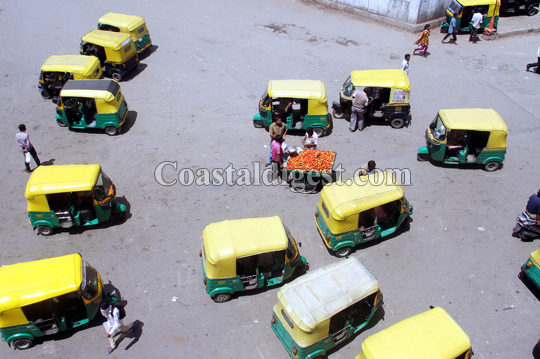
In the wake of the strike, public were depending on private and own vehicles for commuting even as several commuters complained that private transporters were overcharging.

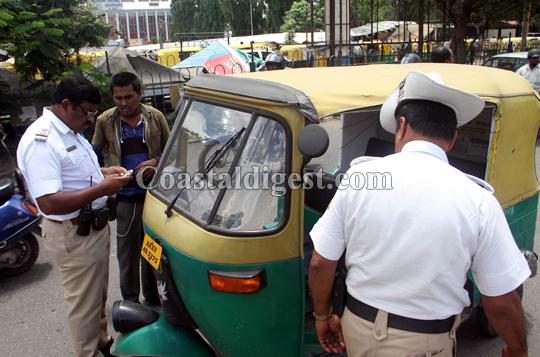
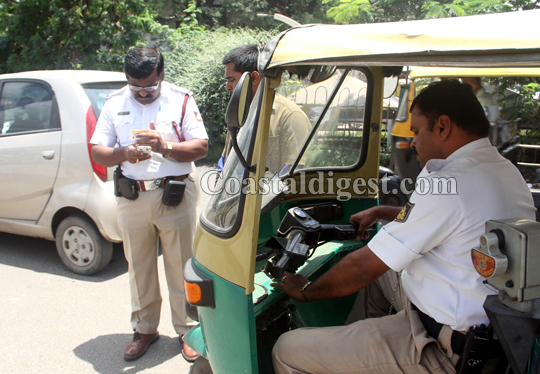
Transport officials said they have begun crackdown of private transporters who are overcharging.
ksrtcbundh 2

ksrtcbundh 3

ksrtcbundh 4

ksrtcbundh 5

ksrtcbundh 6

ksrtcbundh 7

ksrtcbundh 8

ksrtcbundh 9

ksrtcbundh 10

ksrtcbundh 11

ksrtcbundh 12

ksrtcbundh 13

ksrtcbundh 14

ksrtcbundh 15

ksrtcbundh 16

ksrtcbundh 17

ksrtcbundh 18

ksrtcbundh 19

ksrtcbundh 20

ksrtcbundh 21

ksrtcbundh 22

ksrtcbundh 23

ksrtcbundh 24

ksrtcbundh 25

ksrtcbundh 26

ksrtcbundh 27

ksrtcbundh 28

Comments

Add new comment

  • Coastaldigest.com reserves the right to delete or block any comments.
  • Coastaldigset.com is not responsible for its readers’ comments.
  • Comments that are abusive, incendiary or irrelevant are strictly prohibited.
  • Please use a genuine email ID and provide your name to avoid reject.
Agencies
May 8,2020

Washington D.C., May 8: The prime time for brain development in a child's life is the first year, where the infant spends most of the time asleep. It is the time when neural connections form and sensory memories are encoded.

However, when sleep is disrupted, as occurs more often among children with autism, brain development may be affected, too.

New research led by the University of Washington finds that sleep problems in a baby's first 12 months may not only precede an autism diagnosis but also may be associated with altered growth trajectory in a key part of the brain, the hippocampus.

The study, which was published in the American Journal of Psychiatry, researchers report that in a sample of more than 400 taken of 6- to 12-month-old infants, those who were later diagnosed with autism were more likely to have had difficulty falling asleep.

It also states that this sleep difficulty was associated with altered growth trajectories in the hippocampus.

"The hippocampus is critical for learning and memory, and changes in the size of the hippocampus have been associated with poor sleep in adults and older children.

As many as 80 per cent of the children with autism spectrum disorder have sleep problems," said Annette Estes, director of the UW Autism Center and senior author of the study.

"In our clinical experience, parents have a lot of concerns about their children's sleep, and in our work on early autism intervention, we observed that sleep problems were holding children and families back," added Estes, who is also a UW professor of speech and hearing sciences.

"It could be that altered sleep is part-and-parcel of autism for some children. One clue is that behavioural interventions to improve sleep don't work for all children with autism, even when their parents are doing everything just right. This suggests that there may be a biological component to sleep problems for some children with autism," said Estes.

To consider links among sleep, brain development, and autism, researchers at the IBIS Network looked at MRI scans of 432 infants, surveyed parents about sleep patterns, and measured cognitive functioning using a standardized assessment.

At the outset of the study, infants were classified according to their risk for developing autism: Those who were at higher risk of developing autism -- about two-thirds of the study sample -- had an older sibling who had already been diagnosed.

Infant siblings of children with autism have a 20 per cent chance of developing autism spectrum disorder -- a much higher risk than children in the general population.

In the current study, 127 of the 432 infants were identified as "low risk" at the time the MRI scans were taken because they had no family history of autism.

They later evaluated all the participants at 24 months of age to determine whether they had developed autism. Of the roughly 300 children originally considered "high familial risk," 71 were diagnosed with autism spectrum disorder at that age.

Problems with sleep were more common among the infants later diagnosed with an autism spectrum disorder, as were larger hippocampi. No other subcortical brain structures were affected, including the amygdala, which is responsible for certain emotions and aspects of memory, or the thalamus, a signal transmitter from the spinal cord to the cerebral cortex.

The authors note that while parents reported more sleep difficulties among infants who developed autism compared to those who did not, the differences were very subtle and only observed when looking at group averages across hundreds of infants.

Sleep patterns in the first years of life change rapidly as infants transition from sleeping around the clock to a more adult-like sleep/wake cycle. Until further research is completed, Estes said, it is not possible to interpret challenges with sleep as an early sign of increased risk for autism.

Comments

Add new comment

  • Coastaldigest.com reserves the right to delete or block any comments.
  • Coastaldigset.com is not responsible for its readers’ comments.
  • Comments that are abusive, incendiary or irrelevant are strictly prohibited.
  • Please use a genuine email ID and provide your name to avoid reject.
News Network
May 6,2020

Dubai, May 6: The Indian nationals cleared by the UAE health authorities and found to be asymptomatic will only be allowed to fly back home in one of India's biggest ever repatriation exercises, the Indian Embassy in Abu Dhabi has said ahead of the first set of flights on Thursday.

On Monday, the Indian government announced plans to begin a phased repatriation of its citizens stranded abroad from May 7. Air India will operate 64 flights from May 7 to May 13 to bring back around 15,000 Indian nationals stranded abroad amid the COVID-19-induced lockdown, India's Civil Aviation Minister Hardeep Singh Puri said on Tuesday.

The first two special flights that will operate from Thursday to evacuate Indians stranded in the UAE due to the coronavirus pandemic will begin with applicants from Kerala, who formed the majority of the expatriates who have registered to be repatriated from here, Indian Ambassador to the UAE Pavan Kapoor has said.

"All departing passengers will have to undergo medical screening and IGM/IGG test at the departure airport and only those cleared by the UAE health authorities and found to be asymptomatic will be allowed to board the plane,” the Indian Embassy in Abu Dhabi said on Tuesday.

According to the embassy, all passengers will be required to sign an undertaking to undergo compulsory quarantine at the destination of arrival and bear the cost of the same.

“Each passenger, at the time of boarding would be handed over a safety kit containing 2 three-layered face masks, 2 pairs of gloves and pouches/small bottles of hand sanitizers. While on board the flight, the health protocol of the Ministry of Civil Aviation of India will be strictly followed,” said the embassy.

The passenger lists for the two flights on May 7 have been finalised by the Embassy / Consulate and sent to Air India Express for issue of tickets.

The Embassy / Consulate will continue conveying the details of further special flights as and when they are announced by the Government of India, over the next few days.

Less than 2,000 Indians wishing to return home from the UAE will be flown to six Indian states in the first week of India’s biggest ever repatriation exercise named Vande Bharat Mission—sans social distancing and COVID-19 tests, the Gulf News reported.

Only those cleared by the UAE health authorities and found to be asymptomatic will be allowed to board the plane.

The short-listed applicants, who were contacted by the Indian missions on Tuesday to purchase tickets for the first two flights to Kerala on Thursday, told the Gulf News that the tickets are priced around Dh 725 to Dh 750 (over Rs 15,000).

Sharjah resident Rasheed Thayyil said his 70-year-old mother Nepheeza Thottungal, who came on a visit to the UAE in February, received an email from the Indian Consulate in Dubai which quoted an airfare of around Dh725 (approx Rs 15,000), the report said.

Another applicant from Abu Dhabi Ambily Babu said she purchased a ticket at Dh 750 from Air India Express for her Abu Dhabi-Kochi flight scheduled to fly on Thursday evening, it said.

Air India Express which is set to operate the first two flights to Kerala on Thursday will operate its Boeing 737-800 aircraft, with a seating capacity of 186 economy class seats, the report added.

With nine seats reserved for isolation, only 177 passengers would be flown, it said.

The Indian expatriate community of approximately 3.42 million is reportedly the largest ethnic community in the UAE constituting roughly about 30 per cent of the country's population, according to information available on the Indian Embassy website.

Comments

Add new comment

  • Coastaldigest.com reserves the right to delete or block any comments.
  • Coastaldigset.com is not responsible for its readers’ comments.
  • Comments that are abusive, incendiary or irrelevant are strictly prohibited.
  • Please use a genuine email ID and provide your name to avoid reject.
News Network
June 2,2020

Bengaluru, Jun 2:  With easing of COVID-19 lockdown curbs, the Karnataka excise department has accorded permission for fresh brewing or production of beer and to sell it in microbreweries as takeaways.

"Permission is hereby accorded to microbreweries for fresh brewing/production and sale of beer as takeaway in glass, ceramic or stainless steel container (up to 2 litre) till 30-06-2020, or until further orders, whichever is earlier," the Excise Commissioner in a letter dated June 1 to Deputy Excise Commissioners of all districts said.

The opening and closing hours of the microbreweries shall be from 9 am to 9 pm, it said, adding that all other conditions as laid down will remain unaltered.

Earlier, in a letter dated May 12, the Excise Commissioner had "conditionally" granted permission for microbreweries to sell their beer stock as takeaway on experimental basis for the period from May 14 to June 30 or until exhaustion of existing beer stock, whichever is earlier.

It had called for measures like social distancing, cleanliness, usage of masks and sanitizers, among others, and had said, microbreweries situated in containment zones are not allowed to function.

Comments

Add new comment

  • Coastaldigest.com reserves the right to delete or block any comments.
  • Coastaldigset.com is not responsible for its readers’ comments.
  • Comments that are abusive, incendiary or irrelevant are strictly prohibited.
  • Please use a genuine email ID and provide your name to avoid reject.