Norway Muslims demand minister's resignation after pork post

October 24, 2016

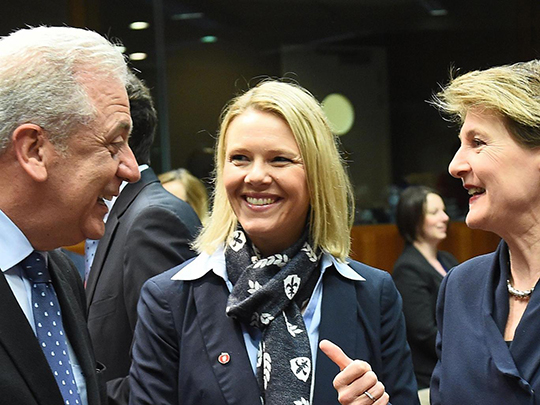
Norway, Oct 24: Norway's integration minister has been widely mocked and asked to "reconsider her position" after telling the country's Muslims to adapt to the country's culture.

norway

Sylvi Listhaug, from the anti-immigrant Progress Party, caused fury and confusion on Monday when she posted on Facebook on the eve of a national integration conference. “I think those who come to Norway need to adapt to our society,” read the post.

Ms Listhaug has since clarified the comment, which was liked more than 20,000 times, claiming she was misunderstood.

“Here we eat pork, drink alcohol and show our face. You must abide by the values, laws and regulations that are in Norway when you come here.”

The country's coalition government, which includes Ms Listhaug's party and the centre-right Conservative party, has been playing tough with the country's Muslims over the past week.

Ms Listhaug also echoed Prime Minister Erna Solberg who said in an interview that she would not personally employ someone wearing the Islamic niqab face veil.

Ms Listhaug's post however still drew criticism.

Comments

Well Wisher
 - 
Tuesday, 25 Oct 2016

Uncultured people speaking about culture, civilization.... very funny.

Add new comment

  • Coastaldigest.com reserves the right to delete or block any comments.
  • Coastaldigset.com is not responsible for its readers’ comments.
  • Comments that are abusive, incendiary or irrelevant are strictly prohibited.
  • Please use a genuine email ID and provide your name to avoid reject.
News Network
March 28,2020

London: Italy on Friday recorded the most daily deaths of any country since the start of the coronavirus pandemic and Spain had its deadliest day, as British Prime Minister Boris Johnson became the first major world leader to test positive.

Italy reported 969 new deaths, Spain 769 and France 299 as Europe reeled from a crisis that has put millions at risk around the world and threatened a global economic meltdown.

In other grim milestones, AFP tallies showed a total of 300,000 cases now recorded in Europe with more than 26,000 deaths worldwide, and the United States overtook China as the country with the most infections.

Italy showed infection rates continuing a downward trend and Spain said its rate of new infections appeared to be slowing, but other countries were bracing to feel the full impact of the virus's spread.

The World Health Organization's regional director for Africa warned the continent faced a "dramatic evolution" of the pandemic, as South Africa became the latest nation to start life under lockdown and reported its first COVID-19 deaths.

Johnson, whose country has seen more than 14,000 declared coronavirus cases and 759 deaths, said he had developed mild symptoms over the previous 24 hours and was self-isolating after testing positive.

Britain's Health Secretary Matt Hancock also tested positive with mild symptoms.

Europe has suffered the brunt of the coronavirus crisis in recent weeks, with millions across the continent on lockdown and the streets of Paris, Rome and Madrid eerily empty.

In France — where nearly 2,000 people have died -- the government announced it was extending its stay-at-home order until at least April 15. While severe, the 299 new deaths it recorded on Friday was lower than the 365 reported the previous day.

The death of a 16-year-old girl from the virus has particularly shaken France, and shattered the belief of many young people that they are immune.

The girl's mother Sabine told AFP that Julie "just had a cough" at first but deteriorated quickly. She died on Wednesday, less than a week after showing her first symptoms.

"It's unbearable," Sabine said. "We were supposed to have a normal life."

Focus was also turning to the United States, where the number of known infections jumped by 18,000 on Friday, reaching more than 97,000 -- higher than both China and Italy. The US also recorded 345 deaths over the past 24 hours, with a total toll of 1,478.

In New York City, health workers are battling a surging toll of dead and infected at the US epicentre of the crisis, including an increasing number of younger patients.

"Now it's 50-year-olds, 40-year-olds, 30-year-olds," said one respiratory therapist at the Jewish Medical Center in Queens.

They "didn't listen about not going out or protecting themselves and washing their hands", he said.

- 'Afraid and lost' -

The coronavirus first emerged in China late last year before spreading globally, with more than half a million declared cases in 183 countries and territories.

Over the last six days, as many new cases have been diagnosed around the world as in the previous 80 days.

Beijing managed to contain its spread with lockdowns and quarantines and its epicentre Wuhan is in the process of easing severe movement restrictions in place for two months.

Three billion people around the world have been told to stay indoors.

In a historic first, Pope Francis performed the rarely recited "Urbi et Orbi" blessing to an empty Saint Peter's Square.

"Thick darkness has gathered over our squares, our streets and our cities; it has taken over our lives, filling everything with a deafening silence and a distressing void, that stops everything as it passes by," he said.

"We find ourselves afraid and lost," he said, describing the coronavirus as a "tempest".

Health care systems even in the most developed nations are stretched to breaking point and medical workers have been having to make difficult choices.

"If I've got five patients and only one bed, I have to choose who gets it," Sara Chinchilla, a paediatrician at a hospital near Madrid, told AFP.

The WHO's chief Tedros Adhanom Ghebreyesus said the dire lack of protective gear for frontline health workers was one of the most pressing problems in the fight to prevent deaths.

"The chronic global shortage of personal protective equipment is now one of the most urgent threats to our collective ability to save lives," he told a virtual news conference in Geneva.

Lockdowns and other measures are wreaking havoc on the global economy, with fears of a downturn worse than the Great Depression of the 1930s.

"It is clear that we have entered a recession" that will be worse than in 2009 following the global financial crisis, International Monetary Fund chief Kristalina Georgieva said Friday.

Unprecedented stimulus measures have helped markets bounce back after a brutal month, but people around the world are bracing for economic hardship.

The United States reported that 3.3 million people applied for unemployment benefits last week -- by far the highest number ever recorded.

Retail workers in particular have suffered as many countries shutter non-essential business, while airlines and the global tourism industry have been dealt devastating blows.

The fashion industry was the latest hit on Friday, with Paris men's fashion week and haute couture shows cancelled along with Milan men's fashion week.

- Armies of volunteers -

The World Tourism Organization said Friday it expected tourist arrivals to fall by 20-30 percent this year, with losses of $300 billion-450 billion in international tourism receipts.

But there have been rays of hope in the midst of the crisis.

Armed groups in Cameroon, the Philippines and Yemen have moved in recent days to reduce violence after UN Secretary General Antonio Guterres issued an appeal for ceasefires.

And armies of volunteers have emerged in many countries to bring help to the needy, with food deliveries for the elderly, free taxi rides, accommodation for health workers, and even home-sewn face masks.


Comments

Add new comment

  • Coastaldigest.com reserves the right to delete or block any comments.
  • Coastaldigset.com is not responsible for its readers’ comments.
  • Comments that are abusive, incendiary or irrelevant are strictly prohibited.
  • Please use a genuine email ID and provide your name to avoid reject.
Agencies
July 29,2020

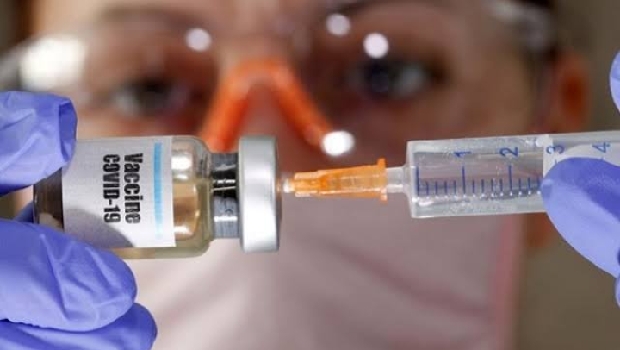
If everything goes as Russia’s expectation, it will be world’s first country to approve a coronavirus vaccine for widespread in the second week of August despite safety and efficacy concerns, according to a report. The adenoviral vector-based vaccine developed by Russian military and government researchers is currently in phase 2 trials.

According to a report from CNN, Russian officials are hoping to get approval for the COVID-19 vaccine developed by the Moscow-based Gamaleya Institute on Agust 10 or even before that. The officials told the outlet that the vaccine will be approved for public use with frontline healthcare workers receiving it first.

“It’s a Sputnik moment,” said Kirill Dmitriev, head of Russia’s sovereign wealth fund, which is financing Russian vaccine research, referring to the successful 1957 launch of the world’s first satellite by the Soviet Union, according to CNN.

“Americans were surprised when they heard Sputnik’s beeping. It’s the same with this vaccine. Russia will have got there first,” he was quoted as saying.

However, Russia is yet to release the scientific data on its coronavirus vaccine trials, hence, questions remain about the safety and efficacy of the vaccine, said the report. The vaccine is in the second phase of testing with developers planning to launch the phase 3 trials sometime after August 3.

Earlier, Interfax reported, citing Health Minister Mikhail Murashko, that the vaccine will be widely used in parallel with phase 3 trials. He said the country plans to vaccinate medics who are at high-risk for COVID-19 next month before clinical trials are completed.

Murashko added that individuals at higher risk of getting infected with the coronavirus such as older people or those with health conditions will also be prioritised for the vaccine, although he did not estimate or reveal when that would happen. The minister added 800 people will be recruited for the phase 3 trials.

Meanwhile, health officials were more cautious considering the fact that human testing of the vaccine is incomplete, and the state registration is expected to begin after August 3, reported The Moscow Times.

On Monday, Moderna and Pfizer announced the commencement of the final phase 3 trials of their candidate vaccines against the SARS-CoV-2 virus, which has so far claimed at least 654,477 lives and infected 16,514,500 people worldwide. 

Researchers will recruit up to 30,000 volunteers in separate trials both backed by the US government. India's first indigenous coronavirus vaccine, COVAXIN, is undergoing phase 1 human clinical trials across the country. More than 150 COVID-19 vaccines are being developed all over the world with at least six candidates already in late-stage clinical trials.

Comments

Add new comment

  • Coastaldigest.com reserves the right to delete or block any comments.
  • Coastaldigset.com is not responsible for its readers’ comments.
  • Comments that are abusive, incendiary or irrelevant are strictly prohibited.
  • Please use a genuine email ID and provide your name to avoid reject.
Agencies
February 29,2020

Doha, Feb 29: The United States signed a landmark deal with the Taliban on Saturday, laying out a timetable for a full troop withdrawal from Afghanistan within 14 months as it seeks an exit from its longest-ever war.

President Donald Trump urged the Afghan people to embrace the chance for a new future, saying the deal held out the possibility of ending the 18-year conflict.

"If the Taliban and the government of Afghanistan live up to these commitments, we will have a powerful path forward to end the war in Afghanistan and bring our troops home," he said on the eve of the event in Doha.

Secretary of State Mike Pompeo arrived in the Qatari capital to witness the signing of the accord, while Defence Secretary Mark Esper was in Kabul for a separate joint declaration with the Afghan government.

The agreement is expected to lead to a dialogue between the Kabul government and the Taliban that, if successful, could ultimately see the Afghan war wind down.

But the position of the Afghan government, which has been excluded from direct US-Taliban talks, remains unclear and the country is gripped by a fresh political crisis amid contested election results.

The United States and its allies will withdraw all their forces from Afghanistan within 14 months if the Taliban abide by the Doha agreement, Washington and Kabul said in a joint statement.

After an initial reduction of troops to 8,600 within 135 days of Saturday's signing, the US and its partners "will complete the withdrawal of their remaining forces from Afghanistan within 14 months... and will withdraw all their forces from remaining bases", the declaration stated.

The Doha accord was drafted over a tempestuous year of dialogue marked by the abrupt cancellation of the effort by Trump in September.

The signing comes after a week-long, partial truce that has mostly held across Afghanistan, aimed at building confidence between the warring parties and showing the Taliban can control their forces.

NATO Secretary General Jens Stoltenberg heralded the agreement as a "first step to lasting peace".

"The way to peace is long and hard. We have to be prepared for setbacks, spoilers, there is no easy way to peace but this is an important first step," the Norwegian former prime minister told reporters in Kabul.

Since the US-led invasion that ousted the Taliban after the September 11, 2001 attacks, America has spent more than $1 trillion in fighting and rebuilding in Afghanistan.

About 2,400 US soldiers have been killed, along with unknown tens of thousands of Afghan troops, Taliban fighters and Afghan civilians.

The insurgents said they had halted all hostilities Saturday in honour of the agreement.

"Since the deal is being signed today, and our people are happy and celebrating it, we have halted all our military operations across the country," Taliban spokesman Zabihullah Mujahid told AFP.

Close to 30 nations were represented at Saturday's signing in the Qatari capital.

While Kabul will not be represented at the Doha ceremony, set for 1245 GMT, it will send a six-person taskforce to the Qatari capital to make initial contact with the Taliban political office, established in 2013.

Any insurgent pledge to guarantee Afghanistan is never again used by jihadist movements such as Al-Qaeda and the Islamic State group to plot attacks abroad will be key to the deal's viability.

The Taliban's sheltering of Al-Qaeda was the main reason for the US invasion following the 9/11 attacks.

The group, which had risen to power in the 1990s in the chaos of civil war, suffered a swift defeat at the hands of the US and its allies. They retreated before re-emerging to lead a deadly insurgency against the new government in Kabul.

After the NATO combat mission ended in December 2014, the bulk of Western forces withdrew from the country, leaving it in an increasingly precarious position.

While Afghans are eager to see an end to the violence, experts say any prospective peace will depend on the outcome of talks between the Taliban and the Kabul government.

But with President Ashraf Ghani and rival Abdullah Abdullah at loggerheads over contested election results, few expect the pair to present a united front, unlike the Taliban, who would then be in a position to take the upper hand in negotiations.

Comments

Add new comment

  • Coastaldigest.com reserves the right to delete or block any comments.
  • Coastaldigset.com is not responsible for its readers’ comments.
  • Comments that are abusive, incendiary or irrelevant are strictly prohibited.
  • Please use a genuine email ID and provide your name to avoid reject.