


'Not your enemies': Muslims in Sri Lanka fear backlash

Agencies
April 24, 2019

Colombo, Apr 24: Mohamed Hasan has barely left his home in Colombo since a string of deadly blasts hit Sri Lanka on Sunday, afraid he could be attacked because he is Muslim.

He has a job at a printing press, but the 41-year-old's family have begged him to stay home.

"They are worried that if I go out, will I be able to come back alive?" he told AFP outside the Jumma mosque in Dematagoda, where he had ventured briefly to pray.

More than 350 people were killed in the carnage unleashed by the Easter attacks against churches and hotels, which have been claimed by the Islamic State group.

The deaths have horrified Sri Lankans and been condemned by Muslim groups, but many in the community have been left feeling vulnerable.

Zareena Begum, 60, said she had barely slept since the weekend. "I know people are angry at Muslims," she said in tears outside the mosque. "Infants being carried in the arms of their mothers were killed.

"I never imagined such hatred being there in the hearts of these people (who attacked). Hatred must not sow more hatred." Wearing a black dress and white headscarf, Begum added: "We have been huddled at our homes. We are scared about going out."

Sri Lanka's population of 21 million is a patchwork of ethnicities and religions, dominated by the Sinhalese Buddhist majority.

Muslims account for 10 per cent of the population and are the second-largest minority after Hindus. Around seven per cent of Sri Lankans are Christians.

Ethnic and religious tensions abound in the country, which suffered through a decades-long Tamil insurgency and more recently has seen outbreaks of sectarian violence.

Muslims have been on the receiving end of sporadic violence and hate attacks since the civil war ended in 2009.

Hardline Buddhist monks have led campaigns against the community, and in 2013 and 2018, Muslim businesses came under attack.

Rumours were even spread that Sinhalese could become sterile if they wore underwear bought from Muslim shops, and that food sold by Muslims would cause infertility.

In the wake of the attacks, Sri Lankan leaders including Prime Minister Ranil Wickremesinghe have urged calm and solidarity.

"The vast majority of Muslims condemn this and they are as angry as the Tamils and the Sinhalese about what happened," he said Tuesday, calling for unity.

But at the Jumma mosque, there was an atmosphere of anxiety, and several worshippers said they hoped police would "take care of every citizen in such critical times".

Hilmy Ahamed, vice-president of the influential Muslim Council of Sri Lanka, said the community was braced for a backlash, with emotions running high. "Hundreds of people are being buried (so) there is going to be an emotional outburst and some of it could be justifiable," said Ahamed.

"We have asked the government... to ensure security is maintained. This (attack) has not been carried out by the Muslim community but by some fringe elements."

In fact, Ahamed and other Muslim leaders said they had warned Sri Lankan authorities years earlier about the leader of the National Thowheeth Jama'ath, a group the government says is its key suspect in the attacks.

The group's leader, Zahran Hashim, was well known to Muslim leaders as an extremist.

"This person was a loner and he had radicalised young people in the guise of conducting Koran classes," Ahamed said.

Back at the mosque, R.F. Ameer said the community just wanted safety. "We are living in constant fear because if someone sees us wearing the skull cap they will perceive us to be their enemies," he said, his forehead creased with worry.

"But we want to tell everyone we are not your enemies. This is our homeland, it is known as the pearl of Asia. We want it to remain like that."

Comments

GOD
 - 
Thursday, 25 Apr 2019

My Dear Brother of christen,

this blast is not done by muslim & christen, this was done by third eye who want muslim & christ fight forever and destroy each other...we all know who is it "ISREAL"...without this they cannot rule all world...


we must patient...GOD have other plan to the evil isreal..


condelence to sri lanka family who lost there people.

Add new comment

  • Coastaldigest.com reserves the right to delete or block any comments.
  • Coastaldigset.com is not responsible for its readers’ comments.
  • Comments that are abusive, incendiary or irrelevant are strictly prohibited.
  • Please use a genuine email ID and provide your name to avoid reject.
Agencies
February 20,2020

India ranked 77th on a sustainability index that takes into account per capita carbon emissions and ability of children in a nation to live healthy lives and secures 131st spot on a flourishing ranking that measures the best chance at survival and well-being for children, according to a UN-backed report.

The report was released on Wednesday by a commission of over 40 child and adolescent health experts from around the world. It was commissioned by the World Health Organization (WHO), UN Children's Fund (UNICEF) and The Lancet medical journal.

In the report assessing the capacity of 180 countries to ensure that their youngsters can survive and thrive, India ranks 77th on the Sustainability Index and 131 on the Flourishing Index, it said.

Flourishing is the geometric mean of Surviving and Thriving. For Surviving, the authors selected maternal survival, survival in children younger than 5 years old, suicide, access to maternal and child health services, basic hygiene and sanitation, and lack of extreme poverty.

For Thriving, the domains were educational achievement, growth and nutrition, reproductive freedom, and protection from violence.

Under the Sustainability Index, the authors noted that promoting today's national conditions for children to survive and thrive must not come at the cost of eroding future global conditions for children's ability to flourish.

The Sustainability Index ranks countries on excess carbon emissions compared with the 2030 target. This provides a convenient and available proxy for a country's contribution to sustainability in future.

The report noted that under realistic assumptions about possible trajectories towards sustainable greenhouse gas emissions, models predict that global carbon emissions need to be reduced from 39·7 giga­ tonnes to 22·8 gigatonnes per year by 2030 to maintain even a 66 per cent chance of keeping global warming below 1·5°C.

It said that the world's survival depended on children being able to flourish, but no country is doing enough to give them a sustainable future.

"No country in the world is currently providing the conditions we need to support every child to grow up and have a healthy future," said Anthony Costello, Professor of Global Health and Sustainability at University College London, one of the lead authors of the report.

"Especially, they're under immediate threat from climate change and from commercial marketing, which has grown hugely in the last decade," said Costello – former WHO Director of Mother, Child and Adolescent health.

Norway leads the table for survival, health, education and nutrition rates - followed by South Korea and the Netherlands. Central African Republic, Chad and Somalia come at the bottom.

However, when taking into account per capita CO2 emissions, these top countries trail behind, with Norway 156th, the Republic of Korea 166th and the Netherlands 160th.

Each of the three emits 210 per cent more CO2 per capita than their 2030 target, the data shows, while the US, Australia, and Saudi Arabia are among the 10 worst emitters. The lowest emitters are Burundi, Chad and Somalia.

According to the report, the only countries on track to beat CO2 emission per capita targets by 2030, while also performing fairly – within the top 70 – on child flourishing measures are: Albania, Armenia, Grenada, Jordan, Moldova, Sri Lanka, Tunisia, Uruguay and Vietnam.

"More than 2 billion people live in countries where development is hampered by humanitarian crises, conflicts, and natural disasters, problems increasingly linked with climate change," said Minister Awa Coll-Seck from Senegal, Co-Chair of the commission.

The report also highlights the distinct threat posed to children from harmful marketing.

Evidence suggests that children in some countries see as many as 30,000 advertisements on television alone in a single year, while youth exposure to vaping (e-cigarettes) advertisements increased by more than 250 per cent in the US over two years, reaching more than 24 million young people.

Studies in Australia, Canada, Mexico, New Zealand and the US – among many others – have shown that self-regulation has not hampered commercial ability to advertise to children.

Children's exposure to commercial marketing of junk food and sugary beverages is associated with purchase of unhealthy foods and overweight and obesity, linking predatory marketing to the alarming rise in childhood obesity, it said.

The number of obese children and adolescents increased from 11 million in 1975 to 124 million in 2016 – an 11-fold increase, with dire individual and societal costs, the report said.

To protect children, the authors call for a new global movement driven by and for children.

Specific recommendations include stopping CO2 emissions with the utmost urgency, to ensure children have a future on this planet; placing children and adolescents at the centre of global efforts to achieve sustainable development, the report said.

New policies and investment in all sectors to work towards child health and rights; incorporating children's voices into policy decisions and tightening national regulation of harmful commercial marketing, supported by a new Optional Protocol to the UN Convention on the Rights of the Child, it said.

Comments

Add new comment

  • Coastaldigest.com reserves the right to delete or block any comments.
  • Coastaldigset.com is not responsible for its readers’ comments.
  • Comments that are abusive, incendiary or irrelevant are strictly prohibited.
  • Please use a genuine email ID and provide your name to avoid reject.
News Network
August 2,2020

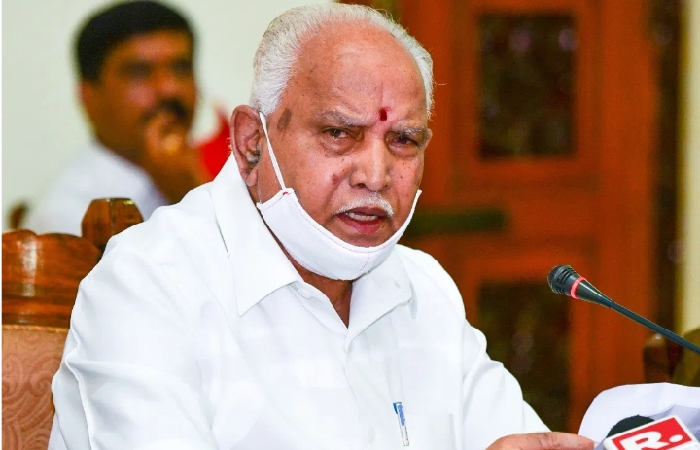
Bengaluru, Aug 2: Within a year of returning to power for the fourth time as Chief Minister in Karnataka, septuagenarian B.S. Yediyurappa has consolidated his position in the ruling BJP to stay the course till the next Assembly elections in mid-2023.

"A combination of factors helped Yediyurappa to consolidate and stay the course for the remaining term of his office to ensure the saffron party retains power in the state though he is unlikely to stake claim for the chief minister's post again as he would be 80 years old by 2023," a party source told news agency here.

Since the 77-year-old seasoned politician assumed office on July 26, 2019, the first year has been tumultuous for him, as he had go through a "trial by fire" what with the party's mighty high command and detractors testing his patience in the face of natural calamities like drought, floods and the Covid pandemic.

The first 7-8 months of the term were spent in tackling drought and floods, winning 12 of the 15 by-elections in December to secure a majority for the ruling party in the lower house and expanding the cabinet in February.

Even as Yediyurappa was settling down to seriously govern after presenting the state budget for fiscal 2020-21 in early March, the coronavirus outbreak overwhelmed him, as the pandemic spread and wreaked havoc, disrupting life, livelihood, economic growth and development.

"While the emphatic victory in the by-elections ensured the government's stability till the assembly term up to mid-2023, the second cabinet expansion on February 6 posed a challenge to Yediyurappa, as he could induct only 10 of the 12 MLAs who defected from the Congress and the Janata Dal-Secular (JD-S) and won the by-elections, triggering a revolt in the party by the loyalists left out of the ministry," the source recalled.

Though Yeddiyurappa has been leading the battle against the virus from day 1 and initially succeeded in controlling it from spreading during the extended lockdown till May 31, reopening the state under Unlock since June has undone the gains, as positive cases shot up to 1,29,287 so far, including 73,219 in Bengaluru after 53,648 recovered from across the state till date, while 2,412 succumbed to the deadly disease since March 9.

"For a state of 7 crore population, the data reveals that the pandemic has been fought on war-footing to contain it from spreading in all the 30 districts, although there are no signs of it going away till a vaccine is found. The chief minister has been trying to balance unlocking the state and containing the infection," a member of the health task force told IANS.

With six cabinet posts in the 34-member ministry being vacant, filling them will be a daunting task for Yediyurappa, as at least 20 legislators, including 5-6 newly elected turncoats and party's veterans are lobbying to become ministers at any cost.

By appointing 20 party legislators as heads of state-run board and corporations, nominating 5 as members of the state legislative council, including JD-S defector A.H. Vishwanath in July and getting 2 Congress defectors R. Shankar and M.T.B. Nagaraj elected as MLCs in June with 2 others, Yediyurappa ensured that these lawmakers would not be in the reckoning for the 6 cabinet posts, as dozen MLAs are already pitching for them.

Nagaraj and Vishwanath lost in the December 5 by-elections, while Shankar was not given a ticket to contest in the by-poll but was assured of making him an MLC with another disgruntled member C.P. Yogeshwar, who lost in the 2018 May assembly polls to JD-S leader and former chief minister H.D. Kumaraswamy of the 14-month-old JD-S and Congress coalition government from May 23, 2018 to July 23, 2019.

Resignations of 17 rebels, including 14 from the Congress and 3 from the JD-S led to the fall of the coalition government, as Kumaraswamy lost the majority in the 225-member assembly on July 23, 2019 in their absence.

Though Yediyurappa led the party to win 105 seats in the 2018 assembly elections and formed a government on May 17, 2018, he resigned 3 days later on May 19, 2018, as he fell 8-9 seats short of the halfway mark (113) for a simple majority in the lower house.

In a post-poll alliance, the JD-S and the Congress formed the coalition government to keep the BJP out of power in May 2018, after the assembly elections gave split verdict and the Congress lost power then.

"The record victory of the ruling party in the May 2019 general elections, when 25 of its 27 contestants won out of 28 Lok Sabha seats from the state, reinforced the popular belief that Yediyurappa is the party's mascot in winning elections and an unquestionable leader of the politically dominant Lingayats in the state," the source pointed out.

When Yediyurappa left the BJP and floated a regional outfit (Karnataka Janata Party) in January 2013, he delivered a body blow to the BJP in the May 2013 state assembly polls, as the votes got split and was defeated by then Congress.

"Besides the party's high command, everyone in the party's state unit, including leaders and cadres are aware of Yediyurappa's popularity across the state, as has the wherewithal to connect with masses and win elections," the source added.

Comments

Add new comment

  • Coastaldigest.com reserves the right to delete or block any comments.
  • Coastaldigset.com is not responsible for its readers’ comments.
  • Comments that are abusive, incendiary or irrelevant are strictly prohibited.
  • Please use a genuine email ID and provide your name to avoid reject.
News Network
July 4,2020

Bengaluru, Jul 4: With the increasing number of COVID-19 cases in Bengaluru, the state government has decided to impose a total lockdown in Bruhat Bengaluru Mahanagara Palike (BBMP) limits.

The lockdown will start from 8 pm today till 5 am on Monday. The sale of essential items will only be allowed during the total lockdown.

"Complete lockdown to be imposed from 8 pm today till 5 am on Monday in Bruhat Bengaluru Mahanagara Palike (BBMP) limits, as per instructions by Karnataka Chief Minister BS Yediyurappa in view of COVID-19," BBMP Commissioner Anil Kumar said on Saturday.

"Sale of essential items will be allowed during the lockdown, including meat shops. Police action will be taken against people found roaming outside unnecessarily," he said.

With the number of cases increasing by 994 in the last 24 hours, the total of cases in the city now stands at 7,713. Of these, 6,297 are active cases.

So far, Karnataka has 19,710 cases with 293 deaths. While 8,805 people have recovered from the deadly virus.

At the national level, the total number of cases have now surged to 6, 48,315 out of which 3, 94,227 patients have recorded, while 18,655 have lost their lives.

Comments

Add new comment

  • Coastaldigest.com reserves the right to delete or block any comments.
  • Coastaldigset.com is not responsible for its readers’ comments.
  • Comments that are abusive, incendiary or irrelevant are strictly prohibited.
  • Please use a genuine email ID and provide your name to avoid reject.