


Note ban will end up making UP polls more costly: Survey

December 26, 2016

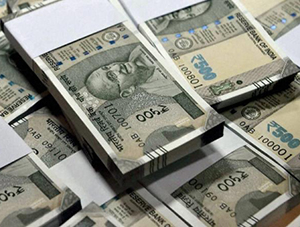
Lucknow, Dec 26: Demonetisation has forced candidates to find "innovative ways to pump in black money" for campaigning which will end up making the Uttar Pradesh Assembly polls more costly, a survey has claimed.note
The survey conducted jointly by Association for Democratic Reforms (ADR) and UP Election Watch to study impact of demonetisation on poll expenses said, "Demonetisation will have no impact in the campaigning or the poll expense."

In the survey, 69 per cent of the prospective candidates and party office-bearers admitted that compared to previous polls, the cost of contesting elections would rise by at least 10 per cent due to demonetisation.

Around 65 per cent of the perspective candidates said there would be no impact on the "mode and methods of luring voters" in the coming Assembly polls while 70 per cent said they would follow the old patterns to woo voters.

Traders dealing in poll materials; event managers, printers and travel agents said there would be problem in the campaigning and 70 per cent of them admitted their trade has been affected.

On cashless system, 60 per cent of the traders admitted it would have no adverse effect on their business.

While releasing the report of the survey, chief convener of ADR and UP Election Watch, Sanjay Singh said post demonetisation, a survey on its possible impact in the forthcoming assembly elections of UP was conducted in various areas and Assembly segments of the state.

The survey was conducted in 30 Assembly constituencies spread over 10 divisions of Uttar Pradesh -- Jhansi, Banda, Kanpur, Lucknow, Meerut, Varanasi, Gorakhpur, Allahabad, Agra and Bareilly.

Comments

Althaf
 - 
Tuesday, 27 Dec 2016

But for BJP it does not matter because most of the BJP Leaders already gathered crores of black money with the help of Our FENKU

Add new comment

  • Coastaldigest.com reserves the right to delete or block any comments.
  • Coastaldigset.com is not responsible for its readers’ comments.
  • Comments that are abusive, incendiary or irrelevant are strictly prohibited.
  • Please use a genuine email ID and provide your name to avoid reject.
Agencies
July 3,2020

New Delhi, Jul 3: The aviation regulator DGCA said on Friday it was extending the suspension of scheduled international passenger flights in the country till July 31 but added that some international scheduled services on selected routes may be permitted on a case to case basis.

Scheduled international passenger flights were suspended in India on March 23 due to the coronavirus pandemic.

Modifying its June 26 circular that stated that scheduled international passenger flights will remain suspended till July 15, 2020, the regulator stated on Friday it has decided to extend the deadline to July 31, 2020.

However, international scheduled flights may be allowed on selected routes by the competent authority on a case to case basis,” said the circular by the Directorate General of Civil Aviation (DGCA).

Air India and other private domestic airlines have been operating unscheduled international repatriation flights under the Vande Bharat Mission, which was started on May 6 by the Central government.

India resumed scheduled domestic passenger flights on May 25, after a gap of two months.

Comments

Add new comment

  • Coastaldigest.com reserves the right to delete or block any comments.
  • Coastaldigset.com is not responsible for its readers’ comments.
  • Comments that are abusive, incendiary or irrelevant are strictly prohibited.
  • Please use a genuine email ID and provide your name to avoid reject.
News Network
June 26,2020

Bengaluru, Jun 26: The National Restaurant Association of India (NRAI) on Thursday came up with a Standard Operating Procedure (SOP) for restaurants whereby among other physical distancing norms, it has suggested a 2-metre gap between tables.

Formulated in partnership with Releski, a Bengaluru based skill-tech company, the SoP suggests that in case of back-to-back seating, people sitting with their backs towards each other will have their seats divided by 'Plexiglass' divider raised up to 2 meters from the ground.

"In a typical restaurant, the improvised seating plan should have a minimum distance of 2 metres between tables. The distance of 2 metres (6 feet) between tables should measure from one edge of the table to the other table's edge," it said.

In case of loose or free seating such as in banquet style or food court style seating, a minimum 2 meters of distance should be maintained between tables.

The guidelines noted that, to encourage physical distancing, restaurants have to sacrifice their seating capacity, to promote health and safety, and also to gain trust from their patrons.

"In order to perform this, divide your restaurants under different sectors. Pull out your restaurant's floor plan and colour code different sections red and yellow. Red sections are potential areas where maximum footfall or traffic is observed. Yellow sections are areas where the footfalls are average," it said.

All the red sections are encircled or bordered by placing barricades or Q manager and will open at specific points to access the yellow section and all the opening points will have hand sanitisers and sprays, and every guest who walks from red zones to yellow zones will sanitise himself/herself to reduce the chances of contamination.

For air conditioning, the guidelines of CPWD shall be followed which inter alia emphasises that the temperature setting of all air conditioning devices should be in the range of 24-30 degree Celsius, relative humidity should be in the range of 40- 65 per cent, intake of fresh air should be as much as possible and cross ventilation should be adequate, the guidelines suggested.

The industry body has also suggested appointment of a COVID-free Ambassador who would operate as the Chief Health Officer within the restaurant team, preferably from the management team in each shift.

The ambassador's would put the new daily work routines into practice, to monitor compliance with good practice and to lead the preventative measures, adapt to health & safety recommendations and requirements of the restaurant and oversee the implementation of the norms.

Anurag Katriar, President of NRAI and CEO & Executive Director of deGustibus Hospitality, said: "Every restaurant cutting across formats is facing the harsh reality of subdued to shut business volumes in the present and the uncertainty of business environment in the future. One thing is certain that hygiene and safety will be a key differentiator in the post-pandemic restaurant operations."

Comments

Add new comment

  • Coastaldigest.com reserves the right to delete or block any comments.
  • Coastaldigset.com is not responsible for its readers’ comments.
  • Comments that are abusive, incendiary or irrelevant are strictly prohibited.
  • Please use a genuine email ID and provide your name to avoid reject.
News Network
July 3,2020

Bengaluru, Jul 3: Opposition leader in the Karnataka Legislative Assembly and former Chief Minister Siddaramaiah on Friday opined that there is no other option left but to resort to 'Jail Bharo' agitation to expose the ruling BJP government's indulge in 'Corona Corruption' which runs into more than Rs 2000 crore.

Siddaramaiah said that according to a submission to the Karnataka High Court the government has submitted that it has incurred Rs 3,392 crore expenditure for Corona in the State so far. While the market price for equipment purchased will not exceed Rs 1163 crore and it clearly shows that the corruption is to the tune of Rs 2,000 crore.

Siddaramaiah speaking to a private TV channel here on Friday said the chief minister B S Yediyurappa-led State government should come out with a White Paper on the money spent for purchases made facilities provided to patients. 

According to submission to the Court, the Government has purchased 1000 Ventilators by paying Rs 120 crore, while the market price is Rs 40 crores at Rs 4 lakh for each Ventilator. Why is Rs 120 crore more paid, does it not lead to doubt the government's claim. For purchase of kits, mask, gloves etc. it amounted to Rs 1,500 crores but paid by the government was Rs 9,000 crore."

Comments

Add new comment

  • Coastaldigest.com reserves the right to delete or block any comments.
  • Coastaldigset.com is not responsible for its readers’ comments.
  • Comments that are abusive, incendiary or irrelevant are strictly prohibited.
  • Please use a genuine email ID and provide your name to avoid reject.