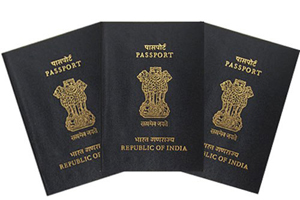
Now, Karnataka citizens will get passport in 10 days

[email protected] (CD Network)
October 17, 2016

Bengaluru, Oct 17: Here's good news for passport applicants in Karnataka. The Regional Passport Office is taking all necessary steps to ensure that the applicants get the passports within 10 days.

passport“From the time an applicant applies for a passport to passport delivery and completion of police verification, it should take about 10 days,” said P S Karthigeyan, regional passport officer-Karnataka.

"In September, we took an average of 13 days in Bengaluru and it was 25 days across the state. This is possible because of the mobile passport police app which was piloted first in Bengaluru with five police stations in May 2016. From August it has been extended to all police stations in Bengaluru," he said.

The app allows cops to download the digital copies of applications cleared by passport officers and upload the verification immediately from the field, thus reducing the time and paper use.

Karnataka has been second highest issuer of passports in 2015 after Lucknow—6.18 lakh passports issued in the calendar year. As on last Thursday, the RPO issued five lakh passports and hopes to issue 6.3 lakhs by the end of this year. Of the volume, Karthigeyan claims 45% applications come from Bengaluru alone.

"But we are not seeing a drastic increase in demand for passports as compared to 2013 and 2014. One of the reasons we think, may be, the penetration of passport holders in Karnataka is much higher than few other states like Lucknow," he added.

It has already reduced the wait period for one day for appointment slots, the officer claimed. Last year, it held 27 passport melas to expedite and resolve pending applications. This year, RPO Karnataka has already held seven camps and one more is being organised in Chitradurga on Saturday.

That is not it. Beginning October 13, the state RPO is also authorized to attest or apostille documents required for visa or other purposes by existing passport holders. The documents however, have to be submitted to four outsourced agencies—BLS International Services (Shivajinagar), VFS Global Services(Shivajinagar), IVS Global (Sheshadripuram) and Superb Enterprises (Infantry road).

"We have set up a attestation cell in the Koramangala headquarters of RPO where two senior passport officers will attest documents that must be originated and issued from Karnataka. Even if people living in other states have documents originating or issued from Karnataka, it will be attested. This will take two days," he said.

Ministry of external affairs has prescribed a fee of Rs 18 and Rs 20 for different types of documents and a fixed fee of Rs 150 to be paid to the outsourced agency.

Comments

Rikaz
 - 
Monday, 17 Oct 2016

Wow Karnataka citizens.....I wish its true....

Add new comment

  • Coastaldigest.com reserves the right to delete or block any comments.
  • Coastaldigset.com is not responsible for its readers’ comments.
  • Comments that are abusive, incendiary or irrelevant are strictly prohibited.
  • Please use a genuine email ID and provide your name to avoid reject.
News Network
February 29,2020

Kochi, Feb 29: The Kerala Non-Resident Indians' Commission on Friday passed a resolution to request the Centre and Election Commission (EC) to make appropriate amendments in the Representation of Peoples Act, 1951, to ensure voting rights to the non-resident Indians working abroad. According to People’s Representation Act, 1951, None-Resident Indians (NRIs) can vote by proxy.

The Commission is a statutory body constituted for the welfare of Non-Resident Keralites working outside India.

The Centre had introduced a bill for this purpose which was passed by the Lok Sabha in 2018, but the same has since lapsed.

Therefore, the Kerala NRI Commission decided to request the Centre to consider introducing the bill in the next session of Parliament considering the interest of the NRI community at large.

The resolution was moved by commission member and NRI entrepreneur Shamsheer Vayalil, who is also a petitioner in the writ petition, filed regarding this in the Supreme Court.

"The central government may consider introducing the bill in the next session of the Parliament session considering the interest of the NRI community at large," read the resolution which will now be sent to the Ministry of Law and the Election Commission (EC).

Commission chairman Justice PD Rajan said the right to vote for NRIs is a genuine demand.

"This is the time that we step up pressure on the agencies concerned to implement this. Voting from the workplace would be a different experience for them. It would be a decisive step," he said.

This fresh development comes at a time when a petition filed in the Supreme Court on the same topic last week came before a bench headed by Justice Deepak Gupta, which considered the case and said it will be heard in April.

"We are expecting a favourable decision from the Supreme Court. We would also approach the NRI commission in other states and request them to raise the same demand," said Vayalil.

If implemented, millions of NRIs around the world would be able to exercise their franchise in the electoral processes of the nation. According to the estimate of the Ministry of External Affairs, there are about 3.10 crore NRIs.

Comments

Add new comment

  • Coastaldigest.com reserves the right to delete or block any comments.
  • Coastaldigset.com is not responsible for its readers’ comments.
  • Comments that are abusive, incendiary or irrelevant are strictly prohibited.
  • Please use a genuine email ID and provide your name to avoid reject.
Ram Puniyani
February 10,2020

Noam Chomsky is one of the leading peace workers in the world. In the wake of America’s attack on Vietnam, he brought out his classic formulation, ‘manufacturing consent’. The phrase explains the state manipulating public opinion to have the public approve of it policies—in this case, the attack of the American state on Vietnam, which was then struggling to free itself from French colonial rule.

In India, we are witness to manufactured hate against religious minorities. This hatred serves to enhance polarisation in society, which undermines India’s democracy and Constitution and promotes support for a Hindu nation. Hate is being manufactured through multiple mechanisms. For example, it manifests in violence against religious minorities. Some recent ghastly expressions of this manufactured hate was the massive communal violence witnessed in Mumbai (1992-93), Gujarat (2002), Kandhamal (2008) and Muzaffarnagar (2013). Its other manifestation was in the form of lynching of those accused of having killed a cow or consumed beef. A parallel phenomenon is the brutal flogging, often to death, of Dalits who deal with animal carcasses or leather.

Yet another form of this was seen when Shambhulal Regar, indoctrinated by the propaganda of Hindu nationalists, burned alive Afrazul Khan and shot the video of the heinous act. For his brutality, he was praised by many. Regar was incited into the act by the propaganda around love jihad. Lately, we have the same phenomenon of manufactured hate taking on even more dastardly proportions as youth related to Hindu nationalist organisations have been caught using pistols, while police authorities look on.

Anurag Thakur, a BJP minster in the central government recently incited a crowd in Delhi to complete his chant of what should happen to ‘traitors of the country...” with a “they should be shot”. Just two days later, a youth brought a pistol to the site of a protest at Jamia Millia Islamia university and shouted “take Azaadi!” and fired it. One bullet hit a student of Jamia. This happened on 30 January, the day Nathuram Godse had shot Mahatma Gandhi in 1948. A few days later, another youth fired near the site of protests against the CAA and NRC at Shaheen Bagh. Soon after, he said that in India, “only Hindus will rule”.

What is very obvious is that the shootings by those associated with Hindu nationalist organisations are the culmination of a long campaign of spreading hate against religious minorities in India in general and against Muslims in particular. The present phase is the outcome of a long and sustained hate campaign, the beginning of which lies in nationalism in the name of religion; Muslim nationalism and Hindu nationalism. This sectarian nationalism picked up the communal view of history and the communal historiography which the British introduced in order to pursue their ‘divide and rule’ policy.

In India what became part of “social common sense” was that Muslim kings had destroyed Hindu temples, that Islam was spread by force, and that it is a foreign religion, and so on. Campaigns, such as the one for a temple dedicated to the Hindu god Rama to be built at the site where the Babri masjid once stood, further deepened the idea of a Muslim as a “temple-destroyer”. Aurangzeb, Tipu Sultan and other Muslim kings were tarnished as the ones who spread Islam by force in the subcontinent. The tragic Partition, which was primarily due to British policies, and was well-supported by communal streams also, was entirely attributed to Muslims. The Kashmir conflict, which is the outcome of regional, ethnic and other historical issues, coupled with the American policy of supporting Pakistan’s ambitions of regional hegemony, (which also fostered the birth of Al-Qaeda), was also attributed to the Muslims.

With recurring incidents of communal violence, these falsehoods went on going deeper into the social thinking. Violence itself led to ghettoisation of Muslims and further broke inter-community social bonds. On the one hand, a ghettoised community is cut off from others and on the other hand the victims come to be presented as culprits. The percolation of this hate through word-of-mouth propaganda, media and re-writing of school curricula, had a strong impact on social attitudes towards the minorities.

In the last couple of decades, the process of manufacturing hate has been intensified by the social media platforms which are being cleverly used by the communal forces. Swati Chaturvedi’s book, I Am a Troll: Inside the Secret World of the BJP’s Digital Army, tells us how the BJP used social media to spread hate. Whatapp University became the source of understanding for large sections of society and hate for the ‘Other’, went up by leaps and bounds. To add on to this process, the phenomenon of fake news was shrewdly deployed to intensify divisiveness.

Currently, the Shaheen Bagh movement is a big uniting force for the country; but it is being demonised as a gathering of ‘anti-nationals’. Another BJP leader has said that these protesters will indulge in crimes like rape. This has intensified the prevalent hate.

While there is a general dominance of hate, the likes of Shambhulal Regar and the Jamia shooter do get taken in by the incitement and act out the violence that is constantly hinted at. The deeper issue involved is the prevalence of hate, misconceptions and biases, which have become the part of social thinking.

These misconceptions are undoing the amity between different religious communities which was built during the freedom movement. They are undoing the fraternity which emerged with the process of India as a nation in the making. The processes which brought these communities together broadly drew from Gandhi, Bhagat Singh and Ambedkar. It is these values which need to be rooted again in the society. The communal forces have resorted to false propaganda against the minorities, and that needs to be undone with sincerity.

Combating those foundational misconceptions which create hatred is a massive task which needs to be taken up by the social organisations and political parties which have faith in the Indian Constitution and values of freedom movement. It needs to be done right away as a priority issue in with a focus on cultivating Indian fraternity yet again.


Comments

Add new comment

  • Coastaldigest.com reserves the right to delete or block any comments.
  • Coastaldigset.com is not responsible for its readers’ comments.
  • Comments that are abusive, incendiary or irrelevant are strictly prohibited.
  • Please use a genuine email ID and provide your name to avoid reject.
News Network
April 21,2020

Bengaluru, Apr 21: Bengaluru Police and administration has issued prohibitory orders in the city, with exemptions to essential and emergency services, to enforce the COVID-19 lockdown.

"In exercise of the powers conferred under Section 144 (1) Code of Criminal Procedure, I, Bhaskar Rao, IPS, Commissioner of Police and Additional District Magistrate, Bengaluru city hereby issue a prohibitory order within the limits of Bengaluru city commissioner on midnight of April 20, 2020, to midnight May 3, 2020," the order issued on Monday said.

Section 144 of the CrPC pertains to the power conferred to a District Magistrate, a sub-divisional Magistrate or any other Executive Magistrate to issue orders in urgent cases of a nuisance of apprehended danger.

"As per the guidelines of the Ministry of Home Affairs, Government of India on the measures for containment of COVID-19 epidemic, it is imperative to take stringent measures in the jurisdiction of Commissioner of Bengaluru city to prevent the spread of the disease," the order said.

As per the order, the offices of the Government of India, its autonomous and subordinate offices and public corporations shall remain closed with the exception of defence, central armed police force, treasury, public utilities, disaster management, power generation, and post office, etc.

Offices to the state government, their autonomous bodies, corporation, etc shall also remain closed except police, home guard, civil defence, fire and emergency services, electricity, water, sanitation and Mandis operated by Agriculture Produce Market Committee, etc, it added.

It said that municipal bodies, with staff required for essential services, will also remain functional during this period. Other essential and emergency services, like hospitals, shops, etc have also been exempted from the prohibitory orders.

Comments

Add new comment

  • Coastaldigest.com reserves the right to delete or block any comments.
  • Coastaldigset.com is not responsible for its readers’ comments.
  • Comments that are abusive, incendiary or irrelevant are strictly prohibited.
  • Please use a genuine email ID and provide your name to avoid reject.