


Obama vetoes bill allowing 9/11 victims to sue Saudi Arabia

September 24, 2016

Washington, Sep 24: President Barack Obama on Friday vetoed a bill allowing 9/11families to sue Saudi Arabia, risking a fierce public backlash and rare congressional rebuke.
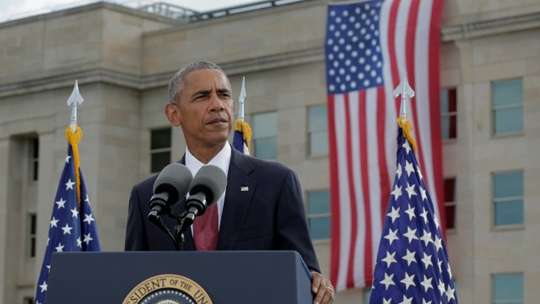
barak obama

While expressing "deep sympathy" for the families of the victims, Obama said the law would be "detrimental to US national interests."

The White House tried and failed to have the legislation -- which was unanimously passed by Congress -- scrapped or substantially revised.

Terry Strada, whose husband Tom was killed in World Trade Center Tower One, told AFP the 9/11 "families are outraged and very disappointed" by Obama's decision.

She vowed that the group would now lobby "just as hard as we possibly can" to have Congress overturn the decision.

Republican presidential nominee Donald Trump, who has already painted Obama and his Democratic opponent Hillary Clinton as weak on terrorism, described the decision as "shameful."

"That President Obama would deny the parents, spouses and children of those we lost on that horrific day the chance to close this painful chapter in their lives is a disgrace."

"If elected president, I would sign such legislation should it reach my desk."

On that point at least Trump was in agreement with Clinton, who, according to her campaign spokesman Jesse Lehrich, would also sign the bill.

Obama now faces the very real prospect of Republican and Democratic lawmakers joining forces to override his veto for the first time in his presidency.

Such a rebuke -- which Congressional sources say could come as early as next Tuesday -- would mark Obama's last months in office and show the White House to be much weakened.

Obama has issued 12 vetoes during his presidency and none have yet been revoked.

New York senator Chuck Schumer -- a Democrat with close ties to Obama and who cosponsored the bill -- insisted that is about to change.

"This is a disappointing decision that will be swiftly and soundly overturned in Congress," he said.

"If the Saudis did nothing wrong, they should not fear this legislation. If they were culpable in 9/11, they should be held accountable."

Families of 9/11 victims have campaigned for the law -- convinced that the Saudi government had a hand in the attacks that killed almost 3,000 people.

Fifteen of the 19 hijackers were Saudi citizens, but no link to the government has been proven. The Saudi government denies any links to the plotters.

Declassified documents showed US intelligence had multiple suspicions about links between the Saudi government and the attackers.

"While in the United States, some of the 9/11 hijackers were in contact with, and received support or assistance from, individuals who may be connected to the Saudi government," a finding read.

Behind the scenes, Riyadh has been lobbying furiously for the bill to be scrapped.

A senior Saudi prince reportedly threatened to pull billions of dollars out of US assets if it becomes law, but Saudi officials now distance themselves from that claim.

The US-Saudi relationship had already been strained by Obama's engagement with Saudi's Shia foe Iran and the July release of a secret report on Saudi involvement in the attacks.

The White House insists Obama did not veto because of concerns over ties with Saudi Arabia, saying it is worried the bill would set a dangerous legal precedent, undermining the principle of sovereign immunity.

The European Union and a host of countries have expressed similar concerns.

But that technical legal argument will struggle to be heard over emotive accusations that Obama is putting relations with Saudi Arabia before 9/11 victims.

The White House will now hold out hope that the override could be delayed until after the November 8 election, when the politics may be less toxic and minds may be changed.

Congressional sources said White House appeals to security-minded senators like Dianne Feinstein may yet be enough to avoid the rebuke.

Comments

shaji
 - 
Sunday, 25 Sep 2016

It is well known that 9/11 attack was carried out by jews supported by Israel. However, they are accusing Muslims and Sauid Arabia for this. Saudi Nationals present in the planes were only passengers and not hijackers. The buildings collapsed mainly by internal blast which was planned by jews and that is the reason why almost all the jews were absent on the particular day. It was well planned by jews to put blame on muslims. The victims should sue Israel for compansations and Amercian Govt should presurise Israel for the payment.

Add new comment

  • Coastaldigest.com reserves the right to delete or block any comments.
  • Coastaldigset.com is not responsible for its readers’ comments.
  • Comments that are abusive, incendiary or irrelevant are strictly prohibited.
  • Please use a genuine email ID and provide your name to avoid reject.
Agencies
May 8,2020

Washington D.C., May 8: The prime time for brain development in a child's life is the first year, where the infant spends most of the time asleep. It is the time when neural connections form and sensory memories are encoded.

However, when sleep is disrupted, as occurs more often among children with autism, brain development may be affected, too.

New research led by the University of Washington finds that sleep problems in a baby's first 12 months may not only precede an autism diagnosis but also may be associated with altered growth trajectory in a key part of the brain, the hippocampus.

The study, which was published in the American Journal of Psychiatry, researchers report that in a sample of more than 400 taken of 6- to 12-month-old infants, those who were later diagnosed with autism were more likely to have had difficulty falling asleep.

It also states that this sleep difficulty was associated with altered growth trajectories in the hippocampus.

"The hippocampus is critical for learning and memory, and changes in the size of the hippocampus have been associated with poor sleep in adults and older children.

As many as 80 per cent of the children with autism spectrum disorder have sleep problems," said Annette Estes, director of the UW Autism Center and senior author of the study.

"In our clinical experience, parents have a lot of concerns about their children's sleep, and in our work on early autism intervention, we observed that sleep problems were holding children and families back," added Estes, who is also a UW professor of speech and hearing sciences.

"It could be that altered sleep is part-and-parcel of autism for some children. One clue is that behavioural interventions to improve sleep don't work for all children with autism, even when their parents are doing everything just right. This suggests that there may be a biological component to sleep problems for some children with autism," said Estes.

To consider links among sleep, brain development, and autism, researchers at the IBIS Network looked at MRI scans of 432 infants, surveyed parents about sleep patterns, and measured cognitive functioning using a standardized assessment.

At the outset of the study, infants were classified according to their risk for developing autism: Those who were at higher risk of developing autism -- about two-thirds of the study sample -- had an older sibling who had already been diagnosed.

Infant siblings of children with autism have a 20 per cent chance of developing autism spectrum disorder -- a much higher risk than children in the general population.

In the current study, 127 of the 432 infants were identified as "low risk" at the time the MRI scans were taken because they had no family history of autism.

They later evaluated all the participants at 24 months of age to determine whether they had developed autism. Of the roughly 300 children originally considered "high familial risk," 71 were diagnosed with autism spectrum disorder at that age.

Problems with sleep were more common among the infants later diagnosed with an autism spectrum disorder, as were larger hippocampi. No other subcortical brain structures were affected, including the amygdala, which is responsible for certain emotions and aspects of memory, or the thalamus, a signal transmitter from the spinal cord to the cerebral cortex.

The authors note that while parents reported more sleep difficulties among infants who developed autism compared to those who did not, the differences were very subtle and only observed when looking at group averages across hundreds of infants.

Sleep patterns in the first years of life change rapidly as infants transition from sleeping around the clock to a more adult-like sleep/wake cycle. Until further research is completed, Estes said, it is not possible to interpret challenges with sleep as an early sign of increased risk for autism.

Comments

Add new comment

  • Coastaldigest.com reserves the right to delete or block any comments.
  • Coastaldigset.com is not responsible for its readers’ comments.
  • Comments that are abusive, incendiary or irrelevant are strictly prohibited.
  • Please use a genuine email ID and provide your name to avoid reject.
News Network
April 10,2020

Thiruvananthapuram, Apr 10: Kerala Chief Minister Pinarayi Vijayan on Friday said that it has been 100 days since the first COVID-19 case was reported and shared the updated figures of positive cases, along with the efforts made by the state government to contain the virus.

"100 Days of #COVID19 | Kerala Story It's been 100 days since the first case was reported. 258 active cases, 97 recovered, Total confirmed: 357 Deaths: 2. 12,710 samples tested Special COVID-19 Hospital, 1,251 Community Kitchens, 28,08,650 Individuals Served, 3,676 Destitutes Rehabilitated," Vijayan tweeted.

India's first case was reported in Kerala in January. The patient was a student, who was studying at Wuhan University in China.

Meanwhile, the Ministry of Health and Family Welfare on Friday informed that India's total number of COVID-19 positive cases now stands at 6,412. Out of these, 5,709 are active patients and 504 of them have been cured/discharged and migrated.

With 30 new deaths reported in the last 12 hours, the death toll has reached 199.

Comments

Add new comment

  • Coastaldigest.com reserves the right to delete or block any comments.
  • Coastaldigset.com is not responsible for its readers’ comments.
  • Comments that are abusive, incendiary or irrelevant are strictly prohibited.
  • Please use a genuine email ID and provide your name to avoid reject.
coastaldigest.com news network
July 2,2020

Mangaluru, Jul 2: A youth who was on job hunt committed suicide by hanging from the roof of his house in Maroli on Wednesday.

32-year-old Advaita Shetty taken pilot training and looking for a job, According to sources, he had come back to his native place, Maroli, three days ago.

The exact reason behind this extreme step is not known yet.

Kankanady town police have registered a case in this regard.

Comments

Add new comment

  • Coastaldigest.com reserves the right to delete or block any comments.
  • Coastaldigset.com is not responsible for its readers’ comments.
  • Comments that are abusive, incendiary or irrelevant are strictly prohibited.
  • Please use a genuine email ID and provide your name to avoid reject.