



Oppn targets Govt over reports to release 800 more separatists

March 10, 2015

New Delhi, Mar 10: Opposition parties today sought to corner the government over reports that the Jammu and Kashmir government was planning to release 800 more separatists and sought to know if the state's Governor has mentioned this in his report to the Centre.

After Naresh Agarwal (SP) and others raised the issue in Rajya Sabha, Finance Minister Arun Jaitley said government was ready to respond to any specific case brought to its notice.
parliment ruckusWhen the House met, Agrawal said he had given a notice under Rule 267 for suspension of business to take up the issue of reports claiming that J&K Governor in a report to Centre has said the state government planned to release 800 more separatists in a day or two.

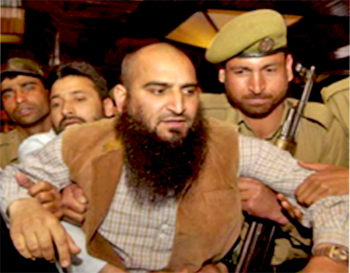
He wanted to know if the Governor had sent any such report and whether he had signed the release order of separatist Masarat Alam. The Hurriyat leader was released from prison three days ago.

Agarwal also wanted to know whether the Centre could give an assurance that no more separatists will be released by the Mufti Mohammad Sayeed government in Jammu and Kashmir.

Rajeev Shukla (Cong) also sought to know if the orders for Alam's release were signed by the Governor and if they were issued when the state was under President's rule.

AIADMK members claimed 10,000 separatist prisoners are about to be released in Jammu and Kashmir.

Jaitley said Home Minister Rajnath Singh had yesterday made it absolutely clear that he had certain reservations about the report received from the state government on the release of one separatist and had sought more information.

Deputy Chairman P J Kurien rejected the notice for suspension of business since the same issue was discussed threadbare yesterday and Home Minister had given his reply.

Kurien said the SP leader could give notice under different rules if he had any new information on the issue.

Taking strong exception to statements that 10,000 prisoners are being released, Jaitley said, "are you telling the world that we have kept 10,000 political prisoners... you have to have some sense of responsiblity (while making such statements)."

Alam had several cases against him and was granted bail by court in some of them, he said, adding the government will respond if any specific case of another separatist being released is brought to its notice.

Maintaining that the government will "find out and give response" if a specific case was given, he said "lt a notice be given with authentic facts. The House cannot be media-driven."

Agarwal however continued to insist on his notice and found support from some Congress members.

The issue consumed nearly half of the Zero Hour before order was restored and other issues taken up.

Earlier CPI(M) member P Rajeeve objected to the listing of the Motor Vehicles (Amendment) Bill, 2015 and Coal Mines (Special Provisions) Bill, 2015 saying the Business Advisory Committee of the House had not allotted time for the same.

Jaitley responded saying BAC had allotted 20 hours for government business and the two bills were to be discussed

Kurien said the House is supreme and can always allot time even if BAC does not provision any.

Comments

Add new comment

  • Coastaldigest.com reserves the right to delete or block any comments.
  • Coastaldigset.com is not responsible for its readers’ comments.
  • Comments that are abusive, incendiary or irrelevant are strictly prohibited.
  • Please use a genuine email ID and provide your name to avoid reject.
Agencies
January 20,2020

New Delhi, Jan 20: The BJP has got a brand new President in the form of JP Nadda. At around 2.30 pm, the announcement was made, bringing an end to the Amit Shah era in BJP. The party's Working President Jagat Prakash Nadda won unopposed, sparking celebrations outside the BJP headquarters here on Monday. 

Amit Shah himself was among the people who proposed Nadda's name along with Nitin Gadkari and Rajnath Singh. Soon after his annointment, BJP election returning officer Radha Mohan Singh told the media, "I announce JP Nadda as the new BJP President." Shah was also seen hugging Nadda.

The nomination process for the post of the BJP President began at 10 am and went on till 12.30 pm. For the next hour, the filed nomination paper, which was just one, was examined. Party members waitied till 2.30 pm for the candidate to withdraw if he wished to. It was after this that Nadda was declared as the man who would step into the shoes of Amit Shah.

Many in the BJP believe that although Nadda is the BJP chief now, Shah would still make all macro-level decisions like pre poll alliances or top organisational appointments. Nadda would be in charge of monitoring the day-to-day needs of the organisation. BJP sources say that Amit Shah himself wanted an arrangement like this one and personally wanted Nadda to take over. as he helped Shah formulate legislations like Triple Talaq and Citizenship Amendment Act.

The party constitution mandates completion of election of at least 50 per cent of state Presidents for the election of national President to happen. In the last few days, the BJP has completed the election of a slew of state Presidents like in West Bengal, Nagaland among others.

The process of election of the national BJP President is quite elaborate and has been described in detail in the party constitution, which says that the national president shall be elected by an electoral college, comprising members of the national council and the state councils.

"Any 20 members of the electoral college of a state can jointly propose the name of a person, who has been an active member for four terms and has 15 years of membership, for the post of national president. Such joint proposal should come from not less than five states where elections have been completed for the national council. The consent of the candidate is necessary," it says.

Who is JP Nadda?

Jagat Prakash Nadda, 59, who has his roots in the Rashtriya Swayamsevak Sangh (RSS) and its affiliates, was appointed the Bharatiya Janata Party (BJP) national President on Monday, replacing his 'mentor' and Union Home Minister Amit Shah.

Former environment, health and law minister from Himachal Pradesh, which has just four of the Lok Sabha's 543 seats, Nadda has tried to carve out his own space in national politics with his low profile and astute organisational skills, believe his party leaders.

He rose through the ranks from the Akhil Bharatiya Vidyarthi Parishad (ABVP), the student wing of the RSS, from where he has managed to build inroads from university to the state politics.

Nadda has been active on the national political scene since 2010 when he was picked by then BJP chief Nitin Gadkari to join his new team. He was made the party's national general secretary.

Born on December 2, 1960, Nadda did his graduation from Patna and holds a post-graduate degree in political science and Bachelor of Legislative Law (LL.B) from Himachal Pradesh University in Shimla.

Starting his political career as a student leader of the ABVP in 1978, Nadda had also worked both with Gadkari and Shah even in the party's youth wing -- the Bharatiya Yuva Morcha -- from 1991 to 1994.

His wife Mallika Nadda, who teaches history at the Himachal Pradesh University and is currently posted in university's campus in Delhi, was an ABVP activist too, and its national general secretary from 1988 to 1999.

In the previous BJP government (2007-12) in the state, Nadda was forced to resign as Forest Minister in 2010 owing to differences between him and then chief minister Prem Kumar Dhumal.

He was elected to the Rajya Sabha in 2012.

Nadda won his first Assembly election from Bilaspur (Sadar) in Himachal in 1993. In 1998, he again won from that seat and became the state Health Minister.

He lost the Assembly elections in 2003, but again won in 2007 and was appointed the Forest Minister in the Himachal Pradesh.

Nadda, as a forest minister, was the brain behind opening forest police stations to check forest crimes, launching community-driven plantation, setting up forest ponds and the massive plantation of deodars to boost the depleting green cover of the 'Queen of Hills', as Shimla was fondly called by the British.

A close confidant of Prime Minister Narendra Modi, Nadda was among those who were mentioned as likely aspirants to the BJP top post after Rajnath Singh was inducted into the Central government as the Home Minister in 2014.

Later, Nadda was inducted into the union cabinet in its first expansion in 2014 as the Health Minister.

Hailing Nadda's appointment, Chief Minister Jai Ram Thakur told IANS it is a proud moment that a leader belonging to a small state in the national politics is today the leader of the country's biggest national party.

His father N.L. Nadda, who was a Vice-Chancellor of the Ranchi University, resides in Bilaspur town.

Comments

Add new comment

  • Coastaldigest.com reserves the right to delete or block any comments.
  • Coastaldigset.com is not responsible for its readers’ comments.
  • Comments that are abusive, incendiary or irrelevant are strictly prohibited.
  • Please use a genuine email ID and provide your name to avoid reject.
News Network
April 23,2020

New Delhi, Apr 23: The entire Muslim community cannot be held responsible for one group's "crime", Minority Affairs Minister Mukhtar Abbas Naqvi said on Thursday while reacting to instances of Muslims being blamed for the spurt in COVID-19 cases after Tablighi Jamaat congregation here, and asserted that most of the minority community members have condemned the group's action.

In an interview to news agency, Naqvi also expressed confidence that Muslims will abide by lockdown guidelines during the holy month of Ramzan.

He said across the India, imams, Ulema and Muslim organizations have unanimously decided that during Ramzan (the Islamic holy month), Muslims will not congregate in mosques, religious places and perform all rituals like 'Iftaar' (breaking of fast) and 'taraweeh' (special prayers) at home keeping in mind social distancing norms.

Naqvi said he has spoken with state waqf board officials, social and religious leaders, imams on adherence to the lockdown and social distancing guidelines during the Ramzan month starting Friday or Saturday evening and they have begun creating awareness among the people.

Asked about some people blaming Muslims for the spread of the pandemic after a large number of cases were found linked to the Tablighi Jamaat event at Nizamudddin here, Naqvi said the whole community cannot be held responsible for the "crime" of one organisation or one person.

"Whatever that organisation did, criminal negligence or crime...most Muslims have strongly reacted to it, condemned it and called for action against it. Entire community cannot be held responsible for one person or one organisation's crime," he asserted, adding that this has always been India's culture.

Last week, the Union Health Ministry had said 29.8 per cent of the total COVID-19 cases — 4,291 out of 14,378 COVID-19 infections — in the country were linked to the Tablighi Jamaat congregation in March at the group's headquarters in Delhi following which some sections of the society severely criticised Muslims, and blamed them for the spread of the pandemic in the country.

Naqvi's comments also assume significance in view of the 57-member prominent international Mulim grouping, Organisation of Islamic Cooperation (OIC), asking India to take "urgent steps" to protect the rights of its minority Muslim community and stop the incidents of "Islamophobia" in the country.

Hitting out at the OIC, the minister had said the country is "heaven for Muslims" and those trying to vitiate the atmosphere of prosperity cannot be friends of Indian Muslims.

Naqvi said those targeting Muslims are few isolated people who are trying to spread "misinformation" and "we should be united and isolate such elements".

On the COVID-19 lockdown restrictions during Ramzan, Naqvi said no Muslim wants to stay away from mosques during the holy month, but everyone has resolved to win this battle against coronavirus.

During this month, everyone should pray to God that not only India but also the entire world is freed from this COVID-19 pandemic, he said.

Asked whether Muslims have followed lockdown and social distancing guidelines till now, Naqvi said, "absolutely, the entire country is standing united in this fight against coronavirus."

"When Prime Minister Narendra Modi had appealed to people with folded hands, he had appealed to 130 crore Indians, it was not based on caste or religion. And everybody responded to his appeal and acted on it," he said.

People have faith that whatever Prime Minister Modi does is for the health and safety of the people, Naqvi said.

Asked about the role of the Opposition in the fight against COVID-19 and Congress chief Sonia Gandhi and Rahul Gandhi's suggestions, Naqvi said,"some people have criticized, but that is their habit, we don't take any offence to it."

Comments

Add new comment

  • Coastaldigest.com reserves the right to delete or block any comments.
  • Coastaldigset.com is not responsible for its readers’ comments.
  • Comments that are abusive, incendiary or irrelevant are strictly prohibited.
  • Please use a genuine email ID and provide your name to avoid reject.
News Network
June 15,2020

Sitamarhi, Jun 15: Eyewitness accounts from locals in Bihar's Sitamarhi district recount the brutality and intimidation by Nepal's security personnel who on June 12 had resorted to unprovoked firing on a group of people at the international border, which left one Indian dead and two others injured.

"18-20 shots were fired for over one hour and everyone is in shock even now," said Nitish Kumar, a resident of Jankinagar recalling the incident that took place early on Friday morning.

Nepal's Armed Police Force (APF) opened fire at the Lalbandi-Jankinagar border in which three men - Vikesh Yadav, Umesh Ram and Uday Thakur - suffered gunshot injuries. Vikash Yadav succumbed to his injuries on Friday itself.

Another person Lagan Kishore, who was at the border with his family to meet his daughter-in-law, a Nepali national and her family, said he was detained by the APF personnel who dragged him to the other side of the border.

Lagan Kishore said that the Nepali personnel abused and hit him with rifle butts and even abused his son and later resorted to firing.

Several residents of Jankinagar, who spoke to media, termed the incident as "unfortunate and shocking".

Nitish Kumar recalled: "A family was here to meet their in-laws (Nepali nationals). The daughter-in-law was talking to her family while her husband and her father-in-law sat a little distance away. Suddenly I saw Nepali personnel abusing her husband who complained about it to his father. All of a sudden the Nepali forces started thrashing them and then opened fire. They also took the father into custody."

"We were all shocked. I could hear about 18-20 gunshots fired over a period of one hour," Kumar said.

Another local, Ajit Kumar, said he was perplexed with the behaviour of the Nepali Police.

"There used to be no problems earlier. We don't understand what happened to the Nepal Police that day. The firing is unfortunate. If this continues, how will people in the border area live?" he questioned.

Ajit Kumar stated that such an incident has taken place for the first time. "People from here go to work in fields in Nepal and their people come to work in our fields. Such a thing has happened for the first time. About 80 per cent of our people are married to Nepalis," he said.

Many people who live in the adjoining districts of Bihar, which shares over 600 kilometres of border with Nepal, have relatives on either side of the border.

Meanwhile, Nepali police have claimed that Lagan Kishore, who was taken into custody following the firing by APF and handed over to Indian Security Forces at no man's land on June 13, was detained for trying to snatch a weapon from one of their personnel during an altercation.

However, both Kishore and his family have denied the claims and said he was "dragged" across the border and was beaten.

Kishore said that during the firing he had rushed towards the Indian side but Nepalese personnel hit him with rifle butt and took him to Nepal's Sangrampur. He was also asked to confess that he was taken into custody from the Nepali side.

"We ran to return to India when they started firing, but they dragged me from the Indian side, hit me with a rifle butt and took me to Nepal's Sangrampur. They told me to confess that I was brought there from Nepal. I told them you can kill me but I was brought there from India," said Kishore.

Kishore's son also said that Nepali personnel started abusing them and hit him and his father.

Speaking to ANI, Kishore's son said, "We went to meet my brother-in-law. Security personnel started abusing me but I could not understand their language. However, my brother's wife asked them to not abuse. After that, they came to the Indian side and hit me. I told my father about the incident and he confronted them."

"They started beating him and called fellow personnel who started firing and dragged my father from the Indian side, hit him with a rifle butt and took him to Nepal''s Sangrampur," he said.

Relations have become strained between India and Nepal after the latter released a map showing parts of Indian Territory-Lipulekh, Kalapani and Limpiyadhura as its own.

Comments

Add new comment

  • Coastaldigest.com reserves the right to delete or block any comments.
  • Coastaldigset.com is not responsible for its readers’ comments.
  • Comments that are abusive, incendiary or irrelevant are strictly prohibited.
  • Please use a genuine email ID and provide your name to avoid reject.