Orphanage Olympics held in Managluru

[email protected] (CD Network)
January 10, 2016

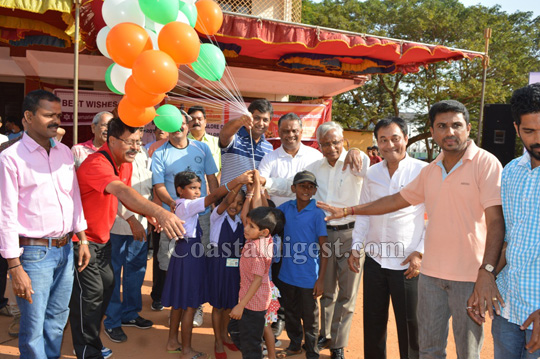
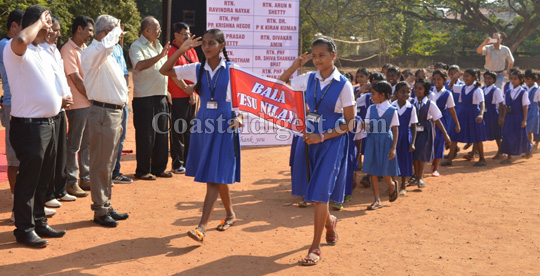
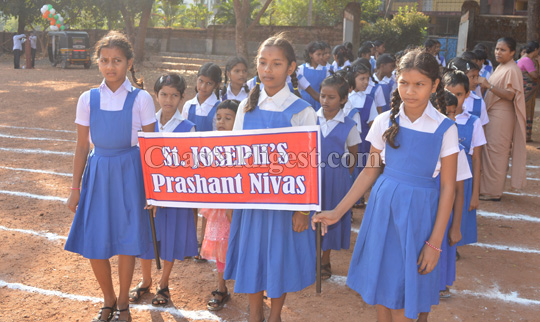
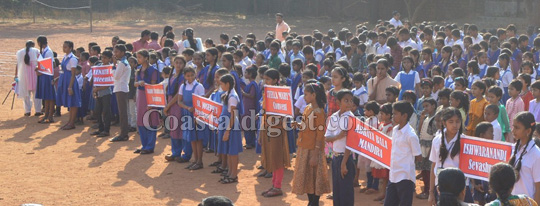
Mangaluru Jan 10: It was a special and eventful day for the very enthusiastic 600 children of 10 Orphanage schools operating in Dakshina Kannada district who crave for parental love and affection but unfortunately deprived.
orphng 8

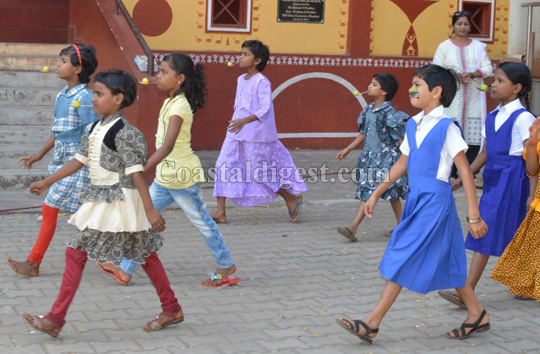
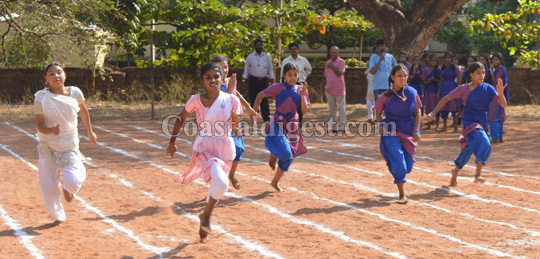
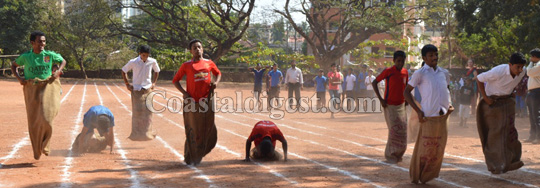
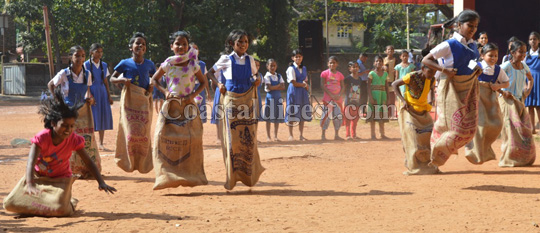
They felt the sense of freedom and freely mingled, played, danced, with other orphanage school children and shared their memorable moments. It was a platform provided by Rotary Club of Mangalore Central to showcase their hidden skills & talents in the field of sports and cultural events. All the guests could see the enjoyment in the faces of the children.

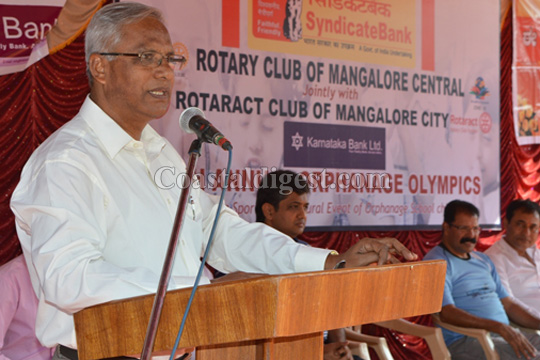
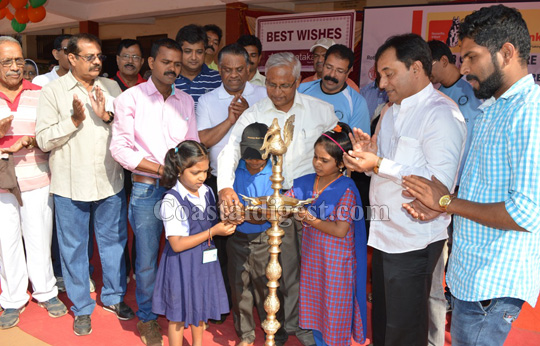
Rotary Club of Mangaluru Central jointly with Rotaract Club of Mangaluru city organised their 17th Annual Orphanage Olympics exclusively for the inmates of the different orphanages operating in the district on Sunday at Canara High School Urwa Campus in the city. It was a one day long fun fair festival of sports and cultural events wherein 600 children belonging to 10 different orphanages of the dist. participated with zeal and enthusiasm.

Mangaluru South MLA JR Lobo in his inaugural address advised the children to grab the rare opportunity provided by the society and participate actively by exhibiting hidden talents and skills to achieve success in their future. The Rotary Club has responded to the needs of the orphanage children by providing a platform and equal opportunity in order to eliminate social inequality. He also lauded the selfless service of Rotarians rendered to community development and recalled club’s substantial financial contribution of Rs. 18 Lakhs towards setting up of Planetarium at Pilikula in the year 1998. Asst. Governor Zone IV Rtn. K R Kamath was the guest of honour on this occasion.

Chairman of the organising committee Rtn. Dr. Devdas Rai in his address revealed that this is club’s prestigious community service project, the aim and objective of the event is to bring a smile on the faces of the lovely children and a feeling that they are not lonely.

President of the club Rtn. Elias Sanctis welcomed. President of Rotaract Club of Mangalore City Rtr. Rajesh Devadiga proposed a vote of thanks. Rtn K. M Hegde compeered the program. On the dais Secretary Rtn. Prasad Shetty and Rtr. Yathish were present.
orphng 1

orphng 2

orphng 3

orphng 4

orphng 5

orphng 6

orphng 7

orphng 9

orphng 10

Comments

Fairman
 - 
Sunday, 10 Jan 2016

Is it not possible to combine these children with other
non-Orphanage children.

Naming the program as orphanage, might cause the orphan-children to think, that they are being separated from the society or from other children.

I remember I heard that (if I am not wrong)
Prophet Muhammad (peace be upon him ) said, whoever look after the orphans, they will be accompanied with him in heaven.

Regardless of religion, race, we should always wholeheartedly help these kids as they never feel they are deprived of parental affection

Add new comment

  • Coastaldigest.com reserves the right to delete or block any comments.
  • Coastaldigset.com is not responsible for its readers’ comments.
  • Comments that are abusive, incendiary or irrelevant are strictly prohibited.
  • Please use a genuine email ID and provide your name to avoid reject.
News Network
April 2,2020

The current physical distancing guidelines provided by the World Health Organisation (WHO) and by the US Centers for Disease Control and Prevention (CDC) may not be adequate to curb the coronavirus spread, according to a research which says the gas cloud from a cough or sneeze may help virus particles travel up to 8 metres. The research, published in the Journal of the American Medical Association, noted that the the current guidelines issued by the WHO and CDC are based on outdated models from the 1930s of how gas clouds from a cough, sneeze, or exhalation spread.

Study author, MIT associate professor Lydia Bourouiba, warned that droplets of all sizes can travel 23 to 27 feet, or 7-8 metres, carrying the pathogen.

According to Bourouiba, the current guidelines are based on "arbitrary" assumptions of droplet size, "overly simplified", and "may limit the effectiveness of the proposed interventions" against the deadly pandemic.

 She explained that the old guidelines assume droplets to be one of two categories, small or large, taking short-range semi-ballistic trajectories when a person exhales, coughs, or sneezes.

However based on more recent discoveries, the MIT scientist said, sneezes and coughs are made of a puff cloud that carries ambient air, transporting within it clusters of droplets of a wide range of sizes.

Bourouiba warned that this puff cloud, with ambient air entrapped in it, can offer the droplets moisture and warmth that can prevent it from evaporation in the outer environment.

"The locally moist and warm atmosphere within the turbulent gas cloud allows the contained droplets to evade evaporation for much longer than occurs with isolated droplets," she said.

"Under these conditions, the lifetime of a droplet could be considerably extended by a factor of up to 1000, from a fraction of a second to minutes," the researcher explained in the study.

The MIT scientist, who has researched the dynamics of coughs and sneezes for years, added that these droplets settle along the trajectory of a cough or sneeze contaminating surfaces, with their residues staying suspended in the air for hours.

"Even when maximum containment policies were enforced, the rapid international spread of COVID-19 suggests that using arbitrary droplet size cutoffs may not accurately reflect what actually occurs with respiratory emissions, possibly contributing to the ineffectiveness of some procedures used to limit the spread of respiratory disease," Bourouiba wrote in the study

Comments

Add new comment

  • Coastaldigest.com reserves the right to delete or block any comments.
  • Coastaldigset.com is not responsible for its readers’ comments.
  • Comments that are abusive, incendiary or irrelevant are strictly prohibited.
  • Please use a genuine email ID and provide your name to avoid reject.
Agencies
May 8,2020

Washington D.C., May 8: The prime time for brain development in a child's life is the first year, where the infant spends most of the time asleep. It is the time when neural connections form and sensory memories are encoded.

However, when sleep is disrupted, as occurs more often among children with autism, brain development may be affected, too.

New research led by the University of Washington finds that sleep problems in a baby's first 12 months may not only precede an autism diagnosis but also may be associated with altered growth trajectory in a key part of the brain, the hippocampus.

The study, which was published in the American Journal of Psychiatry, researchers report that in a sample of more than 400 taken of 6- to 12-month-old infants, those who were later diagnosed with autism were more likely to have had difficulty falling asleep.

It also states that this sleep difficulty was associated with altered growth trajectories in the hippocampus.

"The hippocampus is critical for learning and memory, and changes in the size of the hippocampus have been associated with poor sleep in adults and older children.

As many as 80 per cent of the children with autism spectrum disorder have sleep problems," said Annette Estes, director of the UW Autism Center and senior author of the study.

"In our clinical experience, parents have a lot of concerns about their children's sleep, and in our work on early autism intervention, we observed that sleep problems were holding children and families back," added Estes, who is also a UW professor of speech and hearing sciences.

"It could be that altered sleep is part-and-parcel of autism for some children. One clue is that behavioural interventions to improve sleep don't work for all children with autism, even when their parents are doing everything just right. This suggests that there may be a biological component to sleep problems for some children with autism," said Estes.

To consider links among sleep, brain development, and autism, researchers at the IBIS Network looked at MRI scans of 432 infants, surveyed parents about sleep patterns, and measured cognitive functioning using a standardized assessment.

At the outset of the study, infants were classified according to their risk for developing autism: Those who were at higher risk of developing autism -- about two-thirds of the study sample -- had an older sibling who had already been diagnosed.

Infant siblings of children with autism have a 20 per cent chance of developing autism spectrum disorder -- a much higher risk than children in the general population.

In the current study, 127 of the 432 infants were identified as "low risk" at the time the MRI scans were taken because they had no family history of autism.

They later evaluated all the participants at 24 months of age to determine whether they had developed autism. Of the roughly 300 children originally considered "high familial risk," 71 were diagnosed with autism spectrum disorder at that age.

Problems with sleep were more common among the infants later diagnosed with an autism spectrum disorder, as were larger hippocampi. No other subcortical brain structures were affected, including the amygdala, which is responsible for certain emotions and aspects of memory, or the thalamus, a signal transmitter from the spinal cord to the cerebral cortex.

The authors note that while parents reported more sleep difficulties among infants who developed autism compared to those who did not, the differences were very subtle and only observed when looking at group averages across hundreds of infants.

Sleep patterns in the first years of life change rapidly as infants transition from sleeping around the clock to a more adult-like sleep/wake cycle. Until further research is completed, Estes said, it is not possible to interpret challenges with sleep as an early sign of increased risk for autism.

Comments

Add new comment

  • Coastaldigest.com reserves the right to delete or block any comments.
  • Coastaldigset.com is not responsible for its readers’ comments.
  • Comments that are abusive, incendiary or irrelevant are strictly prohibited.
  • Please use a genuine email ID and provide your name to avoid reject.
coastaldigest.com news network
May 4,2020

Mangaluru, May 4: The district administration has set up seven check-posts to monitor those entering Dakshina Kannada from other districts and states amidst coronavirus crisis.

The check-posts are located at up seven check-posts at Talapady, Hejamady, Gundya, Jalsoor, Charmadi, Naravi and Kallugundi. 

According to Deputy Commissioner Sindhu B Rupesh, all those who enter the district will be screened. Those who come from outside the district and state will be asked to remain in quarantine. 

As the relaxation is announced for 12 hours, the public should be cautious while venturing out of the house. Wearing a mask in public is mandatory in addition to maintaining social distance. 

Further, she said of the 24 cases reported in the district, only four had symptoms of breathlessness and others were asymptomatic. Of the nine active cases in the district, the condition of one patient is serious while two are likely to be discharged from hospital shortly, said the DC.

Comments

Add new comment

  • Coastaldigest.com reserves the right to delete or block any comments.
  • Coastaldigset.com is not responsible for its readers’ comments.
  • Comments that are abusive, incendiary or irrelevant are strictly prohibited.
  • Please use a genuine email ID and provide your name to avoid reject.