Overeating, stress = high BP, diabetes = chronic kidney diseases: Dr Vivek Pathak

[email protected] (CD Network | Photos by Suresh)
June 15, 2015

Mangaluru, Jun 15: Stating that diabetes and high blood pressure are the two primary reasons for chronic kidney diseases (CKD), Dr Vivek Pathak, a renowned nephrologist, said that the prevention of such diseases is cheaper to undergoing treatment later.

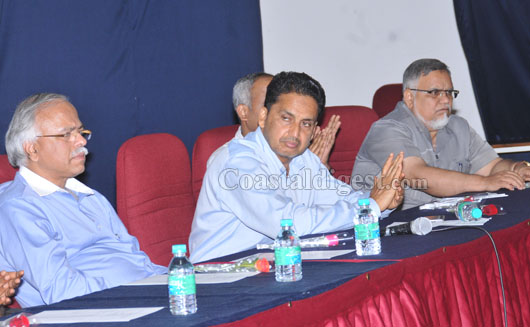
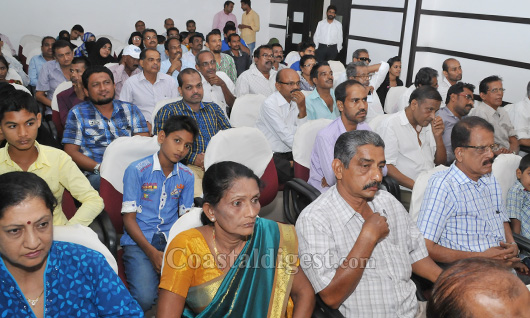
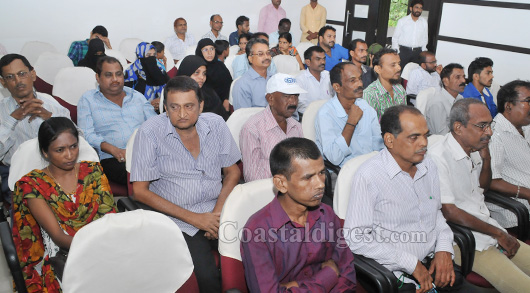
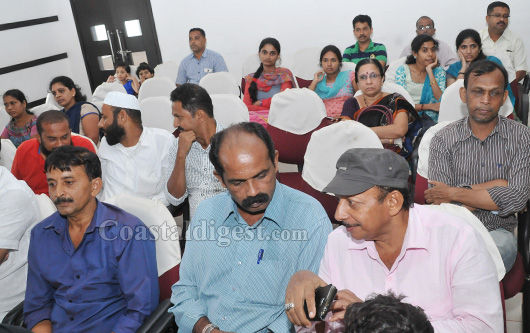
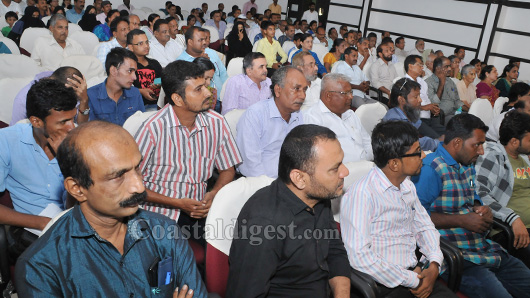
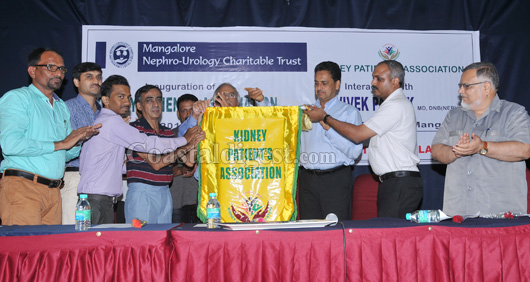
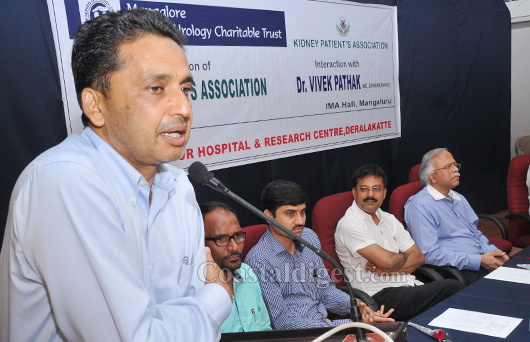
Dr Pathak, a consultant nephrologist at Kovai Medical Center and Hospitals, Coimbatore, known for steroids-free kidney transplantations, was speaking at the inauguration of Kidney Patients’ Association in the city on Sunday.
Kidney association 14 1

“Overeating leads to obesity which in turn leads to diabetes and high BP. No one dies by eating less,” he reminded, adding that stress also would invariably contribute to diabetes and high blood pressure.

Besides diabetes and high BP, such diseases could also happen hereditarily, especially when marriages were done among close relatives. Such practices should stop, he said.

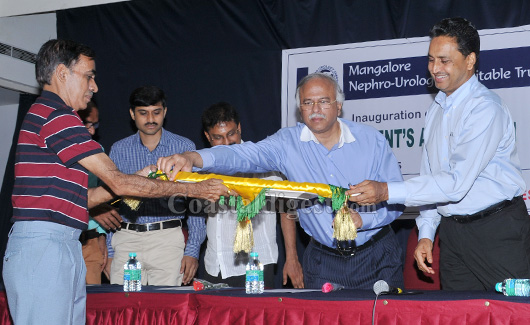
Earlier, the association was formally inaugurated by A B Ibrahim, Deputy Commissioner, DK. Speaking on the occasion, he said that CKD were not included in health schemes because of the alleged involvement of kidney rackets.

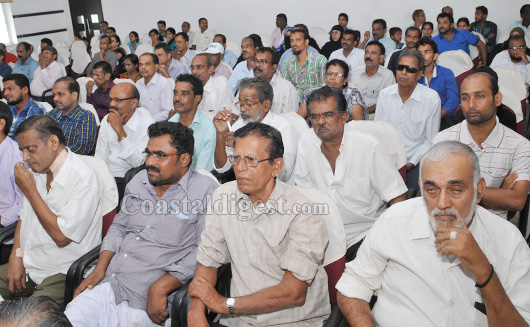
Kidney association 14 1

However, it was true that patients were forced to undergo physical and financial ordeal, he said. “I will send a proposal to the government to bring them under the Vajpayee Arogyashree scheme,” Mr. Ibrahim said.

In his introductory address, Umar U.H., one of the members of Mangalore Nephro-Urology Charitable Trust that is promoting the association, said unlike other diseases, kidney disease would not be known till both the kidneys were damaged. While many other diseases were covered under government health schemes, chronic kidney diseases were not part of them.
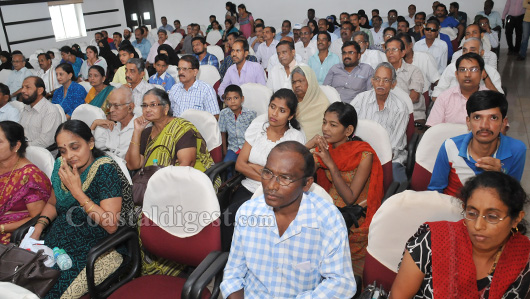
Kidney association 14 1

Those undergoing dialyses as well as transplantation would have to spend thousands of rupees every month for medicines and treatment, he said.

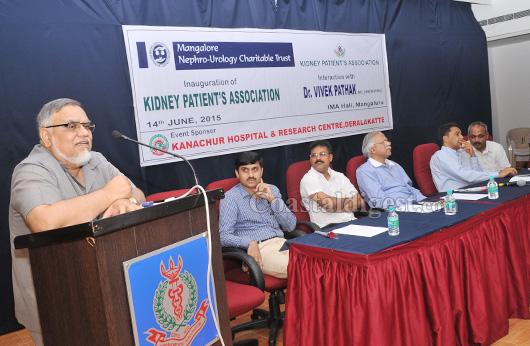
Mohammed Saleem, chairman of the Trust, said it had been conducting awareness programmes on kidney diseases for the past three years. So far, help from society — associations, organisations, temple committees, Masjid jamats etc. — was being taken for treatment or dialysis of poor kidney patients. However, such a practice cannot go for long and the association was conceptualised.

Besides creating a corpus for the financial needs of patients, the association would also work as a collective to demand facilities for them, Dr. Saleem said.

Every dialysis centre would have information centres of the association where new patients would be informed about the procedure of treatment and available alternatives. It would primarily aim at disseminating information, he said.
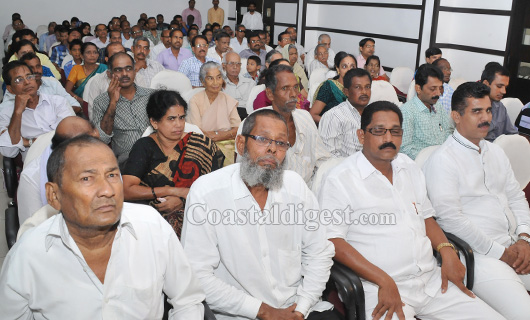
Kidney association 14 1

Kidney association 14 1

Kidney association 14 1

Kidney association 14 1

Kidney association 14 1

Kidney association 14 1

Kidney association 14 1

Kidney association 14 1

Kidney association 14 1

Kidney association 14 1

Comments

Michel
 - 
Thursday, 18 Feb 2016

I havee been surfing online more than 3 hours today, yet I never found any interesting article like yours.
It is pretty worth enough for me. Personally, if all site owners and
bloggerrs made gookd content as you did, the internet will be much
more useful than ever before.

Here is my web-site; private storage gold iras (Florene: http://www.fellas.nl/Activiteiten/Activiteit/26-04-2013/TGIF-borrel_Gro…)

Levi
 - 
Friday, 29 Jan 2016

Many researchers believe that cinnamon might help
maintain normal levels of blood glucose levels.
Results noticed in patients have been administered 3 doses of cinnamon every day for 40 days included lowered blood triglycerides, reduced blood sugar, and decreased cholesterol.
Cinnamon was also given in other experiments alongside a placebo and
patients who received the cinnamon were found to possess significantly lower amounts of glucose inside blood.

Also visit my homepage diabetes
diet: http://diabetesbetter.com/

Add new comment

  • Coastaldigest.com reserves the right to delete or block any comments.
  • Coastaldigset.com is not responsible for its readers’ comments.
  • Comments that are abusive, incendiary or irrelevant are strictly prohibited.
  • Please use a genuine email ID and provide your name to avoid reject.
Media Release
February 14,2020

Veteran journalist P. Sainath has said that the nation is in a crisis. And this crisis is not limited to just the rural area. It has become a national crisis at various areas such as agriculture, education, economy, job creation etc.

He was delivering the endowment lecture on the topic ‘Indian democracy at the post-liberalization and post-truth era’ at Media Manthan 2020 organized by the PG department of journalism and mass communication at St Aloysius College (Autonomous). 

Mr Sainath said that the many policies adopted in the 90s led to India becoming unusually unequal. Referring to the speech Ambedkar had made at the Constituent Assembly while handing over the draft of the Constitution, Mr Sainath said, “Ambedkar had warned about the weakness of Indian democracy that liberty without equality allows the supremacy of a few over the multitude. Liberty, equality and fraternity must be kept together as we cannot have one without the other.” 

Mr Sainath stated that the agrarian crisis was no longer about the loss of productivity, employment or about farmer suicide; it was a societal, civilizational crisis. Commenting on the lopsided policies such as cow-slaughter ban, he explained how cow slaughter ban had adversely affected many industries due to their interdependency. While Muslims who slaughtered cows were rendered helpless, the cattle traders who were mostly OBCs lost their earnings as the cattle prices crashed. An important industry like Kolhapur sandals industry in Maharashtra went bankrupt as a result of the cow slaughter ban in Maharashtra. He said the policymakers had no idea how the rural industries were interconnected. Demonetisation too devastated the rural economy as 98 percent of rural transactions happen through cash. 

Mr Sainath also spoke about the crisis of inequality which affects the Dalits and the Adivasis far more than anyone else as 90 percent of the rural households take home less than Rs 10,000/- per month. “Women are yet another group whose labour is never counted in the gross domestic product. Women and girls globally do unpaid work which amounts to about 12.5 billion working hours per year. Monetarily speaking, this is worth 10.8 trillion dollars,” Mr Sainath added. 

Speaking about the crisis of jobs Mr Sainath said that major companies were laying off employees just to create more profits for the investors and the adoption of artificial intelligence in the industry would further destroy millions of jobs.

Rector of St Aloysius College Institutions Fr Dionysius Vaz SJ, Principal Dr (Fr) Praveen Martis SJ, HOD of Journalism and Mass Communication department Dr (Fr) Melwyn Pinto SJ were present.

‘Veerappan and Vijay Mallya’s business models are interesting!’

Addressing the gathering during his endowment lecture on Friday, Mr Sainath made an interesting comment on the so called ‘revenue model’. “Whenever I visit IIMs and IITs for lectures on my PARI project, the students there ask me what my revenue model for my project is. I tell them that I do not have a revenue model. In fact, journalism does not begin with a revenue model. Gandhiji, Ambedkar, Bhagat Singh were all great journalists. But they did not have a revenue model,” Mr Sainath said.

On a lighter note, he said that the best revenue model that he liked was that of forest brigand Veerappan and liquor baron Vijay Mallya. “Veerappan ruled the forest for forty years and from the top ministers to the villagers he could dictate terms and liver royally. Similarly, Mallya’s revenue model was to steal the banks and run away abroad and live like a king,” Mr Sainath added.

Journalism is not and can never be a business. It is a calling, he opined. While newspaper can be a business, television can be a business, journalism per se cannot be reduced to a business. “Unfortunately today, journalists are recruited on a contract basis and they have no bargaining power; and there are no unions to fight for their cause. Hence, they are at the mercy of the corporate media houses for their survival and are made to write stories that cannot be called journalism,” Mr Sainath said.

Answering a question as to the pressures he faced as a journalist, he said that external pressures from the government or others could be very well handled. It is the internal pressures from once own media house that journalists find it difficult to manage.


Comments

Add new comment

  • Coastaldigest.com reserves the right to delete or block any comments.
  • Coastaldigset.com is not responsible for its readers’ comments.
  • Comments that are abusive, incendiary or irrelevant are strictly prohibited.
  • Please use a genuine email ID and provide your name to avoid reject.
Abu Muhammad | coastaldigest.com
January 16,2020

Even as the Muslims of undivided Dakshina Kannada district broke out of the “spiral of silence” and made history by leading an unprecedented protest against CAA, NPR and NRC as well as the categorial mistreatment of non-saffronites at the hands of the police across the country, mainstream media turned a blind eye to the spectacle at the Shah Garden Maidan in Mangaluru’s Adyar where about two lakh patriots with tricolor in their hands converged to assert themselves on January 15th, 2020, a date which will be remembered by the people of coastal Karnataka forever.

The largest gathering in the history of Mangaluru was absolutely peaceful, law-abiding and respectful. While the slogans of ‘Azaadi’ were reverberating in the atmosphere, the protesters were seen making way for vehicles and passersby, taking care of women and helping elderly citizens on the highway adjacent to the ground. Though the organisers and most of the participants were Muslims, they collectively identified themselves as “We, the people of India”.

The district administration and the police department hadn’t imagined or even dreamt of such a mammoth gathering after blocking the highway and banning public transport from 9 am to 9 pm. Many opine that this action was taken only to discourage the concerned from participating in the protest and to create fear in the hearts of the people who are yet to process the unjustifiable deaths of two innocent citizens in an unwarranted police firing a few weeks ago.

What has since surprised the protesters most is the mainstream media’s blatant attempt to downplay the significance of this largest ever gathering. Shockingly, it could not make it to the front pages of any of the state-level Kannada daily newspapers except city-based Vaartha Bharathi. In the absence of The Hindu, which had announced a holiday on account of Makar Sankranti, most of the English newspapers too pitilessly buried the historic event in their inner pagers. National TV channels too were evidently reluctant to cover the event until NDTV started telecasting the news of the protest.

This uneasy relationship between the media and minorities in coastal Karnataka has long existed, but the non-coverage of the huge protest of Jan 15 marks a quantum leap beyond the media’s traditional pro-Sangh Parivar stance and biases –– which in the past had often demonised non-saffronites –– to now completely ignore and suppress the people’s voice. This media bias has naturally evoked a sharp response from netizens, who took to social media to issue clarion calls to boycott the mainstream media forever.

Cleanliness Drive

Most major protest meets and rallies –– both religious and political –– leave behind tonnes of garbage, especially water bottles, placards and buntings. However, the organisers of the Jan 15 protest meet led by example by launching a cleanliness drive in the area soon after the protesters left the venue peacefully. The drive continued on Jan 16 too. (Ironically, amidst this ongoing cleanliness drive, a local news portal captured photos of a few plastic bottles scattered along the road at Adyar and published a report accusing the event organisers and participants of polluting the area!)

Comments

Add new comment

  • Coastaldigest.com reserves the right to delete or block any comments.
  • Coastaldigset.com is not responsible for its readers’ comments.
  • Comments that are abusive, incendiary or irrelevant are strictly prohibited.
  • Please use a genuine email ID and provide your name to avoid reject.
News Network
May 18,2020

Bengaluru, May 18: Senior Congress leader and former Union Minister Mallikarjuna Kharge on Monday slammed the State Government’s decision to appoint administrative committees to Panchayats, which completes their five-year term, shortly.

Speaking to media persons, the Congress leader described the State Government’s decision on appointing committees as a ‘death knell ‘ to the basic characters of the Panchayat bodies, which were elected on a non-party basis.

Strongly recommending the BJP-led government to desist from its decision, Kharge urged Chief minister B S Yediyurappa to extend the term of the elected bodies of the Panchayats by six months.

Comments

Add new comment

  • Coastaldigest.com reserves the right to delete or block any comments.
  • Coastaldigset.com is not responsible for its readers’ comments.
  • Comments that are abusive, incendiary or irrelevant are strictly prohibited.
  • Please use a genuine email ID and provide your name to avoid reject.