Overeating, stress = high BP, diabetes = chronic kidney diseases: Dr Vivek Pathak

[email protected] (CD Network | Photos by Suresh)
June 15, 2015

Mangaluru, Jun 15: Stating that diabetes and high blood pressure are the two primary reasons for chronic kidney diseases (CKD), Dr Vivek Pathak, a renowned nephrologist, said that the prevention of such diseases is cheaper to undergoing treatment later.

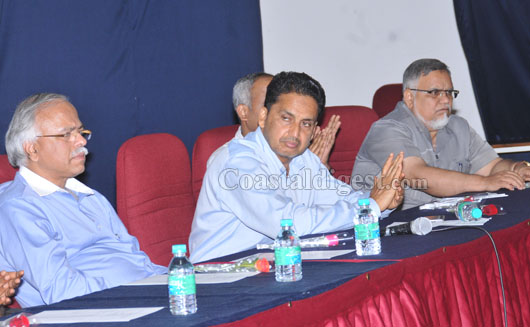
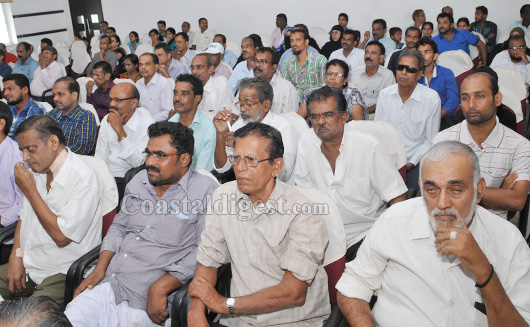
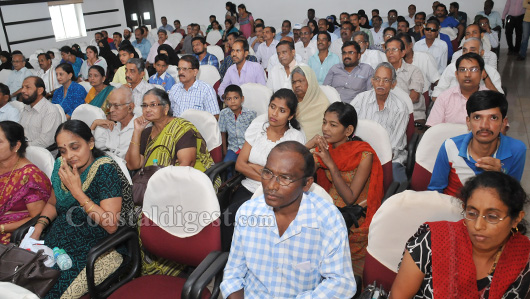
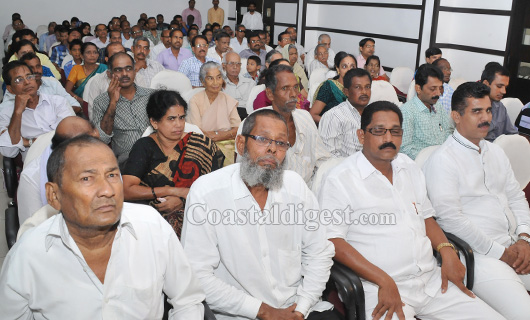
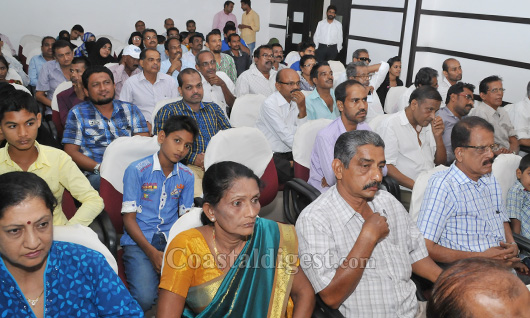
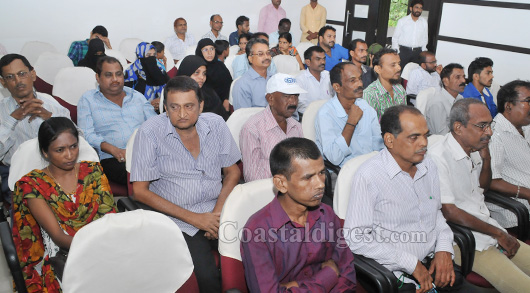
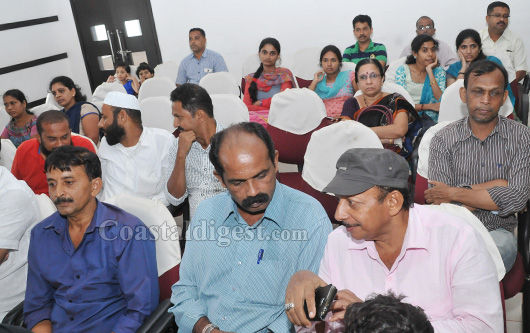
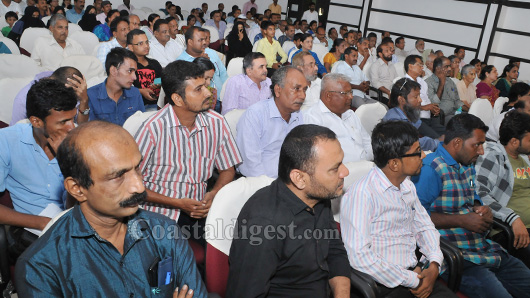
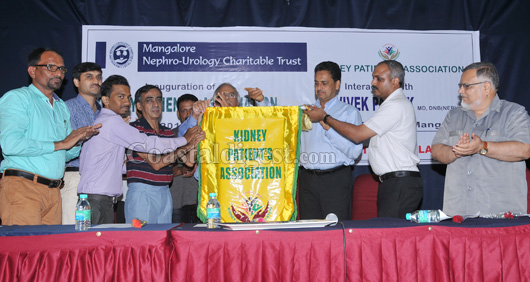
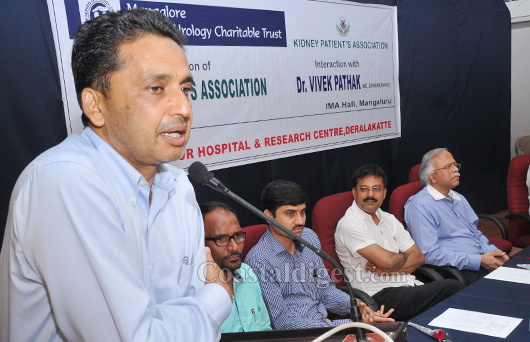
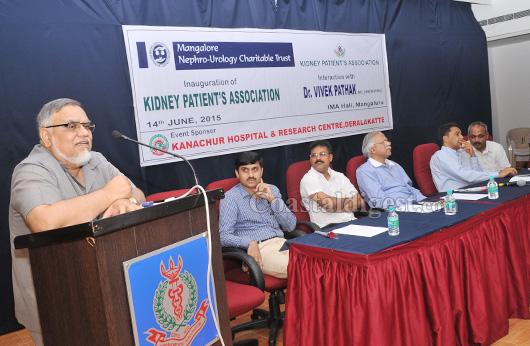
Dr Pathak, a consultant nephrologist at Kovai Medical Center and Hospitals, Coimbatore, known for steroids-free kidney transplantations, was speaking at the inauguration of Kidney Patients’ Association in the city on Sunday.
Kidney association 14 1

“Overeating leads to obesity which in turn leads to diabetes and high BP. No one dies by eating less,” he reminded, adding that stress also would invariably contribute to diabetes and high blood pressure.

Besides diabetes and high BP, such diseases could also happen hereditarily, especially when marriages were done among close relatives. Such practices should stop, he said.

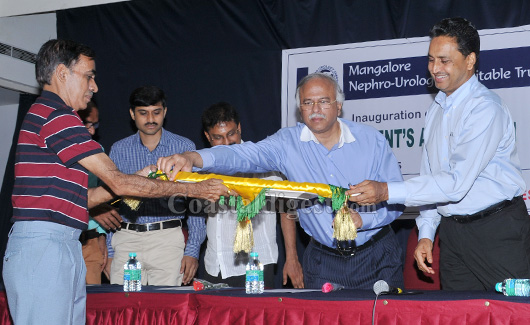
Earlier, the association was formally inaugurated by A B Ibrahim, Deputy Commissioner, DK. Speaking on the occasion, he said that CKD were not included in health schemes because of the alleged involvement of kidney rackets.

Kidney association 14 1

However, it was true that patients were forced to undergo physical and financial ordeal, he said. “I will send a proposal to the government to bring them under the Vajpayee Arogyashree scheme,” Mr. Ibrahim said.

In his introductory address, Umar U.H., one of the members of Mangalore Nephro-Urology Charitable Trust that is promoting the association, said unlike other diseases, kidney disease would not be known till both the kidneys were damaged. While many other diseases were covered under government health schemes, chronic kidney diseases were not part of them.
Kidney association 14 1

Those undergoing dialyses as well as transplantation would have to spend thousands of rupees every month for medicines and treatment, he said.

Mohammed Saleem, chairman of the Trust, said it had been conducting awareness programmes on kidney diseases for the past three years. So far, help from society — associations, organisations, temple committees, Masjid jamats etc. — was being taken for treatment or dialysis of poor kidney patients. However, such a practice cannot go for long and the association was conceptualised.

Besides creating a corpus for the financial needs of patients, the association would also work as a collective to demand facilities for them, Dr. Saleem said.

Every dialysis centre would have information centres of the association where new patients would be informed about the procedure of treatment and available alternatives. It would primarily aim at disseminating information, he said.
Kidney association 14 1

Kidney association 14 1

Kidney association 14 1

Kidney association 14 1

Kidney association 14 1

Kidney association 14 1

Kidney association 14 1

Kidney association 14 1

Kidney association 14 1

Kidney association 14 1

Comments

Michel
 - 
Thursday, 18 Feb 2016

I havee been surfing online more than 3 hours today, yet I never found any interesting article like yours.
It is pretty worth enough for me. Personally, if all site owners and
bloggerrs made gookd content as you did, the internet will be much
more useful than ever before.

Here is my web-site; private storage gold iras (Florene: http://www.fellas.nl/Activiteiten/Activiteit/26-04-2013/TGIF-borrel_Gro…)

Levi
 - 
Friday, 29 Jan 2016

Many researchers believe that cinnamon might help
maintain normal levels of blood glucose levels.
Results noticed in patients have been administered 3 doses of cinnamon every day for 40 days included lowered blood triglycerides, reduced blood sugar, and decreased cholesterol.
Cinnamon was also given in other experiments alongside a placebo and
patients who received the cinnamon were found to possess significantly lower amounts of glucose inside blood.

Also visit my homepage diabetes
diet: http://diabetesbetter.com/

Add new comment

  • Coastaldigest.com reserves the right to delete or block any comments.
  • Coastaldigset.com is not responsible for its readers’ comments.
  • Comments that are abusive, incendiary or irrelevant are strictly prohibited.
  • Please use a genuine email ID and provide your name to avoid reject.
News Network
January 15,2020

Bengaluru, Jan 15: Srishti Institute of Art, Design and Technology in Bengaluru has decided to remain shut for two days after a group of BJP workers wiped out graffiti on its outer walls claiming it as anti-Modi and allegedly warned them against any anti CAA agitation there.

According to sources, the group led by Yelahanka MLA S R Vishwanath allegedly even towed away some vehicles of students and faculty parked in front of the institute alleging that they were blocking the road and causing inconvenience to the local people.

Some students have alleged that they were threatened by BJP workers and also the institute's authorities regarding the graffiti and the blocking of the road using traffic police.

They even claimed that BJP workers warned them against organising any anti-NRC or CAA protests.

A few local residents are also said to have joined the BJP workers and raised complaints about the conduct of the institute's students.

According to local BJP workers, the MLA and a few party men had gone near the institute on receiving complaints from locals about vehicles parked there blocking the road, and when they came across the graffiti they painted it with saffron paint to avoid any controversy, and there was no altercation as being alleged.

However, there is no clarity on who drew the graffiti regarding Modi, which according to BJP workers allegedly depicted the PM in poor light.

The institute has declared holiday on Thursday and Friday to avoid any further escalation, keeping the interest and safety of students in mind, sources said.

Interestingly, on Tuesday graffiti had appeared overnight on the shutters of some shops and walls on the Church Street against Modi, CAA and NRC, following which the city police have launched an investigation.

Comments

Add new comment

  • Coastaldigest.com reserves the right to delete or block any comments.
  • Coastaldigset.com is not responsible for its readers’ comments.
  • Comments that are abusive, incendiary or irrelevant are strictly prohibited.
  • Please use a genuine email ID and provide your name to avoid reject.
News Network
April 19,2020

Kasaragod, Apr 19: Kasaragod, Kerala's COVID-19 hotspot, is the only district in the southern state lacking adequate health infrastructure.

In spite of treating the highest number of COVID-19 patients in the state with meagre infrastructural facilities and even without the support of a medical college in the north Kerala district, no deaths have been reported due to coronavirus.

The state health department views the performance of M Kunhiraman and his team, consisting of Janardhana Naik and Krishna Naik, at the General hospital in Kasaragod as a success story.

"Not only did they control the situation quickly with minimum infrastructure, they also started turning out a large number of negative cases within a few weeks and creditably ensured zero mortality.

This can be showcased as a best global model," Chairman of the Information Education and Communication (IEC) Committee and Project Director Kerala State Aids Control Society, R Ramesh said.

Recalling the ordeal, Janardhana Naik said his first major challenge was the physical examination of a patient with suspected COVID-19.

"Even with the PPE kit, nobody knew how effective they were and it took a whole 30 minutes to wear them properly.

But as time passed, we got accustomed to it," he said.

The traditional method of dealing with a patient involved knowing his or her history, observation and physical examination.

For hundreds of years, the hands-on body approach has been the soul of the doctor-patient relationship -- taking the pulse, tapping on and listening to the chest, feeling lumps.

With the onset of COVID-19 all that has changed.

"In fact, the whole exercise was fraught with grave risks because everything connected with COVID-19 was new.

Doctors have to keep a distance even though the physical examination wearing a Personal Protective Equipment (PPE) is difficult.

Sounds from the body are inaudible, vision is blurred through the smog-covered goggles and a stethoscope seldom has any use," Janardhana Naik said.

It was from March 15 that the hospital started receiving COVID-19 patients, primarily from Dubai.

By the time the first person came, the hospital was ready for him.

Soon, patient numbers began to swell and in a couple of weeks they reached about 91.

From then on, it was teamwork.

Committees were formed for each and every task, including the help desk, IT, treatment, medical board, training, food, waste disposal and data maintenance.

Initially, patients had many misgivings about the hospital.

"Some were disillusioned and even aggressive. Some were not happy with the facilities the hospital had to offer.

But gradually through good treatment and counselling by a psychiatrist, who visited the hospital on alternate days, the confidence and mood of the patients changed and they became friendly with the staff," Naik elaborated.

Counselling was also given to the concerned family members of the patients.

Besides treatment, the medical staff had to spend a considerable amount of time clearing the doubts of patients.

When they got discharged some patients insisted on seeing the faces of the medical staff, who till then were anonymous entities covered from head to toe.

Some even wanted to take selfies with them.

However, the medical team politely turned down their requests and preferred to remain hidden in their work attires.

The mood of the patients also rubbed off on the doctors and hospital staff.

All the physicians and hospital staff are now more confident of dealing with contagious diseases after treating COVID-19 patients.

"Our previous experience of treating H1N1, Chikungunya and Dengue cases helped us a lot.

Words of encouragement from the Health Minister K K Shailaja, Health Principal Secretary Dr Rajan N Khobragade and Health Services Director Dr Sarita R L gave us the impetus to build up confidence.

Moreover, the field health workers did a wonderful job in containing the viral spread," Naik added.

As the number of coronavirus cases rose, the state government on April 5 deputed a 26-member medical team from Thiruvananthapuram to set up a COVID-19 hospital in the district.

They turned a block of the under construction Government Medical College as a hospital-like facility, setting up a 200 bed facility to treat coronavirus patients.

Comments

Add new comment

  • Coastaldigest.com reserves the right to delete or block any comments.
  • Coastaldigset.com is not responsible for its readers’ comments.
  • Comments that are abusive, incendiary or irrelevant are strictly prohibited.
  • Please use a genuine email ID and provide your name to avoid reject.
News Network
January 14,2020

Mangaluru, Jan 14: Ace Yakshagana guru Kadri Ramachandra Bhat Yelluru will be awarded the ‘Kundeshwara Samman’ award by Shri Kundeshwara Kshetra, Hirgana, Karkala taluk.

The award will be presented to him in a ceremony on January 21.

“A Yakshagana, ‘Bhargava Vijaya’, with Yakshadhruva Patla Sateesh Shetty will be held on the same day. A Tulu drama, ‘Panoditthundu’, will be staged by Sindhura team. The annual temple festival will be held on January 22,” a press release issued by Cultural Programme Convenor Jitendra Kundeshwara said here on Tuesday.

Comments

Add new comment

  • Coastaldigest.com reserves the right to delete or block any comments.
  • Coastaldigset.com is not responsible for its readers’ comments.
  • Comments that are abusive, incendiary or irrelevant are strictly prohibited.
  • Please use a genuine email ID and provide your name to avoid reject.