A P Musliyar exhorts religious leaders of Dakshina Kannada to promote peace

coastaldigest.com news network
July 17, 2017

Mangaluru, Jul 17: A P Aboobacker Musliyar, General Secretary of the All India Sunni Jamiyyathul Ulama, has appealed to people in the coastal Karnataka to maintain peace and not be carried away by forces that what to create disharmony.

Talking to reporters here on Monday, the Sunni stalwart of South Indian said some vested groups are trying to create divide among communities for their own political interests.

People of Dakshina Kannada, which is known for its diversity, should not support such groups that are acting against the religious tenets.

Stating that there is no place for violence under the guise of religion, he said that this region is an abode for large number of Hindus, Muslims, Christians and the followers of other faiths.

“There are a large number of mosques, churches and temples too in this region. Heads of such religious centres should be the standard-bearers of the communal harmony in the region as all religions promote peace,” he said.

“Promoting animosity between communities is a part of vote bank politics. People should thwart efforts by vested interests to damaging the image of district which was known as place for all religions,” he said.

He also said that people should follow the teachings of their religion which doesn’t allow them to indulge in any kind of violence.

Ibrahim Musliyar Bekal, the Khazi of Udupi and Chikkamagaluru Samyukta Jamaath, said that common men belonging to all faiths in the country want peace while some leaders try to create discord among them for political gains.

N K M Shafi Saadi Bengaluru, Zainul Ulama M Abdul Hameed Musliyar Mani, Sunni coordination committee state president Sharful Ulama Abbas Musilar Manjanady, Takwa Masjid secretary B M Mumtaz Ali Krishnapura, SYS state secretary M S M Abdul Rasheed Zaini Kamil Sakhafi were present among others.

Comments

Zakariya
 - 
Wednesday, 19 Jul 2017

Shocking to say that such fools were not even in the BJP would kill their parents for politics
Leave this politics and join the house to work anywhere.

Shuaib
 - 
Wednesday, 19 Jul 2017

bjp is not fit to rule the country.....

because they can not manage themselves...

Indian
 - 
Wednesday, 19 Jul 2017

Son of so called Maulwi lol Showing his ugly side to the world.

Holy cow
 - 
Wednesday, 19 Jul 2017

These saffron extremists will go any extent to create tension and terror in India. Please ban RSS and other extremist terrorist groups to bring peacefulness to India

Shuaib
 - 
Wednesday, 19 Jul 2017

Shameless Women!!!

Killing own org. people for vote bank...

Add new comment

  • Coastaldigest.com reserves the right to delete or block any comments.
  • Coastaldigset.com is not responsible for its readers’ comments.
  • Comments that are abusive, incendiary or irrelevant are strictly prohibited.
  • Please use a genuine email ID and provide your name to avoid reject.
coastaldigest.com news network
July 29,2020

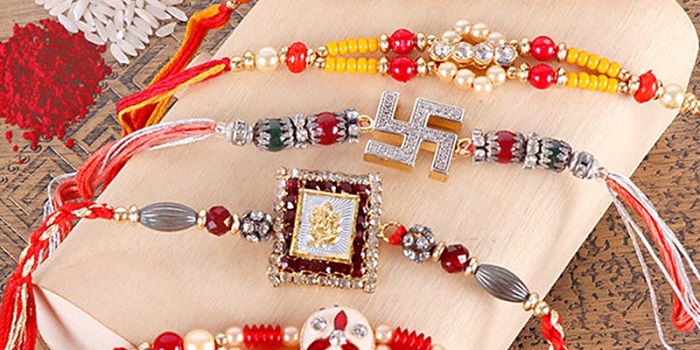
Mangaluru, Jul 29: Ahead of popular Hindu festival Raksha Bandhan, Karnataka postal circle has introduced an online portal 'Rakhi Post' to deliver rakhis across the country amid the COVID-19 outbreak.

This year Raksha Bandhan will be celebrated on Monday, August 3.

This service can be used to send rakhis to people across the country without violating the coronavirus norms.

Speaking to news agency, Senior Superintendent of Post offices, Shriharsha N said, "I am happy to announce that Karnataka postal circle has introduced an online portal 'rakhi post' to deliver rakhis to people during coronavirus phase."

"People willing to avail this service can visit this portal and pay a nominal amount of Rs 100 to send a rakhi," Shriharsha said.

The official has suggested to avail the service before July 31 for the timely delivery of rakhis.

The portal is also offering a special service to send rakhis to the soldier deployed on the borders. "We have also introduced a unique feature to deliver rakhis to Indian soldiers on the borders," he added.

Comments

Add new comment

  • Coastaldigest.com reserves the right to delete or block any comments.
  • Coastaldigset.com is not responsible for its readers’ comments.
  • Comments that are abusive, incendiary or irrelevant are strictly prohibited.
  • Please use a genuine email ID and provide your name to avoid reject.
Ram Puniyani
February 10,2020

Noam Chomsky is one of the leading peace workers in the world. In the wake of America’s attack on Vietnam, he brought out his classic formulation, ‘manufacturing consent’. The phrase explains the state manipulating public opinion to have the public approve of it policies—in this case, the attack of the American state on Vietnam, which was then struggling to free itself from French colonial rule.

In India, we are witness to manufactured hate against religious minorities. This hatred serves to enhance polarisation in society, which undermines India’s democracy and Constitution and promotes support for a Hindu nation. Hate is being manufactured through multiple mechanisms. For example, it manifests in violence against religious minorities. Some recent ghastly expressions of this manufactured hate was the massive communal violence witnessed in Mumbai (1992-93), Gujarat (2002), Kandhamal (2008) and Muzaffarnagar (2013). Its other manifestation was in the form of lynching of those accused of having killed a cow or consumed beef. A parallel phenomenon is the brutal flogging, often to death, of Dalits who deal with animal carcasses or leather.

Yet another form of this was seen when Shambhulal Regar, indoctrinated by the propaganda of Hindu nationalists, burned alive Afrazul Khan and shot the video of the heinous act. For his brutality, he was praised by many. Regar was incited into the act by the propaganda around love jihad. Lately, we have the same phenomenon of manufactured hate taking on even more dastardly proportions as youth related to Hindu nationalist organisations have been caught using pistols, while police authorities look on.

Anurag Thakur, a BJP minster in the central government recently incited a crowd in Delhi to complete his chant of what should happen to ‘traitors of the country...” with a “they should be shot”. Just two days later, a youth brought a pistol to the site of a protest at Jamia Millia Islamia university and shouted “take Azaadi!” and fired it. One bullet hit a student of Jamia. This happened on 30 January, the day Nathuram Godse had shot Mahatma Gandhi in 1948. A few days later, another youth fired near the site of protests against the CAA and NRC at Shaheen Bagh. Soon after, he said that in India, “only Hindus will rule”.

What is very obvious is that the shootings by those associated with Hindu nationalist organisations are the culmination of a long campaign of spreading hate against religious minorities in India in general and against Muslims in particular. The present phase is the outcome of a long and sustained hate campaign, the beginning of which lies in nationalism in the name of religion; Muslim nationalism and Hindu nationalism. This sectarian nationalism picked up the communal view of history and the communal historiography which the British introduced in order to pursue their ‘divide and rule’ policy.

In India what became part of “social common sense” was that Muslim kings had destroyed Hindu temples, that Islam was spread by force, and that it is a foreign religion, and so on. Campaigns, such as the one for a temple dedicated to the Hindu god Rama to be built at the site where the Babri masjid once stood, further deepened the idea of a Muslim as a “temple-destroyer”. Aurangzeb, Tipu Sultan and other Muslim kings were tarnished as the ones who spread Islam by force in the subcontinent. The tragic Partition, which was primarily due to British policies, and was well-supported by communal streams also, was entirely attributed to Muslims. The Kashmir conflict, which is the outcome of regional, ethnic and other historical issues, coupled with the American policy of supporting Pakistan’s ambitions of regional hegemony, (which also fostered the birth of Al-Qaeda), was also attributed to the Muslims.

With recurring incidents of communal violence, these falsehoods went on going deeper into the social thinking. Violence itself led to ghettoisation of Muslims and further broke inter-community social bonds. On the one hand, a ghettoised community is cut off from others and on the other hand the victims come to be presented as culprits. The percolation of this hate through word-of-mouth propaganda, media and re-writing of school curricula, had a strong impact on social attitudes towards the minorities.

In the last couple of decades, the process of manufacturing hate has been intensified by the social media platforms which are being cleverly used by the communal forces. Swati Chaturvedi’s book, I Am a Troll: Inside the Secret World of the BJP’s Digital Army, tells us how the BJP used social media to spread hate. Whatapp University became the source of understanding for large sections of society and hate for the ‘Other’, went up by leaps and bounds. To add on to this process, the phenomenon of fake news was shrewdly deployed to intensify divisiveness.

Currently, the Shaheen Bagh movement is a big uniting force for the country; but it is being demonised as a gathering of ‘anti-nationals’. Another BJP leader has said that these protesters will indulge in crimes like rape. This has intensified the prevalent hate.

While there is a general dominance of hate, the likes of Shambhulal Regar and the Jamia shooter do get taken in by the incitement and act out the violence that is constantly hinted at. The deeper issue involved is the prevalence of hate, misconceptions and biases, which have become the part of social thinking.

These misconceptions are undoing the amity between different religious communities which was built during the freedom movement. They are undoing the fraternity which emerged with the process of India as a nation in the making. The processes which brought these communities together broadly drew from Gandhi, Bhagat Singh and Ambedkar. It is these values which need to be rooted again in the society. The communal forces have resorted to false propaganda against the minorities, and that needs to be undone with sincerity.

Combating those foundational misconceptions which create hatred is a massive task which needs to be taken up by the social organisations and political parties which have faith in the Indian Constitution and values of freedom movement. It needs to be done right away as a priority issue in with a focus on cultivating Indian fraternity yet again.


Comments

Add new comment

  • Coastaldigest.com reserves the right to delete or block any comments.
  • Coastaldigset.com is not responsible for its readers’ comments.
  • Comments that are abusive, incendiary or irrelevant are strictly prohibited.
  • Please use a genuine email ID and provide your name to avoid reject.
News Network
April 28,2020

Bengaluru, Apr 28: Former Chief Minister Siddaramaiah on Tuesday demanded that the Karnataka government announce a "special package" for unorganised sector workers, street vendors and autorickshaw drivers, among others, all daily wagers whose lives are affected by the COVID-19 lockdown. "..a special package needs to be announced to this section of people, this is the demand," Siddaramaiah, who is also Leader of the Opposition in the state assembly, told reporters here.

Alleging that the government has failed to control the spread of coronavirus, he said it is the government's responsibility to take care of the basic needs of those from the unorganised sector, whose lives have been impacted by the lockdown. "It is the duty of the government and they should do it immediately. The package should also be announced. I will hold discussions with leaders of other opposition parties like JD(S), CPI, CPI(M) and BSP in this regard and also on trouble faced by farmers," he added. Alleging discrimination in supply of food packets and ration kits, Siddaramaiah said it was being supplied properly only in constituencies represented by BJP legislators.

"Politics is being played out in supply of food materials to the needy, keeping corporation elections in mind.... We don't want to do politics at this point in time as there is lockdown. If things continue to be the same after the lockdown ends, we will protest on the streets," he said.

Siddaramaiah on Tuesday interacted with representatives of auto rickshaw and cab drivers, street vendors, barbers, unorganised workers organisations, among others, to understand the difficulties faced by them during the lockdown and to know whether help from the government has reached them. He said most of them don't have work and it has become difficult for them to lead their normal lives.

They raised several issues like auto and cab drivers being unable to pay road tax and EMI, he said, adding that he would write a detailed letter to the Chief Minister in this regard The former Chief Minister pointed out that there is about 21 lakh registered organised workers, 1.32 crore lakh unorganised workers and also agriculture labourers in the state.

"Among organised workers only 12.5 of the 21 lakh are said to be getting Rs 2000, that too from the Employees Welfare Fund, while others could not get any money, citing reasons like they have not renewed it," he said.

On the other hand, unorganised sector workers don't get money and were also not getting proper food or ration kits, he alleged Though the labour department claimed that it was supplying one lakh food packets and 1.5 lakh ration kits, as also corporations, there were leakages and it was not reaching the beneficiaries properly, he said.

Comments

Add new comment

  • Coastaldigest.com reserves the right to delete or block any comments.
  • Coastaldigset.com is not responsible for its readers’ comments.
  • Comments that are abusive, incendiary or irrelevant are strictly prohibited.
  • Please use a genuine email ID and provide your name to avoid reject.