


Kathmandu, Apr 30: After experiencing major devastation and loss of lives in the April 25 earthquake, Nepal is left with an unsavoury taste in the mouth when it received packets of 'beef masala' as part of the relief package from Pakistan.
Since the majority-Hindu country treats cows as sacred and there is a blanket ban on slaughtering the animal, the development has the potential of triggering diplomatic acrimony between the South Asian Association for Regional Cooperation (SAARC) member countries.
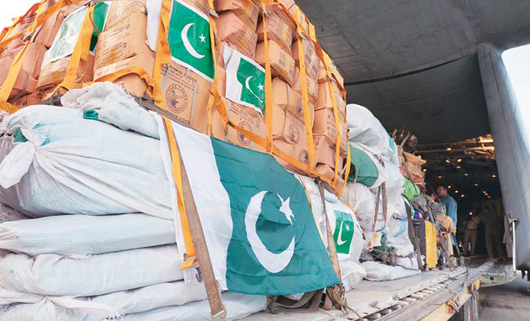
Indian doctors at Kathmandu's Bir Hospital told Mail Today that packets of 'beef masala' were sent by Pakistan on Tuesday as part of relief aid to the temblor survivors. These doctors - drawn from Ram Manohar Lohia (RML) Hospital, Safdarjung Hospital and All India Institute of Medical Sciences (AIIMS) - are members of a 34-member medical team sent to Nepal for treating the survivors.
"When we reached the airport to collect the food items from Pakistan, we found packets of ready-to-eat meals, including packets of 'beef masala'. There were other food items too," Dr Balwinder Singh told Mail Today.
Perplexed, the doctors chose to have food from a hotel instead. "We did not touch the Pakistani aid," Dr Singh said.
"Most of the local people are not aware of the contents. When they understand, they avoid it," said another doctor on the condition of anonymity. He added: "Pakistan has hurt Nepal's religious sentiments by supplying the masala. Shockingly, it did not care about the sensitivity of the matter."
Exclusive photographs of the 'beef masala' packets supplied to Nepal are with Mail Today.
These pictures clearly show that the place of origin of these packets was Nowshera Cantt in Pakistan. These packets also prominently mention that these are not for sale and the contents include 'potato bhujia' and 'beef masala' (see photograph, right).
A top Nepal government official said: "The matter has been conveyed to Prime Minister Sushil Koirala and the intelligence chief. We are also starting an internal inquiry to verify the facts. If the report is correct, we will raise the matter at the diplomatic level with Pakistan. India, being our key partner, will also be informed of the developments."
Tasneem Aslam, spokesperson for Pakistan's ministry of foreign affairs, told Mail Today: "I am not aware of the issue... I am not responsible for the dispatch. The relief aid is sent by the National Disaster Management Authority."
A press note uploaded on the website of National Disaster Management Authority (NDMA), Pakistan (http://www.ndma.gov.pk/new/), states: "(The) National Disaster Management Authority has dispatched the second of two sorties of C-130 aircrafts on April 28 in collaboration with Pakistan Army, Ministry of Foreign Affairs and Pakistan Air Force. The relief goods include 250 tents, 200 food packs (2.6 tonne), 1,000 Meals Ready to Eat (MREs), 1,000 blankets and 33 cartons of medicines. These relief goods have been provided from NDMA stocks...."
The food items have been manufactured by PANA Force Foods. The consignment was supplied after receiving orders from Pakistan's NDMA.
"PANA Force food processing centre aims at providing quality goods at affordable prices. Currently, the company is supplying two brands of products to Pakistan Army commonly known as Meal Ready to Eat (MRE) and Emergency Pack Ration (EP Ration or high-energy biscuits) whereas a plant for the production of dehydrated vegetables and fruits is under construction," the official website of PANA Force Foods mentions.
The website also states that the processing centre provides food to civil population during natural calamities, like earthquakes and floods.
According to Hindu belief, eating beef is a religious offence since cow is a sacred animal and treated on a par with one's mother.
In Nepal - for long the world's only Hindu state - the first royal order officially prohibiting cow slaughter stated that the punishments for the crime were death and confiscation of all property of the offender.
The first Civil Code of Nepal, the Muluki Ain of 1854, stated: "This kingdom is the only kingdom in the world where cows, women, and Brahmins may not be killed." It trumpeted Nepal as the 'purest Hindu kingdom' and simultaneously signaled to Nepalese citizens that Hindu religious creeds would be the law of the land.
But an amendment in 1990 to the Civil Code made cow slaughter punishable by 12 years in prison.

 The kidnapped schoolboy was rescued by the police and reunited with his parents. Son of a gift shop owner from Basavanagudi area in Bengaluru, Chirag has reportedly told police that decided to make some quick money to spend on cricket betting and gambling after learning kidnap tricks from the ‘Crime Patrol’. According to police, Chirag reached a private school around 3pm on Tuesday on a Bounce rental bike and zeroed in on a fourth standard student who was walking out of school. He told the boy he was his father's friend and that he required help to search for a relative who had gone missing. The boy believed Chirag and rode pillion on the bike. Chirag then engaged the boy in conversation and learnt about his father's business and got his mobile phone number. He then made a call to the boy's father, demanded Rs 5 lakh and warned him against approaching cops. However, the boy's father alerted Cottonpet police and special teams were formed to crack the case. While Cottonpet inspector Venkatesh TC's squad verified CCTV footage in and around the school, Chamarajpet inspector BG Kumaraswamy's team started tracking the suspect's mobile phone movements. An hour later, the suspect's location was traced to a hotel on the Lavelle Road-St Mark's Road stretch. Police rushed there, rescued the boy and arrested Chirag.
Comments
I think this is among the so much important info for me.
And i'm happy studying your article. However wanna statement on some general issues, The website taste is ideal, the articles is in reality great :
D. Just right activity, cheers
Here is my blog post female hymen: http://energy.milanoe20.it/?option=com_k2&view=itemlist&task=user&id=25…
Add new comment