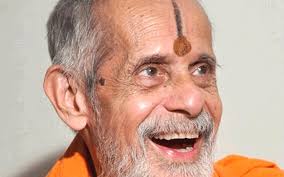
'Pankti bheda' is there in Dharmasthala too; Why you targeting us: Pejawar seer

[email protected] (CD Network)
October 13, 2016

Udupi, Oct 13: Nearly a week after speakers at the Chalo Udupi valedictory ceremony exhorted the Dalits to storm Udupi's Krishna Mutt if it fails to end pankti bheda', Vishwesha Tirtha Swami of Pejawar Mutt has threatened to go on an indefinite fast.

pejawarAddressing media persons here on Thursday, he said that some persons at the Chalo Udupi' programme on Sunday have tried to mislead Dalits and asked them to lay siege to the historic mutt. “Now it is the duty of the government to provide security to the mutt,” he said.

While addressing the Swabhimani Sangarsha Samavesha, the valedictory programme of Chalo Udupi' on Sunday, social activist and Chalo Una organiser Jignesh Mevani gave a deadline of two months for Udupi mutts to stop the ugly practice of pankti bheda.

If it did not stop, the activists would lay siege to the mutt, Mr. Mevani had said.

The seer on Thursday questioned why activists are targeting only Udupi Mutt while pankti bheda is in practice at Dharmasthala, Sringeri and Kukke Subrahmanya temples.

He said that Dalits, Backward Class people and Brahmins were being served food at Udupi Mutt together without any discrimination. But for some traditional Brahmins food is being served separately, he added.

The seer said that Udupi Chalo had been organised to condemn the violence by gau rakshakas (cow protectors). He had already condemned the violence by such rakshakas, he said, adding that the mutt has been drawn into this controversy unnecessarily.

The seer questioned the link between pankti bedha and violence by gau rakshakas.

The seer alleged that some intellectuals were trying to divide the Hindu community by spreading hateredness between Dalits and Brahmins. They are also trying to divide Muslims and Brahmins, the seer added.

Comments

KalliValli Khan
 - 
Friday, 14 Oct 2016

Finally he had to expose the real face of Hindu dharma and its temples.

Add new comment

  • Coastaldigest.com reserves the right to delete or block any comments.
  • Coastaldigset.com is not responsible for its readers’ comments.
  • Comments that are abusive, incendiary or irrelevant are strictly prohibited.
  • Please use a genuine email ID and provide your name to avoid reject.
Agencies
May 8,2020

Washington D.C., May 8: The prime time for brain development in a child's life is the first year, where the infant spends most of the time asleep. It is the time when neural connections form and sensory memories are encoded.

However, when sleep is disrupted, as occurs more often among children with autism, brain development may be affected, too.

New research led by the University of Washington finds that sleep problems in a baby's first 12 months may not only precede an autism diagnosis but also may be associated with altered growth trajectory in a key part of the brain, the hippocampus.

The study, which was published in the American Journal of Psychiatry, researchers report that in a sample of more than 400 taken of 6- to 12-month-old infants, those who were later diagnosed with autism were more likely to have had difficulty falling asleep.

It also states that this sleep difficulty was associated with altered growth trajectories in the hippocampus.

"The hippocampus is critical for learning and memory, and changes in the size of the hippocampus have been associated with poor sleep in adults and older children.

As many as 80 per cent of the children with autism spectrum disorder have sleep problems," said Annette Estes, director of the UW Autism Center and senior author of the study.

"In our clinical experience, parents have a lot of concerns about their children's sleep, and in our work on early autism intervention, we observed that sleep problems were holding children and families back," added Estes, who is also a UW professor of speech and hearing sciences.

"It could be that altered sleep is part-and-parcel of autism for some children. One clue is that behavioural interventions to improve sleep don't work for all children with autism, even when their parents are doing everything just right. This suggests that there may be a biological component to sleep problems for some children with autism," said Estes.

To consider links among sleep, brain development, and autism, researchers at the IBIS Network looked at MRI scans of 432 infants, surveyed parents about sleep patterns, and measured cognitive functioning using a standardized assessment.

At the outset of the study, infants were classified according to their risk for developing autism: Those who were at higher risk of developing autism -- about two-thirds of the study sample -- had an older sibling who had already been diagnosed.

Infant siblings of children with autism have a 20 per cent chance of developing autism spectrum disorder -- a much higher risk than children in the general population.

In the current study, 127 of the 432 infants were identified as "low risk" at the time the MRI scans were taken because they had no family history of autism.

They later evaluated all the participants at 24 months of age to determine whether they had developed autism. Of the roughly 300 children originally considered "high familial risk," 71 were diagnosed with autism spectrum disorder at that age.

Problems with sleep were more common among the infants later diagnosed with an autism spectrum disorder, as were larger hippocampi. No other subcortical brain structures were affected, including the amygdala, which is responsible for certain emotions and aspects of memory, or the thalamus, a signal transmitter from the spinal cord to the cerebral cortex.

The authors note that while parents reported more sleep difficulties among infants who developed autism compared to those who did not, the differences were very subtle and only observed when looking at group averages across hundreds of infants.

Sleep patterns in the first years of life change rapidly as infants transition from sleeping around the clock to a more adult-like sleep/wake cycle. Until further research is completed, Estes said, it is not possible to interpret challenges with sleep as an early sign of increased risk for autism.

Comments

Add new comment

  • Coastaldigest.com reserves the right to delete or block any comments.
  • Coastaldigset.com is not responsible for its readers’ comments.
  • Comments that are abusive, incendiary or irrelevant are strictly prohibited.
  • Please use a genuine email ID and provide your name to avoid reject.
News Network
May 3,2020

Bengaluru, May 3: Undergraduate and postgraduate students skipping online classes held by their universities run the risk of being debarred from writing their exams. 

State universities, which are monitoring the attendance of online classes, are asking their affiliate colleges to send the monthly online attendance details and this would reflect in their regular attendance. This would apply to those studying professional courses like medicine and engineering. 

State medical education minister Dr K Sudhakar has asked all medical colleges to regularly send attendance details to the Rajiv Gandhi University of Health Sciences (RGUHS).

RGUHS vice-chancellor Dr Sachidanand confirmed to DH that the varsity is indeed monitoring the attendance of students. “Online classes are equal to classroom teaching. (Such method of conducting classes) are necessary during the Covid-19 pandemic and the nationwide lockdown,” he said.

According to the Supreme Court directions, students should have 75% attendance to be eligible to appear for the final exams. There could be relaxations if they have health issues. If students are bunking online classes, it would reflect on their minimum attendance necessary to appear for the exams, the vice-chancellors of state-run varsities said.

Bangalore University vice-chancellor Prof K R Venugopal said most of the students are attending online classes and teachers are messaging the parents of those who are irregular. “(Of course) if they fall short of the minimum attendance, they won’t be allowed to appear for the exams,” he said.

Bengaluru North University vice-chancellor Prof T D Kemparaju said the administration has asked its teachers to record details of students attending online classes and update the university.

Mixed signals 

Meanwhile, the University Grants Commission (UGC) on Wednesday issued guidelines directing all universities to treat the lockdown period as “deemed as attended” for students and research scholars. Experts pointed out that the order would prompt students not to take the online classes seriously.

“Arrangements have been made at the state varsities to make students attend online classes compulsorily and students are also serious about it. Now, because of the UGC guidelines, they may bunk classes,” said the vice-chancellor of a state-run university.

Comments

Add new comment

  • Coastaldigest.com reserves the right to delete or block any comments.
  • Coastaldigset.com is not responsible for its readers’ comments.
  • Comments that are abusive, incendiary or irrelevant are strictly prohibited.
  • Please use a genuine email ID and provide your name to avoid reject.
News Network
March 15,2020

While it makes perfect sense for IT employees to work from remote locations via video conferencing and collaboration tools seamlessly - especially in the case of tech giants like Google or Microsoft -- workers from the non-IT companies and small and medium enterprises (SMBs) are the worst-hit in India as most of them have little or no clue about how these messaging and collaboration tools work amid the coronavirus pandemic.

Small companies -- from corporate to education verticals -- are scrambling to get their act together as new coronavirus threat has reached their premises, prompting them to send employees home who have age-old laptops, poor network and connectivity with no UPS backups and little knowledge about how to handle group chat and collaboration software like Zoom, Google Hangouts Meet, Microsoft Teams and Flock etc.

Instead of halting operations, however, businesses can choose to shift towards remote working methods with teaching non-IT staff on how to use the latest digital software to connect and work, say industry experts.

The training will take some time and may hamper productivity in the short run but is a win-win situation for the non-tech companies in the long run, in case any such global emergency arises in the future.

According to a latest report by Gartner, 54 per cent of HR leaders have cited that poor technology and/or infrastructure for remote working is the biggest barrier to effective remote working.

Sandy Shen, Senior Director Analyst, Gartner, says that with COVID-19 disrupting the business landscape, CIOs should relook at the digital fulfillment of market demand.

"The value of digital channels, products and operations is immediately obvious to companies everywhere right now. This is a wake-up call for organisations that have placed too much focus on daily operational needs at the expense of investing in digital business and long-term resilience," warned Shen.

Businesses that can shift technology capacity and investments to digital platforms will mitigate the impact of the outbreak and keep their companies running smoothly now, and over the long term.

"Videoconferencing, messaging, collaboration tools and document sharing are just a few examples of technologies that facilitate remote work. Additional bandwidth and network capacity may also be needed, given the increasing number of users and volume of communications," informed Shen.

The IT industry's apex body Nasscom has asked the government to relax norms for a month to allow work-from-home for technology and back-office employees as a measure to deal with the spread of Covid-19 in India.

Networking giant Cisco said that it has seen "significant growth" in the usage of its web conferencing and video-conferencing service Webex in India.

According to Muneer Ahmad, Business Head, ViewSonic India, due to COVID-19 pandemic, the corporate and educational sector is severely getting affected in the country.

"ViewSonic IFP has a cloud-based software which help teachers and corporates to connect through video conferencing to multiple people at the same time and can split the screen into six screens. It can also connect with various tools like Skype, Cisco WebEx, Zoom, Google Hangouts and GoToMeeting," Ahmad told IANS.

Co-working sector has also taken a hit and the industry is looking at several measures to tackle it -- from ensuring supply of juices rich in Vitamin C to supply of disinfectants and giving work from home facilities.

"The scheduled visits of the clients at our co-working offices have been postponed. Few of our clients have cancelled their outstation meetings and have now started audio/video conferencing for virtual meetings," said Nakul Mathur, MD, Avanta India.

According to reports, India has approximately 1,000 co-working locations (as of September 2019) and is the second-largest market for the co-working industry after China.

As India's first licensed B2B Virtual Network Operator, CloudConnect Communications offers a collaborative platform that allows companies to overcome the COVID-19 threat while maintaining seamless business continuity and optimum employee productivity.

"We offer a secure, robust, reliable, scalable and trackable mobile-first unified communication infrastructure that aids remote teleworking so that businesses can continue operating even under any unforeseen circumstances," said Gokul Tandon, Executive Chairman, CloudConnect Communications.


Comments

Add new comment

  • Coastaldigest.com reserves the right to delete or block any comments.
  • Coastaldigset.com is not responsible for its readers’ comments.
  • Comments that are abusive, incendiary or irrelevant are strictly prohibited.
  • Please use a genuine email ID and provide your name to avoid reject.