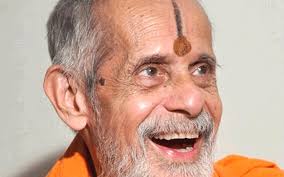
'Pankti bheda' is there in Dharmasthala too; Why you targeting us: Pejawar seer

[email protected] (CD Network)
October 13, 2016

Udupi, Oct 13: Nearly a week after speakers at the Chalo Udupi valedictory ceremony exhorted the Dalits to storm Udupi's Krishna Mutt if it fails to end pankti bheda', Vishwesha Tirtha Swami of Pejawar Mutt has threatened to go on an indefinite fast.

pejawarAddressing media persons here on Thursday, he said that some persons at the Chalo Udupi' programme on Sunday have tried to mislead Dalits and asked them to lay siege to the historic mutt. “Now it is the duty of the government to provide security to the mutt,” he said.

While addressing the Swabhimani Sangarsha Samavesha, the valedictory programme of Chalo Udupi' on Sunday, social activist and Chalo Una organiser Jignesh Mevani gave a deadline of two months for Udupi mutts to stop the ugly practice of pankti bheda.

If it did not stop, the activists would lay siege to the mutt, Mr. Mevani had said.

The seer on Thursday questioned why activists are targeting only Udupi Mutt while pankti bheda is in practice at Dharmasthala, Sringeri and Kukke Subrahmanya temples.

He said that Dalits, Backward Class people and Brahmins were being served food at Udupi Mutt together without any discrimination. But for some traditional Brahmins food is being served separately, he added.

The seer said that Udupi Chalo had been organised to condemn the violence by gau rakshakas (cow protectors). He had already condemned the violence by such rakshakas, he said, adding that the mutt has been drawn into this controversy unnecessarily.

The seer questioned the link between pankti bedha and violence by gau rakshakas.

The seer alleged that some intellectuals were trying to divide the Hindu community by spreading hateredness between Dalits and Brahmins. They are also trying to divide Muslims and Brahmins, the seer added.

Comments

KalliValli Khan
 - 
Friday, 14 Oct 2016

Finally he had to expose the real face of Hindu dharma and its temples.

Add new comment

  • Coastaldigest.com reserves the right to delete or block any comments.
  • Coastaldigset.com is not responsible for its readers’ comments.
  • Comments that are abusive, incendiary or irrelevant are strictly prohibited.
  • Please use a genuine email ID and provide your name to avoid reject.
News Network
July 19,2020

Belagavi,  Jul 19: In a heart-wrenching incident, a woman used a pushcart to take the body of her dead husband to the crematorium after she allegedly did not receive any help from relatives who suspected him to have died of Covid.

The woman and her son were seen pushing the body in the Athani thaluk of Belagavi.

The man had died two days ago at his residence and no family member apart from the close members attended the last rites due to the fear that he was COVID-19 positive.

It was later found that the deceased person was COVID-19 negative.

A total of 3,693 new COVID-19 positive cases and 115 deaths were reported in Karnataka on Friday, said the state health department.

The total number of COVID-19 cases in the state is presently at 55,115, including 33,205 active cases. While there are 20,757 recoveries, the death toll stands at 1,147.

Comments

Add new comment

  • Coastaldigest.com reserves the right to delete or block any comments.
  • Coastaldigset.com is not responsible for its readers’ comments.
  • Comments that are abusive, incendiary or irrelevant are strictly prohibited.
  • Please use a genuine email ID and provide your name to avoid reject.
Agencies
May 8,2020

Washington D.C., May 8: The prime time for brain development in a child's life is the first year, where the infant spends most of the time asleep. It is the time when neural connections form and sensory memories are encoded.

However, when sleep is disrupted, as occurs more often among children with autism, brain development may be affected, too.

New research led by the University of Washington finds that sleep problems in a baby's first 12 months may not only precede an autism diagnosis but also may be associated with altered growth trajectory in a key part of the brain, the hippocampus.

The study, which was published in the American Journal of Psychiatry, researchers report that in a sample of more than 400 taken of 6- to 12-month-old infants, those who were later diagnosed with autism were more likely to have had difficulty falling asleep.

It also states that this sleep difficulty was associated with altered growth trajectories in the hippocampus.

"The hippocampus is critical for learning and memory, and changes in the size of the hippocampus have been associated with poor sleep in adults and older children.

As many as 80 per cent of the children with autism spectrum disorder have sleep problems," said Annette Estes, director of the UW Autism Center and senior author of the study.

"In our clinical experience, parents have a lot of concerns about their children's sleep, and in our work on early autism intervention, we observed that sleep problems were holding children and families back," added Estes, who is also a UW professor of speech and hearing sciences.

"It could be that altered sleep is part-and-parcel of autism for some children. One clue is that behavioural interventions to improve sleep don't work for all children with autism, even when their parents are doing everything just right. This suggests that there may be a biological component to sleep problems for some children with autism," said Estes.

To consider links among sleep, brain development, and autism, researchers at the IBIS Network looked at MRI scans of 432 infants, surveyed parents about sleep patterns, and measured cognitive functioning using a standardized assessment.

At the outset of the study, infants were classified according to their risk for developing autism: Those who were at higher risk of developing autism -- about two-thirds of the study sample -- had an older sibling who had already been diagnosed.

Infant siblings of children with autism have a 20 per cent chance of developing autism spectrum disorder -- a much higher risk than children in the general population.

In the current study, 127 of the 432 infants were identified as "low risk" at the time the MRI scans were taken because they had no family history of autism.

They later evaluated all the participants at 24 months of age to determine whether they had developed autism. Of the roughly 300 children originally considered "high familial risk," 71 were diagnosed with autism spectrum disorder at that age.

Problems with sleep were more common among the infants later diagnosed with an autism spectrum disorder, as were larger hippocampi. No other subcortical brain structures were affected, including the amygdala, which is responsible for certain emotions and aspects of memory, or the thalamus, a signal transmitter from the spinal cord to the cerebral cortex.

The authors note that while parents reported more sleep difficulties among infants who developed autism compared to those who did not, the differences were very subtle and only observed when looking at group averages across hundreds of infants.

Sleep patterns in the first years of life change rapidly as infants transition from sleeping around the clock to a more adult-like sleep/wake cycle. Until further research is completed, Estes said, it is not possible to interpret challenges with sleep as an early sign of increased risk for autism.


Comments

Add new comment

  • Coastaldigest.com reserves the right to delete or block any comments.
  • Coastaldigset.com is not responsible for its readers’ comments.
  • Comments that are abusive, incendiary or irrelevant are strictly prohibited.
  • Please use a genuine email ID and provide your name to avoid reject.
News Network
May 22,2020

New Delhi: BJP leader Yogish Gowda, who was a member of the Dharwad Zilla Panchayath in Karnataka, was killed because of "political reasons", the CBI has alleged in its charge sheet filed against eight accused before a Dharwad court, officials said on Thursday.

Mr Gowda was killed on June 15, 2016 in front of a gym in Dharwad.

The charge sheet was filed before the Judicial Magistrate First Class Court in Dharwad against Santosh Savadatti, Dinesh M, Sunil KS, Harshith, Aswath S, Nazeer Ahamad, Shanawaz and Nutan K. All but one are in judicial custody.

"The accused allegedly came to Dharwad on two occasions in June 2016 and with the support of the other accused, allegedly planned the murder of Yogish Gowda. These accused fled after the crime," CBI spokesperson RK Gaur said.

The agency has alleged that the killing had "political reasons" behind it and was a result of political rivalry, the officials said.

The agency had taken over the case on September 24, 2019, nearly three years after the murder, on the request of the BJP government in Karnataka and a referral from the centre.

The case was earlier probed by the Karnataka Police which had charged six people for allegedly planning and executing the killing.

The CBI has arrested eight accused in the case of which seven are in judicial custody, they said.

"Further investigation into the role of the other accused and larger conspiracy in this case is continuing on a day-to-day basis," Mr Gaur said.

BJP leader murder caseYogish GowdaCentral Bureau of Investigation (CBI)

Comments

Add new comment

  • Coastaldigest.com reserves the right to delete or block any comments.
  • Coastaldigset.com is not responsible for its readers’ comments.
  • Comments that are abusive, incendiary or irrelevant are strictly prohibited.
  • Please use a genuine email ID and provide your name to avoid reject.