Parties should not give tickets to candidates with criminal background: ECI to SC

Agencies
January 24, 2020

New Delhi, Jan 24: The Election Commission of India on Friday told the Supreme Court that its 2018 direction asking poll candidates to declare their criminal antecedents in electronic and print media has not helped curb criminalisation of politics. The poll panel suggested that instead of asking candidates to declare criminal antecedents in the media, political parties should be asked not to give tickets to candidates with criminal background.

A bench of Justices R F Nariman and S Ravindra Bhat asked the ECI to come up with a framework within one week which can help curb criminalisation of politics in nation's interest.

The top court asked the petitioner BJP leader and advocate Ashiwini Upadhyay and the poll panel to sit together and come up with suggestions which would help him in curbing criminalisation of politics.

In September 2018, a five-judge Constitution bench had unanimously held that all candidates will have to declare their criminal antecedents to the Election Commission before contesting polls and had called for a wider publicity, through print and electronic media about antecedents of candidates.

Comments

Satya Vishwasi
 - 
Saturday, 25 Jan 2020

What about those criminals who were already in parliament and vidahan sabhas? shall the ECI cancel their positions?

Add new comment

  • Coastaldigest.com reserves the right to delete or block any comments.
  • Coastaldigset.com is not responsible for its readers’ comments.
  • Comments that are abusive, incendiary or irrelevant are strictly prohibited.
  • Please use a genuine email ID and provide your name to avoid reject.
Agencies
August 8,2020

Kozhikode, Aug 8: The death toll in Kozhikode air crash is likely to rise as the condition of 22 injured passengers is said to be extremely critical. A total of 149 injured passengers have been admitted to hospitals in Malappuram and Kozhikode districts. 22 others have been discharged after first aid, says K Gopalakrishnan, Malappuram Collector

Deceased passengers:
Mohammed Riyas VP, 24 years - Palakkad, 
Saheer Sayed, 38 years -Malappuram, 
Lailabi KV, 51 years -Malappuram, 
Rajeevan Cherikka Parambil, 61 years - Kozhikode, 
Manal Ahamed, 25 years - Kozhikode, 
Sharafudheen, 35 years - Kozhikode, 
Janaky Kunnoth, 55 years - Kozhikode, 
Azam Muhammed Chembayi ,1 year - Kozhikode, 
Santha Marakkat, 59 years - Malappuram, 
Sudheer Vaariyath, 45 years -Malappuram, 
Sheza Fathima, 2 years -Malappuram, 
Remya Muraleedharan, 32 years - Kozhikode
Aysha Dua, 2 years – Palakkad 
Shivathmika, 5 Years- Kozhikode
Zhenobia, 40 years – Kozhikode
Sahira Banu, 29 years - Kozhikode

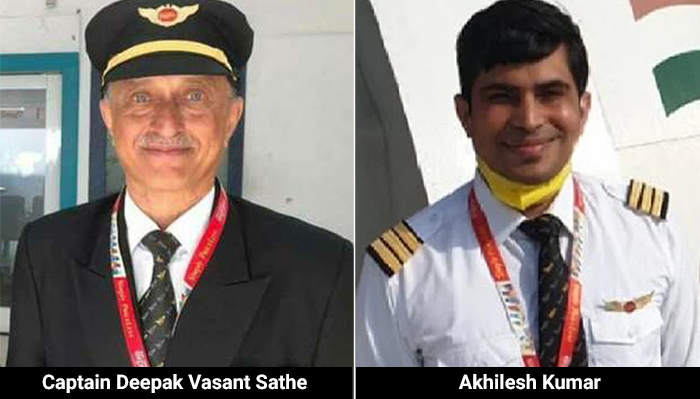
Deceased crew:
Deepak Sathe (Pilot)
Akhilesh Kumar (Copilot)

Comments

Add new comment

  • Coastaldigest.com reserves the right to delete or block any comments.
  • Coastaldigset.com is not responsible for its readers’ comments.
  • Comments that are abusive, incendiary or irrelevant are strictly prohibited.
  • Please use a genuine email ID and provide your name to avoid reject.
News Network
January 24,2020

New Delhi, Jan 24: Although India's Ujjwala programme encouraged adoption of liquefied petroleum gas (LPG) for cooking among the poor, households availing the scheme have not shifted away from using highly polluting fuels like firewood, a study reveals.

The researchers, including those from the University of British Columbia (UBC) in Canada, found that additional incentives to encourage regular use of cooking gas are necessary for a complete transition to clean cooking fuel among poor rural households.

They noted that about 2.9 billion people across Asia, Africa, and Latin America burn solid fuels like firewood to meet their cooking energy needs.

This has significant negative implications for public health, the environment, and societal development, according to the researchers.

Through the Pradhan Mantri Ujjwala Yojana (PMUY), India has provided capital cost subsidies to poor women to adopt a clean-burning cooking fuel or LPG.

The researchers explained that within the first 40 months of the scheme, more than 80 million households obtained LPG stoves.

However, the full benefits of LPG adoption depend on near complete replacement of polluting fuels with LPG, according to a research-based policy brief published in the journal Nature Energy.

The scientists said this cannot be assumed solely on the basis of LPG presence in the household.

"Our research shows that Ujjwala was able to attract new consumers rapidly, but those consumers did not start using LPG on a regular basis," Abhishek Kar, a postdoc at Columbia University in the US, told PTI.

The study analysed LPG sales data for over 25,000 consumers, including PMUY beneficiaries, as well as general rural LPG consumers in Koppal district of Karnataka.

The scientists employed data covering all LPG purchases of PMUY beneficiaries through their first year in the programme.

They also assessed the general rural population's purchases during their first five years as consumers to assess the effect of experience on use.

The findings estimate that an average rural family needs to purchase five 14.2 kilogramme-cylinders annually to meet half of their cooking needs.

However, the study said just seven per cent of PMUY beneficiaries in Koppal purchased five or more cylinders annually, suggesting that the beneficiaries seldom use LPG.

The general (nonPMUY) consumers in this region use on average two times more LPG cylinders than PMUY beneficiaries, the researchers noted.

Yet, only 45 per cent of nonPMUY consumers use five or more cylinders per year -- even after several years of experience with LPG, they said.

The team assessed price and seasonal factors affecting LPG use among the general population over a three-year period.

It found that LPG consumers are sensitive to price and seasonality -- LPG cylinder refill rates are lower in the summer when agricultural activity is limited, and cash is scarce.

"There was no scheme incentives to promote use, except general LPG subsidies which is available to all, including the urban middle class," said Kar, who was a Ph.D. scholar at UBC when the research was published.

"If there is no additional income, what cost would a poor family on an already tight budget cut to pay for an extra expense on a regular basis.

"Ujjwala has started the scheme of 5 kg-cylinder in response, but the impact of that on LPG sales is still publicly unknown," he said.

These findings, the researchers noted, suggest the need for additional measures to promote regular LPG use for all rural populations.

Although the finding come from a single district in Southern India, it may also apply to other areas with similar socio-economic conditions, they said.

A more expansive evaluation of PMUY would help design targeted incentives to transform infrequent users to regular users, according to the researchers.


Comments

Add new comment

  • Coastaldigest.com reserves the right to delete or block any comments.
  • Coastaldigset.com is not responsible for its readers’ comments.
  • Comments that are abusive, incendiary or irrelevant are strictly prohibited.
  • Please use a genuine email ID and provide your name to avoid reject.
News Network
January 17,2020

Jan 17: India's "high power" communication satellite GSAT-30 was successfully launched in the early hours of January 17, the Indian Space Research Organisation (ISRO) said.

The satellite, aimed at providing high-quality television, telecommunications and broadcasting services, was launched onboard Ariane 5 rocket from French Guiana.

Blasting off from the Ariane Launch Complex in Kourou, a French territory located in northeastern coast of South America at 2.35 am IST, European space consortium Arianespace's Ariane 5 vehicle injected GSAT-30 into the orbit in a flawless flight lasting about 38 minutes.

Arianespace CEO Stéphane Israël tweeted about the successful launch of GSAT-30.

ISRO's U R Rao Satellite Centre Director P Kunhikrishnan, who was present in Kourou, congratulated the ISRO community and Arianespace team on the successful launch.

Calling it an "excellent start" to 2020 for ISRO with the launch, he said, "The mission team at the master control facility have already acquired the satellite and they will immediately complete the post launch operations...."

The 3,357-kg satellite, which was deployed from the lower passenger position of Ariane-5 launch vehicle (VA 251) into to geostationary transfer orbit (GTO), is configured on ISRO's enhanced I-3K Bus structure to provide communication services from Geostationary orbit in C and Ku bands.

The satellite derives its heritage from ISRO's earlier INSAT/GSAT satellite series, and is equipped with 12 C and 12 Ku band transponders.

GSAT-30 is to serve as replacement to the "aging" INSAT-4A spacecraft services with enhanced coverage, ISRO has said, adding the satellite provides Indian mainland and islands coverage in Ku-band and extended coverage in C-band covering Gulf countries, a large number of Asian countries and Australia.

With a mission life of 15 years, GSAT-30 is an operational communication satellite for DTH, television uplink and VSAT services.

The Bengaluru-headquartered ISRO has said the communication payload of GSAT-30 is specifically designed and optimised to maximise the number of transponders on the spacecraft bus.

According to the space agency, the spacecraft would be extensively used for supporting VSAT (Very Small Aperture Terminal) network, television uplinking and teleport services, digital satellite news gathering (DSNG), DTH television services, cellular backhaul connectivity and many such applications.

One Ku-band beacon downlink signal is transmitted for ground-tracking purpose, it added.

For its initial flight of 2020, Arianespace on its website said, it would orbit EUTELSAT KONNECT, a telecommunication satellite for the operator Eutelsat, along with GSAT-30, using an Ariane 5 launch vehicle from the Guiana Space Centre.

EUTELSAT KONNECT – which was produced by Thales Alenia Space for Eutelsat – was riding in the upper position of Ariane 5's payload arrangement, and was released first in the flight sequence at 27 minutes following liftoff.

Since the launch of India's APPLE experimental satellite on Ariane Flight L03 in 1981, Arianespace has orbited 24 satellites, including GSAT-30, for the Indian space agency.

Comments

Add new comment

  • Coastaldigest.com reserves the right to delete or block any comments.
  • Coastaldigset.com is not responsible for its readers’ comments.
  • Comments that are abusive, incendiary or irrelevant are strictly prohibited.
  • Please use a genuine email ID and provide your name to avoid reject.