Riyadh, Jun 17: Saudi Arabia is expected to scale back or call off this year's hajj pilgrimage for the first time in its modern history, observers say, a perilous decision as coronavirus cases spike.
Muslim nations are pressing Riyadh to give its much-delayed decision on whether the annual ritual will go ahead as scheduled in late July.
But as the kingdom negotiates a call fraught with political and economic risks in a tinderbox region, time is running out to organise logistics for one of the world's largest mass gatherings.
A full-scale hajj, which last year drew about 2.5 million pilgrims, appears increasingly unlikely after authorities advised Muslims in late March to defer preparations due to the fast-spreading disease.
"It's a toss-up between holding a nominal hajj and scrapping it entirely," a South Asian official in contact with Saudi hajj authorities said.
A Saudi official said: "The decision will soon be made and announced."
Indonesia, the world's most populous Muslim nation, withdrew from the pilgrimage this month after pressing Riyadh for clarity, with a minister calling it a "very bitter and difficult decision".
Malaysia, Senegal and Singapore followed suit with similar announcements.
Many other countries with Muslim populations -- from Egypt and Morocco to Turkey, Lebanon and Bulgaria -- have said they are still awaiting Riyadh's decision.
In countries like France, faith leaders have urged Muslims to "postpone" their pilgrimage plans until next year due to the prevailing risks.
The hajj, a must for able-bodied Muslims at least once in their lifetime, represents a major potential source of contagion as it packs millions of pilgrims into congested religious sites.
But any decision to limit or cancel the event risks annoying Muslim hardliners for whom religion trumps health concerns.
It could also trigger renewed scrutiny of the Saudi custodianship of Islam's holiest sites -- the kingdom's most powerful source of political legitimacy.
A series of deadly disasters over the years, including a 2015 stampede that killed up to 2,300 worshippers, has prompted criticism of the kingdom's management of the hajj.
"Saudi Arabia is caught between the devil and the deep blue sea," Umar Karim, a visiting fellow at the Royal United Services Institute in London, told AFP.
"The delay in announcing its decision shows it understands the political consequences of cancelling the hajj or reducing its scale."
"Buying time"
The kingdom is "buying time" as it treads cautiously, the South Asian official said.
"At the last minute if Saudi says 'we are ready to do a full hajj', (logistically) many countries will not be in a position" to participate, he said.
Amid an ongoing suspension of international flights, a reduced hajj with only local residents is a likely scenario, the official added.
A decision to cancel the hajj would be a first since the kingdom was founded in 1932.
Saudi Arabia managed to hold the pilgrimage during previous outbreaks of Ebola and MERS.
But it is struggling to contain the virus amid a serious spike in daily cases and deaths since authorities began easing a nationwide lockdown in late May.
In Saudi hospitals, sources say intensive care beds are fast filling up and a growing number of health workers are contracting the virus as the total number of cases has topped 130,000. Deaths surpassed 1,000 on Monday.
To counter the spike, authorities this month tightened lockdown restrictions in the city of Jeddah, gateway to the pilgrimage city of Mecca.
"Heartbroken"
"The hajj is the most important spiritual journey in the life of any Muslim, but if Saudi Arabia proceeds in this scenario it will not only exert pressure on its own health system," said Yasmine Farouk from the Carnegie Endowment for International Peace.
"It could also be widely held responsible for fanning the pandemic."
A cancelled or watered-down hajj would represent a major loss of revenue for the kingdom, which is already reeling from the twin shocks of the virus-induced slowdown and a plunge in oil prices.
The smaller year-round umrah pilgrimage was already suspended in March.
Together, they add $12 billion to the Saudi economy every year, according to government figures.
A negative decision would likely disappoint millions of Muslim pilgrims around the world who often invest their life savings and endure long waiting lists to make the trip.
"I can't help but be heartbroken -- I've been waiting for years," Indonesian civil servant Ria Taurisnawati, 37, told AFP as she sobbed.
"All my preparations were done, the clothes were ready and I got the necessary vaccination. But God has another plan."



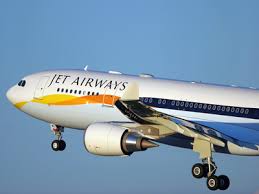 As per new rules consumers can take one hand bag, weighing seven (economy class) or 10 kg (business class), a laptop bag. Women can carry a purse as well without any charge. Anything beyond this will be charged at Rs 900.

Comments
They should also add Cow Tax like Rajasthan?
ACCORDING TO AIRLINES THIS IS NOT FOR REVENUE GENERATION. THEN THIS MONEY WILL GO TO WHOM? WHO WILL UTILIZE THIS AMOUNT.?
JAI HOOOOO
This is SOOFI story
Soofi helida xxxxx vishaya
first of all let them correct the delivery of check in baggage on time . my trip to mangalore on 6 jul on eid day flight no 9w 501horrible . after finishing imigration formalities it was surprised to hear that pax luggage not available on belt and after few hours 9w staff informed us no more baggage is today's flight, come and collect in the next flight next day it was all my eid day items from clothing to sweets and bottled juices next when i went to collect my baggage it was fully broken and spoiled. when i complained to 9w staff she said sorry sir........now this drama
Good move....... to make the journey comfort..... If the Passengers have excess baggage, they can use cargo facilities.... Just plan in advance, and dispatch the cargo well before departure, and make ones and others travel enjoyable ..
Add new comment