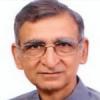
Pejawar seer in ICU after surgery; Muslims offer prayers for his health

coastaldigest.com news network
August 21, 2017

Udupi, Aug 21: Vishwesha Tirtha Swami, the pontiff of Paryaya Pejawar Mutt was shifted to the Intensive Care Unit after a successful surgical procedure for hernia at Kasturba Hospital in Manipal on Sunday.

Meanwhile, a group of Muslims offered prayers at the entrance of Kasturba Hospital seeking good health for the seer.

Raghuram Acharya, Dewan of Pejawar Mutt, said that the 87-year-old Vishwesha Tirtha completed the Maha Puja at the Sri Krishna Mutt/Temple in the morning. Afterwards, he left for the Kasturba Hospital.

He was taken to the Operation Theatre at the hospital at11.30 a.m. After the operation, he was shifted to the ICU at around 1 p.m.

“The doctors who operated upon the seer told us that the latter had cooperated well. The seer would be shifted to a special room in the hospital on Monday morning. The doctors said that they would decide on when to discharge the seer from the hospital after 11 a.m. on Monday,” he said.

“The seer spoke to us. He is in good spirits. He expressed happiness over the services rendered by the doctors at the hospital,” he added.

Vishwaprasanna Tirtha Swami, junior seer of Pejawar Mutt, met and spoke to Vishwesha Tirtha at the hospital in the evening. In the absence of the senior seer, Vishwaprasanna Tirtha is performing the “pujas” at the Sri Krishna Mutt/Temple.

Tradition bars the Paryaya seer from leaving the Car Street during his two-year tenure, when he occupies the Paryaya Peetha, also called the Sarvajna Peetha, at the 800-year-old Sri Krishna Mutt/Temple. Even when the Paryaya seer suffers from minor health ailments, doctors meet him and treat him. However, in the present case, the matter involved a surgical procedure.

“Usually, the Paryaya seer does not leave the Car Street. But this is a special case. Hence, the opinion of the other seers of the Ashta Mutts (or eight mutts) available was taken and they agreed that the Pejawar seer should go to the hospital for the surgical treatment,” Mr. Acharya further said.

In the morning, a Dhanvantri Homa was performed and a group of disciples under the guidance of Vishwaprasanna Tirtha chanted mantras at the Rajangana Hall here praying for the good health of Vishwesha Tirtha.
 

Comments

Truth
 - 
Monday, 21 Aug 2017

Praying that you get better soon... and waiting for your communal comments

Unknown
 - 
Monday, 21 Aug 2017

hoping for your speedy recovery.

Suresh
 - 
Monday, 21 Aug 2017

Get well soon. Lakhs of prayers with you

Kumar
 - 
Monday, 21 Aug 2017

Great news... True spirit. Thank you muslim brother

Sangeeth
 - 
Monday, 21 Aug 2017

At a glance its a great story which highlights communal harmony. But CD hidden agenda to highlight the word Muslims

Add new comment

  • Coastaldigest.com reserves the right to delete or block any comments.
  • Coastaldigset.com is not responsible for its readers’ comments.
  • Comments that are abusive, incendiary or irrelevant are strictly prohibited.
  • Please use a genuine email ID and provide your name to avoid reject.
News Network
February 6,2020

Mangaluru, Feb 6: Over 1500 students and teachers are expected to take part in a three-day State-level conference of the Akhil Bharatiya Vidyarthi Parishat (ABVP) starting on Friday here.

Reception Committee chairman K.C. Nayak and secretary Shantharama Shetty told reporters here today that Deputy Chief Minister C.N. Ashwath Narayana would inaugurate the conference at the Kudmul Ranga Rao Town Hall.

The former ABVP national president and former Nagaland Governor P.B. Acharya would preside over the programme that would be attended by Mangalore University Vice-Chancellor P.S. Yadapadithaya, ABVP national organising secretary Ashish Chauhan and others.

Comments

Althaf
 - 
Thursday, 6 Feb 2020

In this conference students will be taught about how to attack on universities and how to spread the communal agenda of ABVP. 

Add new comment

  • Coastaldigest.com reserves the right to delete or block any comments.
  • Coastaldigset.com is not responsible for its readers’ comments.
  • Comments that are abusive, incendiary or irrelevant are strictly prohibited.
  • Please use a genuine email ID and provide your name to avoid reject.
Agencies
July 8,2020

The Central Board of Secondary Education (CBSE) has rationalised by up to 30 per cent the syllabus for classes 9 to 12 for the academic year 2020-21 to reduce course load on students amid the COVID-19 crisis, Union HRD Minister Ramesh Pokhriyal 'Nishank' announced on Tuesday.

The curriculum has been rationalised while retaining the core elements, the Human Resource Development said.

Among the chapters dropped after the rationalisation exercise are lessons on democracy and diversity, demonetisation, nationalism, secularism, India's relations with its neighbours and growth of local governments in India, among others.

"Looking at the extraordinary situation prevailing in the country and the world, CBSE was advised to revise the curriculum and reduce course load for the students of classes 9 to 12.

"To aid the decision, a few weeks back I also invited suggestions from all educationists on the reduction of syllabus for students and I am glad to share that we received more than 1.5K suggestions. Thank you, everyone, for the overwhelming response," Nishank tweeted.

"Considering the importance of learning achievement, it has been decided to rationalise syllabus up to 30 per cent by retaining the core concepts," he added.

The Union minister said the changes made in the syllabi have been finalised by the respective course committees with the approval of the curriculum committee and the Governing Body of the Board.

"The heads of schools and teachers have been advised by the board to ensure that the topics that have been reduced are also explained to the students to the extent required to connect different topics. However, the reduced syllabus will not be part of the topics for internal assessment and year-end board examination.

"Alternative academic calendar and inputs from the NCERT on transacting the curriculum using different strategies shall also be part of the teaching pedagogy in the affiliated schools," a senior official of the HRD ministry said.

For classes 1 to 8, the National Council of Education Research and Training (NCERT) has already notified an alternative calendar and learning outcomes.

According to the updated curriculum, among the chapters deleted from class 10 syllabus are-- democracy and diversity, gender, religion and caste, popular struggles and movement, challenges to democracy

For class 11, the deleted portions included chapters on federalism, citizenship, nationalism, secularism, growth of local governments in India.

Similarly, class 12 students will not be required to study chapters on India's relations with its neighbours, changing nature of India's economic development, social movements in India and demonetisation, among others.

Universities and schools across the country have been closed since March 16 when the central government announced a nationwide classroom shutdown as one of the measures to contain the COVID-19 outbreak.

A nationwide lockdown was announced on March 24, which came into effect the next day. While the government has eased several restrictions, schools and colleges continue to remain closed.

Comments

Add new comment

  • Coastaldigest.com reserves the right to delete or block any comments.
  • Coastaldigset.com is not responsible for its readers’ comments.
  • Comments that are abusive, incendiary or irrelevant are strictly prohibited.
  • Please use a genuine email ID and provide your name to avoid reject.
Ram Puniyani
June 29,2020

In Minneapolis, US an African American, George Floyd lost his life as the white policeman, Derek Chauvin, caught hold of him and put his knee on his neck. This is a technique developed by Israel police. For nine long minutes the knee of the while policeman was on the neck of George, who kept shouting, I can’t breathe.

Following this gruesome murder America erupted with protests, ‘Black lives matter’. The protestors were not just African Americans but also a large section of whites. Within US one police Chief apologized for the act of this. In a touching gesture of apology the police force came on its knees. This had reverberations in different parts of the World.

The act was the outcome of the remnants of the racial hatred against blacks by the whites. It is the hatred and the perceptions which are the roots of such acts of violence. What was also touching that the state of democracy in US is so deep that even the police apologized, the nation, whites and blacks, stood up as a sensitive collective against this violence.

US is not the only country where the brutal acts of violence torment the marginalized sections of society. In India there is a list of dalits, minorities and adivasis who are regularly subjected to such acts. But the reaction is very different. We have witnessed the case of Tabrez Ansari, who was tied to the pole by the mob and beaten ruthlessly. When he was taken to police station, police took enough time to take him to hospital and Tabrez died.

Mohsin Sheikh, a Pune techie was murdered by Hindu Rashtra Sena mob, the day Modi came to power in 2014. Afrazul was killed by Shambhulal Regar, videotaped the act released on social media. Regar believed that Muslims are indulging in love Jihad, so deserve such a fate. Mohammad Akhlaq is one among many names who were mob lynched on the issue of beef cow. The list can fill pages after pages.

Recently a young dalit boy was shot dead for the crime of entering a temple. In Una four dalits were stripped above waste and beaten mercilessly. Commenting on this act the Union Minister Ramvilas Paswan commented that it is a minor incident. Again the list of atrocities against dalits is long enough. The question is what Paswan is saying is the typical response to such gruesome murders and tortures. In US loss of one black life, created the democratic and humane response. In India there is a general silence in response to these atrocities. Some times after a good lapse of time, the Prime Minister will utter, ‘Mother Bharati has lost a son’. Most of the time victim is blamed. Some social groups raise their voice in some fora but by and large the deafening silence from the country is the norm.

India is regarded as the largest democracy. Democracy is the rule of law, and the ground on which the injustices are opposed. In America though the present President is insensitive person, but its institutions and processes of democratic articulations are strong. The institutions have deepened their roots and though prejudices may be guiding the actions of some of the officers like the killer of George, there are also police officers who can tell their President to shut up if he has nothing meaningful to say on the issue. The prejudices against Blacks may be prevalent and deep in character, still there are large average sections of society, who on the principles of ‘Black lives matter’. There are large sections of vocal population who can protest the violation of basic norms of democracy and humanism.

In India by contrast there are multiple reasons as to why the lives of Tabrez Ansari, Mohammad Akhlaq, Una dalit victims and their likes don’t matter. Though we claim that we are a democracy, insensitivity to injustices is on the rise. The strong propaganda against the people from margins has become so vicious during last few decades that any violence against them has become sort of a new normal. The large populace, though disturbed by such brutalities, is also fed the strong dose of biases against the victims. The communal forces have a great command over effective section of media and large section of social media, which generates Hate against these disadvantaged groups, thereby the response is muted, if at all.

As such also the process of deepening of our democracy has been weak. Democracy is a dynamic process; it’s not a fixed entity. Decades ago workers and dalits could protest for their rights. Now even if peasants make strong protests, dominant media presents it as blocking of traffic! How the roots of democracy are eroded and are visible in the form where the criticism of the ruling dispensation is labelled as anti National..

Our institutions have been eroded over a period of time, and these institutions coming to the rescue of the marginalized sections have been now become unthinkable. The outreach of communal, divisive ideology, the ideology which looks down on minorities, dalits and Adivasis has risen by leaps and bounds.

The democracy in India is gradually being turned in to a hollow shell, the rule of law being converted in to rule of an ideology, which does not have faith in Indian Constitution, which looks down upon pluralism and diversity of this country, which is more concerned for the privileges of the upper caste, rich and affluent. The crux of the matter is the weak nature of democracy, which was on way to become strong, but from decades of 1980s, as emotive issues took over, the strength of democracy started dwindling, and that’s when the murders of the types of George Floyd, become passé. One does complement the deeper roots of American democracy and its ability to protect the democratic institutions, which is not the case in India, where protests of the type, which were witnessed after George Floyd’s murder may be unthinkable, at least in the present times. 

Comments

Add new comment

  • Coastaldigest.com reserves the right to delete or block any comments.
  • Coastaldigset.com is not responsible for its readers’ comments.
  • Comments that are abusive, incendiary or irrelevant are strictly prohibited.
  • Please use a genuine email ID and provide your name to avoid reject.