Periyar statue vandalised in Tamil Nadu, 2 arrested

Agencies
March 7, 2018

Vellore (TN), Mar 7: A statue of social reformer and founder of Dravidian movement E V Ramasamy "Periyar" was allegedly vandalised in Tamil Nadu's Vellore district tonight, police said.

The incident, which the police claimed was perpetrated by two drunk men, assumed political significance as it came after a BJP leader indicated that statues of the rationalist leader could be the next to be pulled down after a statute of Communist icon Lenin was razed by suspected BJP workers in Tripura.

A senior district police officer said that two people, identified as Muthuraman and Francis, damaged the bust at Tirupattur in an inebriated state.

The duo have been arrested, the police said, adding that while Muthuraman was suspected to be a BJP worker, Francis is believed to be a CPI activist.

Earlier today, BJP leader H Raja said in a Facebook post in Tamil said, "Who is Lenin and what is the connection between Lenin and India? What connection India has with Communists? Today Lenin's statue removed in Tripura, tomorrow it will be the statue of EV Ramasamy in Tamil Nadu."

The post was subsequently deleted. It drew condemnation from several political parties in the state. Political parties including DMK, MDMK and the Left lashed out at Raja, a BJP National Secretary, with DMK Working President M K Stalin leading the charge seeking his detention under the 'Goondas Act'.

BJP's Raja was referring to the pulling down of a statue of communist icon Lenin by some persons using an excavator machine at Belonia in South Tripura district, days after the BJP defeated CPI (M) in the closely fought assembly polls.

The CPI(M) has held BJP workers responsible for pulling down the statue of Lenin.

BJP's state unit distanced itself from the issue, saying it was his personal view.

Comments

Add new comment

  • Coastaldigest.com reserves the right to delete or block any comments.
  • Coastaldigset.com is not responsible for its readers’ comments.
  • Comments that are abusive, incendiary or irrelevant are strictly prohibited.
  • Please use a genuine email ID and provide your name to avoid reject.
News Network
January 13,2020

Jan 13: For the first time in years, the government of India’s Prime Minister Narendra Modi is playing defense. Protests have sprung up across the country against an amendment to India’s laws — which came into effect on Friday — that makes it easier for members of some religions to become citizens of India. The government claims this is simply an attempt to protect religious minorities in the Muslim-majority countries that border India; but protesters see it as the first step toward a formal repudiation of India’s constitutionally guaranteed secularism — and one that must be resisted.

Modi was re-elected prime minister last year with an enhanced majority; his hold over the country’s politics is absolute. The formal opposition is weak, discredited and disorganized. Yet, somehow, the anti-Citizenship Act protests have taken hold. No political party is behind them; they are generally arranged by student unions, neighborhood associations and the like.

Yet this aspect of their character is precisely what will worry Modi and his right-hand man, Home Minister Amit Shah. They know how to mock and delegitimize opposition parties with ruthless efficiency. Yet creating a narrative that paints large, flag-waving crowds as traitors is not quite that easy.

For that is how these protests look: large groups of young people, many carrying witty signs and the national flag. They meet and read the preamble to India’s Constitution, into which the promise of secularism was written in the 1970’s.

They carry photographs of the Constitution’s drafter, the Columbia University-trained economist and lawyer B. R. Ambedkar. These are not the mobs the government wanted. They hoped for angry Muslims rampaging through the streets of India’s cities, whom they could point to and say: “See? We must protect you from them.” But, in spite of sometimes brutal repression, the protests have largely been nonviolent.

One, in Shaheen Bagh in a Muslim-dominated sector of New Delhi, began simply as a set of local women in a square, armed with hot tea and blankets against the chill Delhi winter. It has now become the focal point of a very different sort of resistance than what the government expected. Nothing could cure the delusions of India’s Hindu middle class, trained to see India’s Muslims as dangerous threats, as effectively as a group of otherwise clearly apolitical women sipping sweet tea and sharing their fears and food with anyone who will listen.

Modi was re-elected less than a year ago; what could have changed in India since then? Not much, I suspect, in most places that voted for him and his party — particularly the vast rural hinterland of northern India. But urban India was also possibly never quite as content as electoral results suggested. India’s growth dipped below 5% in recent quarters; demand has crashed, and uncertainty about the future is widespread. Worse, the government’s response to the protests was clearly ill-judged. University campuses were attacked, in one case by the police and later by masked men almost certainly connected to the ruling party.

Protesters were harassed and detained with little cause. The courts seemed uninterested. And, slowly, anger began to grow on social media — not just on Twitter, but also on Instagram, previously the preserve of pretty bowls of salad. Instagram is the one social medium over which Modi’s party does not have a stranglehold; and it is where these protests, with their photogenic signs and flags, have found a natural home. As a result, people across urban India who would never previously have gone to a demonstration or a political rally have been slowly politicized.

India is, in fact, becoming more like a normal democracy. “Normal,” that is, for the 2020’s. Liberal democracies across the world are politically divided, often between more liberal urban centers and coasts, and angrier, “left-behind” hinterlands. Modi’s political secret was that he was that rare populist who could unite both the hopeful cities and the resentful countryside. Yet this once magic formula seems to have become ineffective. Five of India’s six largest cities are not ruled by Modi’s Bharatiya Janata Party in any case — the financial hub of Mumbai changed hands recently. The BJP has set its sights on winning state elections in Delhi in a few weeks. Which way the capital’s voters will go is uncertain. But that itself is revealing — last year, Modi swept all seven parliamentary seats in Delhi.

In the end, the Citizenship Amendment Act is now law, the BJP might manage to win Delhi, and the protests might die down as the days get unmanageably hot and state repression increases. But urban India has put Modi on notice. His days of being India’s unifier are over: From now on, like all the other populists, he will have to keep one eye on the streets of his country’s cities.


Comments

Add new comment

  • Coastaldigest.com reserves the right to delete or block any comments.
  • Coastaldigset.com is not responsible for its readers’ comments.
  • Comments that are abusive, incendiary or irrelevant are strictly prohibited.
  • Please use a genuine email ID and provide your name to avoid reject.
coastaldigest.com news network
August 8,2020

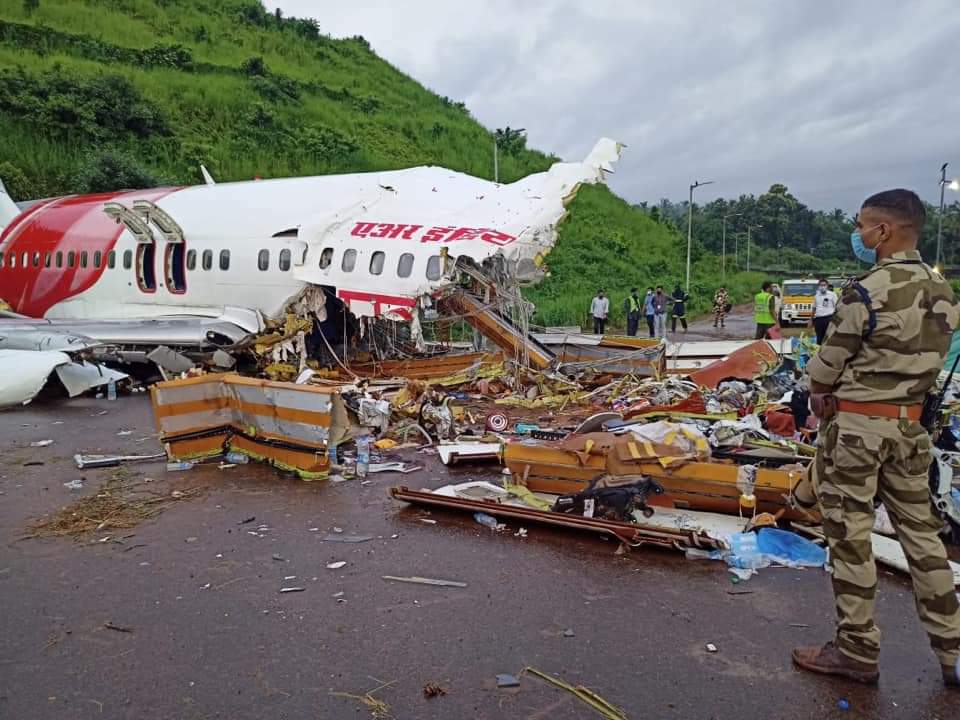
Kozhikode, Aug 8: A tailwind or crosswind could be the reason for the Air India Express flight mishap at Kozhikode international airport in Kerala, according to some aviation experts. 

Team of DGCA and AIE already reached the spot. With the death of the captain and co-pilot in the mishap, the investigation would be focusing mainly on the voice recorders and other technical aspects.

It is learnt that the ill-fated aircraft, IX 1344 with 190 onboard including crew, was initially planning to land on runway-28 of the airport. But later the pilot opted runway-10 which is toward the other direction. Pilots would be taking the decisions on the basis of inputs from ATC.

The questions now doing the rounds are what made the pilot opt runway-10 and whether the tabletop runway lacked adequate safety parameters.

An aviation expert, who didn't want to be quoted, said that Capt Deepak Sathe, who was commandeering the aircraft, was a well-experienced pilot and was also familiar with the terrains. Hence the chances of any error from his part was very unlikely. Hence a fair in-depth probe was required to find the exact cause.

Though the Kozhikode airport has an Instrument Landing System, it was of category-I for which pilot's visibility is very crucial toward a touchdown. Since it is a tabletop airport and rough weather prevailing in the region, the chances of tailwind was also high, said sources.

There had been safety concerns about the airport over quite some time. In 2011 aviation safety consultant captain Mohan Ranganathan reportedly gave a report citing the safety issues, especially the buffer zones at the end of the runway.

However, an AAI officer said that rectification steps were already done by last year by widening the Runway End Safety Area (RESA) from 90 metre to 240 metre. However, the length of the runway had to be reduced to 2,700 metre from 2,850. The AAI was also constantly pressing for increasing the runway length to 3,150 metres. But that was getting delayed due to land acquisition issues pending with the state government.

stm88 info live rtp slot

slot auto scatter hitam

Comments

Add new comment

  • Coastaldigest.com reserves the right to delete or block any comments.
  • Coastaldigset.com is not responsible for its readers’ comments.
  • Comments that are abusive, incendiary or irrelevant are strictly prohibited.
  • Please use a genuine email ID and provide your name to avoid reject.
Agencies
February 14,2020

Lucknow, Feb 14: Uttar Pradesh doctor Kafeel Khan was on Friday booked under the National Security Act (NSA) over his alleged anti-CAA speech at Aligarh Muslim University on December 12, 2019.

The Uttar Pradesh slapped NSA on Kafeel Khan on Friday even as the doctor waited to be released from jail despite being granted bail on Monday in connection with his alleged inflammatory speech.

SP Crime Dr Arvind said that there were sufficient grounds to book the doctor under NSA.

The suspended pediatrician, Kafeel Khan, was arrested for allegedly delivering a controversial speech during Anti-CAA protests on December 12 at the Aligarh Muslim University or AMU. While he was granted bail on Monday, his family members claimed on Thursday that he was yet to be released.

Dr Kafeel Khan's brother Adeel Ahmed Khan had issued a statement saying that despite being granted bail Mathura jail authorities had not honoured the court's order.

Dr Kafeel Khan was arrested by the UP Special Task Force from Mumbai on January 29 for participating anti-CAA protest at AMU. A case was registered against him at the Civil Lines police station here for promoting enmity between different religions.

After his arrest in Mumbai, Dr Khan was brought to Aligarh, from where he was shifted to the district jail in neighbouring Mathura.

According to police, this was done as a precautionary measure in view of the anti-CAA protests on the AMU campus and at the Eidgah grounds in the old city. Police had said that the Dr Khan's presence in the Aligarh jail could have aggravated the law and order situation in the city.

The doctor was earlier arrested for his alleged role in the death of over 60 children in one week at the BRD Medical College in Gorakhpur in August 2017. Short supply of oxygen at the children's ward was blamed at that time for the deaths.

About two years later, a state government probe cleared Khan of all major charges, prompting him to seek an apology from the Yogi Adityanath government.

Comments

Add new comment

  • Coastaldigest.com reserves the right to delete or block any comments.
  • Coastaldigset.com is not responsible for its readers’ comments.
  • Comments that are abusive, incendiary or irrelevant are strictly prohibited.
  • Please use a genuine email ID and provide your name to avoid reject.