


PIL filed in Supreme Court seeking ban on animal sacrifice during Eid-ul-Adha

September 8, 2016

New Delhi, Sep 8: A PIL has been filed in the Supreme Court questioning the sacrifice of animals on Eid-ul-Adha (Bakrid) and the validity of a provision of the Prevention of Cruelty to Animals Act, saying the practice was "cruel, inhuman, barbarian" and cannot be protected in the name of religion.
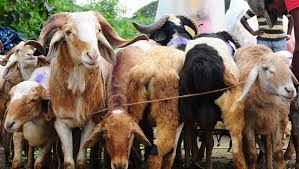
pilThe PIL, filed by seven Uttar Pradesh residents, has sought the court's direction to ensure that no animal is killed during the festival, called the feast of sacrifice, which is to be celebrated early next week.

"Issue a writ, order or direction or declaration to the effect that the practice of sacrifice of animals on Eid-ul-Adha day is unconstitutional and same cannot be resorted to by any member of the public," the petition said.

The plea, filed through lawyer Vishnu Shankar Jain, has challenged the constitutional validity of Section 28 of the Prevention of Cruelty to Animals Act which exempts the killings under religious practices and reads: "Nothing contained in this Act shall render it an offence to kill any animal in a manner required by the religion of any community."

"Issue a writ, order or direction striking down Section 28 of Prevention of Cruelty to Animals Act, 1960 as unconditional, being ultra vires to Article 14,21 and 25 of the Constitution," it said.

The PIL has made Ministries of Home Affairs, Law and Justice and Environment and Forest and Animal Welfare Board of India as parties.

"Tendency to sacrifice animals, even on roads and public places, are developing fast every year on Eid-ul-Adha in the most uncouth and inhuman manner and litres of blood is spread at public places affecting the sentiments of public at large," the plea said.

"It is most respectfully submitted that animals sacrifice on Eid-ul-Adha day is cruel, inhuman, barbarian, decency and morality and the same cannot be protected in the name of religion as such practice is in violation of Article 14,21 and 25 of the Constitution of India," it said.

Comments

naren kotian
 - 
Friday, 9 Sep 2016

they train how to slit the throat for their kids .. no wonder ISIS militrants love throat slitting and beheading ...they rejoice the kill ... it must be banned ...countries throat slitting activities are terrorism , rapes , smugling , hawala , robbing and thefts .. needless to say who are in large no ... hahaha ... so it is the effect of this ..makla justification nodri .. upper part na slice maadi pain agda haage koltaranthe ...adu dodda rocket science nanmaklige ...haha.. 150 crores iddu ondu nobel tegello yogyathe illa ...science bagge maatu .. hogree hogree fish sales madi hogi ... delivery time aithu :)

True indian
 - 
Friday, 9 Sep 2016

Halal best method.

Even yogesh also certified that halal is best way. In halal method. Animals and plants doesnt feel pain.

TRUE INDIAN
 - 
Thursday, 8 Sep 2016

@yogesh

Well said, that's why we say that halal method either veg or animal, is the best method. because of the speed both doesn't feel pain at all.

at last u agree Halal is the best Method. When u accidentally cut ur finger, u wont

TRUE INDIAN
 - 
Thursday, 8 Sep 2016

in halal method animals don't feel pain. what about fish, which die very painfully.

stop eating fish also. fish is also vishnu's avatar, which is more holier than cow.

muslims don't eat pig, because it is dirty and filthy, carries lots of diseases

hindus don't eat cow. why. is it dirty and filthy too.

TRUE INDIAN
 - 
Thursday, 8 Sep 2016

in halal method, animals feel zero pain, proved by science. it is also proved that halal food is more tastier than non halal. and there is no blood in the meat in halal method, even science says halal is the best method. even non-muslims in western countries wants halal chicken, just check the restaurant in usa name is halal guys restaurant. people stand in queue, most of them are non-muslims. next to the restaurant there is one more restaurant, which is non-halal. which is fully empty

Do animals have rights?

The vegetarian argument is that killing animals for the benefit of humans is cruel and an infringement of their rights. They put both on the same level without conceding any superiority to humans over animals. This argument is seriously flawed, because if animals had rights comparable to those of humans, they must also have equivalent duties. In other words, we must be able to blame them and punish them if they violate the rights of others. It is absurd that it should be considered a crime for humans to kill a sheep, but natural for a lion to do so. The problem stems from a misconception of the role of human life within the animal kingdom: a denial of purposeful creation within a clearly defined hierarchy degrades humans to the level of any other creature. Yet even then, the argument is illogical: Why should plants, for example, be denied the same protection from a violation of the sanctity of their life?

Is Islamic slaughter cruel?

The question of how an animal should be slaughtered to avoid cruelty is a different one. It is true that when the blood flows from the throat of an animal it looks violent, but just because meat is now bought neatly and hygienically packaged on supermarket shelves does not mean the animal didn’t have to die? Non-Islamic slaughter methods dictate that the animal should be rendered unconscious before slaughter. This is usually achieved by stunning or electrocution. Is it less painful to shoot a bolt into a sheep’s brain or to ring a chicken’s neck than to slit its throat? To watch the procedure does not objectively tell us what the animal feels.

The scientific facts

A team at the university of Hannover in Germany examined these claims through the use of EEG and ECG records during slaughter. Several electrodes were surgically implanted at various points of the skull of all the animals used in the experiment and they were then allowed to recover for several weeks. Some of the animals were subsequently slaughtered the halal way by making a swift, deep incision with a sharp knife on the neck, cutting the jugular veins and carotid arteries of both sides together with the trachea and esophagus but leaving the spinal cord intact. The remainder were stunned before slaughter using a captive bolt pistol method as is customary in Western slaughterhouses. The EEG and ECG recordings allowed to monitor the condition of the brain and heart throughout.

The Halal method

With the halal method of slaughter, there was not change in the EEG graph for the first three seconds after the incision was made, indicating that the animal did not feel any pain from the cut itself. This is not surprising. Often, if we cut ourselves with a sharp implement, we do not notice until some time later. The following three seconds were characterized by a condition of deep sleep-like unconsciousness brought about by the draining of large quantities of blood from the body. Thereafter the EEG recorded a zero reading, indicating no pain at all, yet at that time the heart was still beating and the body convulsing vigorously as a reflex reaction of the spinal cord. It is this phase which is most unpleasant to onlookers who are falsely convinced that the animal suffers whilst its brain does actually no longer record any sensual messages.

The Western method

Using the Western method, the animals were apparently unconscious after stunning, and this method of dispatch would appear to be much more peaceful for the onlooker. However, the EEG readings indicated severe pain immediately after stunning. Whereas in the first example, the animal ceases to feel pain due to the brain starvation of blood and oxygen – a brain death, to put it in laymen’s terms – the second example first causes a stoppage of the heart whilst the animal still feels pain. However, there are no unsightly convulsions, which not only means that there is more blood retention in the meat, but also that this method lends itself much more conveniently to the efficiency demands of modern mass slaughter procedures. It is so much easier to dispatch an animal on the conveyor belt, if it does not move.

suresh
 - 
Thursday, 8 Sep 2016

Yogesh, Lol, you explained halal veg in best way... anyone can understand now.. all doubts cleared.

Thousif
 - 
Thursday, 8 Sep 2016

after sacrifice animal we are not throwing meat and not keeping meat to eat ghost. we share all the meat to poor people and our family.we are not wasting the meat. if you care that much about animal you should ban eating non veg (chicken mutton)

Rikaz
 - 
Thursday, 8 Sep 2016

I am surprised to see why they dont file PIL from banning export of beef meat. Very strange. Why they are maintaining double standard.

Government can allow Indian cow meat for foreigners to eat....this is very bad and disgusting policy....

Zakir
 - 
Thursday, 8 Sep 2016

On Eid day he feels \Cruel\" other days ?
What about vegetables right? even number of studies prove that plants feel pain. Can people stop using plant and vegetable ?

Court should have right to panish if some one file the IPL which does not make any sence and causing unnessary focus, contradict the constituional rights and waste of court time etc.,"

Ahmed
 - 
Thursday, 8 Sep 2016

We Muslims sacrifice animals once in a year.But our Hindu brother's sacrifices animals every now and then in the name of Balidhan.We Muslims are not bothered about the PIL.Bec we blindly believe in Almighty Allah.

muthhu
 - 
Thursday, 8 Sep 2016

You have to file PIL against killing of HUmans first

Add new comment

  • Coastaldigest.com reserves the right to delete or block any comments.
  • Coastaldigset.com is not responsible for its readers’ comments.
  • Comments that are abusive, incendiary or irrelevant are strictly prohibited.
  • Please use a genuine email ID and provide your name to avoid reject.
News Network
June 5,2020

Bengaluru, Jun 5: An FIR has been filed against former journalist and human rights activist Aakar Anil Patel in Bengaluru here over his comments on social media under charges pertaining to provocation with intent to cause riots.

The FIR was registered under Section 117 (abetting commission of an offence by the public or by more than ten persons), 153 (wantonly giving provocation with intent to cause riot), and 505-1-B (intent to cause, or which is likely to cause, fear or alarm to the public, or to any section of the public) of the Indian Penal Code (IPC) at the JC Nagar police station.

According to the FIR filed on June 2, Patel had tweeted that protests like the ones in the US over George Floyd's death are needed in India by the marginalised communities.

Patel, former chief of Amnesty International India, had on May 31 posted from his Twitter account, which is not verified.

On May 25, Floyd died in police custody in Minneapolis, Minnesota, following which protests against police brutality and racism erupted in various cities in the United States. The protests were later replaced by incidents of violence across the country.

India also has witnessed several cases of mob lynchings and custodial deaths in recent years. In most cases victims belong to down trodden communities such as Muslims and Dalits.

Responding to the development, Amnesty International India has said that FIR against Patel is another example of how the right to dissent is being "increasingly" criminalised.

"The Bengaluru police must stop abusing its authority and put an end to the intimidation and harassment of Aakar Patel for exercising his constitutionally guaranteed right to freedom of expression. People of this country have the right to agree or disagree with those in power, and to express these opinions in peaceful protests - without fear or unlawful interference," Amnesty International India Executive Director Avinash Kumar said.

He said that peacefully protesting against the government is not a crime and added that not agreeing with the policies of those in power does not make you a traitor.

Comments

Add new comment

  • Coastaldigest.com reserves the right to delete or block any comments.
  • Coastaldigset.com is not responsible for its readers’ comments.
  • Comments that are abusive, incendiary or irrelevant are strictly prohibited.
  • Please use a genuine email ID and provide your name to avoid reject.
Agencies
May 8,2020

Washington D.C., May 8: The prime time for brain development in a child's life is the first year, where the infant spends most of the time asleep. It is the time when neural connections form and sensory memories are encoded.

However, when sleep is disrupted, as occurs more often among children with autism, brain development may be affected, too.

New research led by the University of Washington finds that sleep problems in a baby's first 12 months may not only precede an autism diagnosis but also may be associated with altered growth trajectory in a key part of the brain, the hippocampus.

The study, which was published in the American Journal of Psychiatry, researchers report that in a sample of more than 400 taken of 6- to 12-month-old infants, those who were later diagnosed with autism were more likely to have had difficulty falling asleep.

It also states that this sleep difficulty was associated with altered growth trajectories in the hippocampus.

"The hippocampus is critical for learning and memory, and changes in the size of the hippocampus have been associated with poor sleep in adults and older children.

As many as 80 per cent of the children with autism spectrum disorder have sleep problems," said Annette Estes, director of the UW Autism Center and senior author of the study.

"In our clinical experience, parents have a lot of concerns about their children's sleep, and in our work on early autism intervention, we observed that sleep problems were holding children and families back," added Estes, who is also a UW professor of speech and hearing sciences.

"It could be that altered sleep is part-and-parcel of autism for some children. One clue is that behavioural interventions to improve sleep don't work for all children with autism, even when their parents are doing everything just right. This suggests that there may be a biological component to sleep problems for some children with autism," said Estes.

To consider links among sleep, brain development, and autism, researchers at the IBIS Network looked at MRI scans of 432 infants, surveyed parents about sleep patterns, and measured cognitive functioning using a standardized assessment.

At the outset of the study, infants were classified according to their risk for developing autism: Those who were at higher risk of developing autism -- about two-thirds of the study sample -- had an older sibling who had already been diagnosed.

Infant siblings of children with autism have a 20 per cent chance of developing autism spectrum disorder -- a much higher risk than children in the general population.

In the current study, 127 of the 432 infants were identified as "low risk" at the time the MRI scans were taken because they had no family history of autism.

They later evaluated all the participants at 24 months of age to determine whether they had developed autism. Of the roughly 300 children originally considered "high familial risk," 71 were diagnosed with autism spectrum disorder at that age.

Problems with sleep were more common among the infants later diagnosed with an autism spectrum disorder, as were larger hippocampi. No other subcortical brain structures were affected, including the amygdala, which is responsible for certain emotions and aspects of memory, or the thalamus, a signal transmitter from the spinal cord to the cerebral cortex.

The authors note that while parents reported more sleep difficulties among infants who developed autism compared to those who did not, the differences were very subtle and only observed when looking at group averages across hundreds of infants.

Sleep patterns in the first years of life change rapidly as infants transition from sleeping around the clock to a more adult-like sleep/wake cycle. Until further research is completed, Estes said, it is not possible to interpret challenges with sleep as an early sign of increased risk for autism.

Comments

Add new comment

  • Coastaldigest.com reserves the right to delete or block any comments.
  • Coastaldigset.com is not responsible for its readers’ comments.
  • Comments that are abusive, incendiary or irrelevant are strictly prohibited.
  • Please use a genuine email ID and provide your name to avoid reject.
coastaldigest.com news network
April 13,2020

Mangaluru: The Karnataka-Kerala border closure at Talapady amidst nationwide Covid-19 lockdown has not only prevented the movement of vehicles and people from Kasaragod to Mangaluru but also stopped the supply of life-saving drugs from Karnataka’s medical hub to its bordering district.

Hundreds of people from Kasaragod and Kannur districts who were treated in hospitals of Mangaluru for past several years are still dependent on some of the medicines that are available only in Mangaluru. Such medicines have become inaccessible for Keralites following the border closure. Every day, a number of people from Kerala call their acquaintances in Mangaluru to see if there is a way to get medicine.

In fact, Karnataka government has blocked all 23 roads that connect the state with Kerala. The reason given was, Kasaragod is the hotbed of coronavirus and allowing traffic even in emergency cases might lead to spread of Covid-19 in border districts of Dakshina Kannada, Kodagu and Mysuru. The attitude has resulted in the death of around a dozen people in Kasaragod district in last couple of weeks.

Even after the intervention of the Supreme Court a few days ago, the authorities in Karnataka are facing the allegation of being hostile either by blocking the way ahead or turning a deaf ear to the patients reaching their border. 

At this juncture, three Good Samaritans – P K G Anoop Kumar of Canara Engineering College, Mangaluru, Satheesh Shetty of Kasaragod Patla and P Jayaprakash of Ponnangala – have come to the aid of the Malayalee patients who are dependent on medicines from Mangaluru. 

The three activists who are currently staying (in fact stranded amidst lockdown) in Mangaluru, are delivering life-saving medicines to patients in Kerala through Kerala fire servicemen and policemen posted at the Talapady border. 

Anoop Kumar says that took the initiative after a woman, Maria Augustine from Chemberi (Taliparamba) Nellikkutty, contacted him for a medicine. He managed to buy it from a medical store in the port city and handed it over to a Kerala fire serviceman at Talapady border. 

All three are activists of Communist Party of India (Marxist). After moving to Mangaluru, they set up ‘We Donate Charitable Society’ to donate blood. The activists say that they are ready to dispatch medicines from Mangaluru to any person in Kerala. Those Keralites who are in need of medicines from may contact: 888471344 - Anoop, 9895135881 - Jayaprakash

Comments

abdullah
 - 
Sunday, 21 Jun 2020

Salute to you dears.  May God bless you.  HOpe public and Govt will appreciate your sacrifice and support you.

Add new comment

  • Coastaldigest.com reserves the right to delete or block any comments.
  • Coastaldigset.com is not responsible for its readers’ comments.
  • Comments that are abusive, incendiary or irrelevant are strictly prohibited.
  • Please use a genuine email ID and provide your name to avoid reject.