


PIL filed in Supreme Court seeking ban on animal sacrifice during Eid-ul-Adha

September 8, 2016

New Delhi, Sep 8: A PIL has been filed in the Supreme Court questioning the sacrifice of animals on Eid-ul-Adha (Bakrid) and the validity of a provision of the Prevention of Cruelty to Animals Act, saying the practice was "cruel, inhuman, barbarian" and cannot be protected in the name of religion.
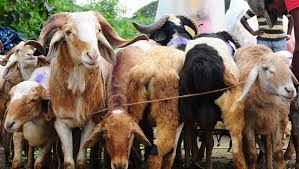
pilThe PIL, filed by seven Uttar Pradesh residents, has sought the court's direction to ensure that no animal is killed during the festival, called the feast of sacrifice, which is to be celebrated early next week.

"Issue a writ, order or direction or declaration to the effect that the practice of sacrifice of animals on Eid-ul-Adha day is unconstitutional and same cannot be resorted to by any member of the public," the petition said.

The plea, filed through lawyer Vishnu Shankar Jain, has challenged the constitutional validity of Section 28 of the Prevention of Cruelty to Animals Act which exempts the killings under religious practices and reads: "Nothing contained in this Act shall render it an offence to kill any animal in a manner required by the religion of any community."

"Issue a writ, order or direction striking down Section 28 of Prevention of Cruelty to Animals Act, 1960 as unconditional, being ultra vires to Article 14,21 and 25 of the Constitution," it said.

The PIL has made Ministries of Home Affairs, Law and Justice and Environment and Forest and Animal Welfare Board of India as parties.

"Tendency to sacrifice animals, even on roads and public places, are developing fast every year on Eid-ul-Adha in the most uncouth and inhuman manner and litres of blood is spread at public places affecting the sentiments of public at large," the plea said.

"It is most respectfully submitted that animals sacrifice on Eid-ul-Adha day is cruel, inhuman, barbarian, decency and morality and the same cannot be protected in the name of religion as such practice is in violation of Article 14,21 and 25 of the Constitution of India," it said.

Comments

naren kotian
 - 
Friday, 9 Sep 2016

they train how to slit the throat for their kids .. no wonder ISIS militrants love throat slitting and beheading ...they rejoice the kill ... it must be banned ...countries throat slitting activities are terrorism , rapes , smugling , hawala , robbing and thefts .. needless to say who are in large no ... hahaha ... so it is the effect of this ..makla justification nodri .. upper part na slice maadi pain agda haage koltaranthe ...adu dodda rocket science nanmaklige ...haha.. 150 crores iddu ondu nobel tegello yogyathe illa ...science bagge maatu .. hogree hogree fish sales madi hogi ... delivery time aithu :)

True indian
 - 
Friday, 9 Sep 2016

Halal best method.

Even yogesh also certified that halal is best way. In halal method. Animals and plants doesnt feel pain.

TRUE INDIAN
 - 
Thursday, 8 Sep 2016

@yogesh

Well said, that's why we say that halal method either veg or animal, is the best method. because of the speed both doesn't feel pain at all.

at last u agree Halal is the best Method. When u accidentally cut ur finger, u wont

TRUE INDIAN
 - 
Thursday, 8 Sep 2016

in halal method animals don't feel pain. what about fish, which die very painfully.

stop eating fish also. fish is also vishnu's avatar, which is more holier than cow.

muslims don't eat pig, because it is dirty and filthy, carries lots of diseases

hindus don't eat cow. why. is it dirty and filthy too.

TRUE INDIAN
 - 
Thursday, 8 Sep 2016

in halal method, animals feel zero pain, proved by science. it is also proved that halal food is more tastier than non halal. and there is no blood in the meat in halal method, even science says halal is the best method. even non-muslims in western countries wants halal chicken, just check the restaurant in usa name is halal guys restaurant. people stand in queue, most of them are non-muslims. next to the restaurant there is one more restaurant, which is non-halal. which is fully empty

Do animals have rights?

The vegetarian argument is that killing animals for the benefit of humans is cruel and an infringement of their rights. They put both on the same level without conceding any superiority to humans over animals. This argument is seriously flawed, because if animals had rights comparable to those of humans, they must also have equivalent duties. In other words, we must be able to blame them and punish them if they violate the rights of others. It is absurd that it should be considered a crime for humans to kill a sheep, but natural for a lion to do so. The problem stems from a misconception of the role of human life within the animal kingdom: a denial of purposeful creation within a clearly defined hierarchy degrades humans to the level of any other creature. Yet even then, the argument is illogical: Why should plants, for example, be denied the same protection from a violation of the sanctity of their life?

Is Islamic slaughter cruel?

The question of how an animal should be slaughtered to avoid cruelty is a different one. It is true that when the blood flows from the throat of an animal it looks violent, but just because meat is now bought neatly and hygienically packaged on supermarket shelves does not mean the animal didn’t have to die? Non-Islamic slaughter methods dictate that the animal should be rendered unconscious before slaughter. This is usually achieved by stunning or electrocution. Is it less painful to shoot a bolt into a sheep’s brain or to ring a chicken’s neck than to slit its throat? To watch the procedure does not objectively tell us what the animal feels.

The scientific facts

A team at the university of Hannover in Germany examined these claims through the use of EEG and ECG records during slaughter. Several electrodes were surgically implanted at various points of the skull of all the animals used in the experiment and they were then allowed to recover for several weeks. Some of the animals were subsequently slaughtered the halal way by making a swift, deep incision with a sharp knife on the neck, cutting the jugular veins and carotid arteries of both sides together with the trachea and esophagus but leaving the spinal cord intact. The remainder were stunned before slaughter using a captive bolt pistol method as is customary in Western slaughterhouses. The EEG and ECG recordings allowed to monitor the condition of the brain and heart throughout.

The Halal method

With the halal method of slaughter, there was not change in the EEG graph for the first three seconds after the incision was made, indicating that the animal did not feel any pain from the cut itself. This is not surprising. Often, if we cut ourselves with a sharp implement, we do not notice until some time later. The following three seconds were characterized by a condition of deep sleep-like unconsciousness brought about by the draining of large quantities of blood from the body. Thereafter the EEG recorded a zero reading, indicating no pain at all, yet at that time the heart was still beating and the body convulsing vigorously as a reflex reaction of the spinal cord. It is this phase which is most unpleasant to onlookers who are falsely convinced that the animal suffers whilst its brain does actually no longer record any sensual messages.

The Western method

Using the Western method, the animals were apparently unconscious after stunning, and this method of dispatch would appear to be much more peaceful for the onlooker. However, the EEG readings indicated severe pain immediately after stunning. Whereas in the first example, the animal ceases to feel pain due to the brain starvation of blood and oxygen – a brain death, to put it in laymen’s terms – the second example first causes a stoppage of the heart whilst the animal still feels pain. However, there are no unsightly convulsions, which not only means that there is more blood retention in the meat, but also that this method lends itself much more conveniently to the efficiency demands of modern mass slaughter procedures. It is so much easier to dispatch an animal on the conveyor belt, if it does not move.

suresh
 - 
Thursday, 8 Sep 2016

Yogesh, Lol, you explained halal veg in best way... anyone can understand now.. all doubts cleared.

Thousif
 - 
Thursday, 8 Sep 2016

after sacrifice animal we are not throwing meat and not keeping meat to eat ghost. we share all the meat to poor people and our family.we are not wasting the meat. if you care that much about animal you should ban eating non veg (chicken mutton)

Rikaz
 - 
Thursday, 8 Sep 2016

I am surprised to see why they dont file PIL from banning export of beef meat. Very strange. Why they are maintaining double standard.

Government can allow Indian cow meat for foreigners to eat....this is very bad and disgusting policy....

Zakir
 - 
Thursday, 8 Sep 2016

On Eid day he feels \Cruel\" other days ?
What about vegetables right? even number of studies prove that plants feel pain. Can people stop using plant and vegetable ?

Court should have right to panish if some one file the IPL which does not make any sence and causing unnessary focus, contradict the constituional rights and waste of court time etc.,"

Ahmed
 - 
Thursday, 8 Sep 2016

We Muslims sacrifice animals once in a year.But our Hindu brother's sacrifices animals every now and then in the name of Balidhan.We Muslims are not bothered about the PIL.Bec we blindly believe in Almighty Allah.

muthhu
 - 
Thursday, 8 Sep 2016

You have to file PIL against killing of HUmans first

Add new comment

  • Coastaldigest.com reserves the right to delete or block any comments.
  • Coastaldigset.com is not responsible for its readers’ comments.
  • Comments that are abusive, incendiary or irrelevant are strictly prohibited.
  • Please use a genuine email ID and provide your name to avoid reject.
News Network
March 11,2020

Bengaluru, Mar 11: The move by rebel ruling Congress MLAs in Madhya Pradesh to trigger the crisis for the party's government in the state appears to have been in the making for at least close to a month as Karnataka BJP leaders were sounded about hosting them in Bengaluru in advance, sources said.

They also indicated that the 19 rebel MLAs would stay in the city for at least two weeks till an alternative government takes charge in Madhya Pradesh.

A senior Karnataka BJP leader, in charge of the Madhya Pradesh legislators' stay in Bengaluru, received a communication from the party's central leaders about the move nearly 15-20 days ago, the sources involved in the development said on condition of anonymity on Tuesday.

The leader had even gone to New Delhi in the third week of February to meet BJP's central leaders in this regard, they said.

In a massive setback for the Congress, its prominent youth leader Jyotiradtya Scindia quit the party and in a coordinated rebellion on Tuesday 21 MLAs loyal to him resigned in Madhya Pradesh, pushing the 15-month-old Kamal Nath government to the brink of collapse.

As many as 19 Madhya Pradesh MLAs, including six ministers, said to be loyalists of Mr Scindia who appeared set to join BJP, are camping at a resort in Bengaluru. Two of them are women, the sources said.

The MLAs on Tuesday sent their resignation letters via e-mail to Raj Bhavan in Bhopal from Bengaluru.

According to the sources, eight legislators, including an independent, have been staying in the city for about a week now. Of them two - one from Congress and the other an independent MLA - had gone back.

The six were joined by 13 legislators, who landed in the city by a chartered flight on Monday, and all of them are put up in a villa.

The senior Karnataka BJP leader, also an MLA, is looking after their stay and related arrangements on the directions of the party high command, the sources said. Their stay here may be for a couple of weeks.

"There will be a no-confidence motion, and then there will be a trust vote of the new alternative government that will be formed. So they may have to stay here for some time. They may be moved out of their current location," they said.

The Madhya Pradesh legislature session is expected to begin on March 16.

The sources also said the six legislators staying in the city since last week were shifted a couple of times within the city.

Congress in Madhya Pradesh, under the leadership of Kamal Nath, had come to power in December 2018 by ousting the BJP by a narrow margin.

Comments

Add new comment

  • Coastaldigest.com reserves the right to delete or block any comments.
  • Coastaldigset.com is not responsible for its readers’ comments.
  • Comments that are abusive, incendiary or irrelevant are strictly prohibited.
  • Please use a genuine email ID and provide your name to avoid reject.
News Network
June 20,2020

Bengaluru, Jun 20: The Karnataka Health Department has issued guidelines on the admission of COVID-19 patients in private hospitals after clinical assessment, mandating that the district surveillance officer (DSO) should be first informed to initiate further procedures, an official said on Friday.

"A health team sent by the DSO should visit the home or hospital where the patient is staying. The team should conduct a rapid assessment of his or her health condition," said Karnataka's Additional Chief Secretary Jawaid Akhtar.

In the rapid health condition assessment, the team should first check the patient's body temperature, followed by SpO2 (oxygen saturation) level and confirm if there are any comorbidities such as hypertension, diabetes, tuberculosis, HIV, cancer, stroke etc.

Depending on the health condition of patients, Akhtar said, two categories have been made.

"Those who have body temperature greater than 37.5 degrees Celsius, SpO2 level below 94 percent, elderly (above 60 years) and suffering from known comorbid conditions should be taken to a dedicated Covid hospital (DCH)," he said.

"All other patients, even if older but not suffering from co-morbidities, those below 60 and suffering from co-morbidities and asymptomatic cases should be taken to a dedicated Covid health centre (DCHC) or a private hospital as opted by the patient," he added.

Private hospitals have been asked to pitch in due to the rising number of cases in Karnataka. Currently, there are 2943 active cases in the state after 337 cases were reported on Friday.

"The patients are assessed clinically and evaluated at DCHCs or private hospitals with appropriate diagnostic tests. After evaluation, if the patients are asymptomatic, they are shifted to a COVID Care Centre (CCC) for further management," said Akhtar.

CCCs are expected to be equipped with ventilated rooms, pulse oximeters, handheld thermal scanners and blood pressure apparatus.

A nurse has to be present round the clock for every 50 patients and should visit each patient twice a day for assessment whereas the medical officer has to visit the CCC once a day. He should also be available on call in case of an emergency.

Staff serving food and others should wear personal protective equipment and an N-95 mask. Explaining the procedures at DCHCs, Akhtar said general examinations for medical conditions like body temperature, BP, pulse, oxygen saturation and urine output should be in place.

Investigations such as complete blood count, fasting blood sugar, random blood sugar, liver function tests, renal function tests, ECG and chest X-ray facilities should be available.

"DCHCs should ensure that above examinations are over in an orderly timeline of 24 hours and depending on the examination, the patient is continued to be lodged at the DCHC or sent to DCH or CCC," said the senior officer.

Likewise, the discharge policy should be done as per the protocols issued by the Health Department from time to time.

The Karnataka government is yet to fix an upper limit on the cost of treating COVID-19 patients in private hospitals. While reports indicated that this could be capped at Rs 5200 per day, health officials are yet to specify this is the case. Private hospitals in the state have asked the government to take a collaborative approach in deciding the fixed cap on treatment cost.

Comments

Add new comment

  • Coastaldigest.com reserves the right to delete or block any comments.
  • Coastaldigset.com is not responsible for its readers’ comments.
  • Comments that are abusive, incendiary or irrelevant are strictly prohibited.
  • Please use a genuine email ID and provide your name to avoid reject.
News Network
January 7,2020

Bengaluru/Ballari, Jan 7: Former minister BZ Zameer Ahmed Khan of the Congress set a one-week deadline for the BJP government on Monday to arrest Ballari City BJP legislator G Somashekhara Reddy for his recent speech warning Muslims of dire consequences if they continue to protest against the Citizenship (Amendment) Act.

Police have already booked Reddy, younger brother of tainted mining baron G Janardhan Reddy, under section 153-A (promoting enmity between different groups on grounds of religion) of the Indian Penal Code.

However, Khan took the fight to Reddy a step further. “If the government fails to arrest Reddy by January 13, I will stage a dharna outside his house in Ballari, come what may. Let them do whatever they want,” Khan told reporters in Bengaluru.

In his speech at a pro-CAA rally organized by BJP workers and ABVP activists in Ballari, the BJP legislator had said, “We [Hindus] are 83% and they [Muslims] are 17% and if we take law into hands, you know what will happen.”

Khan said on Monday, “I challenge Reddy, the coward, to unsheathe his sword and cut me down first. It is absolutely shameful for a legislator to speak such things against a particular community. Why is Prime Minister Narendra Modi, who often says Sabka Saath, Sabka Vikas, silent?”

On his part, Reddy on Monday said he stood by what he said. “What I meant was you Muslims should not get swayed by CAA protests and damage public property. We [Hindus] are sons of the same mother and live peacefully. However, they [Muslims] should not test our [Hindu] patience. I stick by my words 100%,” he said.

A delegation of the Ballari district Congress unit also submitted an appeal to the deputy commissioner, inspector general of police and superintendent of police on Monday to arrest Reddy for his provocative speech.

Comments

Add new comment

  • Coastaldigest.com reserves the right to delete or block any comments.
  • Coastaldigset.com is not responsible for its readers’ comments.
  • Comments that are abusive, incendiary or irrelevant are strictly prohibited.
  • Please use a genuine email ID and provide your name to avoid reject.