PM Modi in Kolkata: Youth being misguided on CAA

News Network
January 12, 2020

Kolkata, Jan 12: Prime Minister Narendra Modi on Sunday said a section of the youth is being misguided about the Citizenship Amendment Act and asserted that it will not take away anybody's citizenship.

Modi also said whoever has faith in India and believes in its Constitution can become an Indian citizen.

“There are a lot of questions among the youth about the new citizenship law, and some are being misled by rumours around it... it is our duty to clear their doubts,” the PM said during an address at Belur Math in Howrah district.

“I want to make this clear again that the CAA is not about taking away anybody's citizenship, but about granting citizenship,” he added.

Modi said that some people with political interests are deliberately spreading rumours about the new citizenship law.

Lauding the youth for speaking against religious persecution of minorities, the prime minister said the energy of the country's young will form the basis of change in the 21st century. The PM is on a two-day visit to the city.

Comments

Add new comment

  • Coastaldigest.com reserves the right to delete or block any comments.
  • Coastaldigset.com is not responsible for its readers’ comments.
  • Comments that are abusive, incendiary or irrelevant are strictly prohibited.
  • Please use a genuine email ID and provide your name to avoid reject.
News Network
June 13,2020

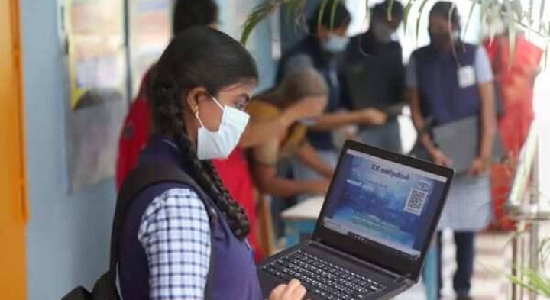
New Delhi, Jun 13: About 56 per cent of children were found to have no access to smartphones which have emerged as essential tools for online learning during the coronavirus-induced lockdown, according to a new study that surveyed 42,831 students at various school levels.

The study ''Scenario amidst COVID 19 - Onground Situations and Possible Solutions'' was conducted by child rights NGO Smile Foundation with an aim of analysing the access to technology.

The findings of the study showed that 43.99 per cent of surveyed children have access to smartphones and another 43.99 per cent of students have access to basic phones while 12.02 per cent do not have access to either smartphones or basic phones.

A total of 56.01 per cent children were found to have no access to smartphones, the study said.

"Concerning television, it was noted that while 68.99 per cent have access to TV, a major chunk of 31.01 per cent does not. Hence suggesting that using smartphone interventions for enhancing learning outcomes is not the only solution," it said.

At the primary level of education (class 1 to 5) 19,576 children were surveyed while at upper primary level (class 6 to 8) 12,277 children were surveyed. At secondary level of education (class 9 to 10) 5,537 children were surveyed and at higher secondary level (class 11 to 12) 3,216 children were surveyed.

The survey based on which the study was conducted used two approaches - over the telephone wherein the NGO reached out to the children whose database it already had -- students enrolled in various education centres of the NGO -- and second was through community mobilization wherein community workers went door to door to get answers.

The survey was conducted in 23 states, including Delhi, Gujarat, Maharashtra, Karnataka, Tamil Nadu, West Bengal, Andhra Pradesh, Telangana, Uttar Pradesh, Haryana, over a period of 12 days from April 16 to April 28.

The lockdown induced by the COVID-19 pandemic in March prompted schools and colleges to move to the virtual world for teaching and learning activities. However, many experts say the digital divide in the country may turn online classes into an operational nightmare.

As per official statistics, there are over 35 crore students in the country. However, it is not clear as to how many of them have access to digital devices and Internet.

Santanu Mishra, co-founder and executive trustee, Smile Foundation, said the findings clearly show that the digital divide is a real challenge, and multiple approaches need to be implemented to cater to all across the nation.

"As an exercise before we start any programme, we do a baseline study to understand the on-ground challenges so that our programmes can bring in real work and real change. With the onset of the pandemic, following indefinite school closures, it is more important than ever to understand the situation and how can we ensure that children are given quality education. Through this, we understand that customized modules need to be built in accordance with the channel of communication," he said.  

Comments

Add new comment

  • Coastaldigest.com reserves the right to delete or block any comments.
  • Coastaldigset.com is not responsible for its readers’ comments.
  • Comments that are abusive, incendiary or irrelevant are strictly prohibited.
  • Please use a genuine email ID and provide your name to avoid reject.
Agencies
March 15,2020

Financially troubled Yes Bank on Saturday reported a standalone net loss of ₹ 18,560.31 crore for the third quarter of the financial year 2019-20. This is amongst the biggest losses reported by the India Inc.

At present, the private lender is under a moratorium and is controlled by the office of the administrator appointed by the RBI.

The bank had reported a net profit of ₹1,001.85 crore during the corresponding period of the previous financial year.

Besides, the bank's total income fell to Rs 6,268.50 crore from Rs 8,849.81 crore earned during the October-December quarter of the previous fiscal.

On consolidated basis, Yes Bank reported a net loss of ₹18,564.24 crore for the December quarter from a net profit of Rs 1,000.57 crore in the corresponding period of the previous fiscal.

The independent auditor's review report on the consolidated results pointed out that there is a "material uncertainty related to going concern" of the bank.

"The said assumption of going concern is dependent upon the degree of success of the final reconstruction scheme, the quantum of capital infused into the bank and the bank's ability to stabalise its deposit balances post withdrawal of the moratorium by the RBI. Our conclusion is not modified in respect of this matter," the auditor said.

Furthermore, the bank recognised additional loans of ₹ 5,150.2 crore as NPAs and related provisioning requirements of ₹772.5 crore for the quarter ended December 31, 2019.

The bank has recognised an additional provisions of ₹15,422.0 crore in the quarter ended December 31, 2019.

Last week, the RBI placed Yes Bank under moratorium and capped the withdrawal limit at ₹50,000 till next Wednesday.

Additionally, the central bank also superseded Yes Bank's board of directors and appointed former SBI CFO Prashant Kumar as its administrator.

Meanwhile, Kumar has been appointed as the new Chief Executive Officer of the financially troubled lender. He will take over his new responsibilities once the moratorium on the stressed lender is lifted on Wednesday.

Apart from Kumar, Sunil Mehta, former non-executive Chairman of Punjab National Bank, will take over as the non-executive Chairman of Yes Bank.

Other board members include Mahesh Krishnamurthy and Atul Bheda, both as non-executive Directors.

Additionally, six private lenders have joined the SBI to rescue Yes Bank with Federal Bank committing ₹300 crore by subscribing to 30 crore shares of ₹2 each at a premium of ₹8 per equity share.

The six private lenders have now committed an investment of ₹3,700 crore in the cash-strapped private sector bank.

On Friday, ICICI Bank and Housing Development Finance Corporation (HDFC) Ltd had announced that they will be investing ₹1,000 crore each in Yes Bank's equity. Axis Bank and Kotak Mahindra Bank will be investing ₹ 600 crore and ₹500 crore, respectively, while Bandhan Bank will invest ₹300 crore.

The SBI board has already approved up to 49 per cent stake purchase in Yes Bank, as per the RBI's reconstruction scheme for the lender. It had said on Thursday that an investment of ₹7,250 crore would be made in Yes Bank to pick up₹ 725 crore equity shares.


Comments

Add new comment

  • Coastaldigest.com reserves the right to delete or block any comments.
  • Coastaldigset.com is not responsible for its readers’ comments.
  • Comments that are abusive, incendiary or irrelevant are strictly prohibited.
  • Please use a genuine email ID and provide your name to avoid reject.
Agencies
July 29,2020

New Delhi, Jul 29: The new National Education Policy (NEP) approved by the Union Cabinet on Wednesday is set to usher in a slew of changes with the vision of creating an education system that contributes directly to transforming the country, providing high-quality education to all, and making India a global knowledge superpower.

The draft of the NEP by a panel headed by former Indian Space Research Organisation (ISRO) chief Kasturirangan and submitted to the Union Human Resource Development Minister Ramesh Pokhriyal when he took charge last year. The new NEP replaces the one formulated in 1986.

Some of the key highlights of the New Education Policy are:-

The policy aims to enable an individual to study one or more specialized areas of interest at a deep level, and also develop character, scientific temper, creativity, spirit of service, and 21st century capabilities across a range of disciplines including sciences, social sciences, arts, humanities, among others.

It identified the major problems facing the higher education system in the country and suggested changes such as moving towards multidisciplinary universities and colleges, with more institutions across India that offer medium of instruction in local/Indian languages, a more multidisciplinary undergraduate education, among others. 

The governance of such institutions by independent boards having academic and administrative autonomy has also been suggested.

Under the suggestions for institutional restructuring and consolidation, it has suggested that by 2040, all higher education institutions (HEIs) shall aim to become multidisciplinary institutions, each of which will aim to have 3,000 or more students, and by 2030 each or near every district in the country there will be at least one HEI.

The aim will be to increase the Gross Enrolment Ratio in HEIs including vocational education from 26.3 per cent (2018) to 50 per cent by 2035.

Single-stream HEIs will be phased out over time, and all will move towards becoming vibrant multidisciplinary institutions or parts of vibrant multidisciplinary HEI clusters.

It also pushes for more holistic and multidisciplinary education to be provided to the students.

Comments

Add new comment

  • Coastaldigest.com reserves the right to delete or block any comments.
  • Coastaldigset.com is not responsible for its readers’ comments.
  • Comments that are abusive, incendiary or irrelevant are strictly prohibited.
  • Please use a genuine email ID and provide your name to avoid reject.