PM Modi unveils word's tallest Statue of Unity in honour of Patel, flays 'political prism'

Agencies
October 31, 2018

Kevadiya, Oct 31: Prime Minister Narendra Modi on Wednesday dedicated to the nation the much- awaited 182-metre high Statue of Unity in honour of coutry's first Home Minister Sardar Vallabhbhai Patel.

Mr Modi urged critics not to dismiss his government's efforts to pay tributes to icons like Patel with 'political prism'. 

Paying rich tributes to Sardar Patel, the Prime Minister said the towering statue will serve as a reminder about the courage and firm political commitment of a man who brought in unity among all princely states in 1947 and later and thwarted efforts to disintegrate India.

Built on Sadhu Bet Island on Narmada river, the imposing statue is twice as high as the 93-metre Statue of Liberty in New York and surpasses the China's Spring Temple Buddha by about 29 metres. 

He lashed out at those skeptics and political detractors who try to see his government's efforts to show due respect to great sons of India such as Sardar Vallabhbhai Patel with 'political prism'.

"At times, they give an impression as if by remembering the contributions of great sons of India like Sardar Patel is an offence. Is it an offence?," Mr Modi said. 

The remarks from the Prime Minister came even as critics and a section of citizens on social network and micro blogging site Twitter have tried to suggest that showing tributes to the legacy of Patel was akin to election gimmick.

Three Indian Air Force planes flew past the Patel figure and created the tricolour in the sky on the occasion graced among others by Gujarat Governor O P Kohli, Chief Minister Vijay Rupani, BJP chief Amit Shah, Madhya Pradesh Governor Anandiben Patel and Karnataka Governor Vajubhai Vala.

The grand ceremony coincided with Patel's 143rd birth anniversary. Originally, the concept of such a grand statue was conceptualised by Mr Modi in 2010 during his stint as the Gujarat Chief Minister.

"It is in fitness of things that Sardar Patel's birthday today is being celebrated as Ekta Diwas in the country," Mr Modi said.

He said it goes to the visionary statesmanship of Sardar Patel that the fundamental right is today inherent part of India's democracy.

Approximately 70,000 tonnes of cement in addition to 18,500 tonnes of reinforcement steel and 6000 tonnes of structural steel have been used to build the statue - also billed as an architectural wonder.

"Had Sardar Patel not united the country, we would need visas to see lions in Gujarat or pay homage at Somnath or view the Charminar in Hyderabad," Mr Modi said, lauding the stellar role played by Sardar Patel in integrating the princely states after the partition of 1947.

PM Modi described the Statue of Unity as a symbol of the country's engineering and technical capabilities. He also took part in a 'pooja' on the occasion.

He also recorded appreciation of the erstwhile rulers of the princely states and said their 'sacrifice' and decision to merge with Indian union was no less.

A viewing gallery has been created at a height of 135 metres at the venue to enable tourists to have a view of the dam and nearby mountain ranges.

This Statue will boost tourism and help local tribals get a regular source of income, Mr Modi said.

The world's largest statue is also a symbol of 'New India' as being envisioned by his government, Mr Modi said.

"This statue is recognition of contribution of tribals and farmers who contributed iron pieces and their sincerity for the unique statue," the Prime Minister said.

"When I proposed this Statue on October 31, 2010, I wanted that the man deserves his due place in Indian history," the Prime Minister said. 

"There were skeptics who thought India's diversity will be a weakness. Sardar Patel proved the prophets of doom wrong. During the time of such skepticism, it was Sardar Patel who stood as a symbol of unity," the Prime Minister said.

Sardar Patel had the unique synthesis of 'Kautiyla's diplomacy and Shivaji's bravery', Mr Modi said.

Comments

Anti-modi
 - 
Thursday, 1 Nov 2018

when you vote for a man who always lie then your futur will be in danger, the day will come to india that they will be all poor people and all political people are rich and dont think thast they will develop hindu people, you are the most effected people in india not muslim or cristian.


softman
 - 
Wednesday, 31 Oct 2018

Use this money for poor in the name Sardar Patel.


Foolish decision to spend for statue

Add new comment

  • Coastaldigest.com reserves the right to delete or block any comments.
  • Coastaldigset.com is not responsible for its readers’ comments.
  • Comments that are abusive, incendiary or irrelevant are strictly prohibited.
  • Please use a genuine email ID and provide your name to avoid reject.
Agencies
August 2,2020

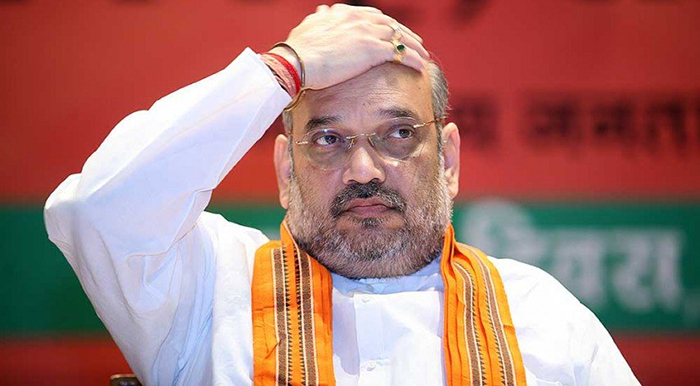
New Delhi, Aug 2: Union Home Minister Amit Shah today tested positive for COVID-19 coronavirus infection and has been admitted to a hospital. 

Shah took to social media today to inform about his infection. “I have tested positive but my health is fine," he said, adding that he has been hospitalised on the assistance of doctors. 

The Union Home Minister also appealed to those who came into close contact with him in the last few days to get themselves tested for COVID-19.

Comments

Add new comment

  • Coastaldigest.com reserves the right to delete or block any comments.
  • Coastaldigset.com is not responsible for its readers’ comments.
  • Comments that are abusive, incendiary or irrelevant are strictly prohibited.
  • Please use a genuine email ID and provide your name to avoid reject.
News Network
April 24,2020

New Delhi, Apr 24: The trajectory of COVID-19 cases could have plateaued and might even fall for some weeks after the lockdown is lifted but India is likely to see a second wave in late July or August with a surge in the number of cases during the monsoon, say scientists.

The timing of the peak will depend on how India is able to control physical distancing and on the level of infection spreads after restrictions are relaxed, they said.

It looks apparent that the trajectory of daily new cases has reached a plateau and eventually it will take a downward fall, maybe for some weeks or even months, Samit Bhattacharya, associate professor at the Department of Mathematics, Shiv Nadar University, said.

Still, we may get a surge of new cases of the same coronavirus and this will be considered a second wave, Bhattacharya explained.

The second epidemic may come back in late July or August in the monsoon, although the peak timing will depend on how we control social distancing during that time, he said.

Rajesh Sundaresan, professor at Bengaluru's Indian Institute of Science (IISc), agreed.

“Once we return to normal activity levels, there is a chance that infection may begin to rise again. China is seeing this to some extent post easing of some restrictions on travel,” Sundaresan, corresponding author of a working paper by researchers at IISc and the Tata Institute of Fundamental Research (TIFR) in Mumbai, said.

On March 25, when the number of coronavirus cases was 618 with 13 deaths, the government announced a nationwide lockdown that was later extended to May 3.

On Friday, the death toll due to COVID-19 rose to 718 and the number of cases to 23,077, according to the Union Health Ministry.

In good news, officials said this week that the doubling rate of cases has slowed down in the period, going from 3.4 days before lockdown to 7.5 days, with 18 states doing better than the national average. The recovery rate has also almost doubled in the last 10 days.

"Looking at the new cases in the past few days, it seems the growth of new daily infection is much slower than earlier. This apparently indicates that we might have reached at the plateau of the growth curve, Bhattacharya said.

He noted that recent studies in China and Europe observed that the infection might relapse in those people who have already recovered from earlier phases.

So, there is no evidence that the earlier infection may help acquire immunity against the second infection. And in that way, the entire population may be vulnerable to the second wave to some extent, said the scientist.

In their study unveiled this week, IISc and TIFR researchers analysed the impact of strategies such as case isolation, home quarantine, social distancing and various post-lockdown restrictions on COVID-19 that might remain in force for some time.

The study modelled on Bengaluru and Mumbai suggests the infection is likely to have a second wave and the public health threat will remain, unless steps are taken to aggressively trace, localise, isolate the cases, and prevent influx of new infections.

The new levels and the peaking times for healthcare demand depend on the levels of infection spreads in each city at the time of relaxation of restrictions, they said.

The lockdown is currently upon us. It has given us valuable time. Let us test, trace, quarantine, isolate, practice better hygiene, search for a vaccine, etc. We should do these anyway, and these are being done. When and how to lift the lockdown is going to be a difficult decision to make, said Sundaresan.

It's clear that it's going to be phased. What our team is focusing on is to come up with tools to help the decision makers assess the public health impact of various choices, he said.

According to the experts, infectious diseases spread via contact between infectious and susceptible people. In the absence of any control measures, an outbreak will grow as long as the average number of people infected by each infectious person is more than one.

Once enough people are immune there will be fewer people susceptible to the infection and the outbreak will die.

However, when an outbreak is brought under control by social distancing and other interventions, it is possible only a small proportion of the population will have been infected and gained immunity, they said.

This means enough susceptible people may remain to fuel a second wave if controls are relaxed and infection is reintroduced.

Until the vaccine comes on the market, we have to remain alert Once sporadic cases occur here and there in the country, we immediately need to implement quarantine or social distancing locally for the people in that region, and also need to perform tests to identify positive cases irrespective of showing symptoms, Bhattacharya explained.

Note that these monsoon months are also flu season in many places of India. So, we should not ignore the early signs of the flu symptoms. Irrespective of symptoms, we need to increase tests in the hotspots to identify people and contain the surge, he said.

Sundaresan added that the timeline for a second wave will depend on a lot of circumstances which may change as the time passes.

Significant testing may have been underway, there may be behavioural changes with people becoming more careful about their hygiene, wearing masks may become more common, etc. All these responses may help restrict the second wave, he said.

A study published in The Lancet journal earlier this month modelled the potential adverse consequences of premature relaxation of interventions, and found it might lead to a second wave of infections.

The finding is critical to governments globally, because it warns against premature relaxation of strict interventions, the researchers said.

While interventions to control the spread of SARS-CoV-2 are in place, countries will need to work toward returning to normalcy; thus, knowledge of the effect of each intervention is urgently required, they said in the study.

According to a recent analysis by the Harvard Chan School of Public Health, the best strategy to ease the critical care burden and loss of life from COVID-19 might be on-again, off-again social distancing.

In the absence of such interventions, surveillance and intermittent distancing may need to be maintained into 2022, which would present a substantial social and economic burden, the researchers wrote.p

Comments

Add new comment

  • Coastaldigest.com reserves the right to delete or block any comments.
  • Coastaldigset.com is not responsible for its readers’ comments.
  • Comments that are abusive, incendiary or irrelevant are strictly prohibited.
  • Please use a genuine email ID and provide your name to avoid reject.
News Network
August 8,2020

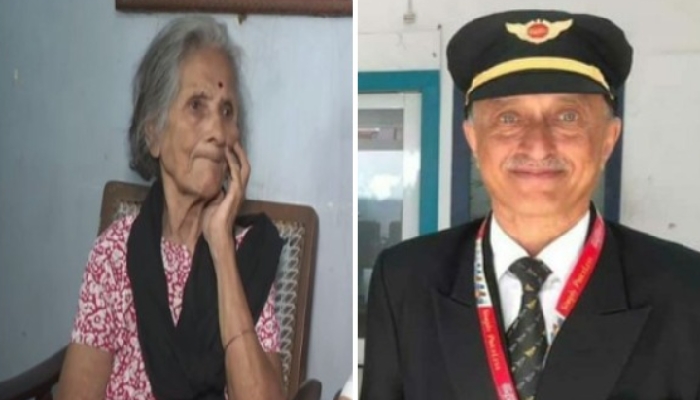
Nagpur, Aug 8: "He was a great son and always the first one to help others in need. He sacrificed his life for the country," said Neela Sathe, the mother of late captain DV Sathe, who was flying the Air India flight that crash-landed at Kozhikode airport on Friday, claiming 18 lives.

Indian Army Retired Colonel Vasant Sathe and his wife Neela lost both their sons in line of duty. The couple is originally from Nagpur, Maharashtra.

Speaking to news agency, Neela broke into tears and said, "He was a great son and always the first one to help others in need. 

His teachers still appreciate him. During the Ahmedabad floods, he saved the children of the soldiers by lifting them in his arms. I wish God would have called us instead of him."

"Both our children sacrificed their lives for the country," she added.

Remembering DV Sathe's childhood, Neela talked about every that moment when he made his parents proud.

Neela told with great pride that Captain DV Sathe had received the Sword of Honor and had also won eight medals in the Air Force.

Neela last talked to DV Sathe over phone call a few days ago during which captain told her mother not to go out of the house amid COVID-19 crisis as if something happens to her, he won't be able to bear that.

Vasant, captain's father retired as a colonel after serving in the Army for 30 years, following the footsteps of their father, both his sons joined too the Army.

Their elder son Vikas, was in the Army, and at the age of 22, he was martyred in an accident in Ferozepur in 1981. Their younger son Deepak (DV Sathe), who served as a pilot in Air India after serving in the Indian Air Force, died in the plane crash on Friday.

An Air India Express plane carrying 190 passengers including 10 infants skidded while landing at Karipur Airport in Kozhikode on Friday evening.

Comments

Add new comment

  • Coastaldigest.com reserves the right to delete or block any comments.
  • Coastaldigset.com is not responsible for its readers’ comments.
  • Comments that are abusive, incendiary or irrelevant are strictly prohibited.
  • Please use a genuine email ID and provide your name to avoid reject.