


Police check for passport may take just 8 days in future

February 21, 2016

The humble passport is creating its own little revolution in governance in India. Like the landline telephone of yore, the acquisition of a passport signalled a rise in social status a few decades ago because you had jumped through several hoops to get it.passport
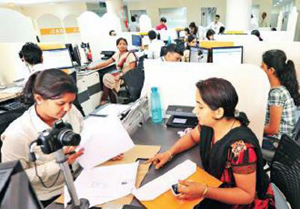
Over the past few years, Indians have found it easier to get a new passport or have one renewed at computerised seva kendras, which have taken some of the tension out of the exercise, and serve 50,000 people a day. The passport, like the Aadhar card, is writing its own governance script, and government departments are adapting to keep up.

By the end of 2015, 6.33 crore Indian citizens possessed valid passports, up from 5.19 crore in 2013. This week, the ministry of external affairs (MEA) expanded its footprint with a passport kendra in Arunachal Pradesh. "We now cover the entire country," says Muktesh Pardeshi, chief passport officer.

Appointed India's next ambassador to Mexico, Pardeshi has helmed the MEA's passport campaign for the past five years. Having spruced up the front end of the passport service system by tying up with TCS and boosting manpower, Pardeshi says they are now tackling the back end. The weakest link here is police verification, but it is also the most critical component of the passport issuance process.

We all know how tough that can get — a deadly cocktail of inefficiency and corruption. Last year, MEA and states held a brainstorming session to fix this. In the past months, technology, coercion and political push has succeeded in integrating 683 of 731 police districts in India with the passport system online.

This means police verification documents travel from passport offices to the police stations electronically, and return the same way. Police stations can no longer say, "document kho gaya" or no one was available to carry the papers. An e-trail shows how long the police station sat on it. This is very different from the days when you pleaded with the police station, or looked for someone who could "influence" them and found yourself funding a lot of "chai-paani" along the way.

Directors general of police in all the states have been provided with electronic dashboards to track progress, and pull up errant officials. In 2015, this brought the time taken for verification down to 34 days from 49 in 2013 despite the fact that passport applications shot by 40% across the country. This year, it is expected to come down to eight days. "We will soon bring J&K and Nagaland police districts within this ambit," Pardeshi said.

The revolution has been most visible in Uttar Pradesh. Over the past couple of years that the new system has been in practice, UP has jumped from issuing 6.5 lakh passports to 13 lakh passports a year. In 2015, UP, Tamil Nadu, Maharashtra and Kerala issued more than 10 lakh passports each. At the five-lakh-mark are West Bengal, Telangana, Gujarat, Karnataka and Punjab, while the highest growth was seen in Assam, Meghalaya, Manipur and Tripura.

MEA has reduced the categories of passports that need pre-police verification, and is aiming for post-verification for the bulk of Indian citizens. So, if you submit your Aadhaar, voter and PAN cards and a signed affidavit, you can pick up your passport and travel, and get verified after you return.

By August 2015, MEA had completely integrated the Aadhaar database with the passport system. This has taken the passport issuance process closer to a biometric verification.
MEA is also pushing for the early rollout of the crime and criminal tracking and networking system (CCTNS), which will be able to verify if you have a criminal record.

But police verification can never be done away with, so the MEA has developed an app for the police. Constables will receive their assignments on the app, which is GPS-enabled, and they can take photographs, scan documents and mail them to their bosses.
Commissioners are equipped to assign services and check the verification before reverting to the RPO. The app is connected to an online SMS system which seeks instant citizen feedback, keeping policemen on their toes. Seems like it's time for everyone to fly.

Comments

Mohammed
 - 
Monday, 22 Feb 2016

Really sad that Inside passport office in Bangalore, they started imposing fines on poor people. The Last Counter officials dont know to talk Hindi, English, or Kannada in Bangalore Passport Office. They can talk only in Tamil. Recently My Relative who was labour was fined for Rs.5000/- & reason was untold. The lady officer who fined him was not ready to tell reason at all.
Really sad there is nobody inside the passport office to help poor people who want to go out of country for their livelihood. The first two counters inside the bangalore office are from TCS. The last counter is Ministry official who are so old, who cant even operate the computers perfectly. The ministry is misusing our Tax funds in wrong manner. The poor people are fined for no reason.

Add new comment

  • Coastaldigest.com reserves the right to delete or block any comments.
  • Coastaldigset.com is not responsible for its readers’ comments.
  • Comments that are abusive, incendiary or irrelevant are strictly prohibited.
  • Please use a genuine email ID and provide your name to avoid reject.
Ram Puniyani
March 14,2020

In the wake of Citizenship Amendment Act (CAA) UN High Commissioner, Michele Bachelet, has filed an intervention in the Supreme Court petition challenging the constitutionality of the Citizenship Amendment Act, as she is critical of CAA. Responding to her, India’s Foreign Minister S. Jai Shanker strongly rebutted her criticism, saying that the body (UNHCR) has been wrong and is blind to the problem of cross border terrorism. The issue on hand is the possibility of scores of people, mainly Muslims, being declared as stateless. The problem at hand is the massive exercise of going through the responses/documents from over 120 crore of Indian population and screening documents, which as seen in Assam, yield result which are far from truthful or necessary.

The issue of CAA has been extensively debated and despite heavy critique of the same by large number of groups and despite the biggest mass opposition ever to any move in Independent India, the Government is determined on going ahead with an exercise which is reminiscent of the dreaded regimes which are sectarian and heartless to its citizens, which have indulged in extinction of large mass of people on grounds of citizenship, race etc. The Foreign minister’s assertion is that it is a matter internal to India, where India’s sovereignty is all that matters! As far as sovereignty is concerned we should be clear that in current times any sovereign power has to consider the need to uphold the citizenship as per the principle of non-discrimination which is stipulated in Art.26 of the International Covenant on Civil and Political (ICCPR) rights.

Can such policies, which affect large number of people and are likely to affect their citizenship be purely regarded as ‘internal’? With the World turning into a global village, some global norms have been formulated during last few decades. The norms relate to Human rights and migrations have been codified. India is also signatory to many such covenants in including ICCPR, which deals with the norms for dealing with refugees from other countries. One is not talking of Chicago speech of Swami Vivekanand, which said that India’s greatness has been in giving shelter to people from different parts of the World; one is also not talking of the Tattariaya Upanishad’s ‘Atithi Devovhav’ or ‘Vasudhaiva Kutumbkam’ from Mahaupanishad today.

What are being talked about are the values and opinions of organizations which want to ensure to preserve of Human rights of all people Worldwide. In this matter India is calling United Nations body as ‘foreign party’; having no locus standi in the case as it pertains to India’s sovereignty. The truth is that since various countries are signatories to UN covenants, UN bodies have been monitoring the moves of different states and intervening at legal level as Amicus (Friend of the Court) to the courts in different countries and different global bodies. Just to mention some of these, UN and High Commissioner for Human Rights has often submitted amicus briefs in different judicial platforms. Some examples are their intervention in US Supreme Court, European Court of Human Rights, International Criminal Court, and the Inter-American Court of Human Rights. These are meant to help the Courts in areas where UN bodies have expertise.

 Expertise on this has been jointly formulated by various nations. These interventions also remind the nations as to what global norms have been evolved and what are the obligations of individual states to the values which have evolved over a period of time. Arvind Narrain draws our attention to the fact that, “commission has intervened in the European Court of Human Rights in cases involving Spain and Italy to underscore the principle of non-refoulement, which bars compulsory expulsion of illegal migrants… Similarly, the UN has intervened in the International Criminal Court in a case against the Central African Republic to explicate on the international jurisprudence on rape as a war crime.”

From time to time organizations like Amnesty International and Human Rights Watch have been monitoring the status of Human rights of different countries. This puts those countries in uncomfortable situation and is not welcome by those establishments. How should this contradiction between ‘internal matter’, ‘sovereignty’ and the norms for Human rights be resolved? This is a tough question at the time when the freedom indices and democratic ethos are sliding downwards all over the world. In India too has slid down on the scale of these norms.

In India we can look at the intervention of UN body from the angle of equality and non discrimination. Democratic spirit should encourage us to have a rethink on the matters which have been decided by the state. In the face of the greatest mass movement of Shaheen bagh, the state does need to look inwards and give a thought to international morality, the spirit of global family to state the least.

The popular perception is that when Christians were being persecuted in Kandhmal the global Christian community’s voice was not strong enough. Currently in the face of Delhi carnage many a Muslim majority countries have spoken. While Mr. Modi claims that his good relations with Muslim countries are a matter of heartburn to the parties like Congress, he needs to relook at his self gloating. Currently Iran, Malaysia, Indonesia and many Muslim majority countries have spoken against what Modi regime is unleashing in India. Bangladesh, our neighbor, has also seen various protests against the plight of Muslims in India. More than the ‘internal matter’ etc. what needs to be thought out is the moral aspect of the whole issue. We pride ourselves in treading the path of morality. What does that say in present context when while large section of local media is servile to the state, section of global media has strongly brought forward what is happening to minorities in India.   

The hope is that Indian Government wakes up to its International obligations, to the worsening of India’s image in the World due to CAA and the horrific violence witnessed in Delhi.

Comments

Add new comment

  • Coastaldigest.com reserves the right to delete or block any comments.
  • Coastaldigset.com is not responsible for its readers’ comments.
  • Comments that are abusive, incendiary or irrelevant are strictly prohibited.
  • Please use a genuine email ID and provide your name to avoid reject.
News Network
July 31,2020

Bengaluru, Jul 31: An ambulance driver was thrashed by the family members of a 75-year-old COVID-19 patient who passed away on his way to the hospital in Bengaluru on Thursday.

The incident happened after the patient died in the ambulance while waiting in front of the MS Ramaiah Hospital in Bengaluru.

The driver was dragged out of the ambulance and chased around by a relative.

His clothes were ripped off and harangue were hurled at him. The relative was seen shouting and blaming the driver for the patient's death.

Speaking to news agency, the driver said that he was unable to explain the sequence of the protocol which was to be followed while getting the patient to the treatment ward.

Karnataka is one of the worst-affected states by the coronavirus pandemic. According to the Union Ministry of Health and Family Welfare, the state has 67,456 active cases as of Friday.

The state government has been struggling to contain the spread of the disease as it has intermittently imposed and eased lockdown measures, especially in the capital Bengaluru.

Comments

Add new comment

  • Coastaldigest.com reserves the right to delete or block any comments.
  • Coastaldigset.com is not responsible for its readers’ comments.
  • Comments that are abusive, incendiary or irrelevant are strictly prohibited.
  • Please use a genuine email ID and provide your name to avoid reject.
News Network
July 17,2020

Bengaluru, Jul 17: Karnataka Chief Minister BS Yediyurappa on Friday held a meeting with the Ministers-in-charge of eight zones to take stock of the COVID-19 situation and its management in Bengaluru.

Yediyurappa suggested that it should be ensured that both COVID-19 and other patients get timely treatment. He advised home quarantine for asymptomatic patients and hospitals and COVID Care Centers would provide treatment for those who are severely symptomatic.

He said, Rapid Antigen Testing should be carried out for those who died in the hospital, for immediate delivery of the corpse for funeral arrangements. He also said to conduct Rapid Antigen Test for those who have died at home and take action for the funeral of the dead.

The chief minister said, lockdown is not a solution to COVID-19 control, he made it clear that the government has no plans to continue with the lockdown in Bengaluru.

"To fill the shortage of doctors, the process of filling vacancies is ongoing," he said.

"Volunteers are identified and ambulances are assigned to each ward.  Strict action should be taken if private hospitals do not provide beds to patients," the Chief Minister said.

The chief minister said volunteers and nodal officers would be appointed to provide information on the enrollment and availability of beds to COVID-19 infected persons in private hospitals.

"Welfare pavilions and lodges have been identified in each ward, suggesting the use of quarters to quarantine those who do not have separate rooms," the Chief Minister said.

He said, allocate bed within two hours of the result of the test and the ambulance must take action to take the person to the hospital. The Chief Minister suggested that the system be decentralised, zoned, and monitored.

Comments

Add new comment

  • Coastaldigest.com reserves the right to delete or block any comments.
  • Coastaldigset.com is not responsible for its readers’ comments.
  • Comments that are abusive, incendiary or irrelevant are strictly prohibited.
  • Please use a genuine email ID and provide your name to avoid reject.