



Police check for passport may take just 8 days in future

February 21, 2016

The humble passport is creating its own little revolution in governance in India. Like the landline telephone of yore, the acquisition of a passport signalled a rise in social status a few decades ago because you had jumped through several hoops to get it.passport
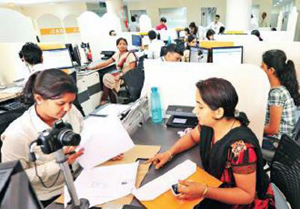
Over the past few years, Indians have found it easier to get a new passport or have one renewed at computerised seva kendras, which have taken some of the tension out of the exercise, and serve 50,000 people a day. The passport, like the Aadhar card, is writing its own governance script, and government departments are adapting to keep up.

By the end of 2015, 6.33 crore Indian citizens possessed valid passports, up from 5.19 crore in 2013. This week, the ministry of external affairs (MEA) expanded its footprint with a passport kendra in Arunachal Pradesh. "We now cover the entire country," says Muktesh Pardeshi, chief passport officer.

Appointed India's next ambassador to Mexico, Pardeshi has helmed the MEA's passport campaign for the past five years. Having spruced up the front end of the passport service system by tying up with TCS and boosting manpower, Pardeshi says they are now tackling the back end. The weakest link here is police verification, but it is also the most critical component of the passport issuance process.

We all know how tough that can get — a deadly cocktail of inefficiency and corruption. Last year, MEA and states held a brainstorming session to fix this. In the past months, technology, coercion and political push has succeeded in integrating 683 of 731 police districts in India with the passport system online.

This means police verification documents travel from passport offices to the police stations electronically, and return the same way. Police stations can no longer say, "document kho gaya" or no one was available to carry the papers. An e-trail shows how long the police station sat on it. This is very different from the days when you pleaded with the police station, or looked for someone who could "influence" them and found yourself funding a lot of "chai-paani" along the way.

Directors general of police in all the states have been provided with electronic dashboards to track progress, and pull up errant officials. In 2015, this brought the time taken for verification down to 34 days from 49 in 2013 despite the fact that passport applications shot by 40% across the country. This year, it is expected to come down to eight days. "We will soon bring J&K and Nagaland police districts within this ambit," Pardeshi said.

The revolution has been most visible in Uttar Pradesh. Over the past couple of years that the new system has been in practice, UP has jumped from issuing 6.5 lakh passports to 13 lakh passports a year. In 2015, UP, Tamil Nadu, Maharashtra and Kerala issued more than 10 lakh passports each. At the five-lakh-mark are West Bengal, Telangana, Gujarat, Karnataka and Punjab, while the highest growth was seen in Assam, Meghalaya, Manipur and Tripura.

MEA has reduced the categories of passports that need pre-police verification, and is aiming for post-verification for the bulk of Indian citizens. So, if you submit your Aadhaar, voter and PAN cards and a signed affidavit, you can pick up your passport and travel, and get verified after you return.

By August 2015, MEA had completely integrated the Aadhaar database with the passport system. This has taken the passport issuance process closer to a biometric verification.
MEA is also pushing for the early rollout of the crime and criminal tracking and networking system (CCTNS), which will be able to verify if you have a criminal record.

But police verification can never be done away with, so the MEA has developed an app for the police. Constables will receive their assignments on the app, which is GPS-enabled, and they can take photographs, scan documents and mail them to their bosses.
Commissioners are equipped to assign services and check the verification before reverting to the RPO. The app is connected to an online SMS system which seeks instant citizen feedback, keeping policemen on their toes. Seems like it's time for everyone to fly.

Comments

Mohammed
 - 
Monday, 22 Feb 2016

Really sad that Inside passport office in Bangalore, they started imposing fines on poor people. The Last Counter officials dont know to talk Hindi, English, or Kannada in Bangalore Passport Office. They can talk only in Tamil. Recently My Relative who was labour was fined for Rs.5000/- & reason was untold. The lady officer who fined him was not ready to tell reason at all.
Really sad there is nobody inside the passport office to help poor people who want to go out of country for their livelihood. The first two counters inside the bangalore office are from TCS. The last counter is Ministry official who are so old, who cant even operate the computers perfectly. The ministry is misusing our Tax funds in wrong manner. The poor people are fined for no reason.

Add new comment

  • Coastaldigest.com reserves the right to delete or block any comments.
  • Coastaldigset.com is not responsible for its readers’ comments.
  • Comments that are abusive, incendiary or irrelevant are strictly prohibited.
  • Please use a genuine email ID and provide your name to avoid reject.
coastaldigest.com news network
May 26,2020

Bengaluru, May 26: Karnataka chief minister BS Yediyurappa has been urged to cancel the proposed SSLC examinations in Karnataka and allow “mass-pass” for every student in the wake of covid-19 crisis. A group of intellectuals and educationists have put forth this demand.

In the letter released by educationist VP Niranjan Aradhya, said that they were listing the scientific reasons to the CM for cancellation of exams which are slated to be held from June 25 to July 4th.

In the letter, the intellectuals have elucidated a number of reasons for cancelling the upcoming exams. “There are close to 8.5 lakh students and 2.5 lakh staff involved. If we include parents who would drop their kids at the exam centre, around 30 lakh people will be involved in the process, making it a risky affair. Though the government has said that it will separate the students with fever or other ailments, will students admit to having fever? What if they consume paracetamol and come to write exams?” asks the letter. 

Added to this, the question papers have to be sent from the district and taluk centres and there may be chances of transmission.

“Even if we conduct exams, then what about the students who have failed? Every year, around 2.5 lakh students fail in the exam. Will the government conduct the supplementary exams again? The whole process of conducting exams comes at a huge cost of Rs 20 cr to Rs 25 crore. Hence, we are suggesting that the government cancels the exams and pass the entire group of student en masse,” said the letter.

Comments

Add new comment

  • Coastaldigest.com reserves the right to delete or block any comments.
  • Coastaldigset.com is not responsible for its readers’ comments.
  • Comments that are abusive, incendiary or irrelevant are strictly prohibited.
  • Please use a genuine email ID and provide your name to avoid reject.
Media Release
January 23,2020

Mangaluru, Jan 23: With the results of Joint Entrance Examination (JEE-Main) out, it is celebration time at CFAL (Centre for Advanced Learning), Mangalore’s top training institute as 12 of its students have secured above 99 percentile, out of 120 students who appeared at the prestigious national examination held in January this year. The students are: Kaustubh Rao (99.79), Ujwal Kumar (99.77), Dheeraj Kamath (99.74), Pramod Rao (99.68), Santhosh M (99.59), Mohan Nayak (99.49), Rihan D’silva (99.43), Rishan D’silva (99.41), Pranav Rao (99.41), Aamod BK (99.29), Anmol J Shetty (99.22) and Madhura Sabhahit (99.083).

Apart from the above students, 8 students have scored above 98 percentile, the details of the students are: D.K. Goutham (98.67), Tejah S.S. (98.49), Akash Shetty (98.4), Tejas Bhat K (98.34), Ninaad PS (98.31), Shreepoorna Rao (98.3), K. Annapoorna Prabhu (98.3) and Rakshith Sajjan (98.2). The results of many more students are awaited.

A total of 8,69,010 students had appeared in the said exam from across India. The students who have attempted the JEE Main exam in January can attempt the exams again in April to better their percentile. Students who clear JEE Main qualify for JEE Advanced and are eligible for seats at the NIT’s and other top institutions of the country.

JEE – The most challenging undergraduate admission test

Joint Entrance Examination (JEE) conducted this year by National Testing Agency (NTA) is a national level examination for students to qualify and pursue engineering degree at under graduate level. Paper 1 is held for BE/B.Tech admissions and Paper 2 for B. Arch/B. Planning. JEE Main is a critical criterion for admission in India’s most prestigious and elite universities like IITs and NIT’s.

Those students who clear JEE Main can take the JEE advanced – which is a pre-requisite requirement for admission in the Indian Institute of Technology and Indian School of Mines (Dhanbad)

CFAL – The first name in training

The training at CFAL consists of defined hours of classes, tests and mock exams, unique course material, experienced professors and hence is the first choice for students appearing for STEM examinations including JEE, NTSE, KYPY, OLYMPIADS etc.  The centre was established with the intention of giving students of Mangalore information, guidance and tools required to qualify the competitive exams. However, the main aim of CFAL is to inculcate passion for Math and Science learning among students and to encourage research and innovation in the subjects.

Comments

Add new comment

  • Coastaldigest.com reserves the right to delete or block any comments.
  • Coastaldigset.com is not responsible for its readers’ comments.
  • Comments that are abusive, incendiary or irrelevant are strictly prohibited.
  • Please use a genuine email ID and provide your name to avoid reject.
News Network
April 18,2020

Bengaluru, Apr 18: The Karnataka government has fixed the cost of test for COVID-19 in private laboratories at Rs 2,250, an official said on Friday.

"Based on the discussions and negotiations, the cost per test has been fixed at Rs 2,250. This includes the screening test and a confirmatory test," said order by Health and Family Welfare Department's Additional Chief Secretary Jawaid Akhtar.

A total of 16 laboratories (11 government and 5 private) have been approved by the Indian Council of Medical Research (ICMR) for testing samples of possible COVID-19 cases in the state.

Realising that early detection of coronavirus cases and timely treatment was the need of the hour, meetings were held to rope in more private laboratories to conduct COVID-19 sample tests.

As per the protocol by the Centre, testing the samples of suspected COVID-19 cases can be taken up in private laboratories subject to conditions which include sharing the lab data pertaining to the diagnosis of COV1D-19 with the state government and with the ICMR on a timely basis.

As per the Union Health Ministry, 353 people have infected from coronavirus in the state of which 83 are cured and discharged and 13 succumbed to the virus.

Comments

Add new comment

  • Coastaldigest.com reserves the right to delete or block any comments.
  • Coastaldigset.com is not responsible for its readers’ comments.
  • Comments that are abusive, incendiary or irrelevant are strictly prohibited.
  • Please use a genuine email ID and provide your name to avoid reject.