


Police check for passport may take just 8 days in future

February 21, 2016

The humble passport is creating its own little revolution in governance in India. Like the landline telephone of yore, the acquisition of a passport signalled a rise in social status a few decades ago because you had jumped through several hoops to get it.passport
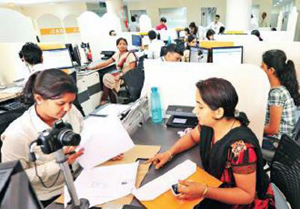
Over the past few years, Indians have found it easier to get a new passport or have one renewed at computerised seva kendras, which have taken some of the tension out of the exercise, and serve 50,000 people a day. The passport, like the Aadhar card, is writing its own governance script, and government departments are adapting to keep up.

By the end of 2015, 6.33 crore Indian citizens possessed valid passports, up from 5.19 crore in 2013. This week, the ministry of external affairs (MEA) expanded its footprint with a passport kendra in Arunachal Pradesh. "We now cover the entire country," says Muktesh Pardeshi, chief passport officer.

Appointed India's next ambassador to Mexico, Pardeshi has helmed the MEA's passport campaign for the past five years. Having spruced up the front end of the passport service system by tying up with TCS and boosting manpower, Pardeshi says they are now tackling the back end. The weakest link here is police verification, but it is also the most critical component of the passport issuance process.

We all know how tough that can get — a deadly cocktail of inefficiency and corruption. Last year, MEA and states held a brainstorming session to fix this. In the past months, technology, coercion and political push has succeeded in integrating 683 of 731 police districts in India with the passport system online.

This means police verification documents travel from passport offices to the police stations electronically, and return the same way. Police stations can no longer say, "document kho gaya" or no one was available to carry the papers. An e-trail shows how long the police station sat on it. This is very different from the days when you pleaded with the police station, or looked for someone who could "influence" them and found yourself funding a lot of "chai-paani" along the way.

Directors general of police in all the states have been provided with electronic dashboards to track progress, and pull up errant officials. In 2015, this brought the time taken for verification down to 34 days from 49 in 2013 despite the fact that passport applications shot by 40% across the country. This year, it is expected to come down to eight days. "We will soon bring J&K and Nagaland police districts within this ambit," Pardeshi said.

The revolution has been most visible in Uttar Pradesh. Over the past couple of years that the new system has been in practice, UP has jumped from issuing 6.5 lakh passports to 13 lakh passports a year. In 2015, UP, Tamil Nadu, Maharashtra and Kerala issued more than 10 lakh passports each. At the five-lakh-mark are West Bengal, Telangana, Gujarat, Karnataka and Punjab, while the highest growth was seen in Assam, Meghalaya, Manipur and Tripura.

MEA has reduced the categories of passports that need pre-police verification, and is aiming for post-verification for the bulk of Indian citizens. So, if you submit your Aadhaar, voter and PAN cards and a signed affidavit, you can pick up your passport and travel, and get verified after you return.

By August 2015, MEA had completely integrated the Aadhaar database with the passport system. This has taken the passport issuance process closer to a biometric verification.
MEA is also pushing for the early rollout of the crime and criminal tracking and networking system (CCTNS), which will be able to verify if you have a criminal record.

But police verification can never be done away with, so the MEA has developed an app for the police. Constables will receive their assignments on the app, which is GPS-enabled, and they can take photographs, scan documents and mail them to their bosses.
Commissioners are equipped to assign services and check the verification before reverting to the RPO. The app is connected to an online SMS system which seeks instant citizen feedback, keeping policemen on their toes. Seems like it's time for everyone to fly.

Comments

Mohammed
 - 
Monday, 22 Feb 2016

Really sad that Inside passport office in Bangalore, they started imposing fines on poor people. The Last Counter officials dont know to talk Hindi, English, or Kannada in Bangalore Passport Office. They can talk only in Tamil. Recently My Relative who was labour was fined for Rs.5000/- & reason was untold. The lady officer who fined him was not ready to tell reason at all.
Really sad there is nobody inside the passport office to help poor people who want to go out of country for their livelihood. The first two counters inside the bangalore office are from TCS. The last counter is Ministry official who are so old, who cant even operate the computers perfectly. The ministry is misusing our Tax funds in wrong manner. The poor people are fined for no reason.

Add new comment

  • Coastaldigest.com reserves the right to delete or block any comments.
  • Coastaldigset.com is not responsible for its readers’ comments.
  • Comments that are abusive, incendiary or irrelevant are strictly prohibited.
  • Please use a genuine email ID and provide your name to avoid reject.
News Network
February 4,2020

Bengaluru, Feb 4: Taking the state government to task, the Karnataka High Court on Monday opined there was a need to rehabilitate or compensate migrant workers whose homes in Tubarahalli and Kundalahalli were demolished by a BBMP engineer last month.

On January 19, the Bruhat Bengaluru Mahanagara Palike (BBMP) assistant executive engineer at Marathahalli had taken up a demolition drive stating that the migrant workers residing in the area were “illegal Bangladeshis”.

A division bench led by Chief Justice Abhay S Oka was hearing a petition by the People’s Union for Civil Liberties which contended that the evacuation of the workers was illegal. Stressing the need for relief, the court directed the state government to come clean on its stance and adjourned the hearing to February 10.

Advocate General Prabhuling K Navadgi submitted that the Union government had issued a circular last year to ascertain the presence of illegal Bangaladesh migrants. “On the basis of this circular, the BBMP officials had written a letter to Marathahalli police sub-inspector on January 18. Based on this letter, the residents in huts were evicted in a civilised manner,” he stated.

The bench, however, differed with the submission. “Who identified them as Bangladeshis before the eviction? Which is the competent authority to do so? Which police officer took up the inquiry?” the bench questioned.

The court also asked whether the government would take up similar eviction drives against illegal buildings of the rich. It also expressed displeasure over the action taken against the BBMP engineer.

“Instead of sending him home, you say you have transferred him. We can’t be mute spectators,” the bench said.

The court did not mince words as it castigated the authorities for failing to act judiciously. “The police and the BBMP are blaming each other. Your action appears to be dangerous. Going by the state of things, it seems that everything is not in order,” it said.

Comments

Add new comment

  • Coastaldigest.com reserves the right to delete or block any comments.
  • Coastaldigset.com is not responsible for its readers’ comments.
  • Comments that are abusive, incendiary or irrelevant are strictly prohibited.
  • Please use a genuine email ID and provide your name to avoid reject.
News Network
February 19,2020

Bengaluru, Feb 19: Pointing out that there was a deliberate attempt to cover up police excesses by implicating innocent persons at whim, the Karnataka High Court on Tuesday granted conditional bail to 21 people who were accused by police of involving in violence during the protests against the Citizenship Amendment Act (CAA) in Mangaluru.

Allowing the bail petitions of Ashik and 20 others from Udupi and Dakshina Kannada districts, Justice John Michael Cunha said the overzealousness of the police is also evident from the fact that FIRs were registered under Section 307 of IPC against the persons killed by the police themselves.

“In an offence involving a large number of people, the identity and participation of each accused must be fixed with reasonable certainty. In the present cases, the identity appears to have been fixed on the basis of their affiliation to PFI and they being members of the Muslim community. Though it is stated that the involvement of the petitioners is captured in CCTV footage and photographs, no such material is produced before the court showing the presence of any of the petitioners at the spot, armed with deadly weapons,” the judge noted.

In the statement of objections filed by the State Public Prosecutor-I, it was stated that there was a hint of Muslim youths holding protest on December 19, 2019, opposing the implementation of CAA. Prohibitory orders were clamped in that connection. This assertion indicated that the common object of the assembly was to oppose the implementation of CAA and National Register for Citizens (NRC) which, by itself, was not an “unlawful object”, the judge pointed out.

‘Pics show cops throwing stones at crowd’

Justice Cunha also said the material collected by the investigators did not contain any specific evidence regarding the presence of any of the petitioners at the spot. On the other hand, omnibus allegations were made against the Muslim crowd of 1,500-2,000, alleging that they were armed with weapons like stones, soda bottles and glass pieces. The photographs produced by the SPP depicted that hardly any member of the crowd were armed with weapons, except one of them holding a bottle. In none of these photographs, police station or policemen were seen in the vicinity, the judge noted.

“On the other hand, photographs produced by the petitioners show that the policemen themselves were pelting stones at the crowd. The petitioners have produced copies of the complaints lodged by the dependants of the deceased who died due to police firing and the endorsement made thereon reveals that even though the law required the police to register independent FIRs in view of the specific complaint made against the police officers making out cognizable offences, the police have failed to register FIRs. This goes to show that a deliberate attempt is underway to cover up police excesses by implicating innocent persons at the whims and caprice of the police,” the judge observed.

In the wake of counter-allegations against the police and in the backdrop of their failure to register FIRs based on complaints lodged by the families of victims, the possibility of false and mistaken implication could not be ruled out, the judge said. In these circumstances, it would be a travesty of justice to deny bail to the petitioners and sacrifice their liberties to the mercy of the district administration and police. The records indicate that a deliberate attempt has been made to trump up evidence and to deprive the liberties of the petitioners by fabricating evidence. None of the petitioners have any criminal antecedents, the court said.

“The allegations levelled against the petitioners are not punishable with death or imprisonment for life. There is no direct evidence to connect them with the alleged offence. The investigation appears to be malafide and partisan. In the circumstances, in order to protect the rights and liberties of the petitioners, it is necessary to admit them to bail,” the judge said.

The petitioners were arrested and remanded in judicial custody after the anti-CAA protests on charges of being members of an unlawful assembly, armed with lethal weapons, attempting to set fire to the North Police Station in Mangaluru, obstructing the police from discharging their duties and causing damage to public property, etc., on December 19 in violation of the prohibitory orders. They moved the High Court as their bail pleas had been rejected by a sessions court in Dakshina Kannada.

Comments

Add new comment

  • Coastaldigest.com reserves the right to delete or block any comments.
  • Coastaldigset.com is not responsible for its readers’ comments.
  • Comments that are abusive, incendiary or irrelevant are strictly prohibited.
  • Please use a genuine email ID and provide your name to avoid reject.
Media Release
January 17,2020

Udupi, Jan 17: In a unique philanthropic initiative, two US based NRI children have established the first unit of Keithan & Keisha Skill Development Centre at SVS English Medium School, Katapady in Udupi district.

The centre was inaugurated by Dr. Ranjan B. Kini, Professor of Management - Information Systems of Indiana University Northwest (UCN), USA on Saturday, January 11, 2020.

The centre will provide exposure to rural high school students in technical skills in emerging technological domains, soft skills and life skills through online training and video conferencing during weekend seminars. The centre is established by Keithan and Keisha with the help of their parents. They are the children of Katapady Krishna Mohan Pai, CEO of Invenger Technologies Inc., USA. One 55 inch LCD TV, two computers and one laptop were donated as part of the initiation package.

Dr. Srikanth Prabhu, Associate Professor, Department of Computer Science & Engineering, MIT, Manipal will be anchoring the training sessions which will cover emerging fields like Robotics, its impact and the opportunities in the future. The training will include international online programmes and video conferencing.

“In today’s competitive world, students need technical knowledge to keep pace with the changing scenarios. Along with technical exposure, they should also be equipped with soft skills, communication skills and organizing abilities,” said Dr. Ranjan B. Kini after inaugurating the first unit at SVS English Medium School, Katapady.

Dr. Srikanth Prabhu informed the gathering about the idea behind the project, explained its features and programmes. “If good awareness is given to students at a young age regarding latest developments in technical fields and if they are trained in soft skills and other complementary skills, they will be able to face the future with confidence and attain the heights of success even if beginning from zero,” he said.

Presiding over the function K. Sathyendra Pai, Director of Invenger Technologies said, “This is the first centre to be set up under our initiative to train rural children in add-on skills and help them to gain parity with better educated students.”  More such centres will be set up in other schools soon, he added.

Katapady Krishna Mohan Pai, CEO of Invenger Technologies Inc., Amith Nayak of Archana Developers, Umesh Rao, President of Rotary Club Katapady, Savitha Manjunath, PWD Officer of Udupi, technical experts Nidhi Manjunath and Mitesh Singh were the guests of honour. Directors of the company B. C. Pai, Srinivas Vasudev Kini and Venkatramana Bhat were present.

School Headmaster Devendra Nayak welcomed the gathering. Megha gave a vote of thanks. School teachers Uma and Chaitra along with other teachers coordinated the event. Student leaders Dhanush and Jessel Vinola Quadros compered the programme.

Comments

Add new comment

  • Coastaldigest.com reserves the right to delete or block any comments.
  • Coastaldigset.com is not responsible for its readers’ comments.
  • Comments that are abusive, incendiary or irrelevant are strictly prohibited.
  • Please use a genuine email ID and provide your name to avoid reject.