



Police check for passport may take just 8 days in future

February 21, 2016

The humble passport is creating its own little revolution in governance in India. Like the landline telephone of yore, the acquisition of a passport signalled a rise in social status a few decades ago because you had jumped through several hoops to get it.passport
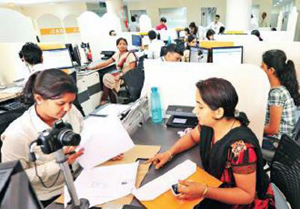
Over the past few years, Indians have found it easier to get a new passport or have one renewed at computerised seva kendras, which have taken some of the tension out of the exercise, and serve 50,000 people a day. The passport, like the Aadhar card, is writing its own governance script, and government departments are adapting to keep up.

By the end of 2015, 6.33 crore Indian citizens possessed valid passports, up from 5.19 crore in 2013. This week, the ministry of external affairs (MEA) expanded its footprint with a passport kendra in Arunachal Pradesh. "We now cover the entire country," says Muktesh Pardeshi, chief passport officer.

Appointed India's next ambassador to Mexico, Pardeshi has helmed the MEA's passport campaign for the past five years. Having spruced up the front end of the passport service system by tying up with TCS and boosting manpower, Pardeshi says they are now tackling the back end. The weakest link here is police verification, but it is also the most critical component of the passport issuance process.

We all know how tough that can get — a deadly cocktail of inefficiency and corruption. Last year, MEA and states held a brainstorming session to fix this. In the past months, technology, coercion and political push has succeeded in integrating 683 of 731 police districts in India with the passport system online.

This means police verification documents travel from passport offices to the police stations electronically, and return the same way. Police stations can no longer say, "document kho gaya" or no one was available to carry the papers. An e-trail shows how long the police station sat on it. This is very different from the days when you pleaded with the police station, or looked for someone who could "influence" them and found yourself funding a lot of "chai-paani" along the way.

Directors general of police in all the states have been provided with electronic dashboards to track progress, and pull up errant officials. In 2015, this brought the time taken for verification down to 34 days from 49 in 2013 despite the fact that passport applications shot by 40% across the country. This year, it is expected to come down to eight days. "We will soon bring J&K and Nagaland police districts within this ambit," Pardeshi said.

The revolution has been most visible in Uttar Pradesh. Over the past couple of years that the new system has been in practice, UP has jumped from issuing 6.5 lakh passports to 13 lakh passports a year. In 2015, UP, Tamil Nadu, Maharashtra and Kerala issued more than 10 lakh passports each. At the five-lakh-mark are West Bengal, Telangana, Gujarat, Karnataka and Punjab, while the highest growth was seen in Assam, Meghalaya, Manipur and Tripura.

MEA has reduced the categories of passports that need pre-police verification, and is aiming for post-verification for the bulk of Indian citizens. So, if you submit your Aadhaar, voter and PAN cards and a signed affidavit, you can pick up your passport and travel, and get verified after you return.

By August 2015, MEA had completely integrated the Aadhaar database with the passport system. This has taken the passport issuance process closer to a biometric verification.
MEA is also pushing for the early rollout of the crime and criminal tracking and networking system (CCTNS), which will be able to verify if you have a criminal record.

But police verification can never be done away with, so the MEA has developed an app for the police. Constables will receive their assignments on the app, which is GPS-enabled, and they can take photographs, scan documents and mail them to their bosses.
Commissioners are equipped to assign services and check the verification before reverting to the RPO. The app is connected to an online SMS system which seeks instant citizen feedback, keeping policemen on their toes. Seems like it's time for everyone to fly.

Comments

Mohammed
 - 
Monday, 22 Feb 2016

Really sad that Inside passport office in Bangalore, they started imposing fines on poor people. The Last Counter officials dont know to talk Hindi, English, or Kannada in Bangalore Passport Office. They can talk only in Tamil. Recently My Relative who was labour was fined for Rs.5000/- & reason was untold. The lady officer who fined him was not ready to tell reason at all.
Really sad there is nobody inside the passport office to help poor people who want to go out of country for their livelihood. The first two counters inside the bangalore office are from TCS. The last counter is Ministry official who are so old, who cant even operate the computers perfectly. The ministry is misusing our Tax funds in wrong manner. The poor people are fined for no reason.

Add new comment

  • Coastaldigest.com reserves the right to delete or block any comments.
  • Coastaldigset.com is not responsible for its readers’ comments.
  • Comments that are abusive, incendiary or irrelevant are strictly prohibited.
  • Please use a genuine email ID and provide your name to avoid reject.
News Network
February 12,2020

Mangaluru, Feb 12: More than 7,000 people at Mangalore International Airport (MIA) and over 1,000 at the New Mangalore Port (NMP) have undergone thermal screening for the novel coronavirus in the past few days, a taluk health official said on Wednesday.

A few more ships are scheduled to arrive at the port and all precautionary measures to check the ship’s passengers and crew are ready, he said.

Soon after a positive case of deadly pathogen surfaced in Kerala, the district health officials here actively started monitoring all entry points in the bordering district. 

Apart from Mangaluru, there is bus connectivity to Puttur, Sullia, Bantwal, Dharmasthala and Subrahmanya from Kerala. More than eight to 10 trains arrive at Mangaluru daily from Kerala.

Hence, it is impossible to take up screening of all the vehicles arriving from Kerala, sources in District Health and Family Welfare said.

Comments

Add new comment

  • Coastaldigest.com reserves the right to delete or block any comments.
  • Coastaldigset.com is not responsible for its readers’ comments.
  • Comments that are abusive, incendiary or irrelevant are strictly prohibited.
  • Please use a genuine email ID and provide your name to avoid reject.
News Network
June 18,2020

Bengaluru, Jun 18: Karnataka Public Service Commission (KPSC) was reprimanded for withholding information, sought by a candidate regarding an examination held in 2005 for Gazeted Probationary posts, by the State Information Commissioner here on Thursday.

According to official sources, the State Information Commissioner NP Ramesh, while disposing off a petition by the candidate, who had written an examination conducted by the KPSC for the gazeted probationary posts held in 2005, had directed to provide the information sought by the candidate, free of costs within ten days.

The State Information Commissioner in his order had termed the conduct of the KPSC as against the spirit of transparency among the public authorities.

Comments

Add new comment

  • Coastaldigest.com reserves the right to delete or block any comments.
  • Coastaldigset.com is not responsible for its readers’ comments.
  • Comments that are abusive, incendiary or irrelevant are strictly prohibited.
  • Please use a genuine email ID and provide your name to avoid reject.
News Network
May 12,2020

May 12: Children suffering from non-respiratory disease symptoms like diarrhea and fever, or those with a history of exposure to the novel coronavirus, should be suspected of having COVID-19, a new study says.

According to the research, published in the journal Frontiers in Pediatrics, gastrointestinal symptoms first suffered by some children hints at potential infection with SARS-CoV-2 through the digestive tract.

"This case series is the first report to describe the clinical features of COVID-19 with non-respiratory symptoms as the first manifestation in children," the scientists from Tongji Hospital in China wrote in the study.

They explained that the gastrointestinal symptoms could be arising since the type of receptors in lung cells targeted by the virus can also be found in the intestines.

Most children are only mildly affected by COVID-19, and the few severe cases often have underlying health issues, the researchers said.

"It is easy to miss its diagnosis in the early stage, when a child has non-respiratory symptoms, or suffers from another illness," said study co-author Wenbin Li, who works at the Department of Pediatrics, Tongji Hospital.

"Based on our experience of dealing with COVID-19, in regions where this virus is epidemic, children suffering from digestive tract symptoms, especially with fever and/or a history of exposure to this disease, should be suspected of being infected with this virus," Li said.

In the study, the scientists described the clinical features of children admitted to hospital with non-respiratory symptoms, who were subsequently diagnosed with pneumonia and COVID-19.

"These children were seeking medical advice in the emergency department for unrelated problems, for example, one had a kidney stone, another a head trauma," Li said.

The study noted that all the children had pneumonia, which was confirmed by chest X-ray scan before or soon after admission.

These children were then confirmed to have COVID-19.

While their COVID-19 symptoms were initially mild or relatively hidden before their hospital admission, four out of the five cases had digestive tract symptoms as the first manifestation of this disease, the researchers said.

Li hopes that doctors will use the findings to quickly diagnose and isolate patients with similar symptoms, which may aid early treatment and reduce transmission.

According to the researchers, the children's gastrointestinal symptoms, which have also been recorded in adult patients, could be an additional route of infection.

"The gastrointestinal symptoms experienced by these children may be related to the distribution of receptors and the transmission pathway associated with COVID-19 infection in humans," Li explained.

Since the virus infects people via the ACE2 receptor, which can be found in certain cells in the lungs as well as the intestines, COVID-19 might infect patients not only through the respiratory tract in the form of air droplets, but also through the digestive tract by contact or fecal-oral transmission, the study noted.

While COVID-19 tests can occasionally produce false positive readings, Li said all the five children assessed in the study were infected with the disease.

However, he cautioned that more research is needed to confirm their findings.

"We report five cases of COVID-19 in children showing non-respiratory symptoms as the first manifestation after admission to hospital. The incidence and clinical features of similar cases needs further study in more patients," he said.

Comments

Add new comment

  • Coastaldigest.com reserves the right to delete or block any comments.
  • Coastaldigset.com is not responsible for its readers’ comments.
  • Comments that are abusive, incendiary or irrelevant are strictly prohibited.
  • Please use a genuine email ID and provide your name to avoid reject.