Police to import sophisticated weapons to fight terrorism

January 20, 2015

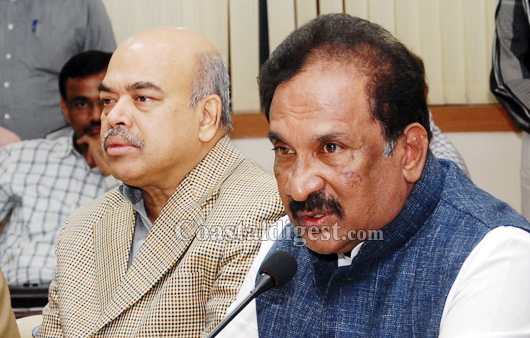
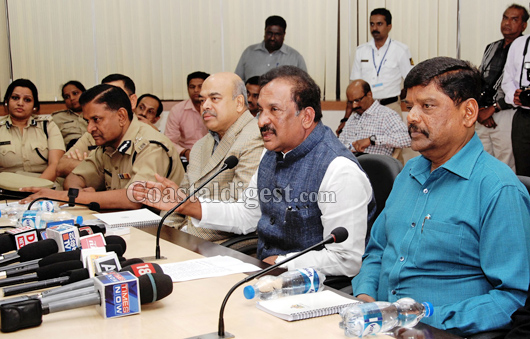
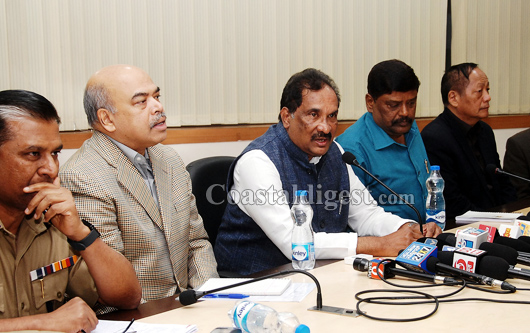
Bengaluru, Jan 20: The State government will spend Rs six crore to import sophisticated weapons for the police, Home Minister K J?George said here on Monday.

kj george 1

“The government has realised the fact that police personnel are using traditional weapons that are not suitable to fight in a terror-like situation.?Hence, we have decided to procure modern weapons from abroad. The Cabinet recently approved a Rs six-crore project in this regard,” he told a press conference.

The Home Minister said the government had decided to go out of the way and recruit professionals for technical wings such as cyber crime cell and Forensic Science Laboratory (FSL) to speed up the investigation of various cases. Terrorists are increasingly using various technological means to execute their attacks.?Hence, the government is contemplating to appoint experts in cyber cell and FSL, he said.

Referring to the upcoming Republic Day celebrations, he said the government had ensured massive security arrangements across the State especially in Bengaluru and requested the public to contact the Commissioners of Police, DG&IGP and SPs if they come across any suspicious objects or movements of people.

He said the police followed required legal procedure in arresting four suspected ultras recently and added the government would not deny any assistance to the suspects’ family members. To a question he said the police were yet to achieve a breakthrough in the Church Street blast case.

DG&IGP?L?R?Pachuau and Additional Chief Secretary (Home) S?K?Pattanayak were present on the occasion.

kj george 1

kj george 1

kj george 1

Comments

Add new comment

  • Coastaldigest.com reserves the right to delete or block any comments.
  • Coastaldigset.com is not responsible for its readers’ comments.
  • Comments that are abusive, incendiary or irrelevant are strictly prohibited.
  • Please use a genuine email ID and provide your name to avoid reject.
News Network
January 3,2020

Bengaluru, Jan 3: Prime Minister Narendra Modi on Friday called on young scientists of India to "Innovate, Patent, Produce and Prosper," and said these four steps would lead our country towards faster development. The Prime Minister also stressed on the need to transform the landscape of Indian science, technology and innovation.

"The growth story of India depends on its success in the science and technology sector. There is a need to transform the landscape of Indian science, technology and innovation," Modi said.

Speaking after inaugurating the 107th Session of Indian Science Congress, he said, "My motto for the young scientists in this country is -Innovate, Patent, Produce and Prosper. These four steps will lead our country towards faster development."

"If we innovate we will patent and that in turn will make our production smoother and when we take these products to the people of our country, I'm sure they will prosper," he said, adding that innovation for the people and by the people is the direction of our new India. The Prime Minister also said he was happy to learn that India's ranking has improved in the Global Innovation Index to 52.

"Our programmes have created more technology business incubators in the last five years than in the previous 50 years. I congratulate our scientists for this achievement," he added.

Comments

Add new comment

  • Coastaldigest.com reserves the right to delete or block any comments.
  • Coastaldigset.com is not responsible for its readers’ comments.
  • Comments that are abusive, incendiary or irrelevant are strictly prohibited.
  • Please use a genuine email ID and provide your name to avoid reject.
coastaldigest.com news network
July 24,2020

Bantwal, Jul 24: Former Union Minister B Janardhan Poojary on Friday said that people need to shed all their misconception regarding COVID-19 and stop taking it so lightly as it is not just any normal disease.

The 83-year-old politician who was tested positive for covid-19, was recently discharged from hospital after recovering completely.

Giving a word of caution, he said, “Earlier also there have been several diseases like Covid-19 and it has been eradicated. Even covid-19 will be eradicated. So, people should not get scared of the disease instead must fight with it”

“Also, covid-19 patients must not be treated like untouchables as those with symptoms may also not mention it due to the fear of being treated badly,” he added.

Comments

Add new comment

  • Coastaldigest.com reserves the right to delete or block any comments.
  • Coastaldigset.com is not responsible for its readers’ comments.
  • Comments that are abusive, incendiary or irrelevant are strictly prohibited.
  • Please use a genuine email ID and provide your name to avoid reject.
Agencies
May 8,2020

Washington D.C., May 8: The prime time for brain development in a child's life is the first year, where the infant spends most of the time asleep. It is the time when neural connections form and sensory memories are encoded.

However, when sleep is disrupted, as occurs more often among children with autism, brain development may be affected, too.

New research led by the University of Washington finds that sleep problems in a baby's first 12 months may not only precede an autism diagnosis but also may be associated with altered growth trajectory in a key part of the brain, the hippocampus.

The study, which was published in the American Journal of Psychiatry, researchers report that in a sample of more than 400 taken of 6- to 12-month-old infants, those who were later diagnosed with autism were more likely to have had difficulty falling asleep.

It also states that this sleep difficulty was associated with altered growth trajectories in the hippocampus.

"The hippocampus is critical for learning and memory, and changes in the size of the hippocampus have been associated with poor sleep in adults and older children.

As many as 80 per cent of the children with autism spectrum disorder have sleep problems," said Annette Estes, director of the UW Autism Center and senior author of the study.

"In our clinical experience, parents have a lot of concerns about their children's sleep, and in our work on early autism intervention, we observed that sleep problems were holding children and families back," added Estes, who is also a UW professor of speech and hearing sciences.

"It could be that altered sleep is part-and-parcel of autism for some children. One clue is that behavioural interventions to improve sleep don't work for all children with autism, even when their parents are doing everything just right. This suggests that there may be a biological component to sleep problems for some children with autism," said Estes.

To consider links among sleep, brain development, and autism, researchers at the IBIS Network looked at MRI scans of 432 infants, surveyed parents about sleep patterns, and measured cognitive functioning using a standardized assessment.

At the outset of the study, infants were classified according to their risk for developing autism: Those who were at higher risk of developing autism -- about two-thirds of the study sample -- had an older sibling who had already been diagnosed.

Infant siblings of children with autism have a 20 per cent chance of developing autism spectrum disorder -- a much higher risk than children in the general population.

In the current study, 127 of the 432 infants were identified as "low risk" at the time the MRI scans were taken because they had no family history of autism.

They later evaluated all the participants at 24 months of age to determine whether they had developed autism. Of the roughly 300 children originally considered "high familial risk," 71 were diagnosed with autism spectrum disorder at that age.

Problems with sleep were more common among the infants later diagnosed with an autism spectrum disorder, as were larger hippocampi. No other subcortical brain structures were affected, including the amygdala, which is responsible for certain emotions and aspects of memory, or the thalamus, a signal transmitter from the spinal cord to the cerebral cortex.

The authors note that while parents reported more sleep difficulties among infants who developed autism compared to those who did not, the differences were very subtle and only observed when looking at group averages across hundreds of infants.

Sleep patterns in the first years of life change rapidly as infants transition from sleeping around the clock to a more adult-like sleep/wake cycle. Until further research is completed, Estes said, it is not possible to interpret challenges with sleep as an early sign of increased risk for autism.


Comments

Add new comment

  • Coastaldigest.com reserves the right to delete or block any comments.
  • Coastaldigset.com is not responsible for its readers’ comments.
  • Comments that are abusive, incendiary or irrelevant are strictly prohibited.
  • Please use a genuine email ID and provide your name to avoid reject.