


Popular Front Leaders Meet calls for broad alliance against ‘lynch politics’

coastaldigest.com news network
July 11, 2017

Malappuram, Jul 11: The National Leaders Meet convened by Popular Front of India Monday at Malabar House, Malappuram in Kerala called upon the people to resist growing incidents of mob lynching and other atrocities against weaker sections by making best use of all democratic and legal means. The Meet reminded Muslims and Dalits who are the prime victims of communal and casteist onslaughts and the secular civil society at large that building broad alliances at different levels by burying all petty prejudices among them is the timely responsibility bestowed upon them.
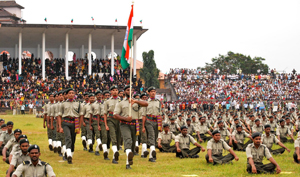
pfiThe Chairman E Abubacker who presided over the Leaders Meet stated that lynching of human beings by communally frenzied mobs in the name of protecting cow, marks yet another phase of communal fascism in democratic India. While witnessing the past three years of India under RSS controlled BJP government with Narendra Modi as prime minister, mob lynching of Muslims and Dalits has become the new dimension of lawlessness. The way how the 16 year old Hafiz Junaid was brutally killed and thrown out from a running train, while hundreds of fellow citizens remaining mute spectators, was not an isolated happening. As per the data collected and published recently, 28 people were killed in the name gorakhsha, out of which 23 are Muslims. 32 out of the 63 lynching incedents happened in BJP ruled states. He added that the real cause is not love for cows, and the crime is not trading cattle and eating beef, but it is the faith or the caste. It is the state of being a Muslim or a Dalit that makes them deserve lynching. It is the result of nearly a century long divisive and poisonous propaganda of RSS and its open and shadow armies. E Abubacker criticized the central and state governments under BJP for leading India to a civil war and cautioned the prime minister that his constitutional responsibility is not over, by simply uttering some evasive words such as killing people in the name of Cow bhakti is not acceptable and cowardly mentioning the names of Mahatma Gandhi and Baba Saheb Ambedkar occasionally. “Modi ji, please leave Gandhi and Ambedkar, till you are not ready to leave the legacy of Savarkar, Godse, Golwarkar and the like”, he told.

The Meet which was attended by national, zonal and state functionaries and council members of the organisation reviewed the activities during the past six months after the election of new leadership. The General Secretary Mohamed Ali Jinnah presented an analysis of the achievements during the period followed by inputs from state leaders. He noted that what we have achieved during this period as expansion, growth and interventions have exceeded the targets. He mentioned the sacrifices of countless cadres and remembered the martyrs who are our real leaders and role models. While concluding the discussion Mohamed Ali Jinnah urged the delegates to stand steadfast amidst all odds around and be in forefront of the masses, and we can feel their faith and hope in our movement across the country.

In a resolution adopted in the Leaders Meet, Popular Front expressed apprehensions over the reports about the ongoing preparatory work of Ram Mandir and asked the centre and U.P. state government to stop moves against the status quo ordained by the apex court. The Meet sought urgent intervention of Hon’ble Supreme Court and ensuring that the court directions are not violated in the Masjid site. This juncture of the 25th anniversary of the martyrdom of Babri Masjid reminds us the national responsibility of facilitating the rebuilding of the demolished Masjid. Popular Front expressed its concern over the turn of the situation that, now it has made an issue of the deprived Muslim community only. The secular parties have found it convenient to side line the Masjid rebuilding issue, which is a question mark on their very commitment to the secular values.

In another resolution, the Meet expressed the view that the recent visit of Prime Minister Narendra Modi to Israel has ended up in seriously deviating from the traditional Indian stand of supporting the cause of Palestine. The visit also indicates that the sovereignty of India is on the path of complete surrender to the unholy and hegemonic designs of US-Israel vicious combine.

A panel consisting of national functionaries, vice chairman O.M.A. Salam, secretaries Abdul Wahid Sait and Anis Ahamed, treasurer Mohammed Shahabudin and central secretariat members K.M. Shareef and E.M. Abdul Rahiman moderated the discussions.

Comments

Jeevan
 - 
Thursday, 13 Jul 2017

Really sad, what reason make them to do suicide. police please investigate the report clearly, some faulty smell coming in this case.

Mahesh
 - 
Thursday, 13 Jul 2017

Preplanned Murder all i can say! they doesnt look like taking this extreme step.

s
 - 
Thursday, 13 Jul 2017

for RSS worker they bring experts? not for others?

Add new comment

  • Coastaldigest.com reserves the right to delete or block any comments.
  • Coastaldigset.com is not responsible for its readers’ comments.
  • Comments that are abusive, incendiary or irrelevant are strictly prohibited.
  • Please use a genuine email ID and provide your name to avoid reject.
Ram Puniyani
January 14,2020

In the beginning of January 2020 two very disturbing events were reported from Pakistan. One was the attack on Nankana Sahib, the holy shrine where Sant Guru Nanak was born. While one report said that the place has been desecrated, the other stated that it was a fight between two Muslim groups. Prime Minister of Pakistan Imran Khan condemned the incident and the main accused Imran Chisti was arrested. The matter related to abduction and conversion of a Sikh girl Jagjit Kaur, daughter of Pathi (One who reads Holy Guru Granth Sahib in Gurudwara) of the Gurudwara. In another incident one Sikh youth Ravinder Singh, who was out on shopping for his marriage, was shot dead in Peshawar.

While these condemnable attacks took place on the Sikh minority in Pakistan, BJP was quick enough to jump to state that it is events like this which justify the Citizenship Amendment Act (CAA). Incidentally CAA is the Act which is discriminatory and relates to citizenship with Religion, which is not as per the norms of Indian constitution. There are constant debates and propaganda that population of Hindus has come down drastically in Pakistan and Bangla Desh. Amit Shah, the Home minister stated that in Pakistan the population of Hindus has come down from 23% at the time of partition to 3.7% at present. And in Bangla Desh it has come down from 22% to present 8%.

While not denying the fact that the religious minorities are getting a rough deal in both these countries, the figures which are presented are totally off the mark. These figures don’t take into consideration the painful migrations, which took place at the time of partition and formation of Bangla Desh later. Pakistan census figures tell a different tale. Their first census was held in 1951. As per this census the overall percentage of Non Muslim in Pakistan (East and West together) was 14.2%, of this in West Pakistan (Now Pakistan) it was 3.44 and in Eat Pakistan it was 23.2. In the census held in Pakistan 1998 it became 3.72%. As far as Bangla Desh is concerned the share of Non Muslims has gone down from 23.2 (1951) to 9.6% in 2011.

The largest minority of Pakistan is Ahmadis, (https://minorityrights.org/country/pakistan/) who are close to 4 Million and are not recognised as Muslims in Pakistan. In Bangla Desh the major migrations of Hindus from Bangla Desh took place in the backdrop of Pakistan army’s atrocities in the then East Pakistan.

As far as UN data on refugees in India it went up by 17% between 2016-2019 and largest numbers were from Tibet and Sri Lanka.  (https://www.un.org/en/development/desa/population/migration/publication…)

The state of minorities is in a way the index of strength of democracy. Most South Asian Countries have not been able to sustain democratic values properly. In Pakistan, the Republic began with Jinnah’s classic speech where secularism was to be central credo of Pakistan. This 11th August speech was in a way what the state policy should be, as per which people of all faiths are free to practice their religion. Soon enough the logic of ‘Two Nation theory” and formation of Pakistan, a separate state for Muslim took over. Army stepped in and dictatorship was to reign there intermittently. Democratic elements were suppressed and the worst came when Zia Ul Haq Islamized the state in collusion with Maulanas. The army was already a strong presence in Pakistan. The popular formulation for Pakistan was that it is ruled by three A’s, Army, America and Allah (Mullah).

Bangla Desh had a different trajectory. Its very formation was a nail in the coffin of ‘two nation theory’; that religion can be the basis of a state. Bangla Desh did begin as a secular republic but communal forces and secular forces kept struggling for their dominance and in 1988 it also became Islamic republic. At another level Myanmar, in the grip of military dictatorship, with democratic elements trying to retain their presence is also seeing a hard battle. Democracy or not, the army and Sanghas (Buddhist Sang has) are strong, in Myanmar as well. The most visible result is persecution of Rohingya Muslims.

Similar phenomenon is dominating in Sri Lanka also where Budhhist Sanghas and army have strong say in the political affairs, irrespective of which Government is ruling. Muslim and Christian minorities are a big victim there, while Tamils (Hindus, Christians etc.) suffered the biggest damage as ethnic and religious minorities. India had the best prospect of democracy, pluralism and secularism flourishing here. The secular constitution, the outcome of India’s freedom struggle, the leadership of Gandhi and Nehru did ensure the rooting of democracy and secularism in a strong way.

India so far had best democratic credentials amongst all the south Asian countries. Despite that though the population of minorities rose mainly due to poverty and illiteracy, their overall marginalisation was order of the day, it went on worsening with the rise of communal forces, with communal forces resorting to identity issues, and indulging in propaganda against minorities.

While other South Asian countries should had followed India to focus more on infrastructure and political culture of liberalism, today India is following the footsteps of Pakistan. The retrograde march of India is most visible in the issues which have dominated the political space during last few years. Issues like Ram Temple, Ghar Wapasi, Love Jihad, Beef-Cow are now finding their peak in CAA.

India’s reversal towards a polity with religion’s identity dominating the political scene was nicely presented by the late Pakistani poetess Fahmida Riaz in her poem, Tum bhi Hum Jaise Nikle (You also turned out to be like us). While trying to resist communal forces has been an arduous task, it is becoming more difficult by the day. This phenomenon has been variously called, Fundamentalism, Communalism or religious nationalism among others. Surely it has nothing to do with the religion as practiced by the great Saint and Sufi traditions of India; it resorts mainly to political mobilization by using religion as a tool.

Comments

Ashi
 - 
Tuesday, 14 Jan 2020

If Malaysia implement similar NRC/CAA, India and China are the loser.

Add new comment

  • Coastaldigest.com reserves the right to delete or block any comments.
  • Coastaldigset.com is not responsible for its readers’ comments.
  • Comments that are abusive, incendiary or irrelevant are strictly prohibited.
  • Please use a genuine email ID and provide your name to avoid reject.
News Network
February 14,2020

Bhuj, Feb 14: In a horrifying incident, as many as 68 undergraduate girls were paraded through their college into the restroom and forced to individually remove their undergarments to prove that they were not menstruating. 

This shameful exercise was conducted at Shri Sahjanand Girls’ Institute (SSGI) in Gujarat’s Bhuj under the supervision of principal and other teachers. 

It all began after the hostel rector complained to the principal that some of the inmates had been violating the Hindu religious norms specifically for menstruating females.

According to the sect’s norms, menstruating females are barred from entering the temple and kitchen. They are even forbidden from touching other students. However, the hostel administration reportedly complained to principal Rita Raninga that some girls who were having their periods not just mingled with other hostel inmates, but also entered the kitchen and ventured near the temple on the premises. 

“It was sheer mental torture and we don’t have words to describe it,” a student who underwent the traumatic experience said, adding that there were total 68 girls who were forced to pass through the test.

“The hostel administration levelled this allegation and insulted us on Wednesday. On Thursday, when we were attending lectures, rector Anjaliben called the principal and complained about this. We were forced to leave our classrooms and queue up outside in the passage. The principal abused and insulted us, asking which of us were having our periods. Two of us who were menstruating stepped aside,” said another victim.

“Despite this, we were all taken to the washroom. There, female teachers asked us to individually remove our undergarments so they could check if we were menstruating,” she added.

Another teenage undergraduate said, “We come from farflung villages. The college campus houses a school that runs classes from Class 1to 12. They provide hostel facilities to the school students. The college does not have its own hostel. We live with the school-kids in their hostel.”

She added, “The principal, hostel rector and the trustees harass us regularly over the issue of menstruation. We are punished for having periods. This happens even if we follow their religious rules. They made us remove our undergarments because they thought some of us were lying about not having periods, and mingling with the others against rules. But the humiliation meted out to us on Thursday was the last straw. When we protested against this, trustee Pravin Pindoria told us that we could take legal action if we wanted but we would have to first leave the hostel. He also forced the students to sign a letter saying nothing happened in college. But enough is enough.”

Kutch University authorities have, meanwhile, swung into action and a five-member team including in-charge vice-chancellor, Darshna Dholakia, and two other senior female professors visited the college on Thursday. “We will speak to the students and the college authority and later initiate appropriate action based on the findings,” Dholakia said.

Run by followers of Swaminarayan Mandir, the college was set up in 2012 but moved into a new building on the premises of Shree Swaminarayan Kanya Mandir in 2014. The college which offers BCom, BA and BSc courses has about 1,500 students of which 68, who come from remote villages, stay in the hostel on campus. The college is known for its pro-Hindutva stance.

Comments

Add new comment

  • Coastaldigest.com reserves the right to delete or block any comments.
  • Coastaldigset.com is not responsible for its readers’ comments.
  • Comments that are abusive, incendiary or irrelevant are strictly prohibited.
  • Please use a genuine email ID and provide your name to avoid reject.
News Network
July 16,2020

Bengaluru, Jul 16: Aiming to forge a citizen-government partnership in combating the Covid pandemic, the Karnataka government is seeking plasma donations from survivors for a token appreciation of Rs 5,000, a minister said on Wednesday.

"I request all those who have recovered from Covid-19 to donate plasma and save lives. As a token of our appreciation, we will give Rs 5,000 to patients who come forward and donate their plasma," said Medical Education Minister K. Sudhakar.

He said the battle against the pandemic can only be won through citizen-government partnership.

On Wednesday, Covid cases swelled by 1,975 infections in Bengaluru, ground zero for the pandemic in the southern state, raising its total number of cases to 22,944, out of which 17,051 are active.

In the past 24 hours, the state as a whole registered a record 3,176 cases, raising Karnataka's tally to 47,253, even as 87 people succumbed to the virus.

Meanwhile, Sudhakar said 8,134 booth level workforce will conduct a house to house survey along with other Covid control measures in Bengaluru.

He said many locals and block level officers will be the members of the workforce.

Comments

Add new comment

  • Coastaldigest.com reserves the right to delete or block any comments.
  • Coastaldigset.com is not responsible for its readers’ comments.
  • Comments that are abusive, incendiary or irrelevant are strictly prohibited.
  • Please use a genuine email ID and provide your name to avoid reject.