


Poultry demand dips in Karnataka as people wary of bird flu

May 10, 2016

Bengaluru, May 10: The demand for poultry dropped slightly in Bengaluru on Monday, a day after thousands of chickens died of bird flu (H5N1) in Bidar district. Chicken eaters are taking precaution and asking sellers where the birds have been sourced from.
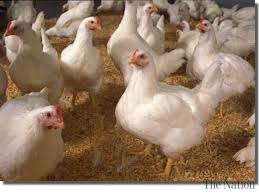
poulM Sheikh, who runs a poultry shop, said people had become cautious, though there was no drastic drop in sales. “People are enquiring about bird flu but we have few answers,” he said.

Nadir A, who works in a chicken store, said there was a slight decline in sales. “The sales are low in summer, but today was unusual,” he said but claimed that he wasn't aware of bird flu. Bhuvan, a resident, said he would better take precaution. “Even the last time when there was bird flu, I was cautious,” he said.

Doctors and poultry sellers, however, say there is no need to panic. H N Nagabhushan, general secretary, Karnataka Poultry Farmers' and Breeders' Association, said the current bird flu was noticed only in a layer poultry (egg production) farm in Humnabad taluk, Bidar, where poultry population was low. According to him, the government has started culling the birds and around 1.5 lakh chickens in one-kilometre radius of the farm would be culled.

Restrictions have been put on the movement of poultry, eggs and other input from the affected areas. Hence, there is no need to panic as the disease is localised, Nagabhushan said, adding that it was “perfectly safe” to consume chicken and egg across Karnataka.

Chickens sold in Bengaluru are sourced from Mysuru and bred on the outskirts of the city. They are not brought from other parts of Karnataka, he said. Poultry farmers have been advised to take appropriate bio-security measures and approach the Animal Husbandry Department for any assistance, he added.

Dr Mahesh P S, director of Central Poultry Development Organisation, said that whenever bird flu was reported, the chickens were being culled as per the standard procedure.

According to him, Indians were less likely to contract the H5N1 virus because of their distinct cooking culture. The virus dies at temperature above 60 degrees Celsius. Since the Indian food is cooked at a higher temperature and is even boiled, the virus likely dies down, he said. Outside of India, chicken and egg are eaten raw or half-cooked, increasing the chances of the virus spread, he added.

Comments

Swathi
 - 
Tuesday, 10 May 2016

in our place we eat chicken eveyday, no matter what will be.

Add new comment

  • Coastaldigest.com reserves the right to delete or block any comments.
  • Coastaldigset.com is not responsible for its readers’ comments.
  • Comments that are abusive, incendiary or irrelevant are strictly prohibited.
  • Please use a genuine email ID and provide your name to avoid reject.
coastaldigest.com news network
February 5,2020

Bengaluru, Jan 5: B S Yediyurappa-led Karnataka cabinet has finally decided to resume supply of subsidised rice and wheat to students of welfare institutions and hostels including those run by religious mutts under the Dasoha Scheme’s welfare programme. The supply was stopped over two months ago.

“Cabinet has decided to continue supply of subsidised foodgrains (rice and wheat) for the benefit of 37,700 children under the Dasoha scheme in 351 welfare institutions for the next one year at the cost of Rs 18 crore,” said J C Madhuswamy, Law and Parliamentary Affairs Minister. Under this scheme, institutions that provide free accommodation and food for students are entitled to avail 10 kg rice and 5 kg wheat per student every month at subsidised rates. But following a central government directive in November, the state government had stopped supply to private institutions since December.

Hours before the cabinet meeting, Khader addressed a press conference and said, “This government is snatching away food from children by stalling the supply of foodgrains. Institutions like Suttur Mutt, Siddaganga Mutt that have worldwide fame for their service are being inconvenienced by this,” Khader said.

Finding itself in a fix, especially in a matter that involves mutts, the cabinet was quick to restore the supply. “Foodgrains were being supplied to 183 government-run institutions and 281 institutions run by private entities. As per a central government directive, supply to private institutions was stopped but the decision was made by the previous government,” Shashikala Jolle, Women and Child Development Minister, said.

Comments

Add new comment

  • Coastaldigest.com reserves the right to delete or block any comments.
  • Coastaldigset.com is not responsible for its readers’ comments.
  • Comments that are abusive, incendiary or irrelevant are strictly prohibited.
  • Please use a genuine email ID and provide your name to avoid reject.
News Network
March 27,2020

Bengaluru, Mar 27: Karnataka Pradesh Congress Committee (KPCC) on Friday formed a task force to monitor the spread of COVID-19 disease in the state and provide guidelines and suggestions to contain its proliferation in the state.

In a press release, the KPCC has stated that the 15 member committee will be headed by the senior Congress leader and former Health minister K R Rameshkumar also included two other former health ministers, Shivanand Patil and U T Khader as the members of the committee.

Comments

Add new comment

  • Coastaldigest.com reserves the right to delete or block any comments.
  • Coastaldigset.com is not responsible for its readers’ comments.
  • Comments that are abusive, incendiary or irrelevant are strictly prohibited.
  • Please use a genuine email ID and provide your name to avoid reject.
News Network
June 29,2020

Bengaluru, June 29: The Karnataka government on Monday issued guidelines to conduct online classes for all students of ICSE, CBSE and SSLC under the directions of the High Court.

According to the guidelines, for the kindergarten students, online classes can be held 30 minutes a week and students in classes 1-5 will have online classes for 30-45 minutes divided into two periods for three alternate days every week.

For students in classes 6-8, the online classes will be for 30-45 minutes divided into two periods for five days every week while students in classes 9 and 10 can have the virtual classes for 30-45 minutes divided into four periods for five days a week.

Earlier, the state government barred online classes for the kids from LKG to class 5.

Minister for primary and secondary education S Suresh Kumar had said that online classes cannot be held for the kids from LKG to class V.

Comments

Add new comment

  • Coastaldigest.com reserves the right to delete or block any comments.
  • Coastaldigset.com is not responsible for its readers’ comments.
  • Comments that are abusive, incendiary or irrelevant are strictly prohibited.
  • Please use a genuine email ID and provide your name to avoid reject.