


Poultry demand dips in Karnataka as people wary of bird flu

May 10, 2016

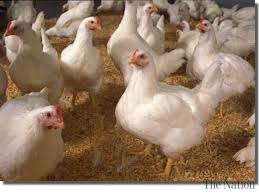
Bengaluru, May 10: The demand for poultry dropped slightly in Bengaluru on Monday, a day after thousands of chickens died of bird flu (H5N1) in Bidar district. Chicken eaters are taking precaution and asking sellers where the birds have been sourced from.
poulM Sheikh, who runs a poultry shop, said people had become cautious, though there was no drastic drop in sales. “People are enquiring about bird flu but we have few answers,” he said.

Nadir A, who works in a chicken store, said there was a slight decline in sales. “The sales are low in summer, but today was unusual,” he said but claimed that he wasn't aware of bird flu. Bhuvan, a resident, said he would better take precaution. “Even the last time when there was bird flu, I was cautious,” he said.

Doctors and poultry sellers, however, say there is no need to panic. H N Nagabhushan, general secretary, Karnataka Poultry Farmers' and Breeders' Association, said the current bird flu was noticed only in a layer poultry (egg production) farm in Humnabad taluk, Bidar, where poultry population was low. According to him, the government has started culling the birds and around 1.5 lakh chickens in one-kilometre radius of the farm would be culled.

Restrictions have been put on the movement of poultry, eggs and other input from the affected areas. Hence, there is no need to panic as the disease is localised, Nagabhushan said, adding that it was “perfectly safe” to consume chicken and egg across Karnataka.

Chickens sold in Bengaluru are sourced from Mysuru and bred on the outskirts of the city. They are not brought from other parts of Karnataka, he said. Poultry farmers have been advised to take appropriate bio-security measures and approach the Animal Husbandry Department for any assistance, he added.

Dr Mahesh P S, director of Central Poultry Development Organisation, said that whenever bird flu was reported, the chickens were being culled as per the standard procedure.

According to him, Indians were less likely to contract the H5N1 virus because of their distinct cooking culture. The virus dies at temperature above 60 degrees Celsius. Since the Indian food is cooked at a higher temperature and is even boiled, the virus likely dies down, he said. Outside of India, chicken and egg are eaten raw or half-cooked, increasing the chances of the virus spread, he added.

Comments

Swathi
 - 
Tuesday, 10 May 2016

in our place we eat chicken eveyday, no matter what will be.

Add new comment

  • Coastaldigest.com reserves the right to delete or block any comments.
  • Coastaldigset.com is not responsible for its readers’ comments.
  • Comments that are abusive, incendiary or irrelevant are strictly prohibited.
  • Please use a genuine email ID and provide your name to avoid reject.
News Network
June 26,2020

Bengaluru, Jun 26: The National Restaurant Association of India (NRAI) on Thursday came up with a Standard Operating Procedure (SOP) for restaurants whereby among other physical distancing norms, it has suggested a 2-metre gap between tables.

Formulated in partnership with Releski, a Bengaluru based skill-tech company, the SoP suggests that in case of back-to-back seating, people sitting with their backs towards each other will have their seats divided by 'Plexiglass' divider raised up to 2 meters from the ground.

"In a typical restaurant, the improvised seating plan should have a minimum distance of 2 metres between tables. The distance of 2 metres (6 feet) between tables should measure from one edge of the table to the other table's edge," it said.

In case of loose or free seating such as in banquet style or food court style seating, a minimum 2 meters of distance should be maintained between tables.

The guidelines noted that, to encourage physical distancing, restaurants have to sacrifice their seating capacity, to promote health and safety, and also to gain trust from their patrons.

"In order to perform this, divide your restaurants under different sectors. Pull out your restaurant's floor plan and colour code different sections red and yellow. Red sections are potential areas where maximum footfall or traffic is observed. Yellow sections are areas where the footfalls are average," it said.

All the red sections are encircled or bordered by placing barricades or Q manager and will open at specific points to access the yellow section and all the opening points will have hand sanitisers and sprays, and every guest who walks from red zones to yellow zones will sanitise himself/herself to reduce the chances of contamination.

For air conditioning, the guidelines of CPWD shall be followed which inter alia emphasises that the temperature setting of all air conditioning devices should be in the range of 24-30 degree Celsius, relative humidity should be in the range of 40- 65 per cent, intake of fresh air should be as much as possible and cross ventilation should be adequate, the guidelines suggested.

The industry body has also suggested appointment of a COVID-free Ambassador who would operate as the Chief Health Officer within the restaurant team, preferably from the management team in each shift.

The ambassador's would put the new daily work routines into practice, to monitor compliance with good practice and to lead the preventative measures, adapt to health & safety recommendations and requirements of the restaurant and oversee the implementation of the norms.

Anurag Katriar, President of NRAI and CEO & Executive Director of deGustibus Hospitality, said: "Every restaurant cutting across formats is facing the harsh reality of subdued to shut business volumes in the present and the uncertainty of business environment in the future. One thing is certain that hygiene and safety will be a key differentiator in the post-pandemic restaurant operations."

Comments

Add new comment

  • Coastaldigest.com reserves the right to delete or block any comments.
  • Coastaldigset.com is not responsible for its readers’ comments.
  • Comments that are abusive, incendiary or irrelevant are strictly prohibited.
  • Please use a genuine email ID and provide your name to avoid reject.
News Network
February 16,2020

Bengaluru, Feb 16: Deputy chief minister Laxman Savadi’s election to the lone vacant council seat, for which a bypoll has been called, is only a formality as the only other candidate in the contest, independent BR Anil Kumar, dropped out on Saturday.

Kumar conveyed his decision to council secretary and returning officer Vishalakshmi. He decided to withdraw from the February 17 bypoll after failing to get support from Congress and JD(S) legislators.

The bypoll was necessitated after sitting member Rizwan Arshad of Congress resigned as he moved to the legislative assembly as an MLA. Rizwan won the Shivajinagar bypoll in December last year.

“Since the notification on candidates in the fray, after the last date of withdrawal, has already been published, irrespective of any candidate’s retirement, the election has to be conducted,” an official said.

Savadi’s victory was always assured as BJP has 119 members in the House.

Still, Ramanagara BJP district president Rudresh and MP BY Raghavendra reportedly approached Kumar, urging him to withdraw. Kumar, however, denied that he was persuaded by BJP.

“I entered the fray thinking secular parties and likeminded MLAs will support me, but that didn’t happen, so I decided to retire,”he said.

A section of Congress and JD(S) politicians, led by former minister HD Revanna, had persuaded Kumar to enter the contest with the hope that disgruntlement among some BJP legislators over Savadi’s promotion as the deputy CM would result in an upset.

Former chief minister HD Kumaraswamy also offered to support Kumar. Siddaramaiah of Congress refused to do the same. Congress and JD(S) did not field any candidates of their own as they don’t have the requisite numbers in the House.

Savadi must get elected to the council before February 20, otherwise he will lose his cabinet role. According to rules, a person who is not a member of either House should get elected within six months after becoming a minister. Savadi took oath on August 20 last year.

Comments

Add new comment

  • Coastaldigest.com reserves the right to delete or block any comments.
  • Coastaldigset.com is not responsible for its readers’ comments.
  • Comments that are abusive, incendiary or irrelevant are strictly prohibited.
  • Please use a genuine email ID and provide your name to avoid reject.
News Network
March 11,2020

Kalaburagi, Mar 11: A suspected coronavirus patient who had returned to Kalaburagi from Saudi Arabia on February 29 passed away today in hospital.

It is said he was admitted to the hospital on March 5 after he showed flu symptoms. But, the family members of the patient had shifted him to Hyderabad from GIMS on Tuesday against the advice of the doctors.

However, the district administration and District Health Officer (DHO) M A Jabbar are waiting for the final report of throat swab of the patient sent for lab test.

The DHO has directed Taluk Health Officer Sharanabasappa Kyatanal to supervise until the final rites of the suspect person were performed.

Kalaburagi Deputy Commissioner B Sharat said the patient died on Tuesday night on his way back to Kalaburagi after the doctor stated that chances of his survival was bleak. "It is still a suspected coronavirus case. We are waiting for the report," he said.

Sharat said he developed severe respiratory problem coupled with cough, cold and fever. "As he was 76-year-old, he failed to respond to the treatment. It is yet to be confirmed if the cause of death was coronavirus," he said.

Comments

Add new comment

  • Coastaldigest.com reserves the right to delete or block any comments.
  • Coastaldigset.com is not responsible for its readers’ comments.
  • Comments that are abusive, incendiary or irrelevant are strictly prohibited.
  • Please use a genuine email ID and provide your name to avoid reject.