


Poultry demand dips in Karnataka as people wary of bird flu

May 10, 2016

Bengaluru, May 10: The demand for poultry dropped slightly in Bengaluru on Monday, a day after thousands of chickens died of bird flu (H5N1) in Bidar district. Chicken eaters are taking precaution and asking sellers where the birds have been sourced from.
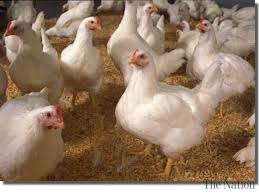
poulM Sheikh, who runs a poultry shop, said people had become cautious, though there was no drastic drop in sales. “People are enquiring about bird flu but we have few answers,” he said.

Nadir A, who works in a chicken store, said there was a slight decline in sales. “The sales are low in summer, but today was unusual,” he said but claimed that he wasn't aware of bird flu. Bhuvan, a resident, said he would better take precaution. “Even the last time when there was bird flu, I was cautious,” he said.

Doctors and poultry sellers, however, say there is no need to panic. H N Nagabhushan, general secretary, Karnataka Poultry Farmers' and Breeders' Association, said the current bird flu was noticed only in a layer poultry (egg production) farm in Humnabad taluk, Bidar, where poultry population was low. According to him, the government has started culling the birds and around 1.5 lakh chickens in one-kilometre radius of the farm would be culled.

Restrictions have been put on the movement of poultry, eggs and other input from the affected areas. Hence, there is no need to panic as the disease is localised, Nagabhushan said, adding that it was “perfectly safe” to consume chicken and egg across Karnataka.

Chickens sold in Bengaluru are sourced from Mysuru and bred on the outskirts of the city. They are not brought from other parts of Karnataka, he said. Poultry farmers have been advised to take appropriate bio-security measures and approach the Animal Husbandry Department for any assistance, he added.

Dr Mahesh P S, director of Central Poultry Development Organisation, said that whenever bird flu was reported, the chickens were being culled as per the standard procedure.

According to him, Indians were less likely to contract the H5N1 virus because of their distinct cooking culture. The virus dies at temperature above 60 degrees Celsius. Since the Indian food is cooked at a higher temperature and is even boiled, the virus likely dies down, he said. Outside of India, chicken and egg are eaten raw or half-cooked, increasing the chances of the virus spread, he added.

Comments

Swathi
 - 
Tuesday, 10 May 2016

in our place we eat chicken eveyday, no matter what will be.

Add new comment

  • Coastaldigest.com reserves the right to delete or block any comments.
  • Coastaldigset.com is not responsible for its readers’ comments.
  • Comments that are abusive, incendiary or irrelevant are strictly prohibited.
  • Please use a genuine email ID and provide your name to avoid reject.
News Network
January 15,2020

Mangaluru, Jan 16: A protest against the Citizenship Amendment Act, National Register of Citizens and National Population Register organised by the Muslim Central Committee of the Dakshina Kannada and Udupi districts near Adiyar on Wednesday signalled a snowballing opposition to the measures.

Harsh Mander, former Indian Administrative Service officer-turned-social activist, asserted that the nation’s fight against 'fascist' forces including Bharatiya Janata Party and its parent organisation Rashtriya Swayamsewak Sangh began over 100 years ago when Mahatma Gandhi returned from South Africa and led the freedom movement against the British.

In his address, Mr Mander asserted that the fight against CAA and NRC is also a campaign to save the secular fabric of the nation. He added that the fight began over a century ago when Hindu Mahasabha and other organisations popped up with their vision to turn the nation into a Hindu country.4

Also Read: 

#MangaluruAgainstNRC | Undeclared bandh in parts of Dakshina Kannada

‘Who are you? Are you British?’ PFI leader lambasts Mangaluru top cop at anti-NRC protest

Comments

Add new comment

  • Coastaldigest.com reserves the right to delete or block any comments.
  • Coastaldigset.com is not responsible for its readers’ comments.
  • Comments that are abusive, incendiary or irrelevant are strictly prohibited.
  • Please use a genuine email ID and provide your name to avoid reject.
News Network
March 24,2020

Mangaluru, Mar 24: A Covid-19 patient from Kasaragod, who recently came from abroad travelled to Mangaluru twice, revealed Karnataka department of health and family welfare.

The 54-year-old person is confirmed as Covid-19 positive case yesterday.

He landed at Mangalore International Airport on March 10 at 5.30pm by Air India Express flight.

From there, he had travelled in his own vehicle to Kasaragod. He had coffee near Kasaragod and reached home at 7.30pm.

On March 11, he had visited local fish market and returned home at 10pm.

He had consulted a local doctor at Kasaragod on March 18 and later visited to Kasturba Medical College, Attavar at 3pm, visited reception and consulted a doctor.

He had tea at KMC canteen and travelled in an auto to Medicity and brought medicines and returned to Kasaragod by KSRTC bus.

Again he travelled to Mangaluru on March 20 in a private vehicle and visited a doctor and returned back to Kasargod in a private vehicle.

The health department has requested all passengers who travelled in the above said flight/aircraft, and KSRTC bus can self-report by dialing 104 or other helpline numbers.

Comments

Add new comment

  • Coastaldigest.com reserves the right to delete or block any comments.
  • Coastaldigset.com is not responsible for its readers’ comments.
  • Comments that are abusive, incendiary or irrelevant are strictly prohibited.
  • Please use a genuine email ID and provide your name to avoid reject.
coastaldigest.com web desk
June 9,2020

With the steep hike in excise duty in the past couple of months, an average consumer of petrol now pays over 275% in taxes to centre and states on a litre of the fuel.  The base price of petrol is just about Rs 18. The taxes are close to Rs 50 and the pump price is over Rs 72.

India imports 85% of all its crude oil demand.  After a steep hike in excise duty in the past two months despite a hold on daily price revisions by the oil public sector undertakings (PSUs), Indian consumers now pay 275% collectively in excise duty to state and centre. 

The central government hiked excise on petrol and diesel by Rs 10 and Rs 13 respectively last month. The excise duty on petrol is taxed around Rs 33-a-litre while the same on diesel it is Rs 32.

The Value-Added Tax (VAT) on both petrol and diesel is Rs 16.44 and Rs 16.26 respectively. Both the taxes together are around Rs 49 while it is sold at petrol pumps at 73-per-litre.

These two taxes cumulatively account for 69% of tax which is higher than anywhere else in the world. The same is taxed at 19% in the US, 47% in Japan, UK 62% and 63% in France. The government does not pass on the benefit of lower crude oil prices to the customer.

It is to be noted that Indian consumers continued to pay Rs 70-a-litre even when crude oil prices hit a paltry US $ 20-a-barrel on April 12.

Former finance minister and Congress leader recently took a jab at the Centre over rising prices stating, “Fuel selling prices raised twice in two days, following tax hikes two weeks ago. This time to benefit oil companies. Government is poor, it needs more taxes. Oil companies are poor, they need better prices. Only the poor and middle class are not poor, so they will pay”.

Comments

Lovely indian
 - 
Wednesday, 10 Jun 2020

Acche din for modi bakth....lets enjoy


you need only ram mandir and NRC

Add new comment

  • Coastaldigest.com reserves the right to delete or block any comments.
  • Coastaldigset.com is not responsible for its readers’ comments.
  • Comments that are abusive, incendiary or irrelevant are strictly prohibited.
  • Please use a genuine email ID and provide your name to avoid reject.