


Poultry demand dips in Karnataka as people wary of bird flu

May 10, 2016

Bengaluru, May 10: The demand for poultry dropped slightly in Bengaluru on Monday, a day after thousands of chickens died of bird flu (H5N1) in Bidar district. Chicken eaters are taking precaution and asking sellers where the birds have been sourced from.
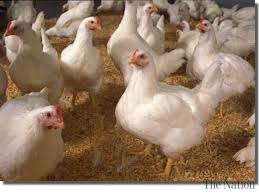
poulM Sheikh, who runs a poultry shop, said people had become cautious, though there was no drastic drop in sales. “People are enquiring about bird flu but we have few answers,” he said.

Nadir A, who works in a chicken store, said there was a slight decline in sales. “The sales are low in summer, but today was unusual,” he said but claimed that he wasn't aware of bird flu. Bhuvan, a resident, said he would better take precaution. “Even the last time when there was bird flu, I was cautious,” he said.

Doctors and poultry sellers, however, say there is no need to panic. H N Nagabhushan, general secretary, Karnataka Poultry Farmers' and Breeders' Association, said the current bird flu was noticed only in a layer poultry (egg production) farm in Humnabad taluk, Bidar, where poultry population was low. According to him, the government has started culling the birds and around 1.5 lakh chickens in one-kilometre radius of the farm would be culled.

Restrictions have been put on the movement of poultry, eggs and other input from the affected areas. Hence, there is no need to panic as the disease is localised, Nagabhushan said, adding that it was “perfectly safe” to consume chicken and egg across Karnataka.

Chickens sold in Bengaluru are sourced from Mysuru and bred on the outskirts of the city. They are not brought from other parts of Karnataka, he said. Poultry farmers have been advised to take appropriate bio-security measures and approach the Animal Husbandry Department for any assistance, he added.

Dr Mahesh P S, director of Central Poultry Development Organisation, said that whenever bird flu was reported, the chickens were being culled as per the standard procedure.

According to him, Indians were less likely to contract the H5N1 virus because of their distinct cooking culture. The virus dies at temperature above 60 degrees Celsius. Since the Indian food is cooked at a higher temperature and is even boiled, the virus likely dies down, he said. Outside of India, chicken and egg are eaten raw or half-cooked, increasing the chances of the virus spread, he added.

Comments

Swathi
 - 
Tuesday, 10 May 2016

in our place we eat chicken eveyday, no matter what will be.

Add new comment

  • Coastaldigest.com reserves the right to delete or block any comments.
  • Coastaldigset.com is not responsible for its readers’ comments.
  • Comments that are abusive, incendiary or irrelevant are strictly prohibited.
  • Please use a genuine email ID and provide your name to avoid reject.
News Network
June 11,2020

New Delhi, Jun 11: The Department of Pharmaceuticals has given its nod for lifting of ban on the export of hydroxychloroquine, Union Minister D V Sadananda Gowda said on Wednesday.

India had banned export of hydroxychloroquine on March 25, with some exceptions, amid views in some quarters that the drug could be used to fight COVID-19. On April 4, it completely banned the exports without any exception.

"Department of Pharmaceuticals has approved the lifting of ban on export of Hydroxychloroquine API as well as formulations. Manufacturers except SEZ/EOU Units have to supply 20 per cent production in the domestic market," the minister of chemicals and fertilisers said in a tweet.

The Directorate General of Foreign Trade (DGFT) has been asked to issue formal notification in this regard, he added.

In another tweet, Gowda said he held discussions with representatives of pharma companies along with some of his ministerial colleagues on the challenges being faced by the industry and on the roadmap to boost exports.

"Had detailed discussion with representatives of pharma companies & association, stakeholder Ministries along with Hon Ministers @piyushGoyal  ji, @HardeepSPuri  ji, & @MansukhMandviya  ji on entire gamut of challenges faced by the industry as well as strategies to boost pharma export," Gowda tweeted.

India exported hydroxychloroquine API (active pharmaceutical ingredient) worth USD 1.22 billion in April-January 2019-20.

During the same period, exports of formulations made from hydroxychloroquine was at USD 5.50 billion.

Comments

Add new comment

  • Coastaldigest.com reserves the right to delete or block any comments.
  • Coastaldigset.com is not responsible for its readers’ comments.
  • Comments that are abusive, incendiary or irrelevant are strictly prohibited.
  • Please use a genuine email ID and provide your name to avoid reject.
News Network
May 15,2020

Bengaluru, May 15: There is no trace of community spread of COVID-19 pandemic in Karnataka due to the strict measures taken by the State Government, Medical Education Minister Dr K Sudhakar said on Friday.

All those tested positive for the virus here have arrived from other states and are currently being treated in quarantine centres, he tweeted.

Over 25 per cent of the COVID-19 positive cases, which were detected in the state, were related to those who had either come from abroad or other states, and only about 7 per cent cases were associated with the influenza-like diseases, his tweet further read.

Comments

Add new comment

  • Coastaldigest.com reserves the right to delete or block any comments.
  • Coastaldigset.com is not responsible for its readers’ comments.
  • Comments that are abusive, incendiary or irrelevant are strictly prohibited.
  • Please use a genuine email ID and provide your name to avoid reject.
News Network
July 17,2020

Bengaluru, Jul 17: The Karnataka State Board of AUQAF has ordered that management committees at Muslim Khabarastans, shall not refuse burial to Muslims died due to COVID-19.

"...in exercise the powers conferred under Waqf Act 1995, it is hereby ordered that management Committees/Muthawallies/Administrators responsible for the management of Muslim Khabarastans in the state of Karnataka irrespective of registered or unregistered in the Waqf, shall not refuse the burial of Muslims died due to COVID-19 pandemic," read an order from the Karnataka State Board of AUQAF on Thursday.

"They shall co-operate with all the Nodal Officers designated for this purpose regarding the decent burial. Non co-operation or refusal on the part of the management will be construed as an insult committed to the deceased. Any violation of the above order will attract the punitive provision of Indian Penal Code and removal from the management as per the provisions of the Waqf Act 1995," the order read.

It further said that the Waqf Officers, District Wakf Advisory Committees of the state, shall ensure the adherence of this order, and circulate the same to all the Khabarastan managements, registered or unregistered in the state.

"No further deliberation in this regard is solicited except compliance of the order in letter and spirit. Any dereliction in this regard will be viewed seriously," it read.

Giving a background on the issue of burial of COVID-19 deceased, the order read, "It is observed that, number of deaths are being occurred in various Districts of Karnataka, due to COVID-19 pandemic and it is reported that, some of the management committees of Khabarastan, are not cooperating to bury the dead bodies of COVID-19."

"A decent burial is a right of the dead person" as per the law of the land and the Islamic jurisprudence. It is needless to emphasize the importance of burial of Muslim dead bodies in Shariah. The dead body of a Muslim is treated with the utmost respect by the Ummah, joining in the funeral (Tadfeen), participating in the Namaz-e-Janaza and the burial are considered as Farz-e-Kifaya in Muslim law. According to the tradition of Islam, the person who participates in the funeral is entitled to Mountain sized reward (Sawaab)," the order read.

As per the order, the board, in its earlier circular had also cautioned the management of Waqf institutions and Khabarastan which were reluctant to allow the decent burial in the Khabarastan would be punished under the provisions of Indian Penal Code and the punitive provisions of the Waqf Act 1995 as well.

"The District Magistrates and the Superintendent of Police in the districts have been requested to prosecute the erring management committees who are responsible for non co-operation in this regard. Hence, the following order," it added.

Comments

Add new comment

  • Coastaldigest.com reserves the right to delete or block any comments.
  • Coastaldigset.com is not responsible for its readers’ comments.
  • Comments that are abusive, incendiary or irrelevant are strictly prohibited.
  • Please use a genuine email ID and provide your name to avoid reject.