


Pramod Madhwaraj is 10th richest state minister in India

[email protected] (CD Network)
August 9, 2016

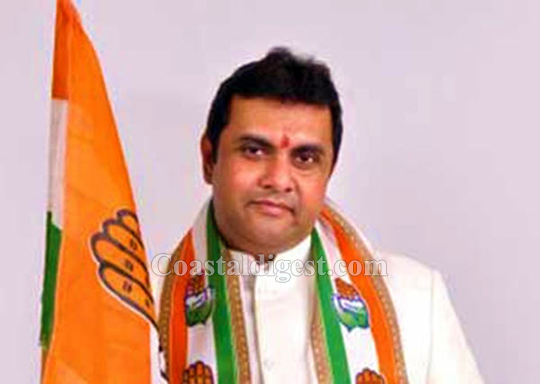
Udupi, Aug 9: Pramod Madhwaraj, the minister for fisheries, sports and youth affairs, Karnataka is the 10th richest state minister in India, according to a report by Association for Democratic Reforms (ADR).
Pramod-Madhwaraj

Mr Madhwaraj, who represents Udupi constituency in Karnataka Legislative Assembly, had entered the state cabinet through a recent cabinet reshuffle.

Son of former MLA Late Malpe Madhwaraj and former minister Manorama Madhwaraj, the Mogaveera community stalwart is the proprietor of Raj fish meal and oil company, Malpe, which is the largest manufacturer of fish meal and fish oil in India.

Mr Madhwaraj is the chairman of Canara Jewel Tex Pvt. Ltd, which runs a large mall of gold and sarees in Udupi district, called The Wedding Palace'. He is the managing partner of Coronet fish products, an exporter of canned fish. He is also the chairman of Malpe Manipal Builders.

Four from Karnataka

Interestingly, four of the country's 10 richest state ministers are from Karnataka, and 97% of this south Indian state's ministers are crorepatis. Energy minister D K Shivakumar is the second richest state minister in the country with assets worth Rs 251crore.
Labour minister Santosh Lad comes in third with assets worth Rs 186 crore. Planning minister M R Seetharam ranks sixth with assets worth Rs 136 crore and Mr Madhwaraj is in 10th place with Rs 105 crore.

Those with high assets have their liabilities too and again, Shivakumar tops this list with liabilities of Rs 105 crore, Seetharam comes in third with Rs 53 crore, Madhwaraj is fourth with Rs 44 crore and water resources minister M B Patil ranked 10th with Rs 19 crore. Patil's assets are worth Rs 40 crore.

Andhra Pradesh minister Ponguru Narayana who is the richest minister with assets worth Rs 441crore and liabilities of Rs 44 crore.

The 'poorest' minister in the country is Samajwadi Party's Tej Narayana from Faizabad constituency in Ayodhya, who has declared assets of just Rs 66,612.

ADR in a statement said it sourced the details from the affidavits filed by ministers at the time of submitting nomination papers to the Election Commission. Declarations of a total of 609 ministers out of 620 have been analysed from 29 state assemblies and two Union Territories by ADR.

Also Read: 

Udupi MLA Pramod Madhwaraj buys Rolls Royce Ghost for Rs 5.8 crore!

34% state ministers in India criminals, 97% ministers in Karnataka crorepatis

Comments

Rikaz
 - 
Wednesday, 10 Aug 2016

These richest should start some kind big industries and provide employment opportunity to all unemployed around that area.

Youth
 - 
Wednesday, 10 Aug 2016

dear all,

I dont know anything about other ministers, But Mr. Pramaod he is a well known person. he thinks about the poor people. you guys might not knowing, how much he donate the money to all kind of activities and for the people. At last he is not even interested in corrupted money. God has given him alloott.. Please think twice to comment if you dont know anything.

HONEST
 - 
Tuesday, 9 Aug 2016

Hope his richness helps the POOR of our society...

Add new comment

  • Coastaldigest.com reserves the right to delete or block any comments.
  • Coastaldigset.com is not responsible for its readers’ comments.
  • Comments that are abusive, incendiary or irrelevant are strictly prohibited.
  • Please use a genuine email ID and provide your name to avoid reject.
News Network
April 15,2020

Bengaluru, Apr 15: Amir-e-Shariat Maulana Sagir Ahmad Khan Rashadi, Maulanaon Wednesday urged people to compulsorily follow the lockdown restrictions during the month of Ramdan.

Ramazan fastings should not be missed without valid reasons. As already mentioned, five namaz of the day should be performed at home and do not go to Mosques.

Taraweeh Namaz should be performed at home along with family members, he said at a meeting of Imarat-e-Sharia leaders held at Darul Uloom Sabilurrashad (Arabic College) in the city.

Comments

Add new comment

  • Coastaldigest.com reserves the right to delete or block any comments.
  • Coastaldigset.com is not responsible for its readers’ comments.
  • Comments that are abusive, incendiary or irrelevant are strictly prohibited.
  • Please use a genuine email ID and provide your name to avoid reject.
News Network
July 3,2020

New Delhi, Jul 3: Accredited Social Health Activists (ASHAs) in Karnataka have emerged as a "crucial pillar in the state's success" in combating Covid-19, the Union Health Ministry said on Friday.

Acknowledging and praising their work, the ministry said they have been actively participating in household surveys in the state, screening inter-state passengers, migrant workers and others in the community for symptoms of the infection,

“Around 42,000 ASHAs have emerged as a crucial pillar in the state's success” in combating Covid-19, the ministry said.

"Recognizing the increased vulnerability of certain population groups to Covid-19, in a one-time survey to identify households with the elderly, persons with co-morbidities, and immune-compromised individuals, about 1.59 crore households were covered," the ministry said in a statement.

ASHAs regularly monitor such high-risk groups in their area with a periodicity of follow-up visits varying from once a day in the containment zones to once every 15 days in other areas, it said.

They also visit the houses of persons complaining influenza-like-illness (ILI) symptoms and severe acute respiratory infections (SARI), besides high-risk individuals who have called the state health department helpline numbers, the ministry said.

ASHAs are a part of the Rural Task Force, headed by Panchayat Development Officer (PDO) at the Gram Panchayat level, for addressing public grievances on both Covid-19 and non-Covid-19 related services.

ASHAs are trained female community health activists selected from the village itself and accountable to it. They are trained to work as an interface between the community and the public health system.

In the urban areas too, they have been at the forefront of dissemination of various awareness activities in fever clinics and swab collection centres in urban areas.

They have also actively screened cases of ILI and SARI in urban areas. They are also part of the screening teams at international and interstate check-posts.

Karnataka has reported 272 Covid-19 deaths and 18,016 cases, according to the health ministry data updated at 8 AM.

Comments

Add new comment

  • Coastaldigest.com reserves the right to delete or block any comments.
  • Coastaldigset.com is not responsible for its readers’ comments.
  • Comments that are abusive, incendiary or irrelevant are strictly prohibited.
  • Please use a genuine email ID and provide your name to avoid reject.
News Network
June 26,2020

Bengaluru, Jun 26: The National Restaurant Association of India (NRAI) on Thursday came up with a Standard Operating Procedure (SOP) for restaurants whereby among other physical distancing norms, it has suggested a 2-metre gap between tables.

Formulated in partnership with Releski, a Bengaluru based skill-tech company, the SoP suggests that in case of back-to-back seating, people sitting with their backs towards each other will have their seats divided by 'Plexiglass' divider raised up to 2 meters from the ground.

"In a typical restaurant, the improvised seating plan should have a minimum distance of 2 metres between tables. The distance of 2 metres (6 feet) between tables should measure from one edge of the table to the other table's edge," it said.

In case of loose or free seating such as in banquet style or food court style seating, a minimum 2 meters of distance should be maintained between tables.

The guidelines noted that, to encourage physical distancing, restaurants have to sacrifice their seating capacity, to promote health and safety, and also to gain trust from their patrons.

"In order to perform this, divide your restaurants under different sectors. Pull out your restaurant's floor plan and colour code different sections red and yellow. Red sections are potential areas where maximum footfall or traffic is observed. Yellow sections are areas where the footfalls are average," it said.

All the red sections are encircled or bordered by placing barricades or Q manager and will open at specific points to access the yellow section and all the opening points will have hand sanitisers and sprays, and every guest who walks from red zones to yellow zones will sanitise himself/herself to reduce the chances of contamination.

For air conditioning, the guidelines of CPWD shall be followed which inter alia emphasises that the temperature setting of all air conditioning devices should be in the range of 24-30 degree Celsius, relative humidity should be in the range of 40- 65 per cent, intake of fresh air should be as much as possible and cross ventilation should be adequate, the guidelines suggested.

The industry body has also suggested appointment of a COVID-free Ambassador who would operate as the Chief Health Officer within the restaurant team, preferably from the management team in each shift.

The ambassador's would put the new daily work routines into practice, to monitor compliance with good practice and to lead the preventative measures, adapt to health & safety recommendations and requirements of the restaurant and oversee the implementation of the norms.

Anurag Katriar, President of NRAI and CEO & Executive Director of deGustibus Hospitality, said: "Every restaurant cutting across formats is facing the harsh reality of subdued to shut business volumes in the present and the uncertainty of business environment in the future. One thing is certain that hygiene and safety will be a key differentiator in the post-pandemic restaurant operations."

Comments

Add new comment

  • Coastaldigest.com reserves the right to delete or block any comments.
  • Coastaldigset.com is not responsible for its readers’ comments.
  • Comments that are abusive, incendiary or irrelevant are strictly prohibited.
  • Please use a genuine email ID and provide your name to avoid reject.