


Preparations afoot for massive evacuation of Indians from Gulf

News Network
May 1, 2020

Jeddah, May 1: The government of India and its diplomatic missions in the Gulf Cooperation Council (GCC) States have begun elaborate preparations for the massive evacuation of their nationals stranded or needing to return once the lockdown travel restrictions are lifted.

The Indian missions in Saudi Arabia, the United Arab Emirates (UAE), Kuwait, Bahrain, Oman and Qatar have started registration for the return of their nationals. The move coincides with the directive of New Delhi to the Indian Air Force and Navy to get their big engines ready to bring back citizens stuck in the GCC states.

India’s External Affairs Minister S. Jaishankar has stated that the Indian missions in the GCC states have been liaising with local authorities for repatriation of Indians. More than eight millions Indians work and live in the Gulf countries.

The Indian Embassy in Saudi Arabia said that it has issued directives to their nationals who seek repatriation to India to fill an application form so as to facilitate their travel when the authorities lift the travel restrictions. Similar advisories have also been issued by the embassies in other Gulf States.

The Riyadh Embassy said in a press statement that the purpose is only to collect data and no decision has been taken yet regarding resumption of flights to India.

The Embassy will make an announcement with regard to repatriation of Indian nationals when the government of India takes a decision in this regard, the statement said, adding that separate forms have to be filled for each individual, including Indian worker or his or her family members.

The Embassy is in the process of working out the modalities of evacuation of stranded Indians in line with the directions of the government of India, the statement pointed out.

The Embassy and the Consulate General in Jeddah are closely monitoring the situation and are taking all the required measures to ensure the welfare of Indian citizens.

The missions have taken all the necessary measures for the supply of food, medicines and other emergency assistance to Indians in need and that is in coordination and cooperation with volunteers of major community organizations across the Kingdom.

These initiatives have been accelerated following the interactions of Ambassador Dr. Ausaf Sayeed with community volunteers and social workers from all parts of the Kingdom. The Embassy has also been in touch with all major companies in the Kingdom that employed Indian workers to carry out regular monitoring of the workers’ health, especially in labor camps, and take all other precautionary and preventive measures to ensure their health and safety.

According to the plan drawn up by the government of India, the first commercial flights from the Gulf could start after May 3, if the nationwide lockdown restrictions are not extended.

INS Jalashwa, an amphibious assault ship, and two Magar class tank-landing ships are being readied for the evacuation purposes, India’s IANS reported.

These ships, which have a total capacity of 2,000 people, have started making arrangements as per the standard protocols laid out to deal with suspected coronavirus cases like social distancing and sanitization.

The Indian Air Force has been evacuating citizens from coronavirus hit countries such as China, Japan, Iran, Italy and Kuwait since January. The force has stated that it has kept C-17 Globemaster and C-130s on standby which can be used whenever they are required.

Apart from them, Air India flights are also being kept on standby to pick up stranded Indians from the GCC countries.

15 Indian fatalities in western region

Speaking to Saudi Gazette, Indian Consul General Mohammed Noor Rahman Sheikh said that as of Thursday a total of 15 Indian coronavirus fatalities were reported in the western region.

These included seven cases in Makkah, six in Madinah and two in Jeddah. Around 140 Indians have tested positive in the region where most of the coronavirus cases in the Kingdom have been reported.

He said that permission was not accorded from the Ministry of Haj and Umrah to use the Indian Haj mission facility in Makkah as the center to assist the community members with regard to the coronavirus related cases.

“Our medical in charge is in Makkah and with the support of some other staffers, he has been actively involved in lending a helping hand to those Indian nationals who are in distress,” he said.

“We are in regular contact with the Ministry of Health officials in ensuring quick medical assistance to those who are tested positive.” He said preparations are under way for repatriation of Indians once permission is ready to take them home. “We are maintaining a database of all those who contacted the consulate with a request for their repatriation,” he added.

Meanwhile, the bodies of two Indians from the southern state of Kerala who succumbed to the pandemic were buried in Makkah. Naletil Muhammad from Ancharakkandi of Kannoor district, a restaurant worker in Makkah, gave samples at King Faisal Hospital a few days ago after developing symptoms of the disease.

When the hospital authorities advised him to remain in medical isolation, he reportedly preferred to remain in isolation at his residence where he succumbed to the pandemic after a few days.

Muhammad’s two sons, who are working in Riyadh, alerted his colleagues when they failed to contact him over phone. They found him dead at his residence on Monday. Eventually, Ministry of Health officials sent all his six colleagues to medical isolation.

Kottuwala Ippu Musliyar from Thennala, Vengara in Malappuram district, was a well-known social worker in Makkah. He died of coronavirus at Hira Hospital on Wednesday after undergoing treatment for a couple of days.

Mujeeb Pukkottoor, a prominent Indian social worker and general secretary of Makkah chapter of Kerala Muslim Cultural Center, was authorized by their spouses to carry out their burial procedures.

Accordingly Muhammad was buried on Wednesday and Ippu Musliyar on Thursday at the designated area for the coronavirus deceased persons at Sharaie Cemetery in Makkah.

Comments

Add new comment

  • Coastaldigest.com reserves the right to delete or block any comments.
  • Coastaldigset.com is not responsible for its readers’ comments.
  • Comments that are abusive, incendiary or irrelevant are strictly prohibited.
  • Please use a genuine email ID and provide your name to avoid reject.
Agencies
August 2,2020

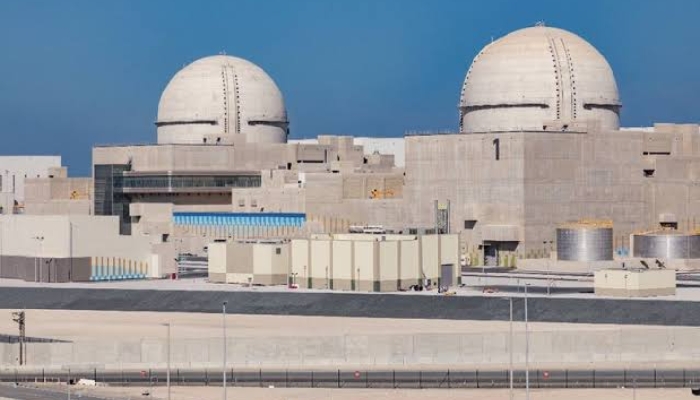
Dubai, Aug 2: The United Arab Emirates (UAE) announced on Saturday that it has started operations in the first of four reactors at the Barakah nuclear power station - the first nuclear power plant in the Arab world.

Emirates Nuclear Energy Corporation (ENEC), which is building and operating the plant with Korea Electric Power Corporation (KEPCO) said in a press release that its subsidiary Nawah Energy Company "has successfully started up Unit 1 of the Barakah Nuclear Energy Plant, located in the Al Dhafrah Region of Abu Dhabi".

That signals that Unit 1, which had fuel rods loaded in March, has achieved "criticality" - a sustained fission chain reaction.

"The start-up of Unit 1 marks the first time that the reactor safely produces heat, which is used to create steam, turning a turbine to generate electricity," said ENEC.

Barakah, which was originally scheduled to open in 2017, has been dogged by delays and is billions of dollars over budget. It has also raised myriad concerns among nuclear energy veterans who are concerned about the potential risks Barakah could visit upon the Arabian Peninsula, from an environmental catastrophe to a nuclear arms race.

Paul Dorfman, an honorary senior research fellow at the Energy Institute, University College London and founder and chair of the Nuclear Consulting Group, has criticised the Barakah reactors' "cheap and cheerful" design that he says cuts corners on safety.

Dorfman authored a report (PDF) last year detailing key safety features Barakah's reactors lack, such as a "core catcher" to literally stop the core of a reactor from breaching the containment building in the event of a meltdown. The reactors are also missing so-called Generation III Defence-In-Depth reinforcements to the containment building to shield against a radiological release resulting from a missile or fighter jet attack.

Both of these engineering features are standard on new reactors built in Europe, says Dorfman.

There have been at least 13 aerial attacks on nuclear facilities in the Middle East - more than any other region on earth.

The vulnerability of critical infrastructure in the Arabian Peninsula was further laid bare last year after Saudi Arabia's oil facilities at Abqaiq and Khurais were attacked by 18 drones and seven cruise missiles - an assault that temporarily knocked out more than half of the kingdom's oil production.

On Saturday, Dorfman reiterated his concern that there is no regional protocol in place to determine liability should an accident or incident at Barakah result in radioactive contamination spreading from the UAE to its neighbours. 

"Given Barakah has started up, because of all the well-rehearsed nuclear safety and security problems, it may be critically important that the Gulf states collectively evolve a Nuclear Accident Liability Convention, so that if anything does go wrong, victim states may have some sort of redress," Dorfman told Al Jazeera. 

The UAE has substantial oil and gas reserves, but it has made huge investments in developing alternative energy sources, including nuclear and solar.

Experts though have questioned why the UAE - which is bathed in sunlight and wind - has pushed ahead with nuclear energy - a far more expensive and riskier option than renewable energy sources.

When the UAE first announced Barakah in 2009, nuclear power was cheaper than solar and wind. But by 2012 - when the Emirates started breaking ground to build the reactors - solar and wind costs had plummeted dramatically.

Between 2009 and 2019, utility-scale average solar photovoltaic costs fell 89 percent and wind fell 43 percent, while nuclear jumped 26 percent, according to an analysis by the financial advisory and asset manager Lazard.

There are also concerns about the potential for Barakah to foment nuclear proliferation in the Middle East - a region rife with geopolitical fault lines and well-documented history of nuclear secrecy.

The UAE has sought to distance itself from the region's bad behaviour by agreeing not to enrich its own uranium or reprocess spent fuel. It has also signed up to the United Nation's nuclear watchdog's Additional Protocol, significantly enhancing inspection capabilities, and secured a 123 Agreement with the United States that allows bilateral civilian nuclear cooperation.

Comments

Add new comment

  • Coastaldigest.com reserves the right to delete or block any comments.
  • Coastaldigset.com is not responsible for its readers’ comments.
  • Comments that are abusive, incendiary or irrelevant are strictly prohibited.
  • Please use a genuine email ID and provide your name to avoid reject.
News Network
February 2,2020

Lucknow, Feb 2: In an early morning firing at Lucknow's Hazratganj, the city centre, Vishva Hindu Mahasabha state president Ranjit Bachchan was killed while he was out on a morning walk on Sunday.

Ranjit Bachchan was taking a stroll in Hazratganj in the morning when bike-borne assailants opened fire on him and killed him on the spot. The Mahasabha leader was shot in the head multiple times.

The incident took place near the CDRI building in Lucknow's Hazratganj.

In the firing, Ranjit Bachchan's brother also suffered bullet injuries. He has been rushed to the trauma centre. Ranjit Bachchan was a resident of Gorakhpur.

The early morning shootout in the Uttar Pradesh capital's central area has caused tension in the area.

Dinesh Singh, DCP Central Lucknow, said, "The body has been identified as of Ranjit Bachchan, who had gone out on morning walk when some unknown assailant shot him. A police team has been formed and further investigation is being carried out."

Before being associated with the Mahasabha, Ranjit Bachchan was a Samajwadi Party member and was often spotted with former UP chief minister Akhilesh Yadav.

The Samajwadi Party has hit out at the Yogi Adityanath government over the law and order situation in the state and demanded immediate resignation of the government.

Comments

Add new comment

  • Coastaldigest.com reserves the right to delete or block any comments.
  • Coastaldigset.com is not responsible for its readers’ comments.
  • Comments that are abusive, incendiary or irrelevant are strictly prohibited.
  • Please use a genuine email ID and provide your name to avoid reject.
News Network
July 6,2020

Dubai, July 6: Even as the world’s one of the most sought after tourist destinations is gearing up to welcome foreign tourists from July 7, the authorities have taken necessary measures to prevent the spread of covid-19.

If the foreign tourists want to avoid self-isolation after landing in Dubai International Airport, they have to fetch covid-negative certificates from their home country. The certificate ought to have been issued up to 96 hours prior to the travel.

Those without a cvid-negative certificate, however, will need to undergo a PCR test on arrival at the Dubai airports and self-isolate until they receive their negative results.

"If passengers opt to take the PCR test on arrival in Dubai, they must self-isolate until test results are received. If the test result is negative, passengers can leave the hotel and enjoy the trip as normal. However, if the test result is positive, passengers are asked to follow the advice of the Dubai Health Authority and self-isolate," Emirates said in a statement.

Budget carrier flydubai said if a passenger tests positive for Covid-19, he/she would need to observe a 14-day quarantine. The airline also advised passengers to comply with all the precautionary Covid-19 measures in place in Dubai "including wearing a mask, observing social distancing and washing your hands regularly".

Tourists with Covid-19 symptoms

* If a traveller is suspected to have Covid-19 symptoms, Dubai Airports has the right to re-test to ensure the tourist is free of the virus

*It is mandatory for Covid-positive tourists to isolate themselves at an institutional facility provided by the government for 14 days at their own expense.

Other requirements

*Travel insurance: Tourists must have a travel insurance with Covid-19 cover or declare that they would bear the costs for treatment and isolation if required. "Bring an insurance certificate stating Covid-19 coverage to present at check-in," Emirates said.

*Visa: Referring to visa requirements, Emirates said: "Depending on your nationality you can get a visa on arrival, or you can apply for your visit visa from Dubai Immigration before you travel."

*Health Declaration Form: Tourists need to complete the form that states they are free from Covid-19 symptoms. This must be done before embarking.

*Tracing app: Tourists must download the Covid-19 DXB app and register details. "This is critically important since it facilitates easy coordination and communication with the health authorities if tourists experience Covid-19 symptoms," Dubai authorities had said earlier.

Comments

Add new comment

  • Coastaldigest.com reserves the right to delete or block any comments.
  • Coastaldigset.com is not responsible for its readers’ comments.
  • Comments that are abusive, incendiary or irrelevant are strictly prohibited.
  • Please use a genuine email ID and provide your name to avoid reject.