President not to attend Sri Sri's cultural extravaganza

March 7, 2016

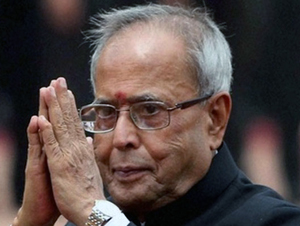
New Delhi, Mar 7: President Pranab Mukherjee will not attend a festival being organised by Sri Sri Ravi Shankar of Art of Living in the wake of the controversy over holding the three-day cultural function on the Yamuna flood plains beginning here this Friday.pranab

"The President cannot attend the function due to unavoidable circumstances," an official of the Rashtrapati Bhavan said here today.

Mukherjee had earlier agreed to attend the valedictory ceremony on Sunday.

While the organisers expect lakhs of people to attend the function, concerns have been raised by experts about the likely damage to the environment caused by holding it on the flood plains of the already polluted river in east Delhi.

The Art of Living foundation, which is organising the function, will have yoga and meditation sessions, peace prayers by Sanskrit scholars and traditional cultural performances from around the world.

The National Green Tribunal, which looks after the environmental issues, is hearing a petition which has claimed the organisers will release 'enzymes' into 17 drains that flow into the Yamuna for cleaning the river. A judgement is expected tomorrow.

The three-day event will be held from March 11-13 on the west bank of Yamuna to celebrate 35 years of The Art of Living foundation.

"This proposed activity would be in blatant violation of the provisions of the Water (Prevention and Control of Pollution) Act, 1974, and the Biological Diversity Act, 2002, since it is, basically, introducing foreign elements into the river, without any scientific study or information," the petition said.

Earlier, the green panel had issued notices to the Delhi government, Delhi Development Authority and Art of Living Foundation on another plea seeking stoppage of ongoing construction work on the flood plains.

It had also constituted an expert committee headed by Water Resources Secretary Shashi Shekhar to inspect the site of the proposed festival.

Comments

Abu Muhammad
 - 
Monday, 7 Mar 2016

What about the case filed in Bangalore for grabbing private land by Art of LOOTING Foundation. After Fattinga's Patanjali now art of cheating's meditation. Don't we have any developmental issues in the country?

Add new comment

  • Coastaldigest.com reserves the right to delete or block any comments.
  • Coastaldigset.com is not responsible for its readers’ comments.
  • Comments that are abusive, incendiary or irrelevant are strictly prohibited.
  • Please use a genuine email ID and provide your name to avoid reject.
News Network
June 27,2020

Jun 27: Alittle-known Indian IT firm offered its hacking services to help clients spy on more than 10,000 email accounts over a period of seven years.

New Delhi-based BellTroX InfoTech Services targeted government officials in Europe, gambling tycoons in the Bahamas, and well-known investors in the United States including private equity giant KKR and short seller Muddy Waters, according to three former employees, outside researchers, and a trail of online evidence.

Aspects of BellTroX's hacking spree aimed at American targets are currently under investigation by U.S. law enforcement, five people familiar with the matter told Reuters. The U.S. Department of Justice declined to comment.

Reuters does not know the identity of BellTroX's clients. In a telephone interview, the company's owner, Sumit Gupta, declined to disclose who had hired him and denied any wrongdoing.

Muddy Waters founder Carson Block said he was "disappointed, but not surprised, to learn that we were likely targeted for hacking by a client of BellTroX." KKR declined to comment.

Researchers at internet watchdog group Citizen Lab, who spent more than two years mapping out the infrastructure used by the hackers, released a report that BellTroX employees were behind the espionage campaign.

"This is one of the largest spy-for-hire operations ever exposed," said Citizen Lab researcher John Scott-Railton.

Although they receive a fraction of the attention devoted to state-sponsored espionage groups or headline-grabbing heists, "cyber mercenary" services are widely used, he said. "Our investigation found that no sector is immune."

A cache of data reviewed by Reuters provides insight into the operation, detailing tens of thousands of malicious messages designed to trick victims into giving up their passwords that were sent by BellTroX between 2013 and 2020. The data was supplied on condition of anonymity by online service providers used by the hackers after Reuters alerted the firms to unusual patterns of activity on their platforms.

The data is effectively a digital hit list showing who was targeted and when. Reuters validated the data by checking it against emails received by the targets.

On the list: judges in South Africa, politicians in Mexico, lawyers in France and environmental groups in the United States. These dozens of people, among the thousands targeted by BellTroX, did not respond to messages or declined comment.

Reuters was not able to establish how many of the hacking attempts were successful.

BellTroX's Gupta was charged in a 2015 hacking case in which two U.S. private investigators admitted to paying him to hack the accounts of marketing executives. Gupta was declared a fugitive in 2017, although the U.S. Justice Department declined to comment on the current status of the case or whether an extradition request had been issued.

Speaking by phone from his home in New Delhi, Gupta denied hacking and said he had never been contacted by law enforcement. He said he had only ever helped private investigators download messages from email inboxes after they provided him with login details.

"I didn't help them access anything, I just helped them with downloading the mails and they provided me all the details," he told Reuters. "I am not aware how they got these details but I was just helping them with the technical support."

Reuters could not determine why the private investigators might need Gupta to download emails. Gupta did not return follow-up messages. Spokesmen for Delhi police and India's foreign ministry did not respond to requests for comment.

HOROSCOPES AND PORNOGRAPHY

Operating from a small room above a shuttered tea stall in a west-Delhi retail complex, BellTroX bombarded its targets with tens of thousands of malicious emails, according to the data reviewed by Reuters. Some messages would imitate colleagues or relatives; others posed as Facebook login requests or graphic notifications to unsubscribe from pornography websites.

Fahmi Quadir's New York-based short selling firm Safkhet Capital was among 17 investment companies targeted by BellTroX between 2017 and 2019. She said she noticed a surge in suspicious emails in early 2018, shortly after she launched her fund.

Initially "it didn't seem necessarily malicious," Quadir said. "It was just horoscopes; then it escalated to pornography."

Eventually the hackers upped their game, sending her credible-sounding messages that looked like they came from her coworkers, other short sellers or members of her family. "They were even trying to emulate my sister," Quadir said, adding that she believes the attacks were unsuccessful.

U.S. advocacy groups were also repeatedly targeted. Among them were digital rights organizations Free Press and Fight for the Future, both of whom have lobbied for net neutrality. The groups said a small number of employee accounts were compromised, but the wider organizations' networks were untouched. The spying on those groups was detailed in a report by the Electronic Frontier Foundation in 2017, but has not been publicly tied to BellTroX until now.

Timothy Karr, a director at Free Press, said his organization "sees an uptick in breach attempts whenever we're engaged in heated and high-profile public policy debates." Evan Greer, deputy director of Fight for the Future, said: "When corporations and politicians can hire digital mercenaries to target civil society advocates, it undermines our democratic process."

While Reuters was not able to establish who hired BellTroX to carry out the hacking, two former employees said the company and others like it were usually contracted by private investigators on behalf of business rivals or political opponents.

Bart Santos of San Diego-based Bulldog Investigations was one of a dozen private detectives in the United States and Europe who told Reuters they had received unsolicited advertisements for hacking services out of India - including one from a person who described himself as a former BellTroX employee. The pitch offered to carry out "data penetration" and "email penetration."

Santos said he ignored those overtures, but could understand why some people didn't. "The Indian guys have a reputation for customer service," he said.


Comments

Add new comment

  • Coastaldigest.com reserves the right to delete or block any comments.
  • Coastaldigset.com is not responsible for its readers’ comments.
  • Comments that are abusive, incendiary or irrelevant are strictly prohibited.
  • Please use a genuine email ID and provide your name to avoid reject.
News Network
January 13,2020

Jan 13: India lost more than $1.33 billion to internet restrictions in 2019 as Prime Minister Narendra Modi’s government pushed ahead with his party’s Hindu nationalist agenda, raising tensions and sparking nationwide protests.

The worst shutdown has been in Kashmir, where after intermittent closures in the first half of the year, the internet has been cut off since Aug. 5 following the government’s decision to revoke the special autonomous status of the country’s only Muslim-majority state, a study said. The prologued closure was criticized by India’s highest court, which ruled Friday that the “limitless” internet shutdown enforced by the government for the last five months was illegal and asked that it be reviewed.

India imposed more internet restrictions than any other large democracy, according to the Cost of Internet Shutdowns 2019 report released by Top10VPN, a U.K.-based digital privacy and security research group. The South Asian nation recorded the third-highest losses after Iraq and Sudan, which lost $2.31 billion and $1.86 billion respectively to disruptions. Worldwide internet restrictions caused losses worth $8.05 billion, the report said.

The cost of internet blackouts was calculated using indicators from groups including the World Bank, International Telecommunication Union, and the Delhi-based Software Freedom Law Center. It includes social media shutdowns in its calculations.

India’s ministry of information and technology didn’t respond to an email seeking a response to the report’s findings.

‘Conservative Estimates’

Through 2019, India shut access to the internet for over 4,000 hours. The report added shutdowns in India were often narrowly targeted, down to the level of blocking city districts for a few hours to allow security forces to restore order. Many of these incidents were not included in the report.

“These are conservative estimates,” said Simon Migliano, head of research at U.K.-based Top10VPN. “Internet shutdowns are increasing and it shows a damaging trend.”

India’s other major internet disruptions coincided with two moves by the government that affect India’s Muslim minority. The first disruption took place in November in the states of Uttar Pradesh and Rajasthan after the Supreme Court handed a victory to Hindu groups over Muslim petitioners in a long-simmering dispute over a plot of land.

There were further disruptions in December when protests erupted against the introduction of a religion-based law that allows undocumented migrants of all faiths except Islam from neighbouring countries to seek Indian citizenship. The government enforced shutdowns across Uttar Pradesh and some Northeastern states in order to quell the protests, the report said.

Comments

Add new comment

  • Coastaldigest.com reserves the right to delete or block any comments.
  • Coastaldigset.com is not responsible for its readers’ comments.
  • Comments that are abusive, incendiary or irrelevant are strictly prohibited.
  • Please use a genuine email ID and provide your name to avoid reject.
News Network
January 6,2020

Hyderabad, Jan 6: AIMIM president Asaduddin Owaisi on Monday expressed solidarity with students of Jawaharlal Nehru University in Delhi, following violence in the campus and said the "cruel attack" was meant to "punish"the students as they "dared to stand up".

"In solidarity with the brave students of JNU. This cruel attack is meant to 'punish' JNU students because they dared to stand up. It's so bad that even Union Ministers are tweeting helplessly. Modi Sarkar must answer why cops aresiding with goons," the Hyderabad MP tweeted.

The AIMIM has also tweeted expressing solidarity with the "students of JNU". "AIMIM stands in solidarity with the students of Jawaharlal Nehru University. Who feels threatened by the voice of students?," the party said in a tweet.

Violence broke out at the JNU on Sunday night as masked men armed with sticks and rods attacked students and teachers and damaged property on the campus, prompting the administration to call in police which conducted a flag march.

At least 28 people, including JNU Students' Union president Aishe Ghosh, were injured as chaos reigned on the campus for nearly two hours.

Comments

Add new comment

  • Coastaldigest.com reserves the right to delete or block any comments.
  • Coastaldigset.com is not responsible for its readers’ comments.
  • Comments that are abusive, incendiary or irrelevant are strictly prohibited.
  • Please use a genuine email ID and provide your name to avoid reject.