President's rule imposed in Uttarakhand

March 27, 2016

New Delhi, Mar 27: Uttarakhand was today brought under President's rule by the Centre on grounds of "breakdown of governance" in a controversial decision which comes in the wake of a political crisis triggered by a rebellion in the ruling Congress.president

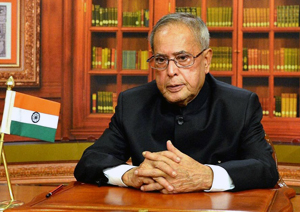
President Pranab Mukherjee signed the proclamation under Art 356 of the Constitution dismissing the Congress government headed by Harish Rawat and placing the Assembly under suspended animation this morning on the recommendation of the Union Cabinet.
The Cabinet had held an emergency meeting here last night presided over by Prime Minister Narendra Modi, who had cut short a visit to Assam to return to the capital for the purpose.

The Cabinet considered several reports received from Governor K K Paul, who had described the political situation as volatile and expressed apprehensions over possible pandemonium during the scheduled trial of strength in the state Assembly tomorrow.

Finance Minister Arun Jaitley is believed to have briefed the President late last night explaining the rationale for the Cabinet's recommendation.

The dismissal of the Rawat government now renders tomorrow's confidence vote infructuous.

It also came amidst reports that Speaker Govind Singh Kunjwal had disqualified 9 rebel Congress MLAs that would have enabled Rawat to sail through in the trust vote.

The Congress denounced the decision calling it a "murder of democracy" and said it showed that BJP did not believe in democracy.

The political crisis in the state arose after the controversial circumstances in which the Appropriation Bill was declared passed in the Assembly by the Speaker with the BJP and the rebel Congress claiming that a division of votes pressed by them was not allowed.

They alleged that the Bill was defeated in the voice vote by a majority of the members present but the Speaker did not test it in a proper division of votes.

The opposition claimed that it had a majority of 35 MLAs, including 9 rebels, in the House that day out of 67 MLAs present. The BJP said the 35 MLAs had written to the Speaker in advance that they would be voting against the bill but the Speaker had refused to take it into his consideration.

Last night, the Union Cabinet met amidst reports that the Speaker had disqualified the rebel Congress MLAs that would would have helped the beleaguered government.

Apprehending imposition of President's rule, the Congress had attacked the BJP saying it was resorting to the extreme step as its earlier moves had failed.

Comments

Abdullah
 - 
Sunday, 27 Mar 2016

The president Pranab Mukerjee working as a RSS agent.

Add new comment

  • Coastaldigest.com reserves the right to delete or block any comments.
  • Coastaldigset.com is not responsible for its readers’ comments.
  • Comments that are abusive, incendiary or irrelevant are strictly prohibited.
  • Please use a genuine email ID and provide your name to avoid reject.
News Network
April 20,2020

Thiruvananthapuram, Apr 20:  Kerala Chief Minister Pinarayi Vijayan on Monday said that the government would revoke the order, which allowed the opening of barbershops and restaurants in the State.

The development comes after the Ministry of Home Affairs (MHA) objected to the move.
When asked about the letter issued by the MHA terming certain decisions as to the dilution of guidelines, Chief Minister Vijayan said: "There is no confrontation between the State government and the Centre."

"Kerala is following all directions issued by the Centre. Barbershops will not be opened and restaurants will only provide online delivery," he told the reporters, adding that public transport would not be allowed.

"There was a decision to open barbershops but many experts have pointed out against the decision. So the Kerala government is withdrawing the decision," he said.

Earlier, Chief Secretary Tom Jose said that if needed, then the State government will make necessary modifications to the lockdown guidelines in the wake of a communication received from the Central government.

The MHA had objected to the decision of Kerala government to allow services like barbershops, local workshops, restaurants, etc., and had urged the State government to revise its lockdown guidelines.

The Government of India had said that violation to lockdown measures reported posed a serious health hazard to the public and risk the spread of COVID-19.

Union Home Secretary Ajay Bhalla wrote to all Chief Secretaries and a separate letter had been sent to the Kerala Chief Secretary asking them not to dilute lockdown guidelines in any manner.

In his letter to the Kerala Chief Secretary, Bhalla had stated that the consolidated revised guidelines on the measures to be taken by the Ministries/Departments of the Government of India has been circulated on April 15 for containment of COVID-19.

Kerala Minister Kadakampally Surendran had said that relaxations have been given abiding by the direction issued by the Central government. He had added that the Centre may have asked for an explanation due to some misunderstanding.

India is under a nation-wide lockdown that came into force on March 25 to contain the spread of coronavirus, which has claimed 559 lives in the country. Last week, Prime Minister Narendra Modi announced the extension of lockdown till May 3.

Comments

Add new comment

  • Coastaldigest.com reserves the right to delete or block any comments.
  • Coastaldigset.com is not responsible for its readers’ comments.
  • Comments that are abusive, incendiary or irrelevant are strictly prohibited.
  • Please use a genuine email ID and provide your name to avoid reject.
Agencies
January 20,2020

New Delhi, Jan 20: The BJP has got a brand new President in the form of JP Nadda. At around 2.30 pm, the announcement was made, bringing an end to the Amit Shah era in BJP. The party's Working President Jagat Prakash Nadda won unopposed, sparking celebrations outside the BJP headquarters here on Monday. 

Amit Shah himself was among the people who proposed Nadda's name along with Nitin Gadkari and Rajnath Singh. Soon after his annointment, BJP election returning officer Radha Mohan Singh told the media, "I announce JP Nadda as the new BJP President." Shah was also seen hugging Nadda.

The nomination process for the post of the BJP President began at 10 am and went on till 12.30 pm. For the next hour, the filed nomination paper, which was just one, was examined. Party members waitied till 2.30 pm for the candidate to withdraw if he wished to. It was after this that Nadda was declared as the man who would step into the shoes of Amit Shah.

Many in the BJP believe that although Nadda is the BJP chief now, Shah would still make all macro-level decisions like pre poll alliances or top organisational appointments. Nadda would be in charge of monitoring the day-to-day needs of the organisation. BJP sources say that Amit Shah himself wanted an arrangement like this one and personally wanted Nadda to take over. as he helped Shah formulate legislations like Triple Talaq and Citizenship Amendment Act.

The party constitution mandates completion of election of at least 50 per cent of state Presidents for the election of national President to happen. In the last few days, the BJP has completed the election of a slew of state Presidents like in West Bengal, Nagaland among others.

The process of election of the national BJP President is quite elaborate and has been described in detail in the party constitution, which says that the national president shall be elected by an electoral college, comprising members of the national council and the state councils.

"Any 20 members of the electoral college of a state can jointly propose the name of a person, who has been an active member for four terms and has 15 years of membership, for the post of national president. Such joint proposal should come from not less than five states where elections have been completed for the national council. The consent of the candidate is necessary," it says.

Who is JP Nadda?

Jagat Prakash Nadda, 59, who has his roots in the Rashtriya Swayamsevak Sangh (RSS) and its affiliates, was appointed the Bharatiya Janata Party (BJP) national President on Monday, replacing his 'mentor' and Union Home Minister Amit Shah.

Former environment, health and law minister from Himachal Pradesh, which has just four of the Lok Sabha's 543 seats, Nadda has tried to carve out his own space in national politics with his low profile and astute organisational skills, believe his party leaders.

He rose through the ranks from the Akhil Bharatiya Vidyarthi Parishad (ABVP), the student wing of the RSS, from where he has managed to build inroads from university to the state politics.

Nadda has been active on the national political scene since 2010 when he was picked by then BJP chief Nitin Gadkari to join his new team. He was made the party's national general secretary.

Born on December 2, 1960, Nadda did his graduation from Patna and holds a post-graduate degree in political science and Bachelor of Legislative Law (LL.B) from Himachal Pradesh University in Shimla.

Starting his political career as a student leader of the ABVP in 1978, Nadda had also worked both with Gadkari and Shah even in the party's youth wing -- the Bharatiya Yuva Morcha -- from 1991 to 1994.

His wife Mallika Nadda, who teaches history at the Himachal Pradesh University and is currently posted in university's campus in Delhi, was an ABVP activist too, and its national general secretary from 1988 to 1999.

In the previous BJP government (2007-12) in the state, Nadda was forced to resign as Forest Minister in 2010 owing to differences between him and then chief minister Prem Kumar Dhumal.

He was elected to the Rajya Sabha in 2012.

Nadda won his first Assembly election from Bilaspur (Sadar) in Himachal in 1993. In 1998, he again won from that seat and became the state Health Minister.

He lost the Assembly elections in 2003, but again won in 2007 and was appointed the Forest Minister in the Himachal Pradesh.

Nadda, as a forest minister, was the brain behind opening forest police stations to check forest crimes, launching community-driven plantation, setting up forest ponds and the massive plantation of deodars to boost the depleting green cover of the 'Queen of Hills', as Shimla was fondly called by the British.

A close confidant of Prime Minister Narendra Modi, Nadda was among those who were mentioned as likely aspirants to the BJP top post after Rajnath Singh was inducted into the Central government as the Home Minister in 2014.

Later, Nadda was inducted into the union cabinet in its first expansion in 2014 as the Health Minister.

Hailing Nadda's appointment, Chief Minister Jai Ram Thakur told IANS it is a proud moment that a leader belonging to a small state in the national politics is today the leader of the country's biggest national party.

His father N.L. Nadda, who was a Vice-Chancellor of the Ranchi University, resides in Bilaspur town.


Comments

Add new comment

  • Coastaldigest.com reserves the right to delete or block any comments.
  • Coastaldigset.com is not responsible for its readers’ comments.
  • Comments that are abusive, incendiary or irrelevant are strictly prohibited.
  • Please use a genuine email ID and provide your name to avoid reject.
News Network
May 20,2020

United Nations, May 20: Highlighting India's long-standing history of promoting inclusive and peaceful societies, a top UN official on Tuesday voiced concern over incidents of "increased hate speech and discrimination" against minority communities in the country following the adoption of the Citizenship Amendment Act.

Under-Secretary-General and UN Special Adviser on the Prevention of Genocide Adama Dieng, however, welcomed Prime Minister Narendra Modi’s call for unity and brotherhood in the wake of the COVID19 pandemic.

Dieng said in a note to the media on Tuesday that he is "concerned over reports of increased hate speech and discrimination against minority communities in India" since the adoption of the Citizenship Amendment Act (CAA) in December 2019.

The Indian government has maintained that the CAA is an internal matter of the country and stressed that the goal is to protect the oppressed minorities of neighbouring countries.

The CAA, which was notified on January 10, grants Indian citizenship to non-Muslim minorities migrated to India from Afghanistan, Pakistan and Bangladesh till December 31, 2014, following persecution over their faith.

"While the objective of the act, to provide protection to minority communities is commendable, it is concerning that this protection is not extended to all groups, including Muslims. This is contrary to India’s obligations under international human rights law, in particular on non-discrimination,” Dieng said.

The Special Adviser recognised "India’s long standing and well recognised history of promoting inclusive and peaceful societies, with respect for equality and principles of non-discrimination.”

He also welcomed recent statements by Prime Minister Modi that the COVID-19 pandemic “does not see race, religion, colour, caste, creed, language or border before striking and that our response and conduct...should attach primacy to unity and brotherhood.”

Dieng encouraged the Government of India to "continue to abide by this guidance by ensuring that national laws and policies follow international standards related to non-discrimination and to address and counter the rise of hate speech through messages of inclusion, respect for diversity and unity.”

He further reiterated that he would continue to follow developments and expressed his readiness to support initiatives to counter and address hate speech.

The hate speech and the dehumanisation of others goes against international human rights norms and values, he added.

“In these extraordinary times brought about by the COVID-19 crisis it is more important than ever that we stand united as one humanity, demonstrating unity and solidarity rather than division and hate,” he said.

Dieng also expressed concern over reports of violence during demonstrations against CAA in some regions of India.

Comments

Add new comment

  • Coastaldigest.com reserves the right to delete or block any comments.
  • Coastaldigset.com is not responsible for its readers’ comments.
  • Comments that are abusive, incendiary or irrelevant are strictly prohibited.
  • Please use a genuine email ID and provide your name to avoid reject.