


President's rule imposed in Uttarakhand

March 27, 2016

New Delhi, Mar 27: Uttarakhand was today brought under President's rule by the Centre on grounds of "breakdown of governance" in a controversial decision which comes in the wake of a political crisis triggered by a rebellion in the ruling Congress.president
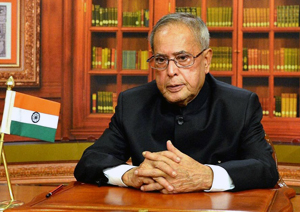
President Pranab Mukherjee signed the proclamation under Art 356 of the Constitution dismissing the Congress government headed by Harish Rawat and placing the Assembly under suspended animation this morning on the recommendation of the Union Cabinet.
The Cabinet had held an emergency meeting here last night presided over by Prime Minister Narendra Modi, who had cut short a visit to Assam to return to the capital for the purpose.

The Cabinet considered several reports received from Governor K K Paul, who had described the political situation as volatile and expressed apprehensions over possible pandemonium during the scheduled trial of strength in the state Assembly tomorrow.

Finance Minister Arun Jaitley is believed to have briefed the President late last night explaining the rationale for the Cabinet's recommendation.

The dismissal of the Rawat government now renders tomorrow's confidence vote infructuous.

It also came amidst reports that Speaker Govind Singh Kunjwal had disqualified 9 rebel Congress MLAs that would have enabled Rawat to sail through in the trust vote.

The Congress denounced the decision calling it a "murder of democracy" and said it showed that BJP did not believe in democracy.

The political crisis in the state arose after the controversial circumstances in which the Appropriation Bill was declared passed in the Assembly by the Speaker with the BJP and the rebel Congress claiming that a division of votes pressed by them was not allowed.

They alleged that the Bill was defeated in the voice vote by a majority of the members present but the Speaker did not test it in a proper division of votes.

The opposition claimed that it had a majority of 35 MLAs, including 9 rebels, in the House that day out of 67 MLAs present. The BJP said the 35 MLAs had written to the Speaker in advance that they would be voting against the bill but the Speaker had refused to take it into his consideration.

Last night, the Union Cabinet met amidst reports that the Speaker had disqualified the rebel Congress MLAs that would would have helped the beleaguered government.

Apprehending imposition of President's rule, the Congress had attacked the BJP saying it was resorting to the extreme step as its earlier moves had failed.

Comments

Abdullah
 - 
Sunday, 27 Mar 2016

The president Pranab Mukerjee working as a RSS agent.

Add new comment

  • Coastaldigest.com reserves the right to delete or block any comments.
  • Coastaldigset.com is not responsible for its readers’ comments.
  • Comments that are abusive, incendiary or irrelevant are strictly prohibited.
  • Please use a genuine email ID and provide your name to avoid reject.
coastaldigest.com web desk
June 9,2020

Bijnor: A 17-year-old Dalit youth was shot dead by four miscreants belonging to the upper caste of Hinduism after the former tried to enter a temple in Uttar Pradesh.

The deceased was identified as Vikas Jatav. The accused had tried to stop the deceased from entering into a temple. 

On being stopped from entering the temple located in Domkhera village, Jatav raised and objection and started arguing with the accused. 

The accused were identified as - Lala Chauhan, Horam Chauhan, Bhushan and Jasveer. The incident took place on May 31, according to the father of the deceased. 

How it happened 
On May 31, Jatav went to a temple in Domkhera to offer his prayers. The four accused, however, did not let him go inside. Following this, an argument broke out between the accused and the 17-year-old boy. 

On the same day, the victim approached the police and lodged a complaint in relation to the incident. The police, however, did not take any action against the accused men. 

Late night on Saturday, Jatav was sleeping inside his house when the four men barged in and opened fire at him. 

Hearing the gunshots, Jatav's family rushed to rescue him, following which, the accused escaped. Vikas was profusely bleeding after being shot and succumbed to the injuries before he could reach the hospital. 

Lala Chauhan and Horam were nabbed by the police while the other two are still at large. The four accused have been booked under section 302 (murder) of the Indian Penal Code (IPC) and the SC/ST Act.

Comments

Add new comment

  • Coastaldigest.com reserves the right to delete or block any comments.
  • Coastaldigset.com is not responsible for its readers’ comments.
  • Comments that are abusive, incendiary or irrelevant are strictly prohibited.
  • Please use a genuine email ID and provide your name to avoid reject.
News Network
June 23,2020

New Delhi, Jun 23: In an unexpected development, the pump price of diesel is all set to surpass the petrol price in the capital, making it the most expensive transport fuel for the first time in a long time.

Globally, diesel is priced slightly above petrol prices due to the very nature of the product that has a higher cost of production. But in India, due to the lopsided taxation structure, diesel attracts lesser of the tax between the two auto fuels keeping its prices lower than petrol for last several years.

Diesel is currently priced at Rs 79.40 a litre in the Capital, just 36 paise short of petrol price that is being retailed at Rs 79.76 a litre. Going by the trend of price movement in the two products for the last few days where diesel prices have consistently increased by 50-60 paise per litre while the daily increase in petrol prices have fallen to just 20 paise on Tuesday, it is set to surpass petrol prices in next few days.

"Diesel price movement is sharper in international market and if oil companies follow the global price trend, diesel prices will surpass that of petrol later this week. It will be after many years that this would happen and is expected to sustain for some time unless government changes the tax structure of the petroleum products again," said an oil sector expert from one of the big four audit and advisory firms asking not to be named.

Interestingly, even in India the base price of diesel is expensive than petrol. According to the Indian Oil Corporation (IOC), while the base price of petrol in Delhi currently comes to Rs 22.11 per litre, the same for diesel is higher at Rs 22.93 per litre (effective from June 16, 2020). This has been the case for a long time, but retail price of petrol can be higher than diesel due to central and state taxes.

What has now brought diesel prices to a whisker of petrol prices in the capital is the Delhi government's decision early May to increase the Value Added Tax on diesel from 16.75 per cent to 30 per cent and on petrol from 27 per cent to 30 per cent. This increased the retail price of diesel and petrol in Delhi by Rs 7.10 and Rs 1.67 a litre respectively. With Central taxes on the two products already reaching identical levels, the Delhi governments move hastened price parity between petrol and diesel.

Currently, the Central excise on petrol is Rs 32.98 a litre while that on diesel it is Rs 31.83 a litre. The VAT on petrol in Delhi is Rs 17.71 a litre and that on diesel is Rs 17.60 a litre.

While the movement of retail pricing is being seen with a sigh of relief by vehicle owners whose cars run on petrol, those buying the relatively expensive diesel cars are now repenting on their decision. The development is also being seen with caution by automobile companies who have spent millions to ramp up their facilities for diesel run vehicles. The expectation is that demand for such cars will now fall, causing more damage to companies where sales are already impacted due to persistent economic slowdown and now the spread of COVID-19 pandemic.

"The pricing development would push automobile companies to strategies being followed by companies in the western markets where diesel run cars are not sold on fuel pricing differential, but on overall make and quality that puts them ahead of petrol run cars," the expert quoted earlier.

Yes, but for commercial vehicle sector the rising price of diesel had not been welcomed. In fact, the commercial transport sector had time an again threatened strike against the move to raise fuel prices.

With petrol and diesel retail prices closing, the case for adultering fuel has also gone down much to the relief of vehicle owners.

Comments

Add new comment

  • Coastaldigest.com reserves the right to delete or block any comments.
  • Coastaldigset.com is not responsible for its readers’ comments.
  • Comments that are abusive, incendiary or irrelevant are strictly prohibited.
  • Please use a genuine email ID and provide your name to avoid reject.
Agencies
June 14,2020

New Delhi, Jun 14: Petrol price on Sunday was hiked by a record 62 paise per litre and that of diesel by 64 paise as oil companies for the eighth day in a row adjusted retail rates in line with cost since ending an 82-day hiatus in rate revision.

Petrol price in Delhi was hiked to Rs 75.78 per litre from Rs 75.16 while diesel rates were increased to Rs 74.03 a litre from Rs 73.39, according to a price notification of state oil marketing companies.

Rates have been increased across the country and vary from state to state depending on the incidence of local sales tax or VAT.

The 62 paise a litre increase in petrol and 64 paise hike in diesel price is the highest surge in rates since the daily price revision was started in June 2017.

This is the eighth daily increase in rates in a row since oil companies on June 7 restarted revising prices in line with costs, after ending an 82-day hiatus.

In eight hikes, petrol price has gone up by Rs 4.52 per litre and diesel by Rs 4.64 -- a record increase in rates in any eight days since the daily price revision was introduced.

The freeze in rates was imposed in mid-March soon after the government hiked excise duty on petrol and diesel to shore up additional finances.

Oil PSUs Indian Oil Corp (IOC), Bharat Petroleum Corp Ltd (BPCL) and Hindustan Petroleum Corp Ltd (HPCL), instead of passing on the excise duty hikes to customers, adjusted them against the fall in the retail rates that was warranted because of international oil prices falling to two-decade lows.

The government had first raised excise duty on petrol and diesel by Rs 3 per litre each on March 14 and then again on May 5 by a record Rs 10 per litre in case of petrol and Rs 13 on diesel. The two hikes gave the government Rs 2 lakh crore in additional tax revenues.

State-owned fuel retailers IOC, BPCL and HPCL had frozen petrol and diesel prices since March 16, as if anticipating the government move and set off gains they accrued from continuing drop in international oil prices against the excise duty hike.

They, however, promptly passed the increase in local sales tax or VAT by state governments such as Rs 1.67 increase in VAT on petrol and Rs 7.10 in diesel by the Delhi government on May 4.

The total incidence of excise duty on petrol has risen to Rs 32.98 per litre and that on diesel to Rs 31.83. The excise tax on petrol was Rs 9.48 per litre when the Narendra Modi government took office in 2014 and that on diesel was Rs 3.56 a litre.

The government had between November 2014 and January 2016 raised excise duty on petrol and diesel on nine occasions to take away gains arising from plummeting global oil prices.

In all, duty on petrol rate was hiked by Rs 11.77 per litre and that on diesel by 13.47 a litre in those 15 months that helped government's excise mop up more than double to Rs 2,42,000 crore in 2016-17 from Rs 99,000 crore in 2014-15.

It cut excise duty by Rs 2 in October 2017 and by Rs 1.50 a year later. But it raised excise duty by Rs 2 per litre in July 2019.

It again raised excise duty on March 14 by Rs 3 per litre.

Comments

Add new comment

  • Coastaldigest.com reserves the right to delete or block any comments.
  • Coastaldigset.com is not responsible for its readers’ comments.
  • Comments that are abusive, incendiary or irrelevant are strictly prohibited.
  • Please use a genuine email ID and provide your name to avoid reject.