


President's rule imposed in Uttarakhand

March 27, 2016

New Delhi, Mar 27: Uttarakhand was today brought under President's rule by the Centre on grounds of "breakdown of governance" in a controversial decision which comes in the wake of a political crisis triggered by a rebellion in the ruling Congress.president
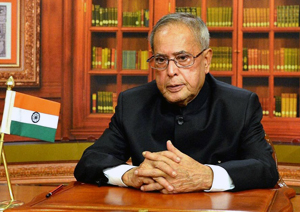
President Pranab Mukherjee signed the proclamation under Art 356 of the Constitution dismissing the Congress government headed by Harish Rawat and placing the Assembly under suspended animation this morning on the recommendation of the Union Cabinet.
The Cabinet had held an emergency meeting here last night presided over by Prime Minister Narendra Modi, who had cut short a visit to Assam to return to the capital for the purpose.

The Cabinet considered several reports received from Governor K K Paul, who had described the political situation as volatile and expressed apprehensions over possible pandemonium during the scheduled trial of strength in the state Assembly tomorrow.

Finance Minister Arun Jaitley is believed to have briefed the President late last night explaining the rationale for the Cabinet's recommendation.

The dismissal of the Rawat government now renders tomorrow's confidence vote infructuous.

It also came amidst reports that Speaker Govind Singh Kunjwal had disqualified 9 rebel Congress MLAs that would have enabled Rawat to sail through in the trust vote.

The Congress denounced the decision calling it a "murder of democracy" and said it showed that BJP did not believe in democracy.

The political crisis in the state arose after the controversial circumstances in which the Appropriation Bill was declared passed in the Assembly by the Speaker with the BJP and the rebel Congress claiming that a division of votes pressed by them was not allowed.

They alleged that the Bill was defeated in the voice vote by a majority of the members present but the Speaker did not test it in a proper division of votes.

The opposition claimed that it had a majority of 35 MLAs, including 9 rebels, in the House that day out of 67 MLAs present. The BJP said the 35 MLAs had written to the Speaker in advance that they would be voting against the bill but the Speaker had refused to take it into his consideration.

Last night, the Union Cabinet met amidst reports that the Speaker had disqualified the rebel Congress MLAs that would would have helped the beleaguered government.

Apprehending imposition of President's rule, the Congress had attacked the BJP saying it was resorting to the extreme step as its earlier moves had failed.

Comments

Abdullah
 - 
Sunday, 27 Mar 2016

The president Pranab Mukerjee working as a RSS agent.

Add new comment

  • Coastaldigest.com reserves the right to delete or block any comments.
  • Coastaldigset.com is not responsible for its readers’ comments.
  • Comments that are abusive, incendiary or irrelevant are strictly prohibited.
  • Please use a genuine email ID and provide your name to avoid reject.
News Network
March 20,2020

New Delhi, Mar 20: The four men convicted of the gang rape and murder of a Delhi woman on December 16, 2012 were hanged in the darkness of pre-dawn on Friday, ending a horrific chapter in India's long history of sexual assault that had seared the nation's soul. Mukesh Singh (32), Pawan Gupta (25), Vinay Sharma (26) and Akshay Kumar Singh (31) were executed at 5.30 am for the savage assault in an empty moving bus on the 23-year-old physiotherapy intern who came to be known the world over as Nirbhaya, the fearless one.

This is the first time that four men have been hanged together in Tihar Jail, South Asia's largest prison complex that houses more than 16,000 inmates. The executions were carried out after the men exhausted every possible legal avenue to escape the gallows. Their desperate attempts only postponed the inevitable by less than two months after the first date of execution was set for January 22.

They were hanged at 5.30 am, Director General of Prison Sandeep Goel said.

After raping and brutalising the woman, the men, one of whom was a juvenile at the time, dumped her on the road and left for dead on the cold winter night. Her friend who was with her was also severely beaten and thrown out along with her. She was so severely violated that her insides were spilling out when she was taken to hospital. She died in a Singapore hospital after battling for her life for a fortnight.

Six people, including the four convicts and the juvenile, were named as accused.

While Ram Singh allegedly committed suicide in the Tihar Jail days after the trial began in the case, the juvenile was released in 2015 after spending three years in a correctional home.

The road to the gallows was a long and circuitous one, going through the lower courts, the High Court, the Supreme Court and the president's office before going back to the Supreme Court that heard and rejected various curative petitions.

The death warrants were deferred by a court thrice on the grounds that the convicts had not exhausted all their legal remedies and that the mercy petition of one or the other was before the president.

On March 5, a trial court issued fresh death warrants for March 20 at 5.30 am as the final date for the execution.

Comments

Add new comment

  • Coastaldigest.com reserves the right to delete or block any comments.
  • Coastaldigset.com is not responsible for its readers’ comments.
  • Comments that are abusive, incendiary or irrelevant are strictly prohibited.
  • Please use a genuine email ID and provide your name to avoid reject.
News Network
January 31,2020

New Delhi, Jan 31: Substantial competition and low tariff rates by telecom operators since 2016 have led to a financial stress in the sector, the Economic Survey said on Friday.

The data price in the country came down by over 99 per cent during 2016-2019, making it among the lowest tariff in the world, according to the survey.

"Since 2016, the sector has witnessed substantial competition and price cutting by the telecom service providers (TSPs), creating financial stress in the sector. As a result, the sector is experiencing consolidation. While some operators have filed for bankruptcy, others have merged, in their quest to improve viability," the survey report said.

In April-June 2019, the price of data was Rs 7.7 per gigabyte (GB) as compared to Rs 200 per GB in June 2016, it added.

"The Average Revenue Per User (ARPU) for GSM based mobile services has also gone down substantially from Rs 126 in June 2016 to Rs 74.30 in June 2019," the survey said.

The tariff war started in the market with entry of new telecom operator Reliance Jio in September 2016.

"BSNL and MTNL are also affected by the tariff war that has impacted their cash flow resulting in mounting losses," the survey said.

The financial health of the public sector telecom firms plummeted to a level where they have been finding hard to pay employees salaries in time.

The government has drawn up a plan to revive these PSUs which is still in works.

The revival plan consists of several measures, including reduction of staff cost through voluntary retirement scheme, allotment of spectrum for 4G services, monetisation of land and building, tower and fibre assets of BSNL and MTNL, debt restructuring through sovereign guarantee bonds and ''in-principle'' approval for merger of BSNL and MTNL.

The survey said that the wireless telephony now constitutes 98.27 per cent of all subscriptions whereas share of landline telephones now stands at only 1.73 per cent where market share is dominated by private sector players.

"The overall tele-density in India stands at 90.45 per cent, the rural tele-density being 57.35 per cent and urban teledensity being 160.71 per cent at the end of September 2019. The private sector dominates with a share of 88.81 per cent (106.06 crore connections) at the end of September, 2019 while the share of public sector was 11.19 per cent (13.36 crore connections)," the survey said.

The lower price of data has also lead in surge of broadband connections and average consumption of the internet.

Total broadband connections increased by about ten times, from 6.1 crore in 2014 to 59.46 crore in June 2019, the survey said.

The number of internet subscribers (both broadband and narrowband put together) stood at 66.53 crore at the end of June 2019 as compared to 25.16 crore in 2014.

The number of mobile internet subscribers was 64.36 lakh at the end of June 2019 while the number of wireline internet subscribers was 2.17 crore.

"India is now the global leader in monthly data consumption, with average consumption per subscriber per month increasing 157 times from 62 MB in 2014 to 9.8 GB in June 2019. The cost of data has also reduced substantially, enabling affordable internet access for millions of citizens," the survey said.

Comments

Add new comment

  • Coastaldigest.com reserves the right to delete or block any comments.
  • Coastaldigset.com is not responsible for its readers’ comments.
  • Comments that are abusive, incendiary or irrelevant are strictly prohibited.
  • Please use a genuine email ID and provide your name to avoid reject.
Agencies
July 2,2020

New Delhi, Jul 2: In the midst of India's tense border standoff with China, the defence ministry on Thursday approved procurement of a number of frontline fighter jets, missile systems and other platforms at a cost of Rs 38,900 crore to bolster the combat capability of the armed forces, officials said.

They said 21 MiG-29 fighter jets are being bought from Russia while 12 Su-30 MKI aircraft will be procured from Russia. The ministry has also approved a separate proposal to upgrade existing 59 MiG-29 aircraft.

The decisions were taken at a meeting of the Defence Acquisition Council (DAC) chaired by Defence Minister Rajnath Singh.

The procurement of 21 MiG-29 and upgrading of the existing fleet of MiG-29 are estimated to cost the government Rs 7,418 crore while purchase of 12 new Su-30 MKI from the Hindustan Aeronautics Ltd will be made at a cost of Rs 10,730 crore, the officials said.

The DAC also approved procurement of long-range land-attack cruise missile systems with a range of 1,000 KM and Astra Missiles for Navy and Air Force.

The officials said cost of these design and development proposals is in the range of Rs 20,400 crore.

"While acquisition of Pinaka missile systems will enable raising additional regiments over and above the ones already inducted, addition of long-range land attack missile systems having a firing range of 1000 KM to the existing arsenal will bolster the attack capabilities of the Navy and the Air Force," said a defence ministry official.

"Similarly induction of Astra Missiles having beyond visual range capability will serve as a force multiplier and immensely add to the strike capability of the Indian Navy and the Indian Air Force," he said.

Comments

Add new comment

  • Coastaldigest.com reserves the right to delete or block any comments.
  • Coastaldigset.com is not responsible for its readers’ comments.
  • Comments that are abusive, incendiary or irrelevant are strictly prohibited.
  • Please use a genuine email ID and provide your name to avoid reject.