


President's rule imposed in Uttarakhand

March 27, 2016

New Delhi, Mar 27: Uttarakhand was today brought under President's rule by the Centre on grounds of "breakdown of governance" in a controversial decision which comes in the wake of a political crisis triggered by a rebellion in the ruling Congress.president
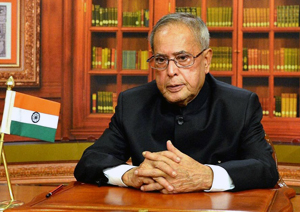
President Pranab Mukherjee signed the proclamation under Art 356 of the Constitution dismissing the Congress government headed by Harish Rawat and placing the Assembly under suspended animation this morning on the recommendation of the Union Cabinet.
The Cabinet had held an emergency meeting here last night presided over by Prime Minister Narendra Modi, who had cut short a visit to Assam to return to the capital for the purpose.

The Cabinet considered several reports received from Governor K K Paul, who had described the political situation as volatile and expressed apprehensions over possible pandemonium during the scheduled trial of strength in the state Assembly tomorrow.

Finance Minister Arun Jaitley is believed to have briefed the President late last night explaining the rationale for the Cabinet's recommendation.

The dismissal of the Rawat government now renders tomorrow's confidence vote infructuous.

It also came amidst reports that Speaker Govind Singh Kunjwal had disqualified 9 rebel Congress MLAs that would have enabled Rawat to sail through in the trust vote.

The Congress denounced the decision calling it a "murder of democracy" and said it showed that BJP did not believe in democracy.

The political crisis in the state arose after the controversial circumstances in which the Appropriation Bill was declared passed in the Assembly by the Speaker with the BJP and the rebel Congress claiming that a division of votes pressed by them was not allowed.

They alleged that the Bill was defeated in the voice vote by a majority of the members present but the Speaker did not test it in a proper division of votes.

The opposition claimed that it had a majority of 35 MLAs, including 9 rebels, in the House that day out of 67 MLAs present. The BJP said the 35 MLAs had written to the Speaker in advance that they would be voting against the bill but the Speaker had refused to take it into his consideration.

Last night, the Union Cabinet met amidst reports that the Speaker had disqualified the rebel Congress MLAs that would would have helped the beleaguered government.

Apprehending imposition of President's rule, the Congress had attacked the BJP saying it was resorting to the extreme step as its earlier moves had failed.

Comments

Abdullah
 - 
Sunday, 27 Mar 2016

The president Pranab Mukerjee working as a RSS agent.

Add new comment

  • Coastaldigest.com reserves the right to delete or block any comments.
  • Coastaldigset.com is not responsible for its readers’ comments.
  • Comments that are abusive, incendiary or irrelevant are strictly prohibited.
  • Please use a genuine email ID and provide your name to avoid reject.
News Network
May 25,2020

Raipur, May 25: A union minister was caught on camera issuing threats to district administration officials in Chhattisgarh saying that she “knows how to take people to a room and beat them with belts"

Officials were taken aback when Renuka Singh, Minister of State for Tribal Affairs, delivered this dialogue during her visit to the quarantine centre at Balrampur, around 400 km from Chhattisgarh capital Raipur on Sunday.

Dilip Gupta, a resident of Balarampur district in Chhattisgarh, had accused the chief executive officer and tehsildar of the district panchayat of assaulting him in a quarantine centre in the area following a quarrel over shoddy facilities. Renuka Singh took cognizance of the matter and reached the quarantine centre to speak to Dilip Gupta.

The minister, on reaching the quarantine centre, received details of the incident from Gupta and his family and lashed out at the officials for "beating him up".

In a video, Renuka Singh is seen cautioning the officials to not think of BJP workers as "weak".

"Ye bhagwadhaari BJP ke karyakartao ko kamzor mat samajhna. Janpad me baithke aur aap tehsil me baith ke jo bhed-bhaav kar rahe hain BJP ke karyakartao ke sazth, bhool jaiye (Don't think of saffron-wearing BJP workers as weak. Forget the discrimination that you are showing towards BJP workers)," Renuka Singh said, lambasting the officials.

However, the minister did not stop there and went on to threaten the officials saying she knows how to 'thrash people with a belt'. 

"Andheri kothri me le jaa ke na main belt khol ke thokna jaanti hu bohot acche se (I very well know how to lock people in a dark room and thrash them with a belt)," Renuka Singh can be heard saying in a video from the incident.

Dilip Gupta, who was put under quarantine after he recently arrived from Delhi, had reportedly complained about the quality of food and basic facilities in the centre and had even uploaded a video on social media over the same after officials failed to address his issues.

Comments

Add new comment

  • Coastaldigest.com reserves the right to delete or block any comments.
  • Coastaldigset.com is not responsible for its readers’ comments.
  • Comments that are abusive, incendiary or irrelevant are strictly prohibited.
  • Please use a genuine email ID and provide your name to avoid reject.
Agencies
August 4,2020

New Delhi, Aug 4: Over 50 per cent of COVID-19 deaths in India have taken place among people aged 60 years and above and 37 per cent deaths have been reported among patients in the age group of 45 to 60 years, Health Ministry said on Tuesday.

Addressing a press conference, Rajesh Bhushan, Secretary, Health Ministry said that 11 per cent COVID-19 deaths took place in the age group of 26 to 44.

The 18 to 25 age group and those below 18 years reported one per cent deaths each.
"Currently, 5,86,298 active COVID-19 cases are in India and over 12 lakh people have recovered.

50 per cent deaths due to COVID19 have taken place among the age group of 60 years or above and 37 per cent deaths took place in the age group between 45 to 60 years," Bhushan said.

"A total of 11 per cent COVID-19 deaths took place in the age group of 26 to 44. Only 1 per cent in 18 to 25 age group and 1 per cent in below the age of 18 years," he added.

Bhushan said that 68 per cent of COVID-19 deaths have been reported among male patients and 32 per cent among female patients which is broadly in line with the global scenario.

The number of recovered COVID-19 patients in India is increasing daily and is now over double the number of active cases.

Bhushan said that the case fatality rate (CFR) is lowest since the first lockdown.

"More than 2 crore COVID-19 tests have been conducted, including more than 6.6 lakh tests in the last 24 hours. Recovered cases are now double of the active cases. 

The case fatality rate (CFR) is lowest since the first lockdown," he said
"This is the first time after the first lockdown that the fatality rate is at the lowest, at 2.10 per cent. The fatality rate has seen a progressive decline and it is continuing, which is a good sign," he added.

According to the World Health Organisation, CFR is a measure of the severity of a disease and is defined as the proportion of reported cases of a specified disease or condition which are fatal within a specified time.

Comments

Add new comment

  • Coastaldigest.com reserves the right to delete or block any comments.
  • Coastaldigset.com is not responsible for its readers’ comments.
  • Comments that are abusive, incendiary or irrelevant are strictly prohibited.
  • Please use a genuine email ID and provide your name to avoid reject.
News Network
February 9,2020

Mumbai, Feb 9: Given the slow progress on the ongoing Rs 38,000-crore capacity expansion at the four largest metro airports, and also the surging traffic, the snaky queues will continue at least till 2023, warns a report.

The four largest airports -- New Delhi, Mumbai, Bengaluru and Hyderabad -- handle more than half of the traffic and are operating at 130 per cent of their installed capacity. These airports are under a record Rs 38,000-crore capex but the capacity will not come up before end-2023, says a Crisil report.

“With the dip in traffic growth largely behind, we expect congestion at the top four airports of New Delhi, Mumbai, Bengaluru and Hyderabad, which handle more than half of the load, to continue till about FY23,” says the report.

Already these airports are operating at over 130 percent of installed capacity, and the ongoing healthy traffic growth this operating rate is expected to rise further in the next 12 months.

“Operationalising of capacities in the following two fiscals will bring down utilisation levels albeit still high at over 90 per cent by fiscal 2023 and that is despite an unprecedented Rs 38,000 crore capex being undertaken by the operators of these airports over five fiscals 2020-24,” says the report.

Despite this unprecedented capex that is debt-funded, ratings are likely to be stable given the strong cash flows expected due to healthy traffic growth, low project risks associated with the capex and improving regulatory environment, notes the report.

“Capacity at these four airports will increase a cumulative 65 per cent to 228 million annually (from 138 million now) by fiscal 2023. However, traffic is expected to grow strong at up to 10 per cent per annum over the same period. Since additional capacities will become operational in phases only by fiscal 2023, high passenger growth will add to congestion till then,” warn the report.

High utilisation will ride on pent-up demand (accumulated in 2019 as traffic was impacted with the grounding of Jet Airways) and one-off issues with new aircraft of certain airlines.

Further impetus will also come from improving connectivity to lower-tier cities and reducing fare difference between air and rail. Increasing footfalls at airports provide a leg-up to non-aero streams such as advertising, rentals, food and beverage and parking, which comprise around half of the revenue of airports already.

These are expected to grow strongly at over 10-12 per cent, also supported by higher monetisation avenue coming along with current capex. The other half of revenue (aero revenue) is an entitlement approved by the regulator, providing a pre-determined, fixed return over the asset base and a pass-through of costs.

Aero revenue is also expected to get a bump up during fiscals 2022-24, when a new tariff order for airports is likely. Overall aggregate cash flows are likely to double by fiscal 2024 and provide a healthy cushion against servicing of debt contracted for capex, the report concludes.

Comments

Add new comment

  • Coastaldigest.com reserves the right to delete or block any comments.
  • Coastaldigset.com is not responsible for its readers’ comments.
  • Comments that are abusive, incendiary or irrelevant are strictly prohibited.
  • Please use a genuine email ID and provide your name to avoid reject.