


President's rule imposed in Uttarakhand

March 27, 2016

New Delhi, Mar 27: Uttarakhand was today brought under President's rule by the Centre on grounds of "breakdown of governance" in a controversial decision which comes in the wake of a political crisis triggered by a rebellion in the ruling Congress.president
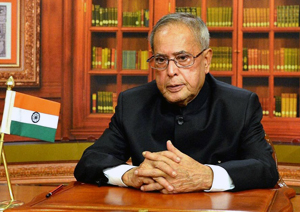
President Pranab Mukherjee signed the proclamation under Art 356 of the Constitution dismissing the Congress government headed by Harish Rawat and placing the Assembly under suspended animation this morning on the recommendation of the Union Cabinet.
The Cabinet had held an emergency meeting here last night presided over by Prime Minister Narendra Modi, who had cut short a visit to Assam to return to the capital for the purpose.

The Cabinet considered several reports received from Governor K K Paul, who had described the political situation as volatile and expressed apprehensions over possible pandemonium during the scheduled trial of strength in the state Assembly tomorrow.

Finance Minister Arun Jaitley is believed to have briefed the President late last night explaining the rationale for the Cabinet's recommendation.

The dismissal of the Rawat government now renders tomorrow's confidence vote infructuous.

It also came amidst reports that Speaker Govind Singh Kunjwal had disqualified 9 rebel Congress MLAs that would have enabled Rawat to sail through in the trust vote.

The Congress denounced the decision calling it a "murder of democracy" and said it showed that BJP did not believe in democracy.

The political crisis in the state arose after the controversial circumstances in which the Appropriation Bill was declared passed in the Assembly by the Speaker with the BJP and the rebel Congress claiming that a division of votes pressed by them was not allowed.

They alleged that the Bill was defeated in the voice vote by a majority of the members present but the Speaker did not test it in a proper division of votes.

The opposition claimed that it had a majority of 35 MLAs, including 9 rebels, in the House that day out of 67 MLAs present. The BJP said the 35 MLAs had written to the Speaker in advance that they would be voting against the bill but the Speaker had refused to take it into his consideration.

Last night, the Union Cabinet met amidst reports that the Speaker had disqualified the rebel Congress MLAs that would would have helped the beleaguered government.

Apprehending imposition of President's rule, the Congress had attacked the BJP saying it was resorting to the extreme step as its earlier moves had failed.

Comments

Abdullah
 - 
Sunday, 27 Mar 2016

The president Pranab Mukerjee working as a RSS agent.

Add new comment

  • Coastaldigest.com reserves the right to delete or block any comments.
  • Coastaldigset.com is not responsible for its readers’ comments.
  • Comments that are abusive, incendiary or irrelevant are strictly prohibited.
  • Please use a genuine email ID and provide your name to avoid reject.
News Network
June 26,2020

Jun 26: The Supreme Court on Friday permitted the Centre and the CBSE to cancel the remaining board examinations due to the COVID-19 pandemic and gave the go-ahead for the scheme to award marks to students for the cancelled papers scheduled to be held in July.

A bench of Justices A M Khanwilkar, Dinesh Maheshwari and Sanjiv Khanna permitted the CBSE to issue a notification for the cancellation of the examinations.

Solicitor General Tushar Mehta, appearing for the Centre and the CBSE, said that the assessment scheme would consider marks scored by students in the last three papers of the board exams.

Both CBSE and ICSE told the top court that the results of the class X and XII board exams can be declared by the middle of July.

The top court was hearing pleas seeking relief, including scrapping of remaining exams of Class 12 scheduled from July 1 to 15, in view of increasing number of COVID-19 cases. Similar relief was sought by the ICSE Board also.

Comments

Add new comment

  • Coastaldigest.com reserves the right to delete or block any comments.
  • Coastaldigset.com is not responsible for its readers’ comments.
  • Comments that are abusive, incendiary or irrelevant are strictly prohibited.
  • Please use a genuine email ID and provide your name to avoid reject.
News Network
June 23,2020

New Delhi, Jun 23: In an unexpected development, the pump price of diesel is all set to surpass the petrol price in the capital, making it the most expensive transport fuel for the first time in a long time.

Globally, diesel is priced slightly above petrol prices due to the very nature of the product that has a higher cost of production. But in India, due to the lopsided taxation structure, diesel attracts lesser of the tax between the two auto fuels keeping its prices lower than petrol for last several years.

Diesel is currently priced at Rs 79.40 a litre in the Capital, just 36 paise short of petrol price that is being retailed at Rs 79.76 a litre. Going by the trend of price movement in the two products for the last few days where diesel prices have consistently increased by 50-60 paise per litre while the daily increase in petrol prices have fallen to just 20 paise on Tuesday, it is set to surpass petrol prices in next few days.

"Diesel price movement is sharper in international market and if oil companies follow the global price trend, diesel prices will surpass that of petrol later this week. It will be after many years that this would happen and is expected to sustain for some time unless government changes the tax structure of the petroleum products again," said an oil sector expert from one of the big four audit and advisory firms asking not to be named.

Interestingly, even in India the base price of diesel is expensive than petrol. According to the Indian Oil Corporation (IOC), while the base price of petrol in Delhi currently comes to Rs 22.11 per litre, the same for diesel is higher at Rs 22.93 per litre (effective from June 16, 2020). This has been the case for a long time, but retail price of petrol can be higher than diesel due to central and state taxes.

What has now brought diesel prices to a whisker of petrol prices in the capital is the Delhi government's decision early May to increase the Value Added Tax on diesel from 16.75 per cent to 30 per cent and on petrol from 27 per cent to 30 per cent. This increased the retail price of diesel and petrol in Delhi by Rs 7.10 and Rs 1.67 a litre respectively. With Central taxes on the two products already reaching identical levels, the Delhi governments move hastened price parity between petrol and diesel.

Currently, the Central excise on petrol is Rs 32.98 a litre while that on diesel it is Rs 31.83 a litre. The VAT on petrol in Delhi is Rs 17.71 a litre and that on diesel is Rs 17.60 a litre.

While the movement of retail pricing is being seen with a sigh of relief by vehicle owners whose cars run on petrol, those buying the relatively expensive diesel cars are now repenting on their decision. The development is also being seen with caution by automobile companies who have spent millions to ramp up their facilities for diesel run vehicles. The expectation is that demand for such cars will now fall, causing more damage to companies where sales are already impacted due to persistent economic slowdown and now the spread of COVID-19 pandemic.

"The pricing development would push automobile companies to strategies being followed by companies in the western markets where diesel run cars are not sold on fuel pricing differential, but on overall make and quality that puts them ahead of petrol run cars," the expert quoted earlier.

Yes, but for commercial vehicle sector the rising price of diesel had not been welcomed. In fact, the commercial transport sector had time an again threatened strike against the move to raise fuel prices.

With petrol and diesel retail prices closing, the case for adultering fuel has also gone down much to the relief of vehicle owners.

Comments

Add new comment

  • Coastaldigest.com reserves the right to delete or block any comments.
  • Coastaldigset.com is not responsible for its readers’ comments.
  • Comments that are abusive, incendiary or irrelevant are strictly prohibited.
  • Please use a genuine email ID and provide your name to avoid reject.
Agencies
June 8,2020

New Delhi, Jun 8: Abortion access to around 1.85 million women was compromised across the country due to the nationwide restrictions imposed in response to the COVID-19 outbreak, a study conducted by Ipas Development Foundation (IDF) revealed.

These abortions were compromised at all points of care, including public and private sector facilities and chemist outlets during 68-day lockdown and the first week of Unlock 0.1 period. The study assesses the near-term impact of COVID-19 on abortion access in India since March 25 when the lockdown was imposed across the country with the announcement of Prime Minister Narendra Modi to contain the spread of novel coronavirus of COVID-19 pandemic.

It also highlights the need for a specially designed and integrated recovery plan for improving abortion services at facilities. The study estimates that access to abortion was highly compromised during lockdown 1 and 2 ( between March 25 and May 3) in which around 59 per cent of women seeking an abortion could not access the services.

However, with the Unlock phase or the recovery period as mentioned in the study starting on June 1, the situation is expected to improve - with 33 per cent abortions being compromised in 24 days. A huge number of women could not access safe abortion services during the lockdown, therefore it is extremely important that the healthcare system, public and private, is prepared to meet the needs of these women, the Ipas foundation says.

The model of the study strives to quantify the reduced access to abortions across three different points of care -public health facilities, private health facilities, and chemist outlets, said Vinoj Manning, CEO, Ipas Development Foundation in a statement.

"Majority of public health facilities and their staff are now focused on COVID-19 treatments and closures of private health facilities have compromised the access to safe abortions, which is a time-sensitive procedure."

He said that the study conducted by his foundation was to get a clearer picture of how COVID-19 restrictions have affected women seeking safe abortion services and what are the areas that would need focused efforts in the days to come.

Speaking on the methodology, Dr Sushanta Kumar Banerjee from Ipas Development Foundation said: "We conducted telephonic surveys and consulted with several experts from FOGSI leadership and social marketing organizations like PSI India Private Limited."

"After careful analysis of the data received from them, we have concluded that of the 3.9 million abortions that would have taken place in 3 months, access to around 1.85 million was compromised due to COVID-19 restrictions."

To facilitate the process Ipas Development Foundation has issued some initial recommendations which include: rapid mapping of facilities for first and second trimester abortions, assessing facilities' preparedness especially for second-trimester abortions, improving referral linkage and spread the word about the availability of the service, streamlining the supply chain for medical abortion drugs, and lastly including mechanisms to offset additional travel and out of pocket expenditures.

Ipas Development Foundation will be holding consultations with other partners and key stakeholders to facilitate meaningful collaborations to ensure access to safe abortions and ensure that no woman suffers long-term harm to her health due to lack of services.

Comments

Add new comment

  • Coastaldigest.com reserves the right to delete or block any comments.
  • Coastaldigset.com is not responsible for its readers’ comments.
  • Comments that are abusive, incendiary or irrelevant are strictly prohibited.
  • Please use a genuine email ID and provide your name to avoid reject.