


President's rule imposed in Uttarakhand

March 27, 2016

New Delhi, Mar 27: Uttarakhand was today brought under President's rule by the Centre on grounds of "breakdown of governance" in a controversial decision which comes in the wake of a political crisis triggered by a rebellion in the ruling Congress.president
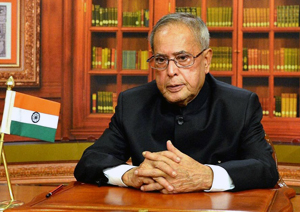
President Pranab Mukherjee signed the proclamation under Art 356 of the Constitution dismissing the Congress government headed by Harish Rawat and placing the Assembly under suspended animation this morning on the recommendation of the Union Cabinet.
The Cabinet had held an emergency meeting here last night presided over by Prime Minister Narendra Modi, who had cut short a visit to Assam to return to the capital for the purpose.

The Cabinet considered several reports received from Governor K K Paul, who had described the political situation as volatile and expressed apprehensions over possible pandemonium during the scheduled trial of strength in the state Assembly tomorrow.

Finance Minister Arun Jaitley is believed to have briefed the President late last night explaining the rationale for the Cabinet's recommendation.

The dismissal of the Rawat government now renders tomorrow's confidence vote infructuous.

It also came amidst reports that Speaker Govind Singh Kunjwal had disqualified 9 rebel Congress MLAs that would have enabled Rawat to sail through in the trust vote.

The Congress denounced the decision calling it a "murder of democracy" and said it showed that BJP did not believe in democracy.

The political crisis in the state arose after the controversial circumstances in which the Appropriation Bill was declared passed in the Assembly by the Speaker with the BJP and the rebel Congress claiming that a division of votes pressed by them was not allowed.

They alleged that the Bill was defeated in the voice vote by a majority of the members present but the Speaker did not test it in a proper division of votes.

The opposition claimed that it had a majority of 35 MLAs, including 9 rebels, in the House that day out of 67 MLAs present. The BJP said the 35 MLAs had written to the Speaker in advance that they would be voting against the bill but the Speaker had refused to take it into his consideration.

Last night, the Union Cabinet met amidst reports that the Speaker had disqualified the rebel Congress MLAs that would would have helped the beleaguered government.

Apprehending imposition of President's rule, the Congress had attacked the BJP saying it was resorting to the extreme step as its earlier moves had failed.

Comments

Abdullah
 - 
Sunday, 27 Mar 2016

The president Pranab Mukerjee working as a RSS agent.

Add new comment

  • Coastaldigest.com reserves the right to delete or block any comments.
  • Coastaldigset.com is not responsible for its readers’ comments.
  • Comments that are abusive, incendiary or irrelevant are strictly prohibited.
  • Please use a genuine email ID and provide your name to avoid reject.
Agencies
May 22,2020

New Delhi, May 22: The number of COVID-19 cases averted due to the lockdown is in the range of 14-29 lakh, while the number of lives saved is between 37,000 and 78,000, the government said on Friday citing various studies, and asserted that the unprecedented shutdown has paid “rich dividends” in the fight against the pandemic.

The lockdown in India has been a timely, graded, proactive and pre-emptive public health measure to fight the COVID-19 pandemic and has been part and parcel of the government’s overall strategy, Dr V K Paul, Member (Health), NITI Aayog, and Chairman, Empowered Group 1, said at a media briefing on the COVID-19 situation.

The government imposed the nationwide lockdown from March 25 to prevent the spread of the novel coronavirus and it is currently in its fourth phase.

Like the number of cases, the growth rate of number of COVID-19 deaths too has fallen significantly due to the lockdown, marking a notable difference between pre-lockdown and post-lockdown situations, he said.

At the briefing, Pravin Srivastava, Secretary, Ministry of Statistics and Programme Implementation gave model-based estimates on COVID-19 cases and deaths which have been prevented due to the lockdown.

As per Boston Consulting Group's model, the lockdown saved between 1.2 lakh and 2.1 lakh lives, while the number of COVID-19 cases averted is between 36 lakh and 70 lakh, he said.

According to Public Health Foundation of India, nearly 78,000 lives have been saved due to the lockdown, Srivastava said.

Citing a model by two independent economists, he said that around 23 lakh COVID-19 cases and 68,000 deaths have been averted due to the lockdown.

Some independent experts, including retired scientists, have calculated that around 15.9 lakh cases and 51,000 deaths have been averted due to the lockdown, Srivastava said.

A joint study by the Ministry of Statistics and Programme Implementation and the Indian Statistical Institute found that around 20 lakh COVID-19 cases and 54,000 deaths were averted due to lockdown, he said.

The number of COVID-19 cases averted due to the lockdown is in the range of 14-29 lakh, while the number of lives saved is between 37,000 and 78,000, the official said.

“We are fully confident that the lockdown, with full public cooperation, has reaped rich dividends,” Srivastava said.

The strong defence of the lockdown, comes a day after the health ministry said the period of lockdown has been gainfully utilized to ramp up the health infrastructure, with around 3,027 dedicated COVID-19 hospitals and 7,013 care centres being readied across the country to fight the disease.

The announcement on Thursday came after some media reports questioned the country's preparedness to deal with the highly infectious disease.

"There are reports in a section of the media about some decisions of the government regarding the lockdown implementation and response to COVID-19 management. The period of the lockdown has been gainfully utilised to ramp up the health infrastructure in the country," the ministry had said.

Addressing the press briefing on Friday, joint secretary in the health ministry Lav Agarwal said 48,534 COVID-19 patients, which is about 41 per cent of the total cases, have recovered so far. As many as 3,234 patients have recovered in the last 24 hours, he said’

The COVID-19 mortality rate has dropped from 3.13 per cent on May 19 to 3.02 per cent as focus was on containment measures andclinical management of cases, Agarwal said.

An ICMR official said 27,55,714 tests for COVID-19 have been conducted till 1 pm Friday with 1,03,829 tests done in one day. Over 1 lakh tests for COVID-19 have been done each day for the last four days, the official said.

The growth rate of novel coronavirus cases witnessed a steep decline from Apr 4 when lockdown put a brake on the speed of increase of cases, V K Paul said.

The number of COVID-19 cases would have risen exponentially had the lockdown not been implemented, he said, adding that the doubling rate of cases was 3.4 days when the lockdown started and it is 13.3 days at present.

The COVID-19 outbreak in India has remained confined to limited areas with 80 per cent of active cases in just five states, Paul said

He said around 80 pc of COVID-19 deaths have been in Maharashtra, Gujarat, Madhya Pradesh, West Bengal and Delhi. 

Comments

Add new comment

  • Coastaldigest.com reserves the right to delete or block any comments.
  • Coastaldigset.com is not responsible for its readers’ comments.
  • Comments that are abusive, incendiary or irrelevant are strictly prohibited.
  • Please use a genuine email ID and provide your name to avoid reject.
News Network
January 31,2020

New Delhi, Jan 31: Chief Economic Adviser K V Subramanian on Friday said India's GDP is expected to grow at 6-6.5 per cent next fiscal as the economic slowdown has bottomed out.

As per the first advance estimates released by the National Statistical Organisation (NSO), the country's economic growth is likely to hit an 11-year low of 5 per cent in the current fiscal ending March 2020.

The Economic Survey 2019-20, prepared by a team lead by Subramanian, has projected the GDP to expand in the range of 6-6.5 per cent during 2020-21.

The Indian economy has hit the bottom and it will see an uptick from here, he said in a media briefing post the Economic Survey.

Amidst a weak environment for global manufacturing, trade and demand, the Indian economy slowed down with GDP growth moderating to 4.8 per cent in the first half of 2019-20, lower than 6.2 per cent in H2 of 2018-19.

Based on NSO's first advance estimates of GDP growth for 2019-20 at 5 per cent, an uptick in GDP growth is expected in the second half of the fiscal, it said.

According to it, the uptick in second half of 2019-20 would be mainly due to ten positive factors like picking up of Nifty India Consumption Index for the first time this year, an upbeat secondary market, higher FDI flows, build-up of demand pressure, positive outlook for rural consumption, rebound of industrial activity, steady improvement in manufacturing, growth in merchandise exports, higher build-up of foreign exchange reserves and positive growth rate of GST revenue collection.

The survey also emphasised that merger of public sector banks may increase the financial strength of the merged entities, lower the risk aversion and result in lowering of lending rates.

Further, as the implementation of GST further settles down, the increased unification of the domestic market may reduce business costs and facilitate fresh investment.

Reforms in land and labour market may further reduce business costs, said the survey, presented a day before Sitharaman's Union Budget 2020-21.

Comments

Add new comment

  • Coastaldigest.com reserves the right to delete or block any comments.
  • Coastaldigset.com is not responsible for its readers’ comments.
  • Comments that are abusive, incendiary or irrelevant are strictly prohibited.
  • Please use a genuine email ID and provide your name to avoid reject.
News Network
July 22,2020

New Delhi, Jul 22: India is responding with utmost urgency to coronavirus from the very beginning and has been continuously strengthening preparedness and response measures, WHO Regional Director (South-East Asia) Poonam Khetrapal Singh said on Wednesday.

"India is responding with utmost urgency to COVID-19 from the start. It's been continuously strengthening preparedness and response measures, including ramping up testing capacities, readying more hospitals, arranging and stocking up medicines and essentials," Singh said at a virtual briefing.

"India took bold, decisive and early measures earlier in the outbreak. The country did not witness an exponential increase in cases like some other countries which reported their first few cases along with India. Like in any other country the transmission of COVID-19 is not homogenous in India. There are areas yet to see a confirmed case, some have sporadic cases, in some areas some small clusters while we are witnessing large clusters in some megacities from the densely populated areas," Singh said.
She said WHO was aware of varying capacities at sub-national levels.

"Not unusual in a country as big as India and its population size that measures taken may often not be uniformly sufficient across all areas. Scaling up capacities and response remains a constant need in India."

Replying on the question of what more needs to be done in controlling the spread of COVID-19, she said all countries including India must continue to implement core public health and social distancing measures.

"Local epidemiology to guide our response for finding hotspots and testing, detecting, isolating and providing care to the affected, promoting safe hygiene practices and respiratory etiquette, protecting health workers and increasing health system capacity is also key," she said.

Comments

Add new comment

  • Coastaldigest.com reserves the right to delete or block any comments.
  • Coastaldigset.com is not responsible for its readers’ comments.
  • Comments that are abusive, incendiary or irrelevant are strictly prohibited.
  • Please use a genuine email ID and provide your name to avoid reject.