


President's rule imposed in Uttarakhand

March 27, 2016

New Delhi, Mar 27: Uttarakhand was today brought under President's rule by the Centre on grounds of "breakdown of governance" in a controversial decision which comes in the wake of a political crisis triggered by a rebellion in the ruling Congress.president
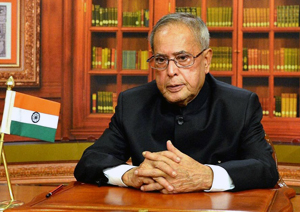
President Pranab Mukherjee signed the proclamation under Art 356 of the Constitution dismissing the Congress government headed by Harish Rawat and placing the Assembly under suspended animation this morning on the recommendation of the Union Cabinet.
The Cabinet had held an emergency meeting here last night presided over by Prime Minister Narendra Modi, who had cut short a visit to Assam to return to the capital for the purpose.

The Cabinet considered several reports received from Governor K K Paul, who had described the political situation as volatile and expressed apprehensions over possible pandemonium during the scheduled trial of strength in the state Assembly tomorrow.

Finance Minister Arun Jaitley is believed to have briefed the President late last night explaining the rationale for the Cabinet's recommendation.

The dismissal of the Rawat government now renders tomorrow's confidence vote infructuous.

It also came amidst reports that Speaker Govind Singh Kunjwal had disqualified 9 rebel Congress MLAs that would have enabled Rawat to sail through in the trust vote.

The Congress denounced the decision calling it a "murder of democracy" and said it showed that BJP did not believe in democracy.

The political crisis in the state arose after the controversial circumstances in which the Appropriation Bill was declared passed in the Assembly by the Speaker with the BJP and the rebel Congress claiming that a division of votes pressed by them was not allowed.

They alleged that the Bill was defeated in the voice vote by a majority of the members present but the Speaker did not test it in a proper division of votes.

The opposition claimed that it had a majority of 35 MLAs, including 9 rebels, in the House that day out of 67 MLAs present. The BJP said the 35 MLAs had written to the Speaker in advance that they would be voting against the bill but the Speaker had refused to take it into his consideration.

Last night, the Union Cabinet met amidst reports that the Speaker had disqualified the rebel Congress MLAs that would would have helped the beleaguered government.

Apprehending imposition of President's rule, the Congress had attacked the BJP saying it was resorting to the extreme step as its earlier moves had failed.

Comments

Abdullah
 - 
Sunday, 27 Mar 2016

The president Pranab Mukerjee working as a RSS agent.

Add new comment

  • Coastaldigest.com reserves the right to delete or block any comments.
  • Coastaldigset.com is not responsible for its readers’ comments.
  • Comments that are abusive, incendiary or irrelevant are strictly prohibited.
  • Please use a genuine email ID and provide your name to avoid reject.
News Network
February 11,2020

New Delhi, Feb 11: As the counting of votes for the Delhi Assembly polls began, Congress leader Digvijaya Singh on Tuesday raised doubts on EVMs, alleging that no machine having a chip is tamper-proof.

He called upon the Election Commission and the Supreme Court to take a fresh look at the use of EVMs in the country.

"No machine (which) has a chip is tamper-proof. Also please do for a moment think, why no developed country uses EVM," Singh said in a tweet.

"Would CEC and Hon Supreme Court please have a fresh look on EVM voting in India? We are the largest democracy in the world, we can't allow some unscrupulous people to hack results and steal the mandate of 1.3 billion people.

"If they match the votes in the counting unit. Declare the result. If they don't match then count the ballots of all polling booths in the assembly. It would convince everyone and save time also as this has been the consistent argument of CEC in favour of EVM," the Congress leader said.

Polling for the 70-member Delhi Assembly polls was held on Saturday.

The Election Commission on Sunday announced that the final voter turnout was 62.59 per cent, five per cent less than 2015.

Comments

Add new comment

  • Coastaldigest.com reserves the right to delete or block any comments.
  • Coastaldigset.com is not responsible for its readers’ comments.
  • Comments that are abusive, incendiary or irrelevant are strictly prohibited.
  • Please use a genuine email ID and provide your name to avoid reject.
News Network
April 4,2020

Kochi, Apr 4: France on Saturday evacuated 112

French citizens stranded in Kerala and Tamil Nadu in a special Air India flight, official sources said here.

The Embassy of France had made a request to the Kerala government to facilitate the journey of the French citizens stranded due to the lockdown announced by the central government to prevent the spread of novel coronavirus.

The French citizens, mostly tourists and those who came for Ayurvedic treatment, were brought here by the state tourism department 24 days ahead of their trip.

They underwent a medical examination before boarding the flight for Paris from Cochin International Airport at 08.13 am on Saturday, officials said.

The Air India flight was chartered by the French government for evacuating its citizens in various cities in India including Kochi, Bengaluru and Mumbai.

On Friday, Gulf nation Oman had evacuated its 46 citizens stranded in Kochi in an Oman Air flight.

Comments

Add new comment

  • Coastaldigest.com reserves the right to delete or block any comments.
  • Coastaldigset.com is not responsible for its readers’ comments.
  • Comments that are abusive, incendiary or irrelevant are strictly prohibited.
  • Please use a genuine email ID and provide your name to avoid reject.
News Network
January 24,2020

New Delhi, Jan 24: Although India's Ujjwala programme encouraged adoption of liquefied petroleum gas (LPG) for cooking among the poor, households availing the scheme have not shifted away from using highly polluting fuels like firewood, a study reveals.

The researchers, including those from the University of British Columbia (UBC) in Canada, found that additional incentives to encourage regular use of cooking gas are necessary for a complete transition to clean cooking fuel among poor rural households.

They noted that about 2.9 billion people across Asia, Africa, and Latin America burn solid fuels like firewood to meet their cooking energy needs.

This has significant negative implications for public health, the environment, and societal development, according to the researchers.

Through the Pradhan Mantri Ujjwala Yojana (PMUY), India has provided capital cost subsidies to poor women to adopt a clean-burning cooking fuel or LPG.

The researchers explained that within the first 40 months of the scheme, more than 80 million households obtained LPG stoves.

However, the full benefits of LPG adoption depend on near complete replacement of polluting fuels with LPG, according to a research-based policy brief published in the journal Nature Energy.

The scientists said this cannot be assumed solely on the basis of LPG presence in the household.

"Our research shows that Ujjwala was able to attract new consumers rapidly, but those consumers did not start using LPG on a regular basis," Abhishek Kar, a postdoc at Columbia University in the US, told PTI.

The study analysed LPG sales data for over 25,000 consumers, including PMUY beneficiaries, as well as general rural LPG consumers in Koppal district of Karnataka.

The scientists employed data covering all LPG purchases of PMUY beneficiaries through their first year in the programme.

They also assessed the general rural population's purchases during their first five years as consumers to assess the effect of experience on use.

The findings estimate that an average rural family needs to purchase five 14.2 kilogramme-cylinders annually to meet half of their cooking needs.

However, the study said just seven per cent of PMUY beneficiaries in Koppal purchased five or more cylinders annually, suggesting that the beneficiaries seldom use LPG.

The general (nonPMUY) consumers in this region use on average two times more LPG cylinders than PMUY beneficiaries, the researchers noted.

Yet, only 45 per cent of nonPMUY consumers use five or more cylinders per year -- even after several years of experience with LPG, they said.

The team assessed price and seasonal factors affecting LPG use among the general population over a three-year period.

It found that LPG consumers are sensitive to price and seasonality -- LPG cylinder refill rates are lower in the summer when agricultural activity is limited, and cash is scarce.

"There was no scheme incentives to promote use, except general LPG subsidies which is available to all, including the urban middle class," said Kar, who was a Ph.D. scholar at UBC when the research was published.

"If there is no additional income, what cost would a poor family on an already tight budget cut to pay for an extra expense on a regular basis.

"Ujjwala has started the scheme of 5 kg-cylinder in response, but the impact of that on LPG sales is still publicly unknown," he said.

These findings, the researchers noted, suggest the need for additional measures to promote regular LPG use for all rural populations.

Although the finding come from a single district in Southern India, it may also apply to other areas with similar socio-economic conditions, they said.

A more expansive evaluation of PMUY would help design targeted incentives to transform infrequent users to regular users, according to the researchers.

Comments

Add new comment

  • Coastaldigest.com reserves the right to delete or block any comments.
  • Coastaldigset.com is not responsible for its readers’ comments.
  • Comments that are abusive, incendiary or irrelevant are strictly prohibited.
  • Please use a genuine email ID and provide your name to avoid reject.